
Reviewed · WALKING TOURS
Salvador: Walking Tour Through Pelourinho
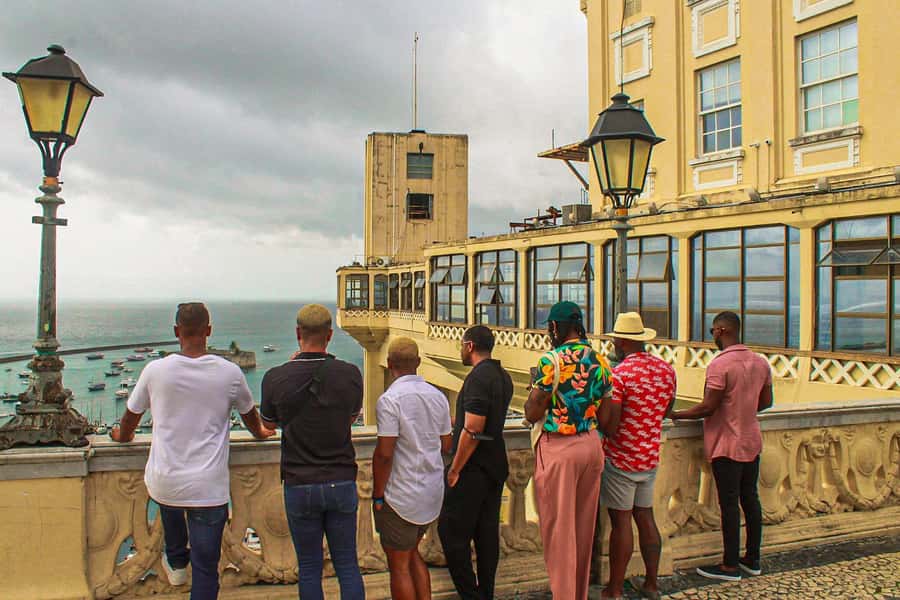
Salvador’s old center is best understood on foot, where grand squares, steep lanes, churches, and painful chapters of Brazilian history sit close together. This 90-minute walk takes you from Praça Castro Alves through Pelourinho, with guide Adriano adding the local context that turns a parade of landmarks into a story about power, faith, slavery, and resistance.
I like the small group of no more than seven, which gives you room to ask questions and makes it easier for the guide to keep everyone together. I also like the balance between major sights and useful local advice. Adriano has helped visitors choose places to eat, find nightlife, and decide what to see next.
The main drawback is the short running time. There is a lot packed into 90 minutes, and entrance fees are not included, so this works best as an introduction rather than a full historical visit inside every church and museum.
In This Review
- Key points at a glance
- Starting at Praça Castro Alves above the bay
- Rua Chile and the first views across Salvador
- Praça Thomé de Souza and the Lacerda Elevator
- Rua Chile, the Mercy Museum, and Praça da Sé
- Terreiro de Jesus and Brazil’s first Faculty of Medicine
- Largo do Cruzeiro de São Francisco and Igreja de Ouro
- Olodum, Ladeira do Pelô, and Michael Jackson’s filming site
- What Adriano adds to the walk
- Is $80 a fair price for 90 minutes?
- Who should book this Pelourinho walk?
- Practical details before you go
- My verdict: a strong first look at Salvador
- FAQ
- How long does the walking tour last?
- What language is the tour conducted in?
- How large is the group?
- Where do I meet the guide?
- Does the tour include hotel pickup and drop-off?
- Are food and drinks included?
- Are entrance fees included?
- Is the tour suitable for wheelchair users?
- Can I cancel for a full refund?
Key points at a glance
- Start with a bay view: Meet at Praça Castro Alves, overlooking Baía de Todos os Santos and its islands.
- Walk Salvador’s historic spine: Follow Rua Chile, described on the tour as Brazil’s first street, toward Praça Thomé de Souza.
- See the Lacerda Elevator: Learn how this landmark links Cidade Alta with Cidade Baixa.
- Face difficult history: Hear about the first bishop of Brazil, Zumbi dos Palmares, slavery, and the Monument to the Fallen Cross.
- Visit Pelourinho’s best-known sights: Pass the first Faculty of Medicine, Igreja de Ouro, Olodum’s house, and Ladeira do Pelô.
- Get personal advice: Adriano is praised for clear English, patient answers, and practical recommendations around Salvador.
Starting at Praça Castro Alves above the bay
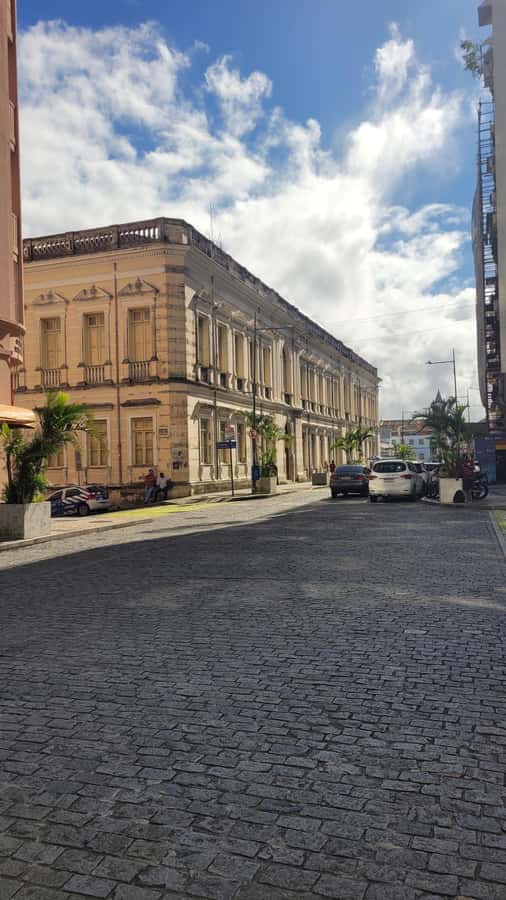
Your meeting point is Praça Castro Alves, where the guide waits with a credential. This is a fitting place to begin because it gives you an immediate sense of Salvador’s setting. From the square, you can look across Baía de Todos os Santos toward its islands before turning toward the old city.
That opening view also helps explain Salvador’s two-level layout. The historic center occupies the Cidade Alta, while the Cidade Baixa runs closer to the water. You will later see how the Lacerda Elevator connects the two.
The tour is conducted in English and limited to seven people. That small size matters in a city center where you may be standing near traffic, moving through narrow streets, or trying to hear an explanation beside a crowded square. Adriano is frequently praised for speaking clearly and loudly enough for the whole group. He also makes an effort to include each person rather than delivering a fixed speech and moving on.
Wear light clothing and comfortable walking shoes. Bring water, sunscreen, a hat, and a camera. Salvador’s sun can be strong, and this is a walking tour with outdoor stops rather than a museum visit in air-conditioned rooms.
A few more Salvador trips to weigh up
- Salvador Historic Walking Tour – Pelourinho
★ 4.8 · 62 reviews - Salvador, Bahia: A amazing Walking Tour!
★ 5.0 · 14 reviews - Rio de Janeiro: Rocinha Favela Walking Tour with Local Guide
★ 4.8 · 3,052 reviews
Rua Chile and the first views across Salvador
From Praça Castro Alves, you continue along Rua Chile. The route presents this as the first street in Brazil, giving the walk an immediate historical claim and a clear physical connection between the city’s past and present.
The value here is not simply checking off an old street. You are moving through the core of Salvador’s Cidade Alta, where important government, religious, and civic sites gather within a walkable area. A local guide can point out how these places relate to one another, which is more useful than seeing each building as an isolated photo stop.
The route includes a pause on Pau da Bandeira street for another view of the bay. This is one of the tour’s practical strengths: you are not rushed from one plaque to another. The photo stop gives you time to look outward, take pictures, and get your bearings before returning to the city’s main squares.
I would bring a camera, but do not plan on making every stop a long photo session. The tour has a fixed 90-minute length, and the number of landmarks means the pace needs to stay steady.
Praça Thomé de Souza and the Lacerda Elevator
The next major stop is Praça Thomé de Souza, named for Brazil’s first General Governor. Here, the walk turns from broad views to the political structure of early Salvador.
You will see the Palácio do Primeiro Governo, a building described on the tour as having been used as Brazil’s first prison. The stop gives Adriano a chance to explain how government, punishment, and control were tied together in the early colonial city.
The square also brings you to the Lacerda Elevator, one of Salvador’s most recognizable landmarks. It connects Cidade Alta and Cidade Baixa, making the city’s dramatic vertical divide practical as well as scenic.
You should think of the elevator as an important piece of urban infrastructure, not just a landmark for photographs. Its position helps you understand why Salvador can feel like two cities stacked above one another. From the upper level, the bay and lower city are part of the view; below, the port-side area has a very different setting.
The tour does not include attraction entrance fees, and the supplied details do not promise a ride on the elevator. You should therefore expect to see and learn about it rather than assume the tour includes every interior or transport experience along the route.
Rua Chile, the Mercy Museum, and Praça da Sé
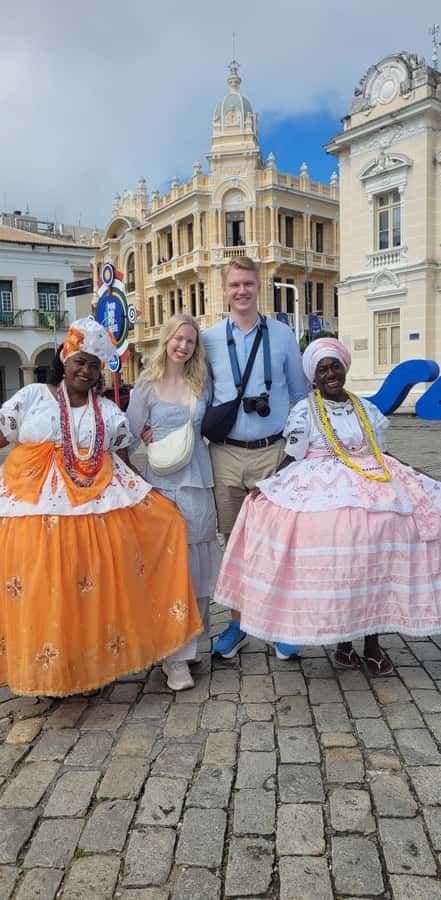
The walk continues along Rua Chile and passes the Museu da Misericórdia. Since entrance fees are not included, this is an exterior pass rather than a guaranteed museum visit.
That distinction matters if you are hoping for a detailed look inside each attraction. The tour’s strength is its connected route. You see how religious, government, and charitable institutions fit into the old center, while Adriano supplies the background and answers questions along the way.
At Praça da Sé, the tone becomes more serious. The square is home to the Monument to the Fallen Cross, erected in protest after the demolition of Igreja da Sé. This is a useful reminder that Salvador’s historic center is not a perfectly preserved postcard. Buildings have been altered, removed, or contested, and the city’s present appearance reflects those decisions.
The square includes two other stops. One is the statue of Brazil’s first bishop, where you learn about his tragic end. The other is a statue of Zumbi dos Palmares, a leader of resistance against slavery.
These stops give the walk a wider focus. You are not hearing only about colonial rulers and ornate churches. You are also introduced to people and events tied to religious authority, slavery, and resistance. Several visitors found this balance especially useful, and Adriano is praised for addressing difficult subjects directly rather than smoothing them over.
Same city, a completely different kind of day:
- From Salvador: Schooner Tour to Frades Islands and Itaparica
★ 3.9 · 98 reviews - Afro-Brazilian Roots Private City Tour in Salvador
★ 4.7 · 88 reviews - Salvador de Bahia African Culture Tour
★ 4.5 · 60 reviews - Salvador: Praia Do Forte and Guarajuba Beach Day Trip
★ 4.1 · 56 reviews
Terreiro de Jesus and Brazil’s first Faculty of Medicine
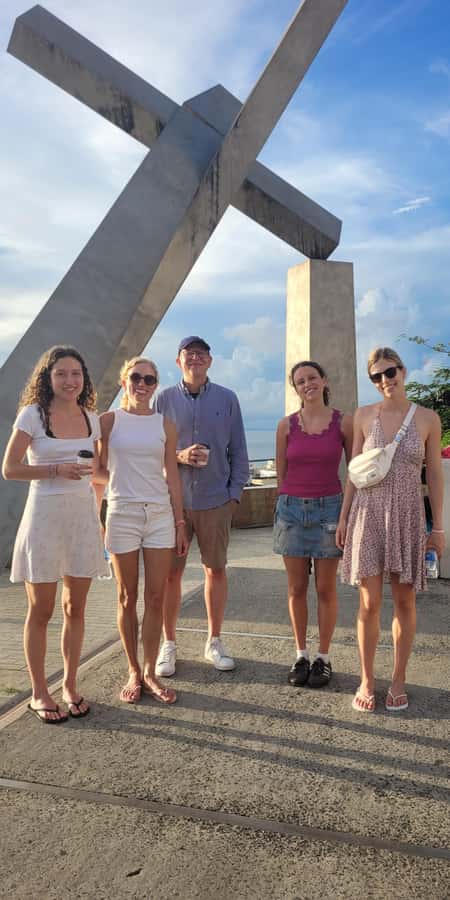
From Praça da Sé, you head to Largo Terreiro de Jesus. The square brings together several churches and the first Faculty of Medicine in Brazil.
This is one of the places where a guide adds real value. A visitor walking alone could admire the façades and move on, but the tour connects the buildings to Brazil’s educational and religious development. The square becomes a lesson in how institutions gathered in the old center.
The church complex also gives you a sense of Salvador’s visual drama. You will see grand religious architecture close together, with the surrounding streets providing a busy urban setting. Take a moment to look up at the details, but also listen for the social history behind them. The walk is not only about decoration.
Because the tour lasts 90 minutes, you should not expect extended interior visits. The route identifies the major places and explains their importance. If you want to study one church in depth, you may need to return independently and pay any entrance fee required.
Largo do Cruzeiro de São Francisco and Igreja de Ouro
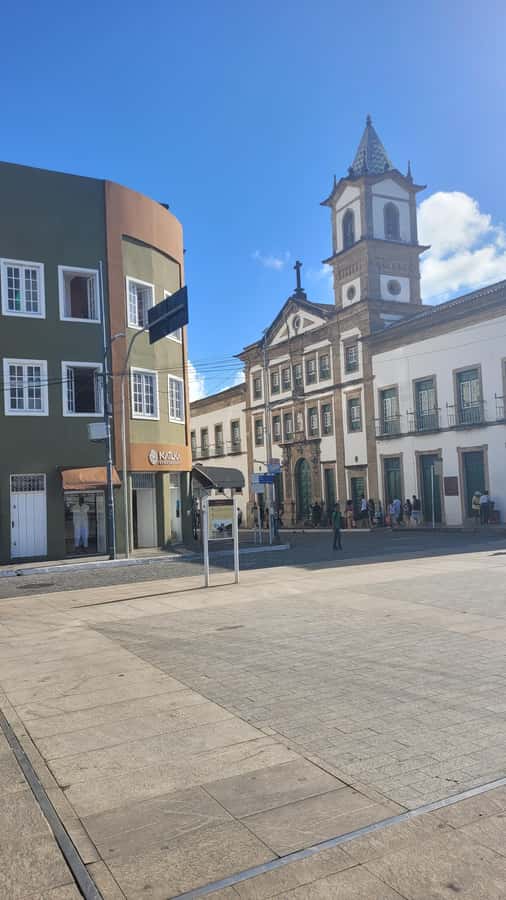
The route then reaches Largo do Cruzeiro de São Francisco, where the Igreja de Ouro is the visual high point for many people. Its lavish interior is among the best-known examples of Salvador’s church decoration, but this experience does not include entrance fees to attractions.
That makes the stop useful for orientation and photography, while leaving you the choice of returning later for a paid interior visit. I like this arrangement for a first walk because it keeps the group moving and avoids forcing everyone into the same sightseeing plan.
The square also reveals a sharp contrast in Salvador. Ornate churches sit beside streets connected to Afro-Brazilian culture and the history of enslavement. The tour’s discussion of the church of black people and the brotherhood of black men in Brazil adds an important layer to what you are seeing.
Pay attention to the guide’s explanations here. The architecture is easy to admire, but the meaning of these religious spaces is tied to the people who built, used, and maintained them. The setting is more than a pretty backdrop.
Olodum, Ladeira do Pelô, and Michael Jackson’s filming site
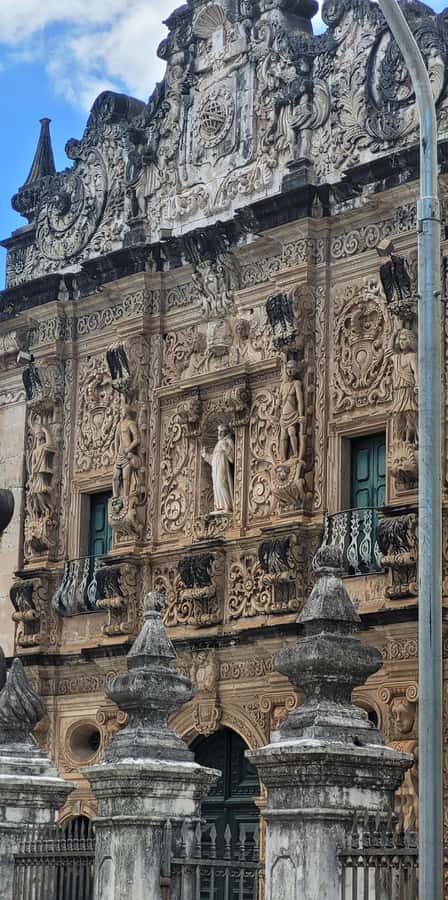
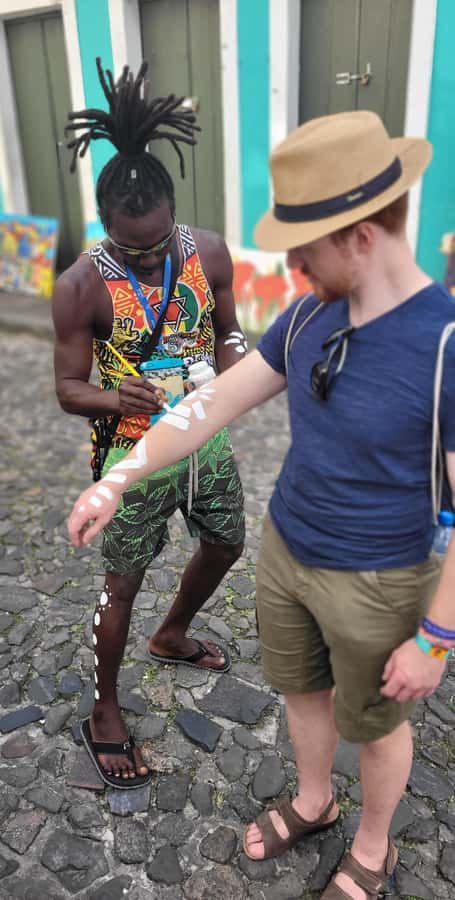
Near the end of the walk, you pass Olodum’s house. The stop connects Pelourinho’s historic streets with Salvador’s modern cultural identity and its strong musical traditions.
You then reach the famous Ladeira do Pelô, associated with Michael Jackson’s music video for They Don’t Care About Us. If you know the video, the setting may look familiar. If you do not, it is still a useful final stop because it shows how Pelourinho became known far beyond Brazil.
This part of the route can feel lighter after the serious material in Praça da Sé. It also gives you a good visual memory of the neighborhood: steep street, colorful façades, and a place where local culture, tourism, music, and global popular culture meet.
The tour ends after this series of central sights. There is no hotel pickup or drop-off, food, or drink included, so plan your own way back and bring water from the start.
What Adriano adds to the walk
The guide is the biggest factor in this experience. Adriano is repeatedly described as friendly, patient, and fluent in English. He keeps a good pace while making time for questions, and he adjusts his explanations to the people in the group.
That personal approach is especially helpful in a short tour. You need someone who can separate essential context from minor details, and the feedback points to a guide who does that well. He explains architecture, food, nightlife, local customs, and difficult historical subjects without making the tour feel like a classroom lecture.
A particularly useful feature is the advice for the rest of your stay. Adriano can recommend places to eat and bars to visit, as well as things to see and areas to avoid. Those tips are not a substitute for your own judgment, but they can help you use the walk as a first orientation to Salvador.
The small group also gives you a better chance to ask about your own interests. If you care most about architecture, Afro-Brazilian culture, food, or local history, say so early. The group limit makes that kind of exchange possible.
Is $80 a fair price for 90 minutes?
At $80 per person, this is not a bargain-priced stroll. You are paying for a short guided walk, not transportation, meals, or admission to the churches and museums.
The value depends on what you want from your first hours in Salvador. If you mainly want a quick introduction to Pelourinho, a clear English-speaking guide, and a route through the area’s main historical points, the small group and personal guidance make the price easier to justify.
If you expect long interior visits, extensive time at each site, or a full-day exploration, the cost may feel high for 90 minutes. You will need to pay separately for any attractions you choose to enter, and you should allow time to return to places that deserve closer attention.
I see this as an orientation tour. It can save you time by explaining what you are looking at and pointing you toward food, nightlife, and further sights. Book it early in your stay if you want to use Adriano’s recommendations during later days in Salvador.
Who should book this Pelourinho walk?
This tour suits first-time visitors who want a structured introduction to the old center without committing to a half-day program. It is also a good fit if you prefer a small group and want to ask questions in English.
History-minded visitors will appreciate the range of subjects, from the first governor and bishop to slavery, resistance, religious brotherhoods, and the demolition of Igreja da Sé. Architecture fans will enjoy the churches, squares, and Lacerda Elevator.
It may be less suitable if you have limited mobility. The route is on foot through Salvador’s historic center, and the experience is specifically listed as unsuitable for people with mobility impairments and wheelchair users. Comfortable shoes are essential.
You should also choose something else if you want a relaxed pace with lots of free time. The route covers many sites in 90 minutes, so the walk needs to keep moving.
Practical details before you go
Meet the guide at Praça Castro Alves, where the guide will be carrying a credential. The activity is offered in English, with a maximum group size of seven people.
Bring:
- Comfortable walking shoes
- Light clothing
- A hat
- Sunscreen
- Water
- A camera
Smoking is not allowed during the activity. Prepare for changing weather, since most of the experience takes place outdoors.
Free cancellation is available up to 24 hours before the start for a full refund. You can also reserve now and pay later, which is useful if you are still arranging your Salvador schedule.
My verdict: a strong first look at Salvador
I would book this walk for a first introduction to Pelourinho, especially if Adriano is leading it. The route covers the bay view, Rua Chile, Praça Thomé de Souza, the Lacerda Elevator, Praça da Sé, Terreiro de Jesus, Igreja de Ouro, Olodum’s house, and Ladeira do Pelô without losing sight of Salvador’s harder history.
The best reason to choose it is not the number of landmarks. It is the chance to hear the city explained by a local guide who speaks clear English, welcomes questions, and offers useful advice for the rest of your visit.
At $80, the tour asks you to pay for guidance rather than inclusions. Go in expecting a brisk, outdoor introduction, not a series of long church visits. If that matches your plans, it is a practical and personable way to get oriented in Salvador.
FAQ
How long does the walking tour last?
The tour lasts 90 minutes.
What language is the tour conducted in?
The live tour guide speaks English.
How large is the group?
The group is limited to seven participants.
Where do I meet the guide?
Meet at Praça Castro Alves. The guide will be standing there with a credential.
Does the tour include hotel pickup and drop-off?
No. Hotel pickup and drop-off are not included.
Are food and drinks included?
No. Food and drinks are not included, so bring water and plan your own meals.
Are entrance fees included?
No. Entrance fees to attractions are not included.
Is the tour suitable for wheelchair users?
No. The activity is listed as unsuitable for wheelchair users and people with mobility impairments.
Can I cancel for a full refund?
Yes. You can cancel up to 24 hours in advance for a full refund.
Just added around Salvador
- Salvador: Schooner Cruise with Pickup and Itaparica Stop★ 3.8 · 5 reviews
- Salvador: Cultural Treasure – Samba de Roda.★ 4.9 · 51 reviews
- Salvador: Traditional Drumming and Percussion Workshop★ 4.4 · 10 reviews
- Salvador: CAPOEIRA CLASS – CULTURAL★ 4.6 · 13 reviews
- Salvador: Cultural Night of Capoeira, Samba, and Drumming★ 4.9 · 17 reviews
- Salvador: 4-Hour Candomblé Mysteries Tour★ 4.3 · 34 reviews
- Salvador: Capoeira Class at Mestre Bimba’s 1st Ever School.★ 4.9 · 34 reviews
- Salvador, Bahia: A amazing Walking Tour!★ 5.0 · 14 reviews
Walking Tours, compared.

Sunrise and Sunrise Walk Two Brothers with Local Guide
Read our review →
Downtown-Center History Walking Tour – in English
Read our review →
Downtown-Center Walking Tour | 2 Hours – English
Read our review →
Learn the History of Rio with an Unforgettable City Center Walking Tour
Read our review →Browse the lists this tour appears in