
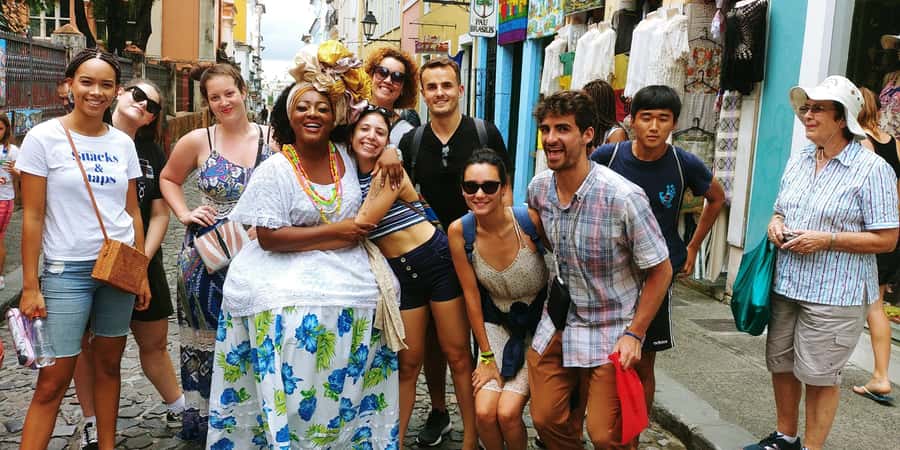
Reviewed · SALVADOR TOURS
Salvador de Bahia African Culture Tour
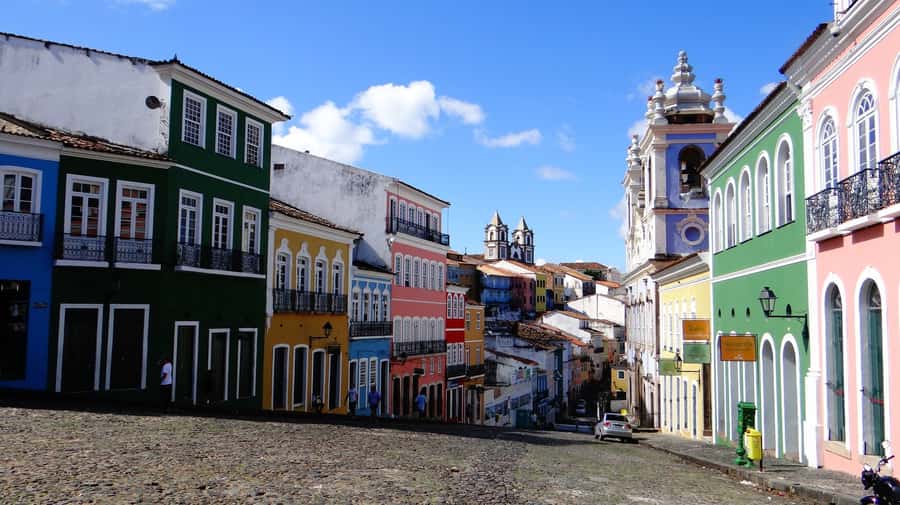
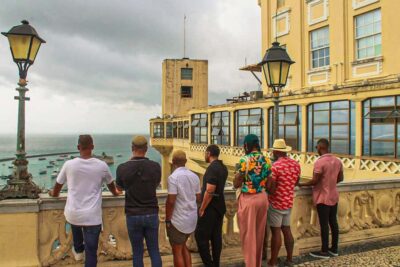
Salvador’s African heritage is not tucked away in a museum. It is part of the city center’s streets, music, faith, dance, and public life. This three-hour walk links the Cathedral Basilica, Terreiro de Jesus, the Cross of São Francisco, and Escola do Olodum to explain how African culture shaped Salvador and continues to shape it today.
I like the private-group format, which lets you ask direct questions and spend more time on subjects that matter to you. I also like the guides’ flexible approach. Sayuri, Eduardo, Aldison, Nilza, Facundo, and Carlos are among the guides praised by name for making the walk personal and easy to follow.
The main caution is value. This is a walking tour, and the formal route may finish at the Cross of São Francisco after three hours, though one booking ended after two. If the price is high for your dates, ask exactly how long the walk will last and whether an Afro-Brazilian Mass or museum visits are included.
In This Review
- Key points to know before you book
- Why Salvador’s African story belongs in the city center
- Meeting at Salvador Cathedral at 2 pm
- Terreiro de Jesus and the story of colonization
- The Cross of São Francisco and Black liberation
- Escola do Olodum and the meaning of Carnival
- The Afro-Brazilian Mass question
- A private tour with a changing guide team
- Is a three-hour walking tour good value?
- Who should book this Salvador African culture tour?
- Final verdict: book it for context, not a performance
- FAQ
- Where does the Salvador African Culture Tour begin?
- What time does the tour start?
- How long does the activity last?
- Which places are included?
- Is an Afro-Brazilian Mass included?
- What languages are available?
- Is this a private tour?
- Can I cancel the booking?
Key points to know before you book
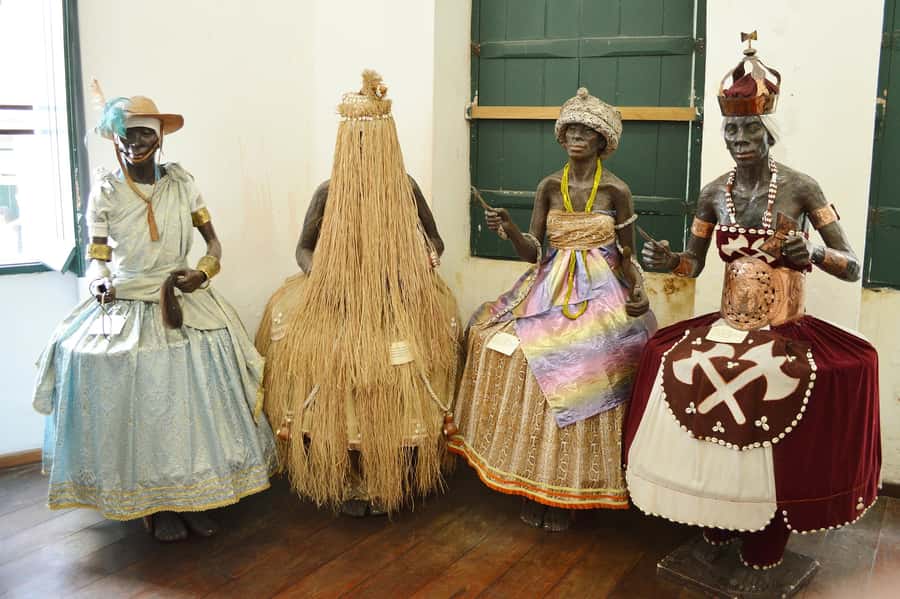
- Terreiro de Jesus sets the historical stage: Learn how Jesuit missions and Portuguese colonization shaped Salvador’s center.
- The Cross of São Francisco brings resistance into focus: Hear about a 19th-century men’s organization that supported Black Salvador residents in their fight for liberation.
- Samba and capoeira are treated as history, not just entertainment: The walk connects movement and music to Afro-Brazilian identity.
- Escola do Olodum explains Carnival’s wider role: This cultural and educational center shows how music, youth work, and Black cultural expression meet.
- Private guiding makes the subject easier to discuss: Your guide can adjust the conversation to your questions, from slavery and religion to Carnival and local food.
- Timing and inclusions need checking: The listed duration is three hours, but the route details do not fully explain the Afro-Brazilian Mass highlight.
Why Salvador’s African story belongs in the city center
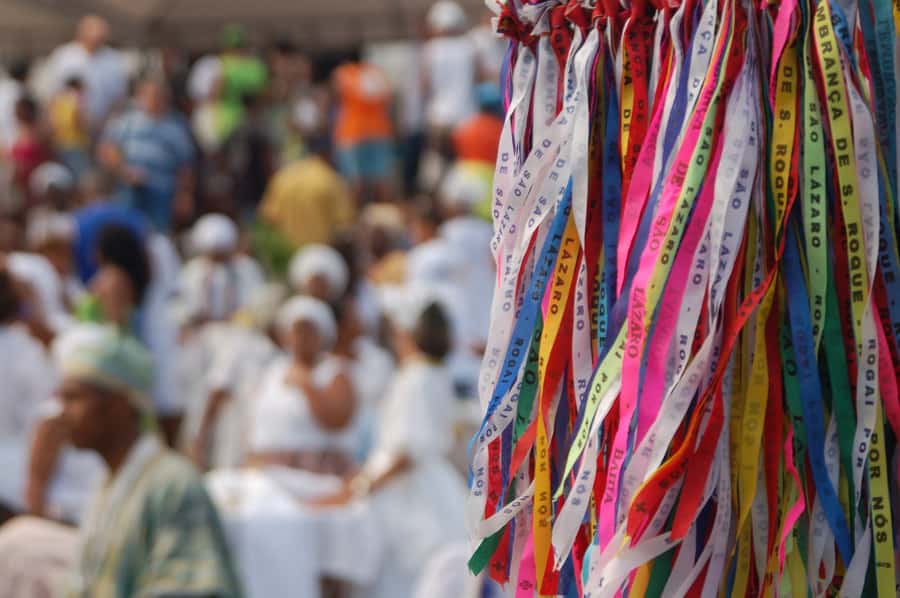
Salvador is one of the best places in Brazil to understand the country’s African inheritance. This tour begins in the historic center, where churches, colonial buildings, public squares, music groups, and Black cultural institutions sit close together.
That setting matters. You are not only hearing dates and names. You are looking at the places where colonial power, Catholic missions, forced labor, resistance, and later cultural renewal all met. The walk gives you a framework for understanding why Salvador feels different from other Brazilian cities.
The subject is not always comfortable. The route includes the effects of Portuguese colonization and the experience of Black Brazilians, with space for difficult topics such as slavery and prostitution. A good guide needs to be clear without turning suffering into a sightseeing prop. The strongest reports about this tour describe guides who handled those subjects with care and allowed time for questions.
I would book this early in a Salvador visit, not because it covers every major sight, but because it gives later visits more meaning. Music in a square, a religious ceremony, a Carnival rehearsal, or a plate of local food can make more sense after you understand the forces behind it.
Other Salvador days worth putting on the list:
- From Salvador: Schooner Tour to Frades Islands and Itaparica
★ 3.9 · 98 reviews - Afro-Brazilian Roots Private City Tour in Salvador
★ 4.7 · 88 reviews - Salvador Historic Walking Tour – Pelourinho
★ 4.8 · 62 reviews
Meeting at Salvador Cathedral at 2 pm
The starting point is in front of the Cathedral Basilica of San Salvador, at approximately -12.9728546, -38.5097046. The meeting time is 2 pm, so give yourself enough time to reach the cathedral and locate the guide in the busy historic center.
This is a useful meeting place because the cathedral sits directly in the area you will explore. There is no transfer by car or bus at the beginning, and the experience stays on foot. That keeps the outing simple, but it also means you should be ready for heat, sun, uneven pavement, and a steady walk through central Salvador.
The tour is offered in Spanish, Portuguese, or English. Since the subject involves colonial history, racial identity, religious practice, and local cultural terms, language choice matters. If you have a preference, select it carefully when booking. The private format should make it easier to ask for a slower explanation or clarification when a name or historical term is unfamiliar.
Terreiro de Jesus and the story of colonization
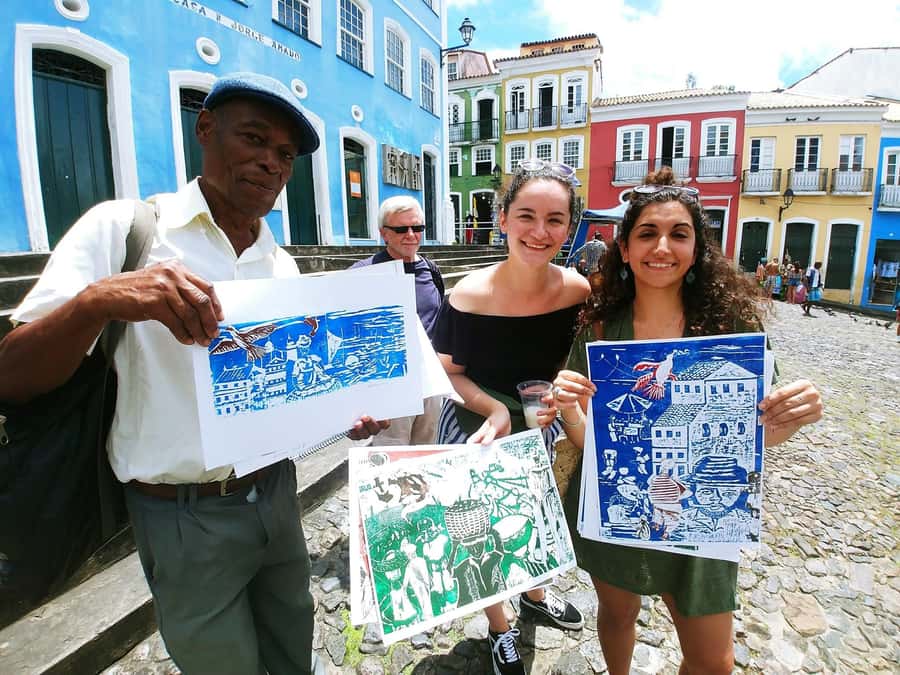
The first major stop is Terreiro de Jesus, a central square with strong links to the colonial development of Salvador. Here, the guide explains the work of the Jesuit missions and the wider role of Portuguese colonization in this part of Brazil.
This section is more useful than a quick architectural stop. Churches and grand public spaces can look beautiful while hiding the unequal system that created them. The point of the visit is to connect the buildings and square with the people who built, served, resisted, and lived around them.
The guide also discusses African figures and public personalities connected with Salvador. The provided route description does not name them in advance, so I would treat this as a chance to ask which local figures best represent the city’s African legacy.
This is where the private arrangement can pay off. You can steer the conversation toward religion, music, politics, daily life, or the experience of Black communities in Brazil. Several guide accounts describe a flexible style, with the guide asking what the group wanted to learn and adjusting the route or discussion around those interests.
Do not expect a full survey of Salvador’s colonial center in this one stop. The tour lasts three hours, and its purpose is the African cultural story rather than every church, museum, or viewpoint. Still, Terreiro de Jesus gives you the needed base: who controlled the city, how institutions worked, and why African cultural survival carries such weight.
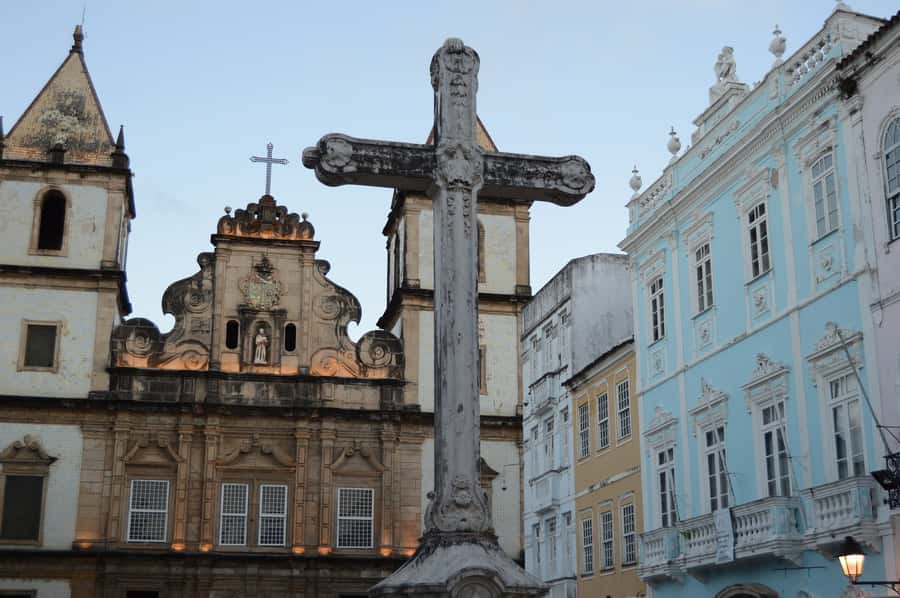
The Cross of São Francisco and Black liberation
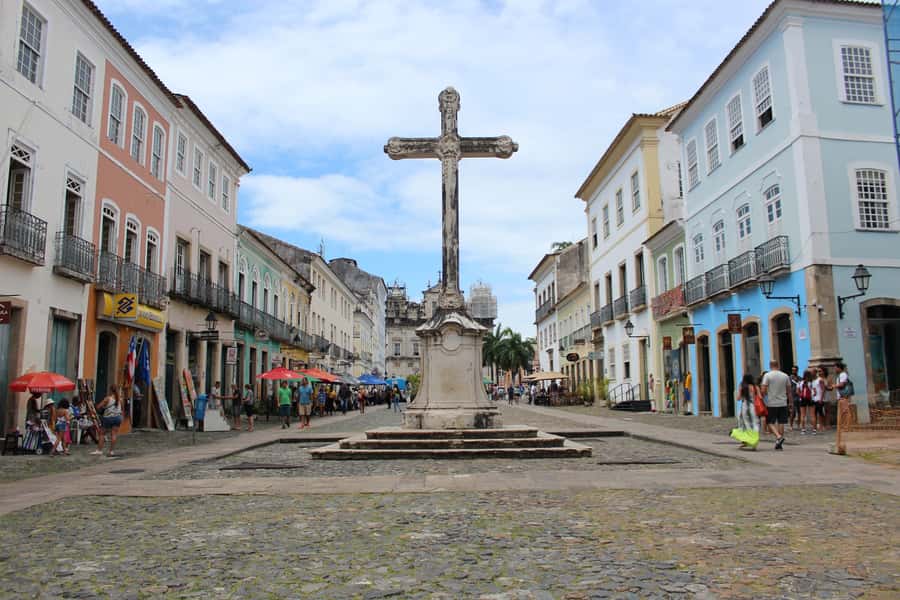
The walk continues to the Cross of São Francisco. Here, the discussion turns toward a 19th-century men’s organization created to help Salvador’s Black community in its struggle for liberation.
This is an important shift in the tour. The first part explains colonial structures. The Cross of São Francisco section looks at organized action and the ways Black residents supported one another. Ask the guide to explain the organization’s name, membership, and practical work, since those details are not included in the short description.
The stop also introduces samba and capoeira. That pairing is especially helpful because both are often reduced to colorful performance for visitors. The guide instead places them within a larger story of African cultural survival and public expression.
You may see or hear demonstrations of the movements in spirit, but the supplied details promise explanation of the dances, not a formal class or show. Set your expectations accordingly. The value is in understanding what these forms mean, not in getting a scheduled performance.
Capoeira, with its blend of movement, music, and social exchange, is one of the clearest examples of culture carrying history in the body. Samba, too, is more than a Carnival soundtrack. A guide who knows how to connect rhythm to community and identity can turn a familiar image into something more precise.
This is also a good point to ask about modern Salvador. The tour is not limited to the past, even though the stops are historic. You can ask how African traditions appear in present-day music, festivals, religion, and neighborhood life.
Same city, a completely different kind of day:
- Salvador: Praia Do Forte and Guarajuba Beach Day Trip
★ 4.1 · 56 reviews - Salvador: Cultural Treasure – Samba de Roda.
★ 4.9 · 51 reviews - Salvador: Walking Tour Through Pelourinho
★ 5.0 · 49 reviews - Salvador: 4-Hour Candomblé Mysteries Tour
★ 4.3 · 34 reviews
Escola do Olodum and the meaning of Carnival
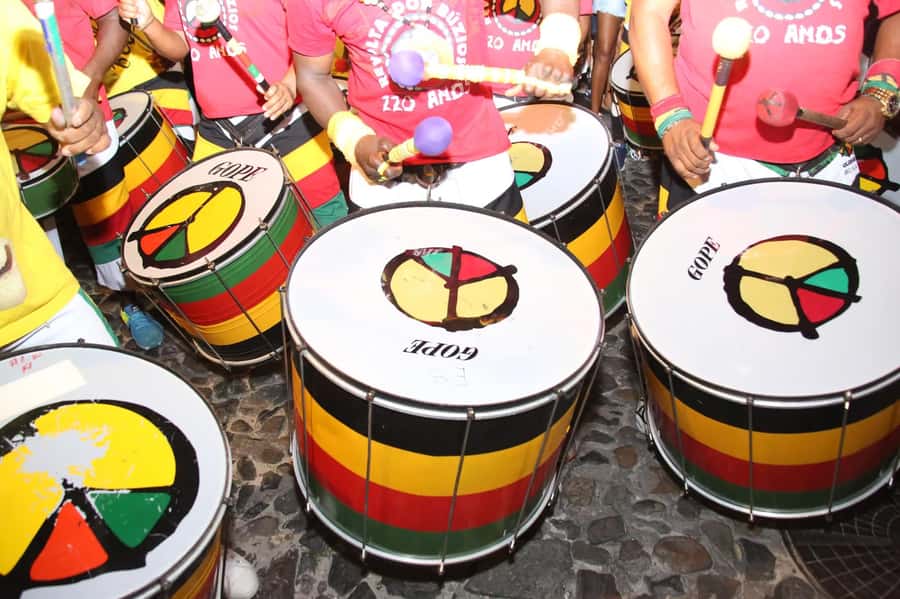
The final planned cultural stop is Escola do Olodum, a cultural and educational center connected with African descent. The guide uses it to explain the importance of Carnival in Salvador.
Olodum is a natural place to discuss Carnival because the festival is not simply a large party. In Salvador, music groups and Carnival organizations can carry statements about race, culture, pride, and public representation. At Escola do Olodum, the conversation moves from historical survival to active cultural production.
The word escola can mislead English speakers. Here, it does not mean an ordinary school visit in the narrow sense. It refers to a cultural and educational center, so ask what activities are taking place on the day and what parts of the building are open to your group.
The tour description does not promise a rehearsal, drumming lesson, or live performance. You may encounter a cultural setting connected with music and Carnival, but do not book this as a concert. Book it for context and conversation.
One particularly useful feature is the link between Carnival and education. The guide can explain why a music group may also have a social role, and why Carnival remains such an important public space for Afro-Brazilian expression. If you are visiting around Carnival, this stop may be especially useful. One guide, Sayuri, has helped visitors with Salvador Carnival advice beyond the time spent together, including ways to make sense of the festival.
The Afro-Brazilian Mass question
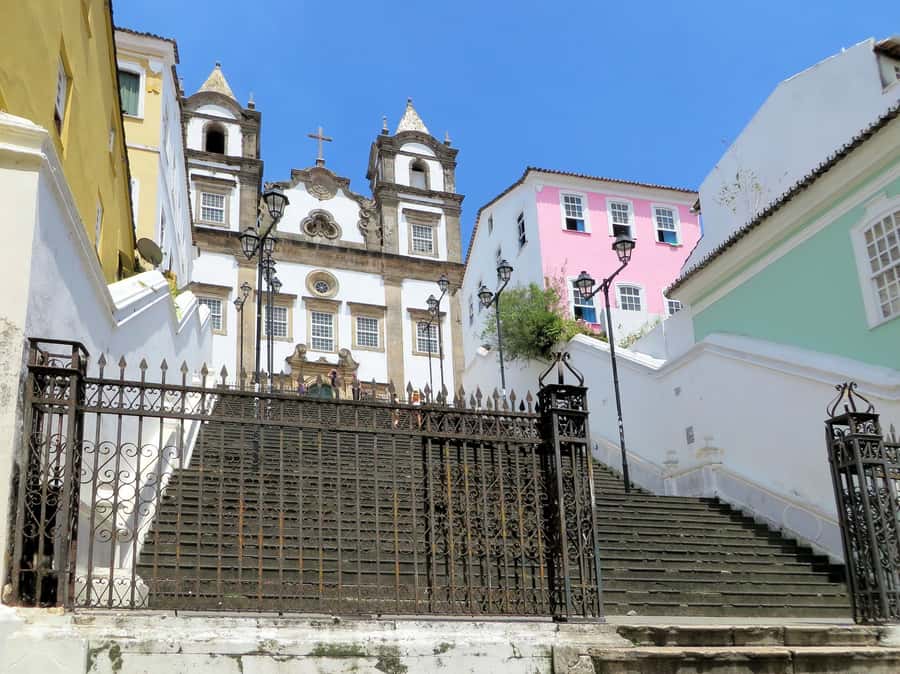
Afro-Brazilian Mass appears among the tour highlights, but the detailed route does not clearly state that the group attends a scheduled Mass during the three-hour walk. The listed itinerary instead ends at the Cross of São Francisco after the visit to Escola do Olodum.
That distinction matters. A Mass is tied to a fixed religious schedule, and a walking tour starting at 2 pm cannot guarantee one without a date-specific arrangement. If this is the main reason you are booking, ask the provider whether a service is included on your chosen day or whether the guide only discusses Afro-Brazilian religious traditions.
This is not a small technical point. A conversation about faith is different from attending worship. You should know which experience you are paying for before you arrive.
A private tour with a changing guide team
This is sold as a private-group experience, but the guide is not fixed in the supplied details. Names associated with strong guide feedback include Eduardo, Sayuri or Sayurin, Aldison or Adilson, Nilza, Facundo, and Carlos.
That range tells you two things. First, the team appears to have several guides who can lead the experience in English, Portuguese, or Spanish. Second, you should not assume you will get a particular person unless the booking confirms it.
The best guide accounts share a few traits: clear explanations, patience, warmth, and a willingness to let the group shape parts of the walk. Eduardo is praised for linking Salvador’s story with wider Brazilian history. Sayuri is described as attentive before and after the activity, with helpful Carnival advice. Aldison is praised for making the city feel like it was being introduced by a friend.
Those are useful qualities for this subject. You want a guide who can explain difficult material without rushing, and who can answer questions without turning the walk into a lecture. A private group also works well for families or friends with mixed interests. One person can ask about architecture while another asks about music, slavery, religion, or Carnival.
One account describes a guide adding three museums to the experience. Treat that as an example of flexibility, not a guaranteed part of every booking. The formal description names Terreiro de Jesus, the Cross of São Francisco, and Escola do Olodum, so confirm any museum visits before you count them as part of the value.
Is a three-hour walking tour good value?
No price is provided here, so I cannot give a fair cost comparison in Brazilian reais. The value depends on the rate shown for your date, the final duration, and how much you want a private guide rather than a basic self-guided walk.
The route itself uses central sites, and some museums may be free. One detailed account felt the price was too high for a walking tour that mainly passed through free museums, especially after the experience ended at two hours. That is the key concern to keep in mind.
A private guide can still justify a higher price if you use the time well. Ask questions, request context on subjects you care about, and confirm whether the guide will include museums, Carnival advice, or a Mass. If you simply want to see the Cross of São Francisco and Terreiro de Jesus, you may find a general city walk better value.
The booking terms are useful for uncertain plans. You can cancel up to 24 hours ahead for a full refund, and reserve now while paying later. Those policies do not change the tour’s content, but they reduce the risk of committing before your Salvador schedule is settled.
Who should book this Salvador African culture tour?
I would choose this walk if you want history explained through Salvador’s Black cultural life rather than a checklist of churches and viewpoints. It suits first-time visitors who want a strong introduction, as well as returning visitors who want to ask more focused questions.
It is especially suitable for you if:
- You want a private guide and conversation instead of a large group.
- You care about the links between colonization, slavery, resistance, music, and Carnival.
- You want to explore in English, Spanish, or Portuguese.
- You prefer a central walking route with no coach transfer.
- You want to shape the discussion around your own interests.
- You are visiting during Carnival season and want cultural context.
I would hesitate if you need guaranteed live music, a capoeira class, a formal museum itinerary, or a confirmed Afro-Brazilian Mass. Those elements are not fully specified. I would also pause if the listed price is far above other central walking tours and the provider cannot confirm the full three hours.
Final verdict: book it for context, not a performance
This Salvador African Culture Tour offers a useful way to read the city. Terreiro de Jesus explains colonial power, the Cross of São Francisco introduces Black organization and liberation, and Escola do Olodum connects African heritage with Carnival and education.
Its strongest feature is the guide-led conversation. Names such as Eduardo, Sayuri, Aldison, Nilza, Facundo, and Carlos are linked with patient, personal guiding, though the exact guide depends on availability. The private format gives you room to ask the questions that a standard sightseeing tour may skip.
Book it if the price feels fair for private guiding and the provider confirms a full three-hour experience. Before paying, ask about the Afro-Brazilian Mass, museum stops, and exact end time. With those points clear, this can be a thoughtful introduction to the African culture that shapes Salvador’s streets, sounds, and public life.
FAQ
Where does the Salvador African Culture Tour begin?
The meeting point is in front of the Cathedral Basilica of San Salvador in Salvador’s historic center. The listed coordinates are -12.972854614257812, -38.50970458984375.
What time does the tour start?
The tour begins at 2 pm.
How long does the activity last?
The stated duration is three hours. One booking ended after two hours, so ask the provider to confirm the expected finishing time before you go.
Which places are included?
The route includes Terreiro de Jesus, the Cross of São Francisco, and Escola do Olodum. The tour ends at the Cross of São Francisco according to the detailed route description.
Is an Afro-Brazilian Mass included?
An Afro-Brazilian Mass is listed as a highlight, but the detailed route does not confirm attendance at a scheduled service. Ask the provider whether one is included on your chosen date.
What languages are available?
The tour is offered in English, Portuguese, and Spanish.
Is this a private tour?
Yes. The activity is for a private group.
Can I cancel the booking?
You can cancel up to 24 hours in advance for a full refund. The reserve-now, pay-later option is also available.
Just added around Salvador
- Salvador: Schooner Cruise with Pickup and Itaparica Stop★ 3.8 · 5 reviews
- Salvador: Walking Tour Through Pelourinho★ 5.0 · 49 reviews
- Salvador: Cultural Treasure – Samba de Roda.★ 4.9 · 51 reviews
- Salvador: Traditional Drumming and Percussion Workshop★ 4.4 · 10 reviews
- Salvador: CAPOEIRA CLASS – CULTURAL★ 4.6 · 13 reviews
- Salvador: Cultural Night of Capoeira, Samba, and Drumming★ 4.9 · 17 reviews
- Salvador: 4-Hour Candomblé Mysteries Tour★ 4.3 · 34 reviews
- Salvador: Capoeira Class at Mestre Bimba’s 1st Ever School.★ 4.9 · 34 reviews
Salvador Tours, compared.

Afro-Brazilian Roots Private City Tour in Salvador
Read our review →

Capoeira Class at Mestre Bimba’s 1st Ever School.
Read our review →Browse the lists this tour appears in