
Reviewed · SAMBA SHOWS
Salvador: Cultural Night of Capoeira, Samba, and Drumming
Salvador’s most memorable cultural show may happen in a working Capoeira school, not a polished theater. At Associação de Capoeira Mestre Bimba, you watch Capoeira rodas, Samba, Maculelê, drumming, singing, and acrobatics in the place linked to Mestre Bimba, who founded the school in 1937.
I like two things right away: the setting has real cultural weight, and the performers include people of different ages and genders rather than only professional stage artists. The fast Capoeira exchanges, live percussion, and spontaneous feel give the evening a pulse that a scripted dance show often lacks.
The trade-off is just as clear. This is not a tightly rehearsed production, so some parts may feel uneven. The room can also get very hot, and the advertised length varies between one hour and one and a half hours. Bring patience, comfortable clothes, and a willingness to watch a living practice rather than a perfectly packaged concert.
In This Review
- Key points to know before booking
- Why this Capoeira school matters
- Arriving at Largo do Terreiro de Jesus
- The Capoeira roda gets the evening moving
- Samba brings a different kind of rhythm
- Maculelê adds sticks, speed, and acrobatics
- Drums and live music hold it together
- What $30 gets you
- Timing, comfort, and the one-hour question
- Who will enjoy this most
- Booking and cancellation details
- Should you book this Salvador cultural night?
- FAQ
- Where does the Cultural Night take place?
- Is transportation to the venue included?
- What nearby landmarks can help me find the venue?
- How long does the experience last?
- What does the ticket include?
- Is food or drink included?
- Can I cancel for a full refund?
Key points to know before booking
- Historic Capoeira setting: The performance takes place at the first Capoeira school in Brazil, founded in 1937 by Mestre Bimba.
- Several Brazilian traditions in one night: You’ll see Capoeira, Samba, Maculelê, traditional drumming, live music, and acrobatics.
- Organic rather than polished: The event reflects an association’s cultural practice, so the quality and pacing may vary from segment to segment.
- A hot room is possible: Wear breathable clothes and comfortable shoes, especially during the active Capoeira and acrobatic sections.
- Good value at $30: The ticket covers the complete cultural program, but food, drinks, and transport are extra.
- Easy fit for a Salvador evening: The meeting point is at Largo do Terreiro de Jesus, near Ó Paí Ó Restaurante and São Domingos Gusmão Church.
Why this Capoeira school matters
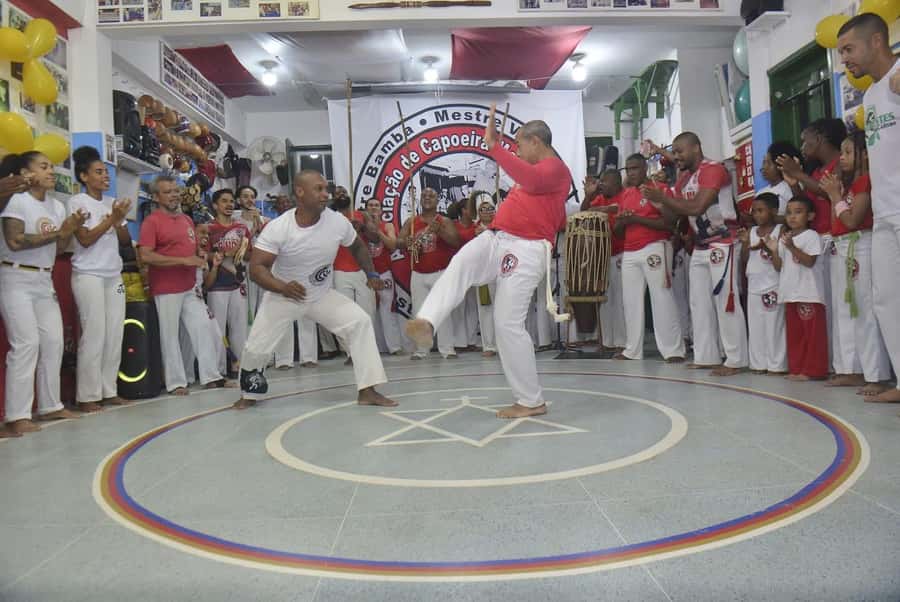
The location is the heart of the experience. Associação de Capoeira Mestre Bimba is tied to Mestre Bimba, the creator of Capoeira Regional and the school’s founder in 1937. That gives the evening more meaning than a generic folklore performance arranged in a hotel or restaurant.
Capoeira is not simply a dance. It combines martial movement, music, rhythm, balance, play, and alertness. Two participants face each other inside the roda, or circle, while musicians and singers help set the pace. The movements can shift quickly from low, controlled positions to sudden kicks, spins, and acrobatics.
At this school, you see Capoeira in a place that honors its Brazilian roots. The setting also connects the performance to the long story of Afro-Brazilian culture and cultural resistance. You do not need prior knowledge to follow the action. The circle, the music, and the reactions of the people around it explain much of what is happening.
I especially like that the program is presented as an organic celebration, not a stage show built around a fixed routine. That can make the experience feel more honest. It also means you should not arrive expecting every transition to be smooth or every act to have the precision of a touring theater company.
More samba shows in Salvador:
- Salvador: Cultural Treasure – Samba de Roda.
★ 4.9 · 51 reviews - Rio de Janeiro: Beginner Samba Lesson in Ipanema
★ 4.9 · 1,071 reviews - Rio: Pub Crawl in Lapa with Cachaça Tasting and Live Samba
★ 4.7 · 881 reviews
Arriving at Largo do Terreiro de Jesus
You make your own way to Associação de Capoeira Mestre Bimba. There is no pickup service, so this is not the best choice if you want door-to-door evening transport arranged for you.
The meeting point is in the Largo do Terreiro de Jesus area. Ó Paí Ó Restaurante and São Domingos Gusmão Church are useful nearby landmarks when you are orienting yourself. Keep the exact venue name handy, since the attraction is a specific association rather than a broad neighborhood meeting point.
Because the program takes place at night, give yourself time to locate the entrance without rushing. The supplied information does not specify a hotel pickup, group size, seating plan, or exact entrance procedure, so check the confirmed meeting instructions before you leave.
The location works well as part of an evening in Salvador’s historic center. You can combine the performance with dinner nearby, but food and drinks are not included in the $30 ticket. Plan those separately instead of assuming refreshments are part of the admission.
The Capoeira roda gets the evening moving
Capoeira is the main reason to book this event. The action begins with quick, intense movement and a strong sense of rhythm. You might see players of different ages and backgrounds take part, which helps show that Capoeira is a community practice, not only a performance for visitors.
Watch the feet and the hands as much as the dramatic kicks. Capoeira depends on timing, balance, feints, and reading the other person’s movement. A player may crouch low, circle, turn upside down, or launch into an acrobatic move, all while staying connected to the beat.
The live singing and drumming matter here. They are not just background sound. The music helps shape the tempo and gives the roda its social structure. As the rhythm changes, the movement can become more playful, more forceful, or more acrobatic.
This section is also where the informal nature of the evening becomes most obvious. One exchange may be thrilling, while another may feel less polished. I see that as part of the bargain. You are watching a real cultural form with spontaneous participation, not a carefully edited sequence in which every performer hits the same mark.
If you have back problems, this activity is not suitable. Pregnant women are also advised not to attend. Even if you are only watching, the close quarters and active movement make comfortable shoes and loose clothing sensible.
Samba brings a different kind of rhythm
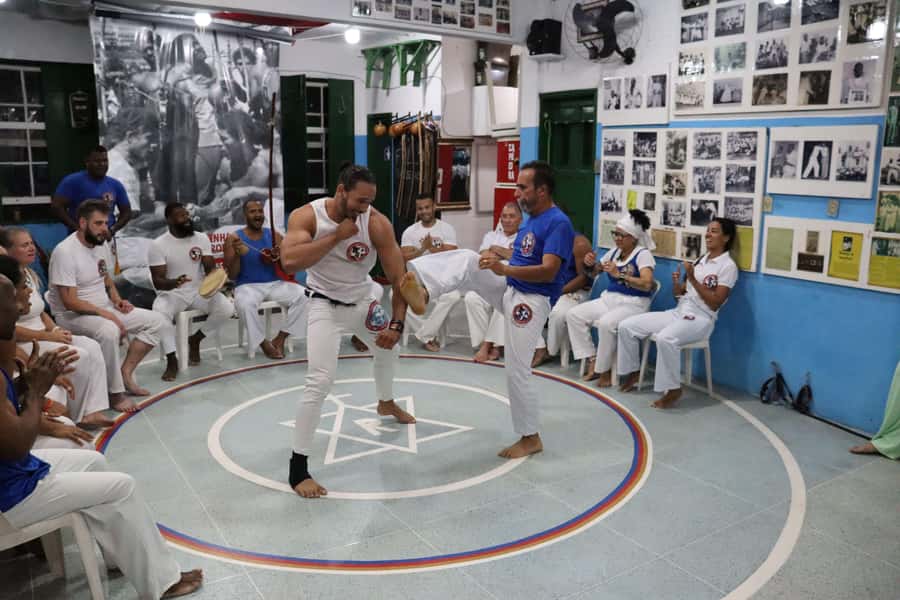
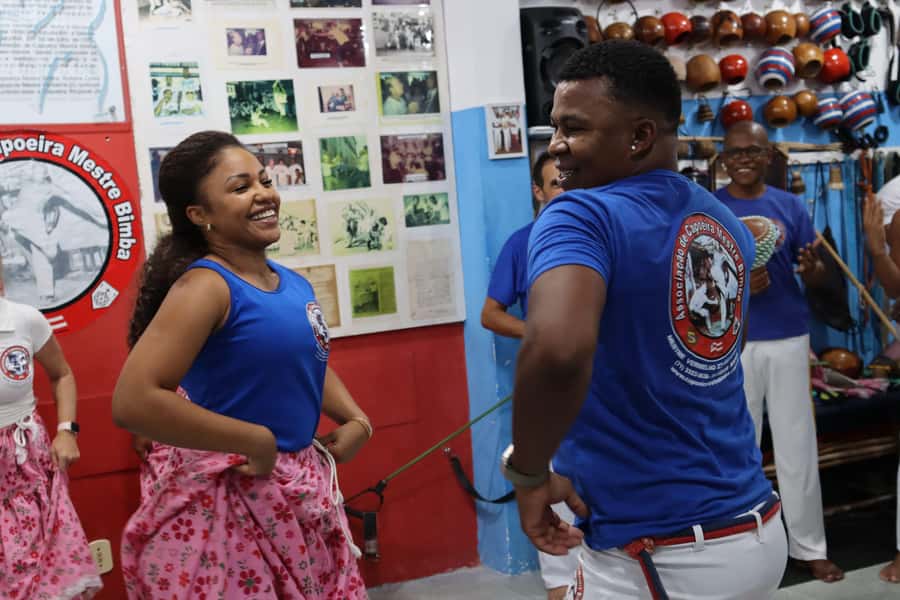
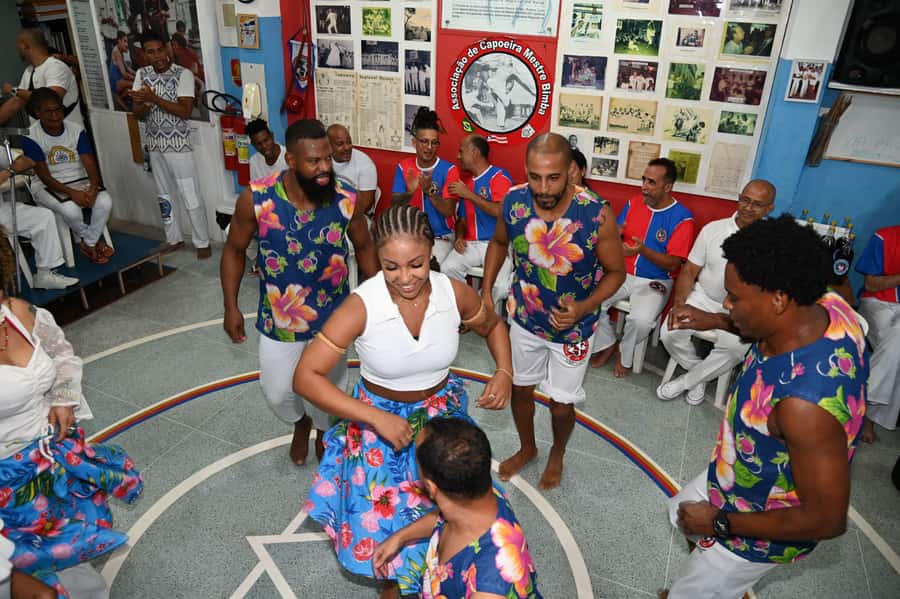
After the martial focus of Capoeira, Samba changes the mood. Samba is more openly dance-driven, with movement that follows the beat and invites a strong response from the room. The music, footwork, and body movement create a clear contrast with the low, watchful exchanges of the roda.
The Samba section is part of the reason this makes a good introduction to Brazilian performance traditions. You do not need to choose between a Capoeira demonstration and a dance show. In one short evening, you get several forms that use rhythm and movement in different ways.
The program includes men and women, and the participation of people from young to old helps give the event a community feel. You may notice that the point is not to present one ideal dancer. It is to show how these traditions are practiced and shared.
Do not expect a long Samba revue with costume changes and elaborate scenery. The supplied details point to a compact cultural program inside a Capoeira association. If you want scale, production effects, and formal choreography, this may feel modest. If you want music and movement in a local setting, the modesty is part of its appeal.
A few more Salvador trips to weigh up
- Salvador by Night: Cultural Dinner and Show
★ 4.7 · 27 reviews - Salvador by Night: Cultural Show and Dinner.
★ 4.4 · 17 reviews - Salvador by Night: Pelourinho & Old Town Tour
★ 4.3 · 8 reviews - Rio de Janeiro: Sunset Sailing Tour
★ 4.8 · 994 reviews
Maculelê adds sticks, speed, and acrobatics
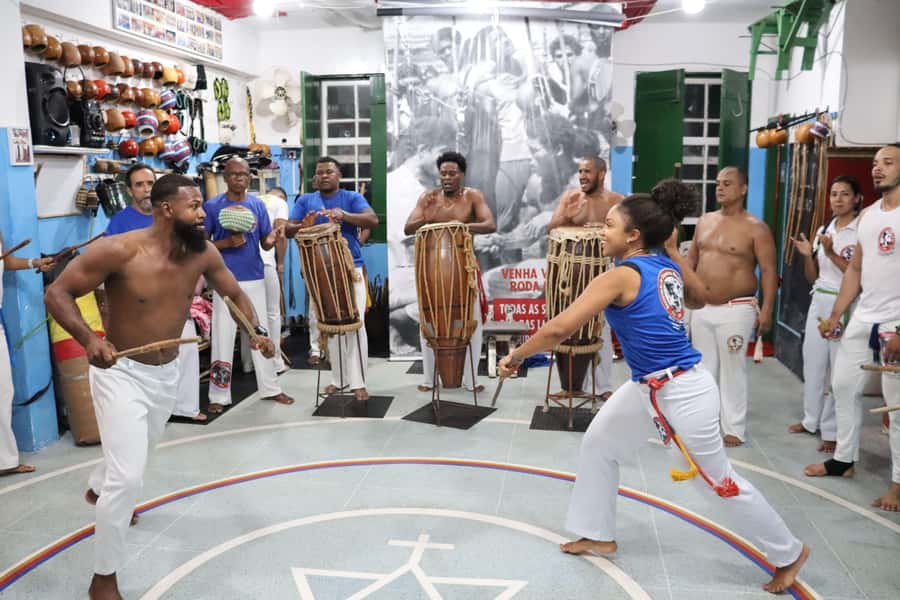
Maculelê brings another change in movement and sound. It is known for rhythmic stick play, coordinated strikes, and dramatic physical action. Here, it forms part of the broader program alongside Capoeira, Samba, drumming, and live music.
The acrobatic element adds visual punch. You may see fast movement, balance work, and body control that make the performance easy to follow even if you do not understand Portuguese. The rhythm tells you when to watch closely.
Maculelê also helps explain why this is more than a single-discipline Capoeira demonstration. The event presents a wider view of Brazilian cultural performance, with each section offering a different relationship between music and movement.
As with Capoeira, the result may not be perfectly uniform. The point is participation and tradition, not a flawless commercial spectacle. I would book this with the right expectation: you are seeing skill, practice, and community energy in a compact format.
Drums and live music hold it together
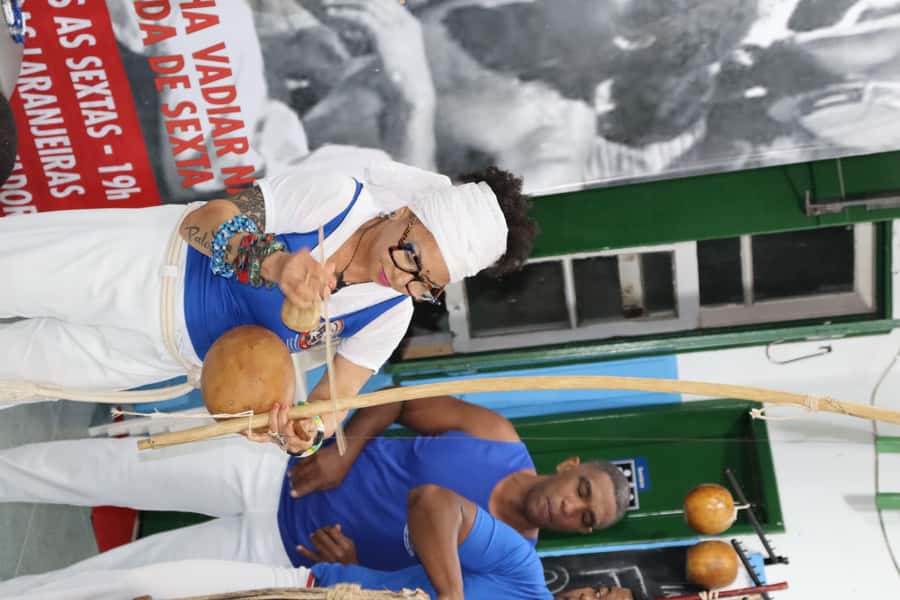
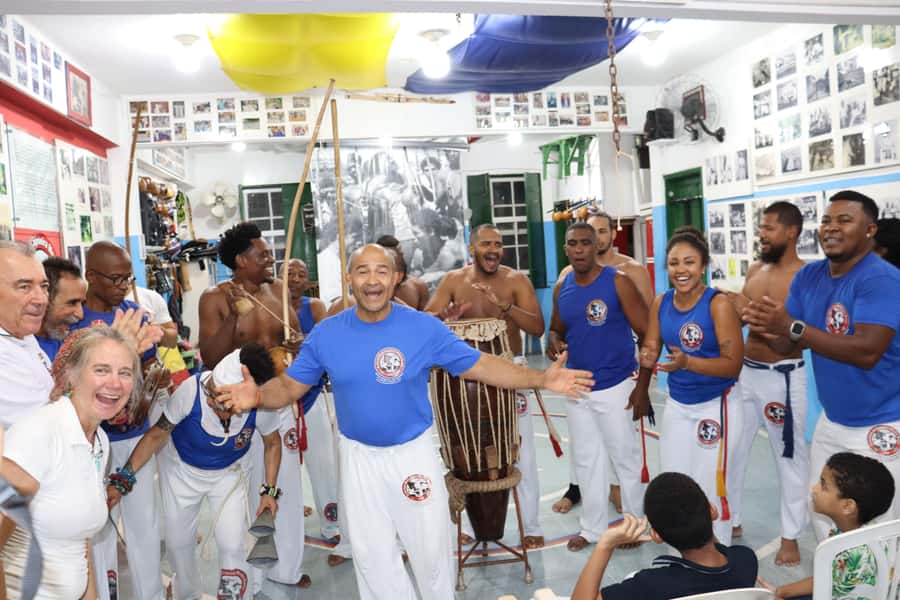
Traditional drumming is one of the strongest parts of the evening because it connects the separate performances. The beat supports the Capoeira roda, gives Samba its drive, and adds force to Maculelê.
Singing is also part of the sound. You may not understand every word, but the call-and-response quality and repeated rhythms make the performance accessible. This is a good reason not to treat the event as a silent demonstration of movement. The music carries much of the story.
The program’s musical side is especially useful for anyone who wants context for Salvador’s Afro-Brazilian culture. The event does not promise a lecture, museum display, or formal history lesson. Instead, you learn through sound, repetition, physical skill, and the way performers work together.
One practical point: the room can become hot. The combination of people, movement, drumming, and limited information about the venue’s cooling makes breathable clothing a smart choice. Comfortable shoes are listed as essential, though you are watching rather than taking a class.
What $30 gets you
At $30 per person, the price is reasonable if you want several cultural forms in one evening and value the historic setting. Your ticket includes entry, Capoeira, Samba, Maculelê, traditional drumming, live music, and acrobatics.
You are not paying for a meal, drinks, or transportation. That keeps the ticket simple, but your real evening cost will be higher once you add the trip to the venue and dinner or refreshments. The experience is best judged against a short live cultural performance, not against a full evening package.
The value also depends on what you want from a show. If you prefer a polished production with fixed choreography, clear stage lighting, and a predictable running time, $30 may feel less compelling. If you want to see Capoeira in a historic school and hear several connected traditions performed by an association, the setting adds value.
A small extra touch may come afterward. One account describes receiving a refreshing treat after the show, but this should not be treated as a guaranteed inclusion because food and drinks are officially not part of the ticket. Plan on buying your own refreshments and regard anything offered afterward as a bonus.
Timing, comfort, and the one-hour question
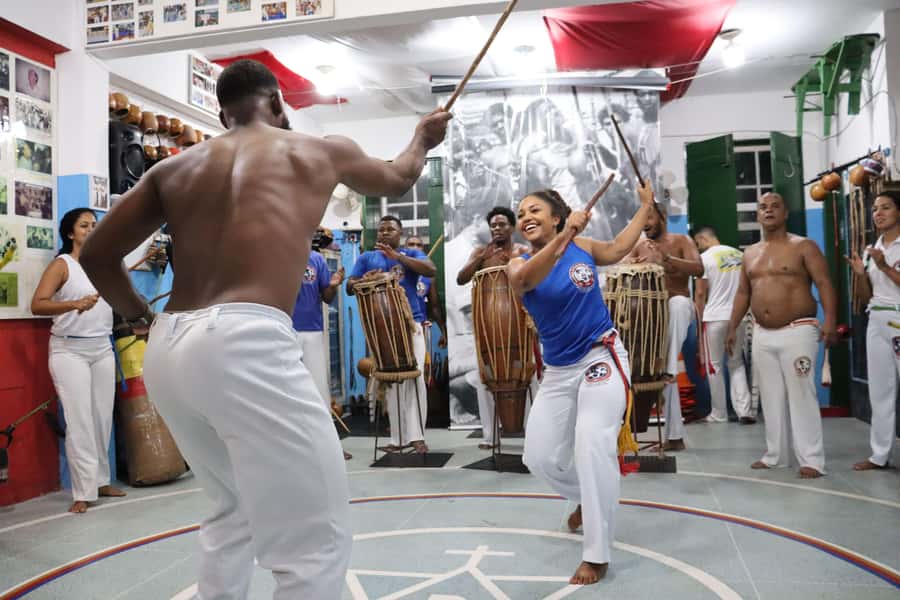
The experience is advertised as one hour, while the detailed program describes about one and a half hours. That difference is worth noting when planning dinner, transport, or another evening activity. Check the available starting time and allow a little breathing room around the performance.
The show starts on time according to the supplied experience details, which is useful if you have a later reservation. Still, I would not schedule a tight connection immediately afterward. An informal cultural program can have transitions that are less exact than a theater production.
Wear light, comfortable clothing. You may find the room warm, so avoid heavy layers. Comfortable shoes are recommended, and smoking is not allowed.
The event is offered with live guidance in English and Portuguese. The information does not identify individual guides by name, so you should not book it expecting a specific named instructor or presenter. The music and action remain central even if your language skills are limited.
Who will enjoy this most
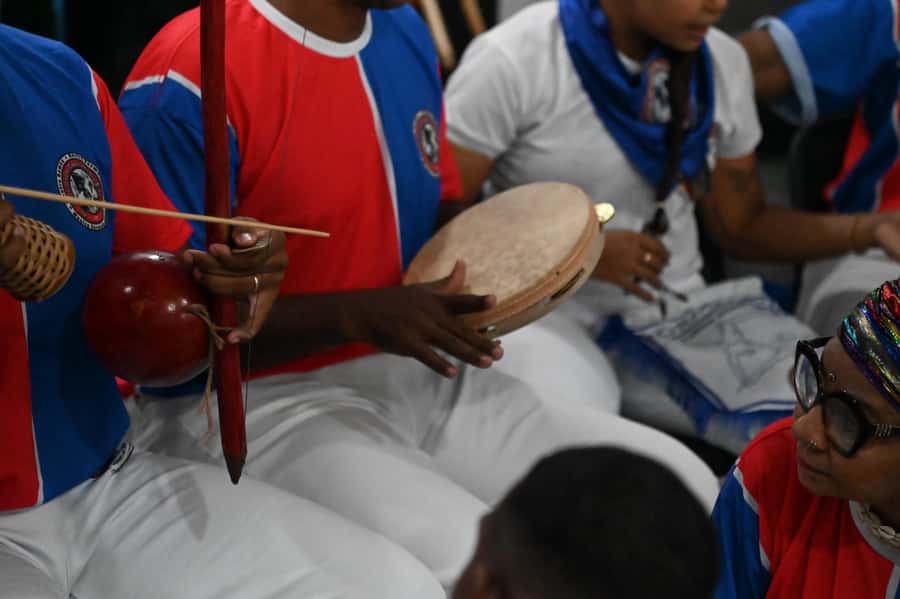
I would recommend this to you if you want a direct encounter with Salvador’s cultural life rather than a general dance performance. It suits people interested in Capoeira, Afro-Brazilian traditions, live percussion, and informal local arts.
It is also a good fit if you have only one evening available and want several styles in one sitting. The combination of Capoeira, Samba, Maculelê, drumming, singing, and acrobatics gives you plenty to watch without committing to a long event.
Families with older children may find the movement and rhythm engaging, but the available information does not set a minimum age. Since the room may be hot and the action can be intense, consider your group’s comfort carefully.
I would be more cautious if you need a fully accessible, quiet, cool, or highly structured venue. The activity is specifically not suitable for pregnant women or people with back problems. It is also not a hands-on class, so anyone hoping to learn Capoeira techniques should look for a separate lesson.
Booking and cancellation details
You can reserve now and pay later, which helps if your Salvador schedule is still changing. Free cancellation is available up to 24 hours before the activity for a full refund.
The experience provider is Associação de Capoeira Mestre Bimba. Since no pickup is offered, confirm how you will reach Largo do Terreiro de Jesus before booking. Nearby reference points include Ó Paí Ó Restaurante and São Domingos Gusmão Church.
Should you book this Salvador cultural night?
Book it if you want authentic atmosphere over polished theater. The historic Mestre Bimba connection, live drumming, fast Capoeira rodas, and mix of ages make this a meaningful way to meet Salvador’s cultural traditions in person.
Skip it if you need a tightly timed, air-conditioned production with guaranteed uniform choreography. The room may be hot, the program can feel uneven, and the one-hour versus one-and-a-half-hour timing should be clarified before you plan the rest of your night.
For $30, I think it is a strong choice for curious visitors who want more than a staged dance number. Wear cool clothes, arrange your own transport, leave room for a little unpredictability, and let the music explain why Capoeira belongs at the center of this evening.
FAQ
Where does the Cultural Night take place?
It takes place at Associação de Capoeira Mestre Bimba in Salvador, near Largo do Terreiro de Jesus.
Is transportation to the venue included?
No. Pickup service and transportation are not included, so you need to make your own way to the meeting point.
What nearby landmarks can help me find the venue?
Ó Paí Ó Restaurante and São Domingos Gusmão Church are listed as nearby landmarks in Largo do Terreiro de Jesus.
How long does the experience last?
The activity is advertised as one hour, while the detailed program lists the dance and concert portion as one and a half hours. Check the confirmed timing when you book.
What does the ticket include?
The ticket includes entry, Capoeira, Samba, Maculelê, traditional drumming, live music, and acrobatics.
Is food or drink included?
No. Food and drinks are not included, although a refreshing treat may sometimes be offered afterward.
Can I cancel for a full refund?
Yes. You can cancel up to 24 hours in advance for a full refund. You can also reserve now and pay later.
Just added around Salvador
- Salvador: Schooner Cruise with Pickup and Itaparica Stop★ 3.8 · 5 reviews
- Salvador: Walking Tour Through Pelourinho★ 5.0 · 49 reviews
- Salvador: Cultural Treasure – Samba de Roda.★ 4.9 · 51 reviews
- Salvador: Traditional Drumming and Percussion Workshop★ 4.4 · 10 reviews
- Salvador: CAPOEIRA CLASS – CULTURAL★ 4.6 · 13 reviews
- Salvador: 4-Hour Candomblé Mysteries Tour★ 4.3 · 34 reviews
- Salvador: Capoeira Class at Mestre Bimba’s 1st Ever School.★ 4.9 · 34 reviews
- Salvador, Bahia: A amazing Walking Tour!★ 5.0 · 14 reviews
Samba Shows, compared.
Pub Crawl in Lapa with Cachaça Tasting and Live Samba
Read our review →
Carnival Backstage Tour at Samba City with Cocktail
Read our review →
Santa Teresa, Lapa, and Cinelândia with Tram Ride and Selarón Steps
Read our review →
Ginga Tropical – Brazilian Samba and Folklore Show
Read our review →
Pedra do Sal: Live Samba Night with Local Guide & Drink
Read our review →Browse the lists this tour appears in