
Reviewed · WALKING TOURS
Salvador, Bahia: A amazing Walking Tour!
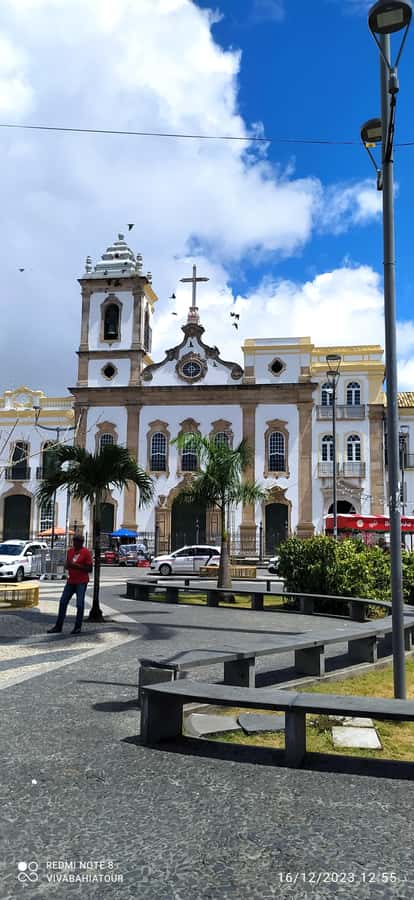
Salvador’s past comes alive on foot, in a city of colorful colonial buildings, narrow streets, church bells, drum rhythms, and strong Afro-Brazilian traditions. This private tour links major sights with the stories that give them meaning, from Rua Chile, often described as Brazil’s first street, to Pelourinho and the Cathedral Basilica.
I especially like the private format, which lets you ask questions and set the pace, and the multilingual guide service, available in seven languages. The local drink tasting at O Cravinho is another nice touch. The main drawback is the price: at $141 per person, this is a premium three-hour walk, and museum or cultural-space tickets cost extra.
In This Review
- Key points at a glance
- Starting at Elevador Lacerda
- Rua Chile and the colonial center
- Cathedral Basilica of Salvador
- Nossa Senhora do Rosário dos Pretos and Afro-Brazilian traditions
- O Cravinho and a taste of Bahia
- Pelourinho, music, and popular culture
- Santo Antônio Além do Carmo and the walk back
- What the $141 price gets you
- Guide languages and the private format
- Who should book this walk
- Should you book the Salvador walking tour?
- FAQ
- Where does the tour start and finish?
- How long does the experience last?
- Is the tour private?
- Which languages are available?
- Are Elevador Lacerda and Cathedral Basilica tickets included?
- Are museums and cultural spaces included?
- Is local food or drink included?
Key points at a glance
- A private walk through Salvador’s historic center: You explore with your own group rather than joining a large shared tour.
- Rua Chile and Elevador Lacerda: The route begins at one of Salvador’s best-known landmarks and follows the old colonial center.
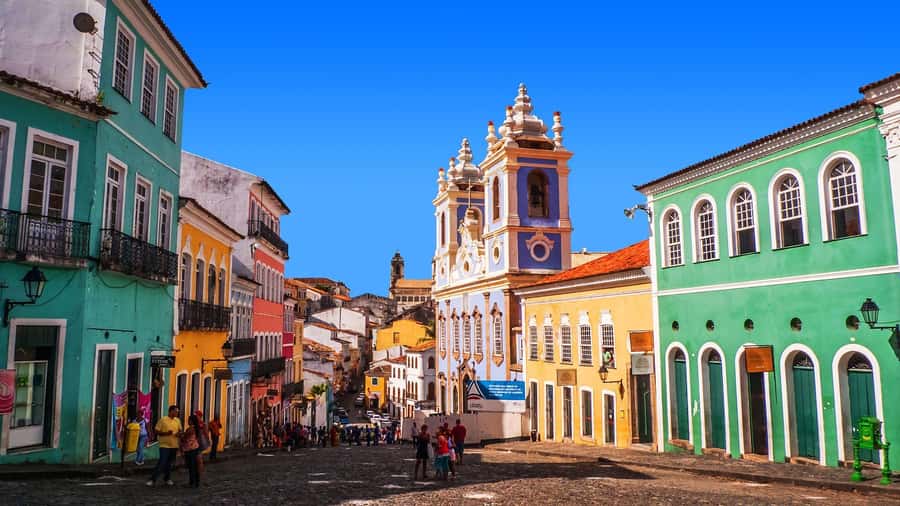
- Pelourinho’s music and culture: Expect stories connected with Olodum, Michael Jackson, and Paul Simon.
- Churches and colonial buildings: The Cathedral Basilica and Nossa Senhora do Rosário dos Pretos help explain Salvador’s religious and social past.
- A taste of Bahia: O Cravinho includes local alcoholic and non-alcoholic drink tasting.
- Seven guide languages: You can request Dutch, French, English, Portuguese, Spanish, German, or Italian.
Starting at Elevador Lacerda
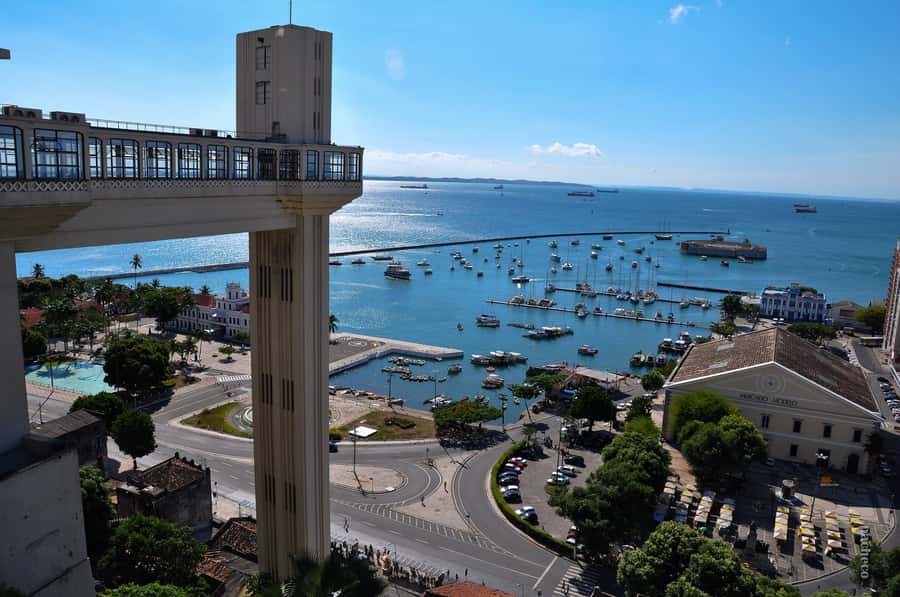
The tour begins at Elevador Lacerda, the famous public elevator connecting Salvador’s Lower City with the Upper City. It is both a useful piece of urban transport and one of the city’s signature sights.
Starting here gives you an immediate sense of Salvador’s unusual layout. The city rises sharply above the bay, and the elevator has long linked the commercial waterfront with the historic district above. Your guide leads the first part of the visit and explains the setting before the walk continues.
Tickets to Elevador Lacerda are included, so you do not need to arrange that separately. The elevator itself is not the main event, but it gives the tour a strong opening and helps you understand how Salvador’s two levels fit together.
I would arrive ready for sun and walking. Sunglasses, a hat, and sunscreen are specifically recommended. Comfortable shoes matter more than dressing up, since the route includes narrow streets, uneven historic areas, and several walking sections.
A few more Salvador trips to weigh up
- Salvador Historic Walking Tour – Pelourinho
★ 4.8 · 62 reviews - Salvador: Walking Tour Through Pelourinho
★ 5.0 · 49 reviews - Rio de Janeiro: Rocinha Favela Walking Tour with Local Guide
★ 4.8 · 3,052 reviews
Rua Chile and the colonial center
From Elevador Lacerda, the route moves into the old center and along Rua Chile. This street is presented as the first street in Brazil, and its buildings connect Salvador’s colonial past with later government and civic life.
The Rio Branco Palace is one of the important buildings highlighted along the way. Rather than treating the street as a simple photo stop, the guide can explain how the buildings relate to Salvador’s role during the colonial period and the years when the city served as Brazil’s capital.
This is where a private guide has real value. The facades may look impressive on their own, but the details can be easy to miss without context. Ask about the buildings, the city’s former political importance, and how the Upper City developed around government, religion, and trade.
The route is not designed as a museum-heavy program. It is a street-level introduction to Salvador, so you spend more time seeing the city in motion and less time indoors. If you want long visits to every museum, this tour will feel too short. If you want an efficient first look at the center, the arrangement makes sense.
Cathedral Basilica of Salvador
The Cathedral Basilica is one of the main interior visits. You receive admission and a guided visit, with about 30 minutes assigned to this part of the experience.
The cathedral gives the tour a quieter pause after the streets. Its religious art and architecture help explain the role of Catholic institutions in colonial Salvador. Your guide can also place the building within the wider story of Brazil’s Portuguese influence and Bahia’s changing society.
I would pay attention to how the cathedral fits into the surrounding square and streets. The building is not isolated from the city’s culture. It sits in the middle of the historic center, where religious, political, musical, and commercial life meet.
Thirty minutes is enough for an introduction, but not for a detailed study of every feature. If churches are a major reason you visit Salvador, ask your guide in advance which details deserve the most attention. The private format gives you room to do that.
Nossa Senhora do Rosário dos Pretos and Afro-Brazilian traditions
The tour also includes a visit to the Church of Nossa Senhora do Rosário dos Pretos, one of the places that helps connect Salvador’s religious life with its African heritage.
The church is especially important within a tour that aims to explain Bahian culture rather than simply point out old buildings. The story of Salvador cannot be separated from the history of enslaved Africans and their descendants, and the guide’s interpretation is an important part of the experience.
Wanderley received particular praise for explaining Afro-Brazilian history in several languages. Gustavo was also singled out for connecting major landmarks with everyday Brazilian society, local culture, and city life. Since guide assignments can vary, you should not assume that one of these two guides will lead your departure, but their approach gives you a useful idea of what to request: ask for historical context, not just dates and names.
This part of the walk may be one of the most meaningful for you if you want to understand why Salvador feels culturally distinct from other Brazilian cities. Music, religion, food, and public celebration all carry traces of that history.
Same city, a completely different kind of day:
- From Salvador: Schooner Tour to Frades Islands and Itaparica
★ 3.9 · 98 reviews - Afro-Brazilian Roots Private City Tour in Salvador
★ 4.7 · 88 reviews - Salvador de Bahia African Culture Tour
★ 4.5 · 60 reviews - Salvador: Praia Do Forte and Guarajuba Beach Day Trip
★ 4.1 · 56 reviews
O Cravinho and a taste of Bahia
O Cravinho is a traditional Bahian pub and a planned stop for local drink tasting. The tasting includes alcoholic and non-alcoholic options, and the visit is scheduled for about 20 minutes.
This is a small stop, but it gives the walk a social break. You can try a local flavor while your guide explains the place and its role in the historic center. If you do not drink alcohol, you are still covered by the non-alcoholic option.
The stop is not a full meal, so do not count on it as lunch. It works better as a cultural sample during the tour. A short tasting also keeps the pace moving, which matters on a three-hour route with several major sights.
Because the tour takes place in the historic center, O Cravinho adds a useful change of mood. You move from churches and government buildings into a traditional pub, seeing how old Salvador remains part of daily life rather than only a preserved monument.
Pelourinho, music, and popular culture
Pelourinho is the heart of the walk. Its colorful buildings and steep lanes are among Salvador’s most recognizable scenes, but the area is more than a pretty backdrop.
Your guide introduces the district’s music and cultural life, including Olodum, the major percussion group associated with Salvador. Pelourinho also gained worldwide attention when Michael Jackson filmed here, and Paul Simon helped bring Bahian percussion to an international audience through his music.
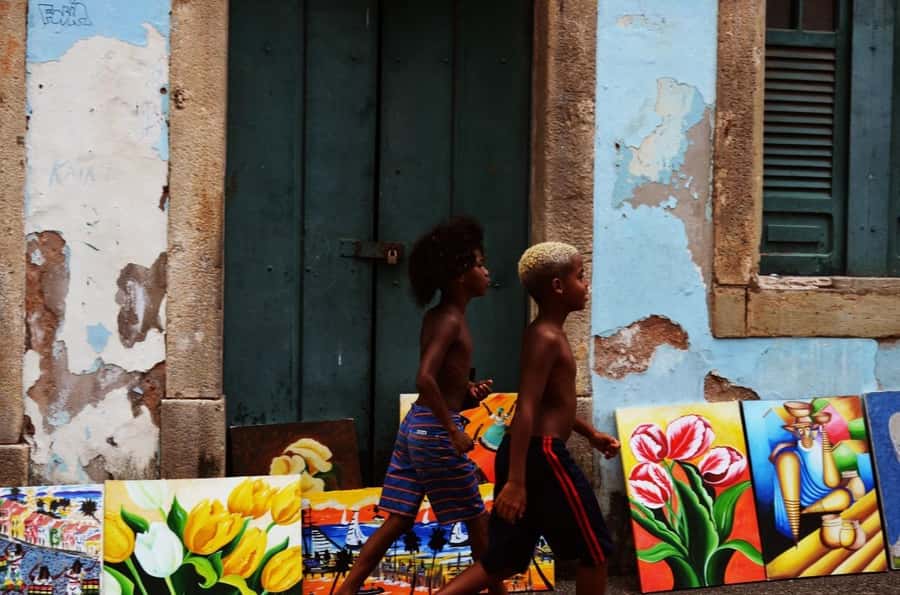
Those references make the area familiar, but the better reason to visit is the connection between sound, public space, and local identity. Music in Pelourinho is not simply decoration for visitors. It is part of how Salvador presents itself and remembers its communities.
The visit is scheduled for roughly 40 minutes, making it one of the longer stops. You will have time for photographs and explanation, but the tour is still a survey rather than a full cultural program. If you want to visit the Jorge Amado Foundation or Casa do Carnaval, ask about adding them or plan a separate visit. Cultural spaces and museums are not included in the tour price.
Santo Antônio Além do Carmo and the walk back
The route continues toward Santo Antônio Além do Carmo, a historic area reached by walking for about 30 minutes. This final section gives you a broader view of Salvador beyond the most famous Pelourinho streets.
The walk helps connect the main sights into a district rather than a collection of separate stops. You see how the historic center changes as you move through it, with different streets, buildings, and local corners along the way.
The route then returns to Elevador Lacerda. Since the tour starts and ends there, it is practical for anyone planning to continue exploring the Lower City or the waterfront afterward. The experience does not include hotel transportation, so you should arrange your own way to the meeting point.
The total duration is three hours. That is long enough for a solid introduction but short enough to fit into a busy Salvador schedule. The listed visits and walking portions create a fairly full program, so the guide may need to keep the group moving. A private group makes that easier, since you can clarify priorities at the start.
What the $141 price gets you

At $141 per person, this is not a budget walking tour. The cost needs to make sense through the private service, guide attention, included elevator and cathedral tickets, and local drink tasting.
For a couple or small group that wants a personal introduction to Salvador, the price may be worthwhile. You are paying for more than a route between landmarks. You get a multilingual guide who can adjust explanations to your interests, answer questions without a large group waiting, and help connect architecture with Bahian culture.
The value is less convincing if you mainly want a quick orientation or prefer to explore independently. Most of the route is in the historic center, where you can see many buildings and streets without paying for a guided experience. Also remember that cultural-space and museum admissions are extra.
I would compare the price with the size of your group. A private tour becomes easier to justify when shared among several people, while a solo booking is a much larger expense for three hours. The flexible cancellation policy, with a full refund available up to 24 hours ahead, and the option to reserve now and pay later, reduce some planning risk.
Guide languages and the private format
Live guiding is offered in Dutch, French, English, Portuguese, Spanish, German, and Italian. That is useful in Salvador, where subtle points about language, religion, and colonial society can be lost if explanations are rushed or unclear.
The strongest praise has focused on the guides’ storytelling. Beatrice specifically valued Wanderley’s ability to speak several languages and explain Afro-Brazilian history. Mathieu described the guide’s explanations of the buildings, cathedral, and the period when Salvador was Brazil’s capital as especially detailed.
Gustavo received similar praise for combining history with stories about daily Brazilian life, cafes, neighborhoods, and smaller corners of the city. If you book, tell the operator what interests you most. You might want architecture, Afro-Brazilian culture, music, colonial politics, churches, or food, and a private guide can shape the conversation around that choice.
A private group also gives you more control over photographs, questions, and the time spent at each stop. It does not guarantee that every suggested site will be entered, since the tour is only three hours and museum tickets are separate.
Who should book this walk
I would recommend this experience to first-time visitors who want a clear introduction to Salvador’s historic center without joining a large group. It also suits couples, families, and friends who value private guiding and want to use one morning or afternoon efficiently.
You should book it if you care about the meaning behind the buildings, especially Afro-Brazilian history, colonial Salvador, music, and religious culture. The route gives you a useful framework for returning to Pelourinho or the surrounding streets on your own later.
It is less suitable if you dislike walking, need a very slow pace, or want extensive museum time. The tour information describes it as wheelchair accessible but also lists people with mobility impairments as unsuitable, so this point is unclear. Contact VivaBahiaTour before booking if you have mobility needs and need confirmation about surfaces, slopes, and the exact route.
The mention of motion sickness is also unusual for a walking tour. Since no vehicle transfer is included in the experience details, ask the operator what part of the activity this warning refers to if it concerns you.
Should you book the Salvador walking tour?
Book it if you want Salvador explained through its streets, churches, music, and living culture, and if you are willing to pay for private attention. The best parts are the multilingual service, the strong focus on Afro-Brazilian history, the included cathedral and elevator tickets, and the easy blend of major sights with a local drink stop.
Skip it if $141 feels high for a three-hour walk or if your priority is visiting several museums and cultural spaces. For the right buyer, though, this is a well-paced first encounter with Salvador, especially when you request a guide who will connect the landmarks to the city’s people and traditions.
FAQ
Where does the tour start and finish?
The tour starts at Elevador Lacerda and returns there after the walk through Salvador’s historic center.
How long does the experience last?
The walking tour lasts three hours.
Is the tour private?
Yes. The activity is offered as a private group experience.
Which languages are available?
Live guiding is available in Dutch, French, English, Portuguese, Spanish, German, and Italian.
Are Elevador Lacerda and Cathedral Basilica tickets included?
Yes. Tickets for Elevador Lacerda and the Cathedral Basilica are included.
Are museums and cultural spaces included?
No. Tickets to cultural spaces and museums are not included in the tour price.
Is local food or drink included?
A tasting of local alcoholic and non-alcoholic drinks is included, with a visit to O Cravinho.
Just added around Salvador
- Salvador: Schooner Cruise with Pickup and Itaparica Stop★ 3.8 · 5 reviews
- Salvador: Walking Tour Through Pelourinho★ 5.0 · 49 reviews
- Salvador: Cultural Treasure – Samba de Roda.★ 4.9 · 51 reviews
- Salvador: Traditional Drumming and Percussion Workshop★ 4.4 · 10 reviews
- Salvador: CAPOEIRA CLASS – CULTURAL★ 4.6 · 13 reviews
- Salvador: Cultural Night of Capoeira, Samba, and Drumming★ 4.9 · 17 reviews
- Salvador: 4-Hour Candomblé Mysteries Tour★ 4.3 · 34 reviews
- Salvador: Capoeira Class at Mestre Bimba’s 1st Ever School.★ 4.9 · 34 reviews
Walking Tours, compared.
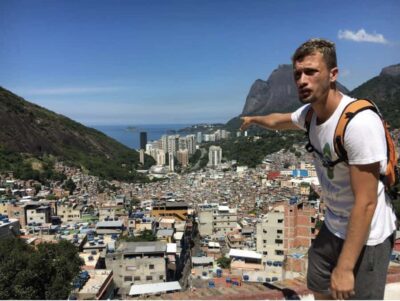
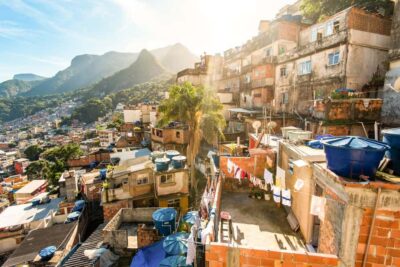

Sunrise and Sunrise Walk Two Brothers with Local Guide
Read our review →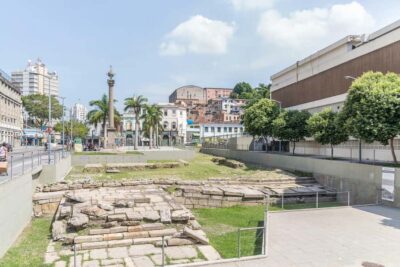
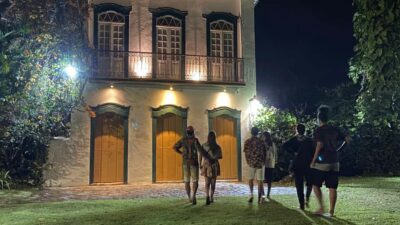
Downtown-Center History Walking Tour – in English
Read our review →
Downtown-Center Walking Tour | 2 Hours – English
Read our review →
Learn the History of Rio with an Unforgettable City Center Walking Tour
Read our review →Browse the lists this tour appears in