
Reviewed · WALKING TOURS
Sao Paulo: Downtown-Center Walking Tour | 2 Hours – English
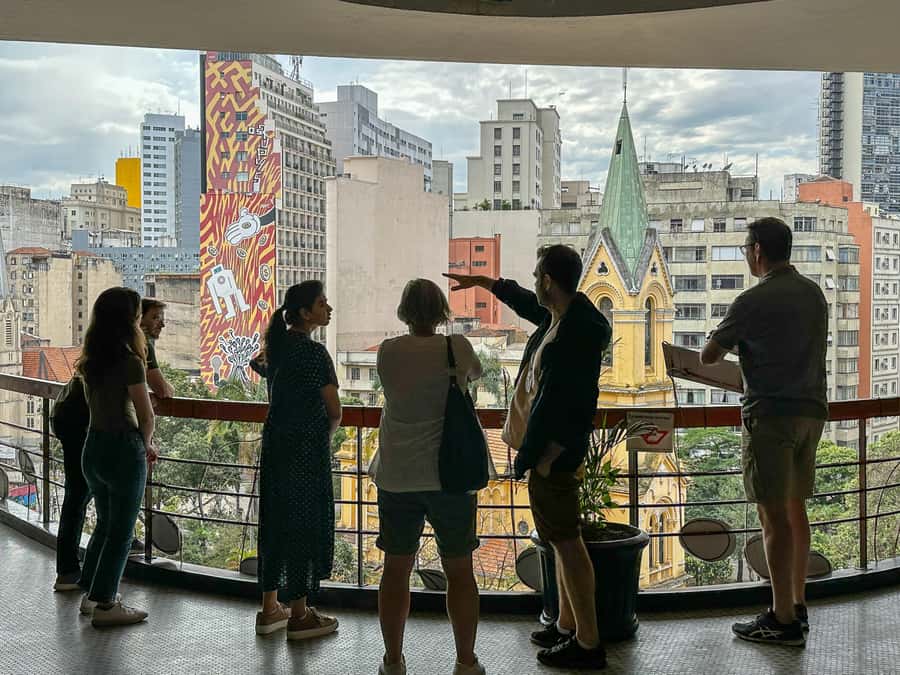
São Paulo’s center makes more sense when you connect its Jesuit beginnings, immigrant communities, churches, banks, and early skyscrapers in one walk. This tour does exactly that, moving from Edifício Itália through the old center and finishing in Liberdade, the city’s best-known Japanese district.
I like the small group limit of 10 and the way guide Giuliano brings both architecture and present-day life into the story. I also like the useful local advice, including vegetarian food tips and ideas for places to explore after the tour. The main drawback is pace: eleven stops in two hours means frequent short visits rather than long time inside each site.
In This Review
- Key points
- Why this two-hour walk works well in São Paulo
- Starting at Edifício Itália and the Copan Building
- Galeria Metrópole and São Paulo’s changing center
- Twenty minutes at Galeria do Rock
- The Municipal Theatre and São Francisco Church
- São Bento Monastery and the old downtown
- Bank of Brazil Cultural Center in 15 minutes
- Pateo do Collegio and the city’s earliest chapter
- São Paulo Cathedral and the final walk to Liberdade
- What Giuliano adds to the experience
- Timing, weather, and walking comfort
- Who should book this São Paulo walk
- Should you book it?
- FAQ
- How long is the São Paulo Downtown-Center Walking Tour?
- What language is the tour conducted in?
- Where does the tour start?
- Where does the tour finish?
- How many people can join the group?
- Is transportation included?
- Are food and drinks included?
- Can I cancel for a full refund?
Key points
- A fast introduction to central São Paulo: Cover major landmarks from Copan to São Paulo Cathedral in two hours.
- Architecture with social context: Learn why the city’s skyscrapers, churches, banks, and galleries matter.
- Small English-speaking group: With no more than 10 participants, questions are easier and conversation feels more personal.
- A strong first-day activity: Use Giuliano’s recommendations to plan food, neighborhoods, and further sightseeing.
- A walk across several eras: Follow the city from Tupi pathways and Jesuit foundations to migration and modern urban life.
- A practical route: No transport is needed, but bring sunscreen, an umbrella, and comfortable walking shoes.
Why this two-hour walk works well in São Paulo
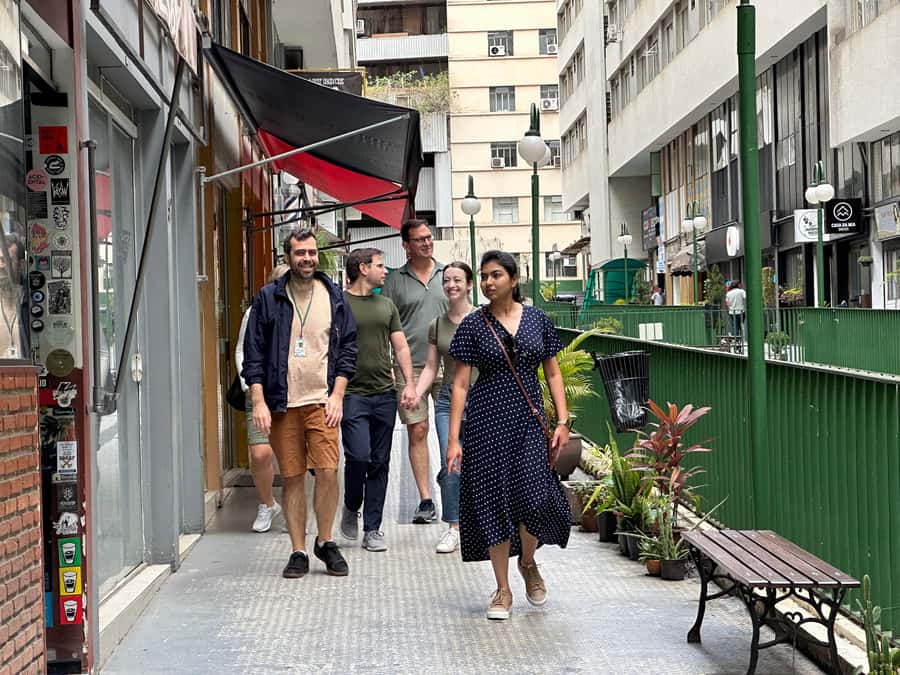
São Paulo can feel enormous at first. Its central districts contain colonial religious sites, grand civic buildings, shopping arcades, office towers, immigrant neighborhoods, and streets that change character from one block to the next. A short guided walk gives you a useful frame before you try to handle the city alone.
The route is not just a parade of façades. Giuliano explains how São Paulo grew from an earlier Tupi presence, old South American paths, and a Jesuit settlement into a major city shaped by conquerors, migrants, and immigrants. That wider view matters because the center can otherwise seem like a collection of unrelated buildings.
You should expect a brisk outing. The scheduled stops range from 10 to 20 minutes, so you will hear the story of a place, look around, and then move on. That format suits me when I want orientation rather than a detailed museum visit. If you prefer lingering over every interior, two hours may feel tight.
The experience costs $37 per person. That is a reasonable price if you want a licensed guide, an English explanation, and a compact introduction to several central districts without arranging transport. You are paying for interpretation and route planning, not meals, entry tickets, or a private car. No food or drinks are included, and there are no hotel pick-ups or drop-offs.
A few more Sao Paulo trips to weigh up
- Sao Paulo: Downtown-Center History Walking Tour – in English
★ 5.0 · 91 reviews - Ecological walk in sao paulo
★ 5.0 · 61 reviews - Night Walking Tour through the Bars of São Paulo
★ 5.0 · 51 reviews
Starting at Edifício Itália and the Copan Building
Meet at the entrance of Edifício Itália on Avenida Ipiranga, 336. The tour starts strictly on time, so allow extra time to reach the building and identify the entrance. Once the walk begins, the guide will be focused on the group rather than checking messages for late arrivals.
The opening stop is the Copan Building, one of São Paulo’s most recognizable modern structures. You spend about 10 minutes here, enough to take in its famous curved form and hear why early skyscrapers mattered to the city and to Latin American urban growth.
This is a useful beginning because it presents São Paulo as a city of ambitious vertical construction. The Copan is not an isolated curiosity. It helps explain the scale of the downtown core and the speed of the city’s changes during the twentieth century.
Do not expect a long architectural lecture or a full building tour. The stop is brief, and the value comes from the explanation around it. Bring your camera, but pay attention to the surrounding streets too. The contrast between the tower and older structures is part of the point.
Galeria Metrópole and São Paulo’s changing center
Galeria Metrópole receives about 10 minutes. The stop adds another layer to the center’s urban story, showing how commercial and social spaces fit into the city’s growth.
A gallery visit may sound less important than a cathedral, but it helps keep the walk from becoming a string of monuments. São Paulo’s character is also found in places where people shop, meet, work, and pass through. Giuliano’s approach connects architecture with the way the city functions now.
Because the schedule is compact, you will probably get an overview rather than time to browse every corner. Think of this stop as a visual example of central São Paulo’s built environment, not a shopping break.
Twenty minutes at Galeria do Rock
The longest early stop is Galeria do Rock, with about 20 minutes to look around. This is one of the route’s more distinctive places because it brings popular culture, music, fashion, and independent businesses into a tour that also includes churches and historic institutions.
The name points to its connection with rock culture, but the wider appeal is the atmosphere of a working urban gallery. You get a sense of how central São Paulo supports subcultures and small businesses alongside formal offices and grand public buildings.
I like this contrast. A city tour that only focuses on colonial history can leave you with an incomplete picture. Galeria do Rock shows a more recent side of São Paulo, and it gives you a chance to notice colors, storefronts, and everyday movement between the formal stops.
The trade-off is that the gallery can feel lively and visually busy. Stay close enough to hear the guide, especially if the group is spread out. Twenty minutes is enough for a look, but not for a serious shopping trip.
Same city, a completely different kind of day:
- São Paulo: Main City Sights in 7 Hours – Shared Group Tour
★ 4.9 · 587 reviews - São Paulo: City Highlights Guided Tour
★ 4.5 · 307 reviews - Private São Paulo City Tour
★ 4.8 · 264 reviews - São Paulo: Downtown Historical Bike Tour
★ 4.9 · 191 reviews
The Municipal Theatre and São Francisco Church
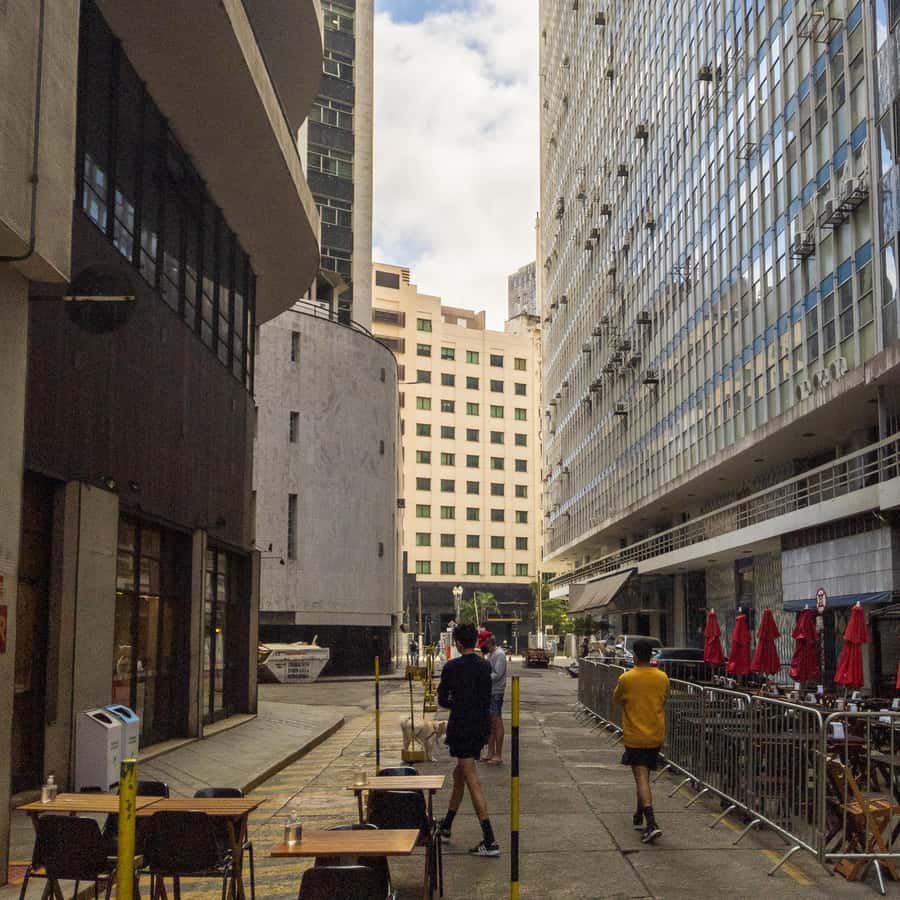
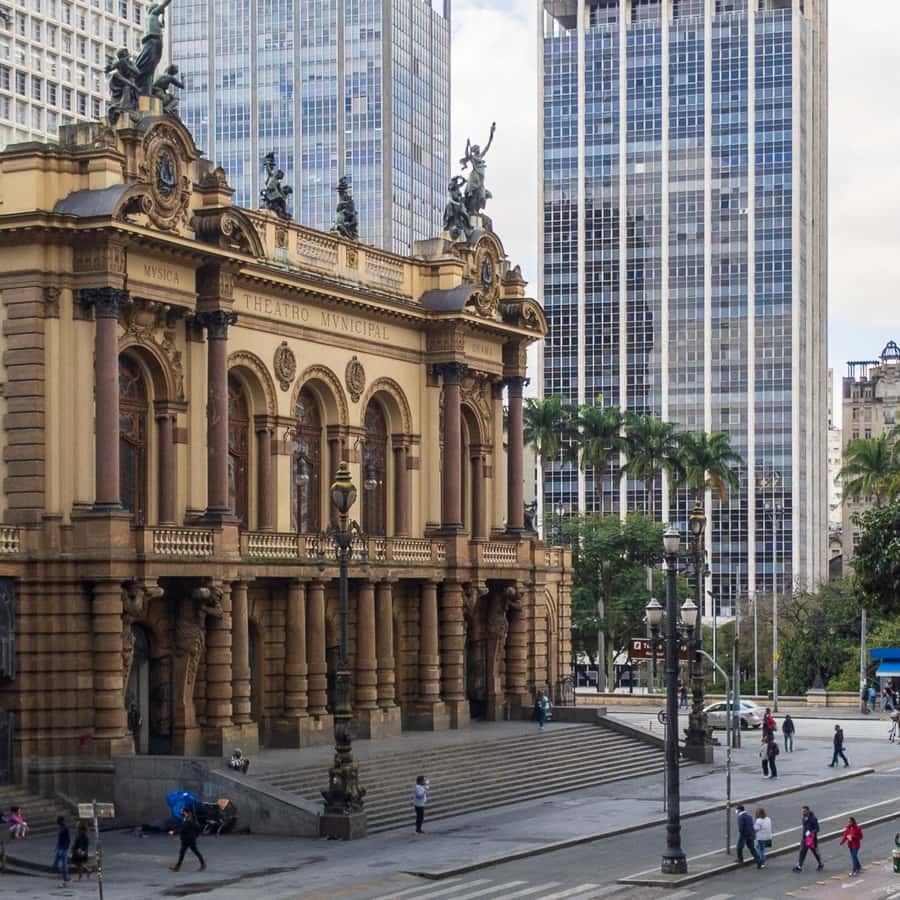
The Municipal Theatre of São Paulo comes next, with about 10 minutes. Its presence helps explain the city’s cultural ambitions and the importance of grand public architecture in the center.
The short visit is best treated as an exterior stop and a history lesson unless the guide advises otherwise. You will not have time for a performance or an extended interior tour during this walk. Still, the theatre makes a strong visual counterpoint to the commercial galleries and towers seen earlier.
The route then gives São Francisco de Assis Parish about 20 minutes. Churches are a major part of São Paulo’s early story, and this stop gives Giuliano room to explain the role of religious institutions in the city’s development.
I especially value the way this tour links buildings to the people and systems behind them. A church is not presented as decoration alone. It becomes part of a story involving Jesuits, settlers, power, migration, and changing city life.
The pace here remains moderate, but remember that worship sites are active places, not simply tourist attractions. Follow the guide’s instructions about where to stand and how to behave. The church stop is also a good moment to ask questions about the city’s earlier periods.
São Bento Monastery and the old downtown
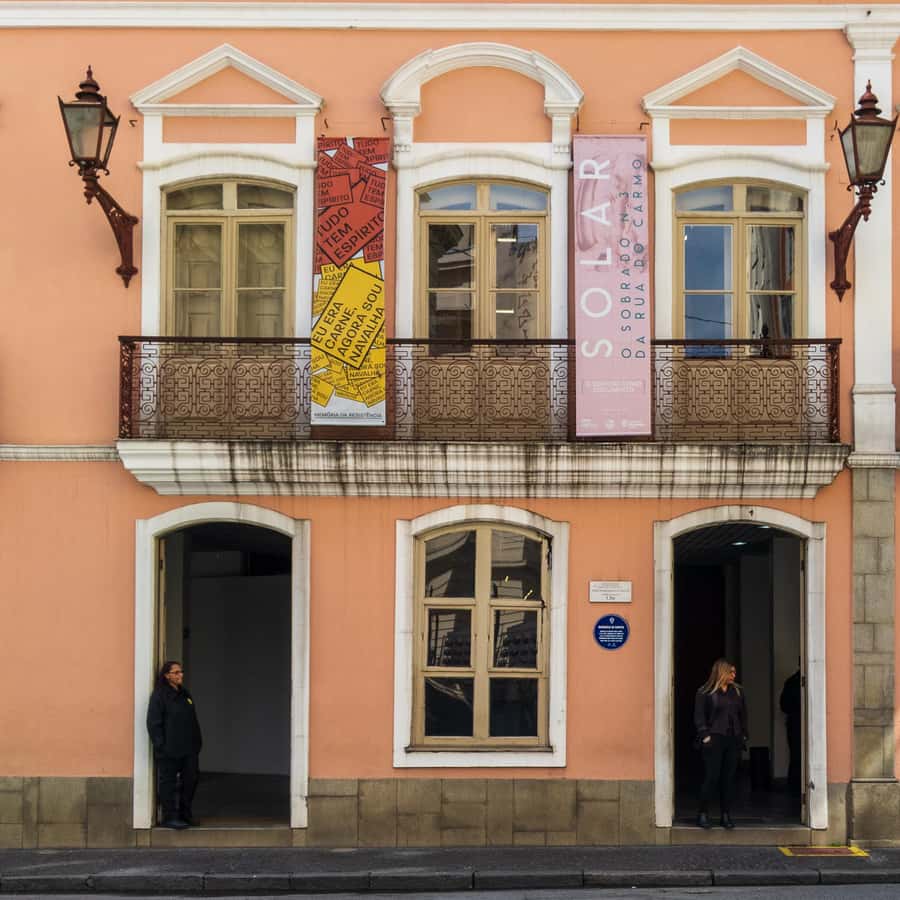
The 15-minute visit to Mosteiro de São Bento brings you into one of the center’s important religious settings. The monastery helps bridge the gap between São Paulo’s earliest foundations and the dense downtown you see today.
This section of the tour is valuable because it slows the story down just enough to show how old institutions survived beside modern towers and offices. You are not looking at a recreated historical quarter. São Paulo’s older landmarks sit inside a living center, surrounded by the pressure and movement of a major metropolis.
You should keep your expectations realistic. Fifteen minutes is a taste, not a full study of the monastery. If a particular church or religious building interests you, make a note and return later with more time.
Bank of Brazil Cultural Center in 15 minutes
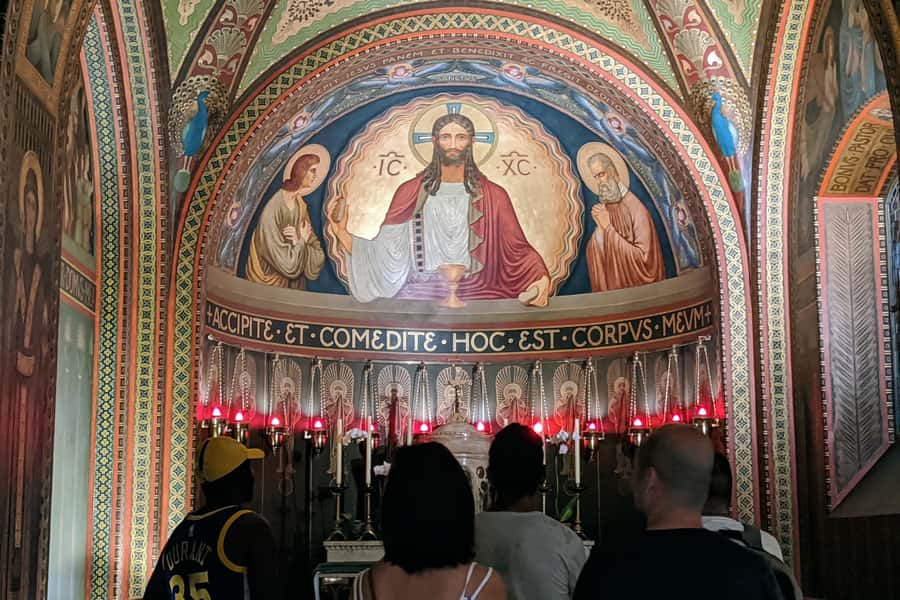
The Bank of Brazil Cultural Center adds a civic and financial chapter to the route. The tour has about 15 minutes here, enough to consider how banks, cultural institutions, and public buildings helped shape downtown São Paulo.
This is where the tour’s social context becomes especially useful. Architecture can tell you about money and power, but only if someone explains what you are seeing. Giuliano’s discussion connects the building world to the people and institutions that drove the city’s transformation.
The cultural center also gives you a different type of stop after several religious sites. That variety keeps the route balanced. You move between faith, commerce, culture, and government rather than hearing one narrow version of São Paulo.
Pateo do Collegio and the city’s earliest chapter
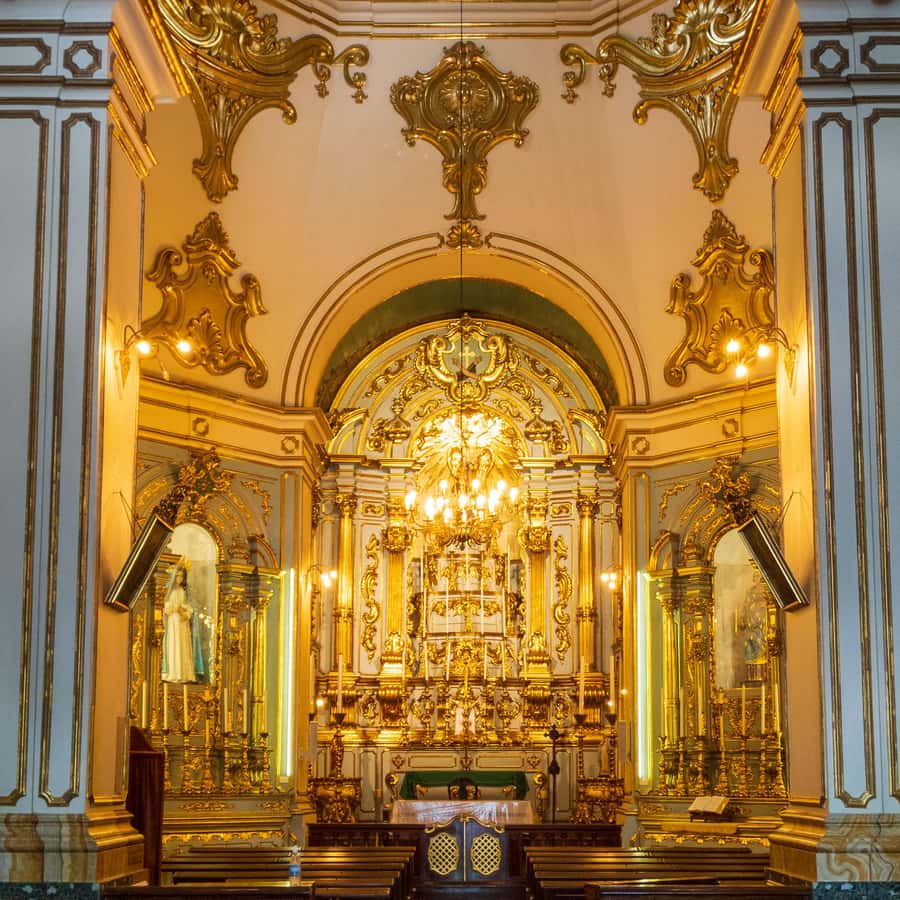
The 20-minute visit to Pateo do Collegio is one of the most important history stops. This is where the tour returns to the Jesuit foundations of São Paulo and to the much earlier Tupi presence and pathways that existed before the city developed into a modern center.
The value here is the timeline. You are encouraged to look beyond the familiar story of colonial founders and consider the people and routes that came before them. That broader explanation gives the rest of the walk more meaning.
Pateo do Collegio also helps you understand why this part of São Paulo matters. The center is not simply old because it has old buildings. It contains layers of settlement, religion, administration, migration, and urban expansion.
Twenty minutes is a generous portion of this two-hour route, though it still will not cover every detail. Listen carefully, ask questions, and use the stop to connect the earlier landmarks with the city’s beginnings.
São Paulo Cathedral and the final walk to Liberdade
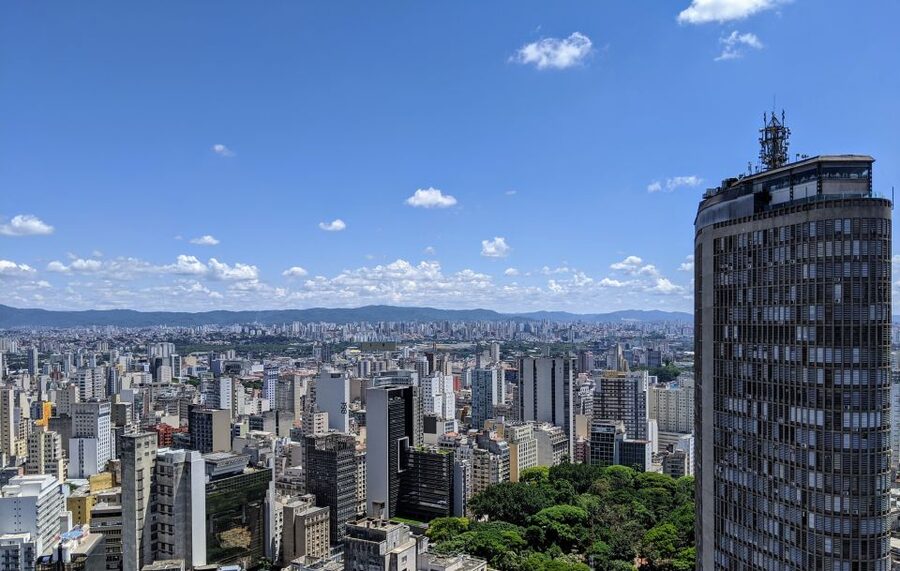
The São Paulo Cathedral receives about 15 minutes. Its scale and position make it a natural landmark for discussing the center’s religious and civic identity. The cathedral also gives you another chance to compare monumental architecture with the dense city streets around it.
At this point, you will have seen skyscrapers, galleries, theatres, churches, a monastery, a bank, a cultural center, and a historic Jesuit site. The cathedral helps pull those pieces together before the route heads toward Liberdade.
The tour finishes at Praça da Liberdade, in Liberdade. This ending is smart because the neighborhood offers a clear next step for your own plans. You can continue exploring the area, find a meal, or use Giuliano’s local suggestions to decide where to go next.
The finish is not a hotel drop-off, so plan your onward route before you arrive. The walk ends in a useful part of the city, but you remain responsible for your own transport and food afterward.
What Giuliano adds to the experience
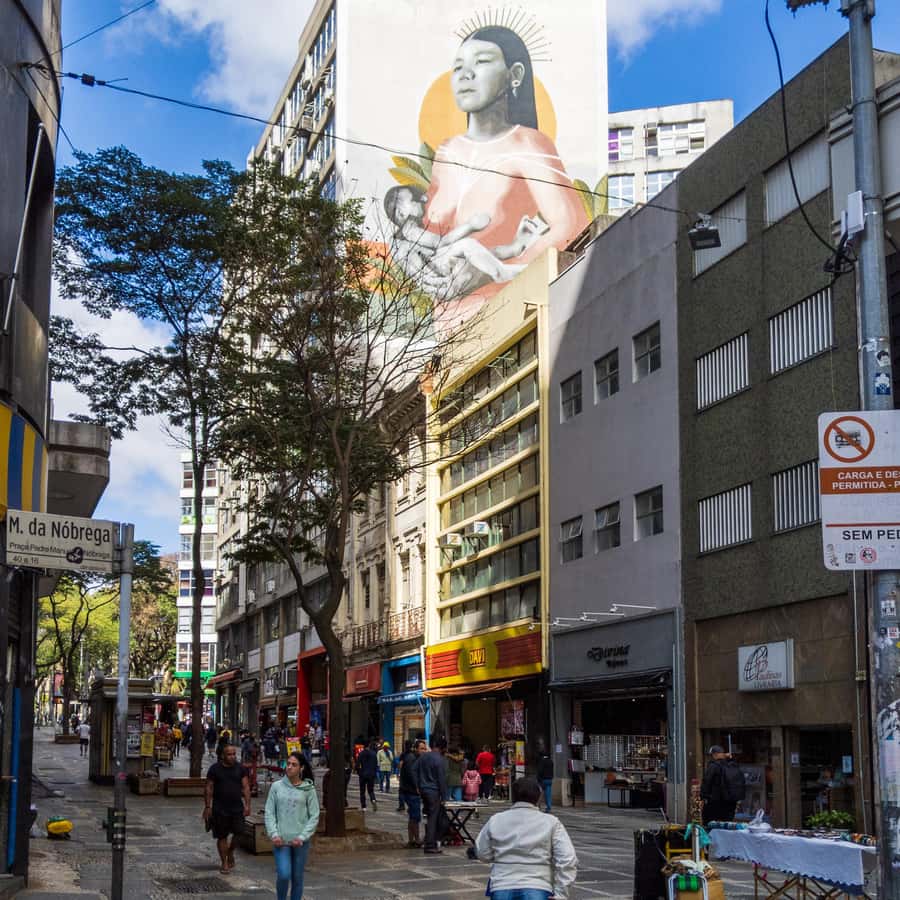
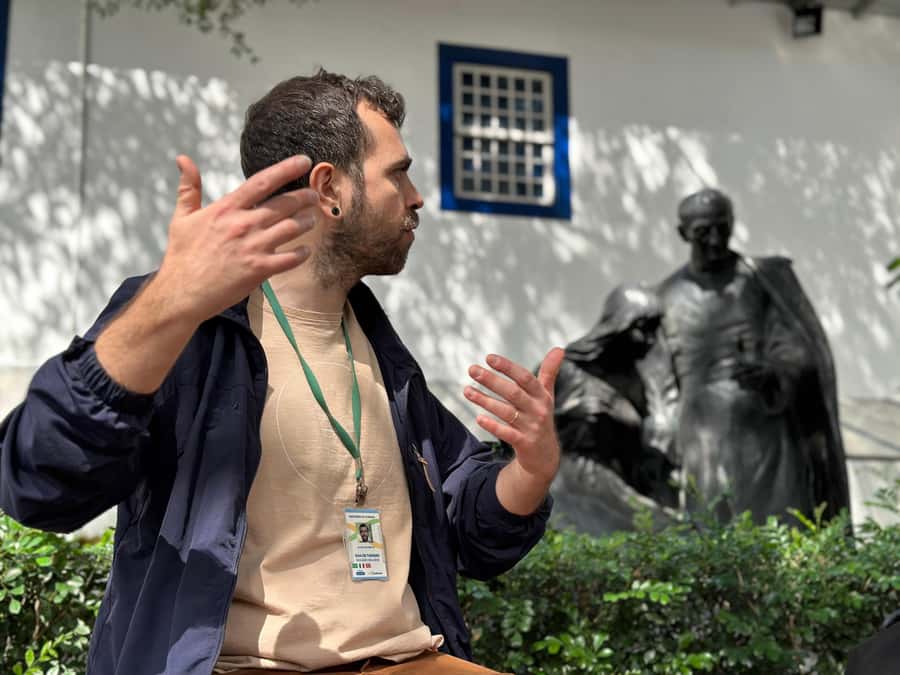
Giuliano is the key reason this route feels more useful than a self-guided stroll. He explains architectural styles, historical events, and the social conditions behind the buildings. He also handles questions well, which matters on a tour covering such a wide range of subjects.
His advice is not limited to monuments. You can ask about current São Paulo life, neighborhoods, and food. Specific vegetarian restaurant tips are especially helpful if your diet makes spontaneous dining harder.
The tour is offered in English only, even though the guide also speaks Spanish, Portuguese, and Italian. That distinction matters. If you need one of those other languages, confirm the format before booking rather than assuming the tour will be multilingual.
The small group size helps the experience. With up to 10 people, you have a better chance to hear explanations, ask questions, and speak with the guide without competing with a large crowd. One group managed to keep the walk moving while Giuliano answered questions and dealt with rainy weather, which suggests that he is attentive to practical conditions as well as historical detail.
Timing, weather, and walking comfort
Two hours sounds short, but the route covers a lot. You will be outside for most of the experience, moving between 11 listed points. Wear comfortable shoes and expect an urban walk rather than a relaxed café outing.
São Paulo’s tropical weather can change quickly. Bring both sunscreen and an umbrella. Rain did not stop one group from enjoying the walk, but wet conditions can affect visibility, comfort, and the amount of time you want to spend outdoors.
The tour is described as wheelchair accessible, yet it is also listed as not suitable for people with mobility impairments. That is an important inconsistency. If you have mobility needs, contact the provider before booking and ask about the actual route, surfaces, stairs, and access at each stop.
Late arrival is the clearest practical risk. The guide asks you to arrive at Edifício Itália before the stated start time and says late joiners cannot be accommodated once the walk begins. Build in a buffer, especially if you are unfamiliar with central São Paulo.
Who should book this São Paulo walk
I would choose this tour for a first or second day in São Paulo. It gives you a working map of the center, introduces major landmarks, and provides ideas for what to see and eat afterward.
It also suits you if architecture interests you but you want more than dates and building names. The route connects towers, churches, banks, galleries, and immigrant communities to the city’s wider social story.
This is less suitable if you want long interior visits, a slow photographic walk, or a food tour. No refreshments are included, and the schedule leaves little room for extended browsing.
At $37, the best value comes from the guide’s interpretation and practical recommendations. If you tried to see these places independently, you could save the guide fee but lose the connections between them. The tour earns its price if those connections are what you need.
Should you book it?
Book this walk if you want a compact, English-language introduction to São Paulo with a small group and a guide who can explain both architecture and current city life. Giuliano’s food advice and social context add value beyond a basic monument checklist.
Skip it if you dislike fixed schedules, cannot walk comfortably for two hours, or want to explore each building at length. For most first-time visitors with limited time, though, the route offers a sensible way to get oriented before setting off on your own.
FAQ
How long is the São Paulo Downtown-Center Walking Tour?
The tour lasts two hours.
What language is the tour conducted in?
The tour is conducted in English only. The guide also speaks Spanish, Portuguese, and Italian, but the activity itself is listed as English only.
Where does the tour start?
Meet at the entrance of Edifício Itália at Avenida Ipiranga, 336.
Where does the tour finish?
The walk finishes at Praça da Liberdade in the Liberdade neighborhood of São Paulo.
How many people can join the group?
The group is limited to 10 participants.
Is transportation included?
No. This is a walking tour, and no transportation is expected or included.
Are food and drinks included?
No. Food and drinks are not included.
Can I cancel for a full refund?
Yes. You can cancel up to 24 hours in advance for a full refund.
Just added around Sao Paulo
- REIKI – Crystal Therapy – by Venus’ Secret Spa – San Francisco★ 5.0 · 41 reviews
- Private Half-Day Guided Tour to São Paulo★ 5.0 · 50 reviews
- Private Street Art Tour of São Paulo with Batman´s Alley Visit★ 5.0 · 30 reviews
- Private Tour: São Paulo’s Top Attractions–6 Hours, Hotel/Airport★ 5.0 · 50 reviews
- Full Day Private Beach Tour Santos & Guarujá – Combine Culture, History & Beach★ 5.0 · 37 reviews
- Downtown Photo Tour★ 5.0 · 45 reviews
- Gastronomic Tour São Paulo – Culture & History Through The Art Of Food – Private★ 5.0 · 50 reviews
- Facial Energization – by Venus’ Secret Spa – São Paulo★ 5.0 · 43 reviews
Walking Tours, compared.


Sunrise and Sunrise Walk Two Brothers with Local Guide
Read our review →
Downtown-Center History Walking Tour – in English
Read our review →
Learn the History of Rio with an Unforgettable City Center Walking Tour
Read our review →
Rio’s city walking tour: a glimpse of history and olympic legacy
Read our review →Browse the lists this tour appears in