

Reviewed · FAVELA TOURS
Rio De Janeiro: Half-Day Rocinha Favela Walking Tour
Rocinha is not a scenic backdrop to be viewed from a jeep window. It is a huge working neighborhood, and this three-hour walking tour gives you time to see its streets, hear local stories, and understand daily life beyond the headlines. Guides such as Wellington, Alberto, Daniel, and Martin have strong local ties, with some having grown up in Rocinha.
I like two things right away: the small-group, on-foot format is more respectful than a drive-by tour, and the route can include a rooftop viewpoint and a capoeira session. The main consideration is physical effort. Narrow alleys, steep stairs, and uneven walking make this a poor fit if you have knee, balance, or mobility problems.
In This Review
- Key points about the Rocinha walk
- Why Rocinha asks for a different kind of tour
- Meeting the guide at Copacabana Palace
- Walking into Rocinha, one step at a time
- Local stories that cut through the stereotype
- The rooftop stop and Rio from above
- Capoeira, music, and community culture
- Safety, respect, and what the guide can control
- Is $35 a good value?
- Who should book this walking tour?
- Practical tips before you go
- Should you book the Rocinha tour?
- FAQ
- How long does the Rocinha walking tour last?
- Where does the tour meet?
- Is hotel pickup included?
- Which languages are available?
- What should I wear?
- Is the tour suitable for people with mobility problems?
- Can I cancel the booking?
Key points about the Rocinha walk
- Local voices: Guides with personal ties to Rocinha explain its past and present in plain, human terms.
- Walking instead of a jeep: You see ordinary streets, shops, stairways, and meeting places at street level.
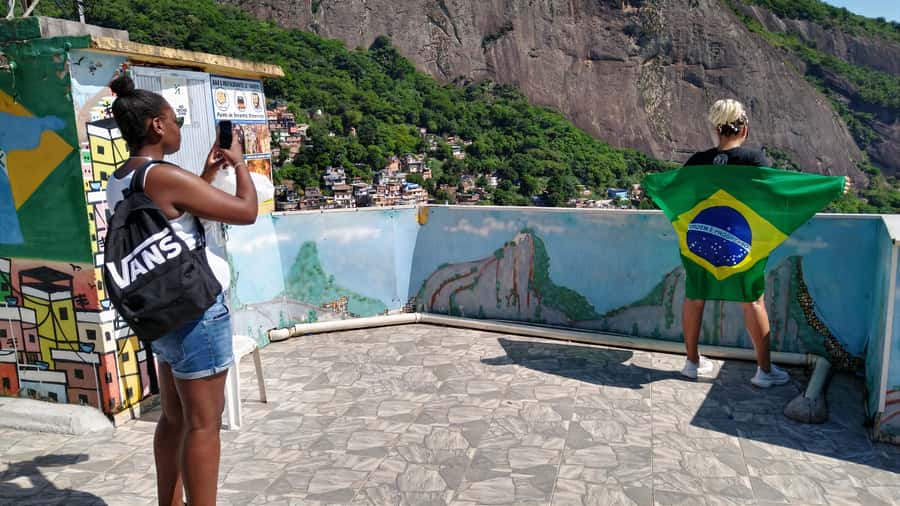
- Rooftop views: A high stop may offer striking views across Rocinha and toward Rio’s famous coastal districts.
- Capoeira and music: A visit to a local capoeira school can add movement, history, and direct contact with community culture.
- A demanding route: Wear firm, comfortable shoes and expect stairs, narrow passages, and a steady three-hour outing.
Why Rocinha asks for a different kind of tour

A favela tour can easily become uncomfortable. Nobody wants to feel as if they are looking at people as a tourist attraction. That concern is valid, and it is worth thinking about before you book.
This outing tries to address that problem by keeping you on foot with local guides and hosts rather than driving visitors through the neighborhood in a jeep. The stated aim is to show how people live and work while avoiding sensational stories about crime and poverty. The tour fee also includes a contribution to the favela community, which gives the visit a practical purpose beyond sightseeing.
You will still be a visitor in a place where people live their daily lives. The respectful approach is simple: listen, do not photograph people without permission, and follow your guide’s instructions. Keep your camera ready for views and street details, but use good judgment around homes, children, and private moments.
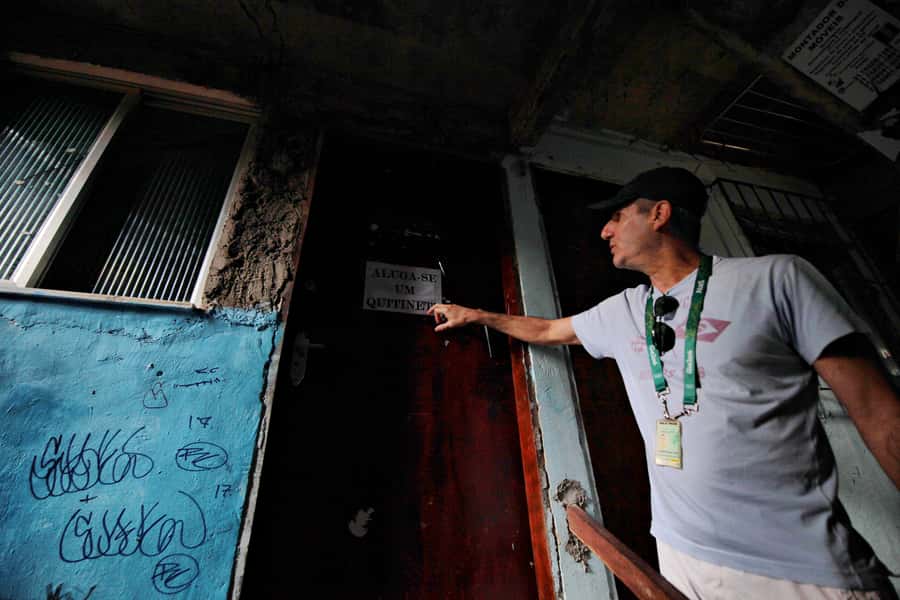
The best guides bring personal experience to the walk. Alberto, for example, has lived in Rocinha for more than 60 years and has shown guests his own house while explaining the problems of favela life. Wellington is often praised for clear English, humor, and an easy way of answering questions. Daniel and Martin are also local guides with strong personal knowledge of the area. Your guide will vary, but the local connection is central to the experience.
More favela tours in Rio De Janeiro:
- Rio de Janeiro: Rocinha Favela Walking Tour with Local Guide
★ 4.8 · 3,052 reviews - Rio de Janeiro: Favela Santa Marta Top Tour with Local Guide
★ 4.9 · 488 reviews - Rio de Janeiro: Favela Santa Marta Tour with Resident Guide
★ 4.6 · 220 reviews
Meeting the guide at Copacabana Palace
The meeting point is in front of the Belmond Copacabana Palace at 13:25. Look for the Journalist Ibrahim Sued statue beside the hotel’s main entrance, on the same sidewalk. There is no hotel pickup, so you need to reach Copacabana on your own and arrive early enough to find the statue without a last-minute scramble.
This location is useful if you are staying in Copacabana, but less convenient if you are based in Ipanema, Barra da Tijuca, or farther inland. Allow extra time for Rio traffic. The meeting point is specific, and standing beside the statue is easier than trying to find a moving guide among hotel guests and beach pedestrians.
The tour lasts about three hours. Since the route is on foot, bring water and wear clothes that let you move freely. Food and drinks are not included, though a rooftop stop may give you the chance to buy a drink.
Walking into Rocinha, one step at a time

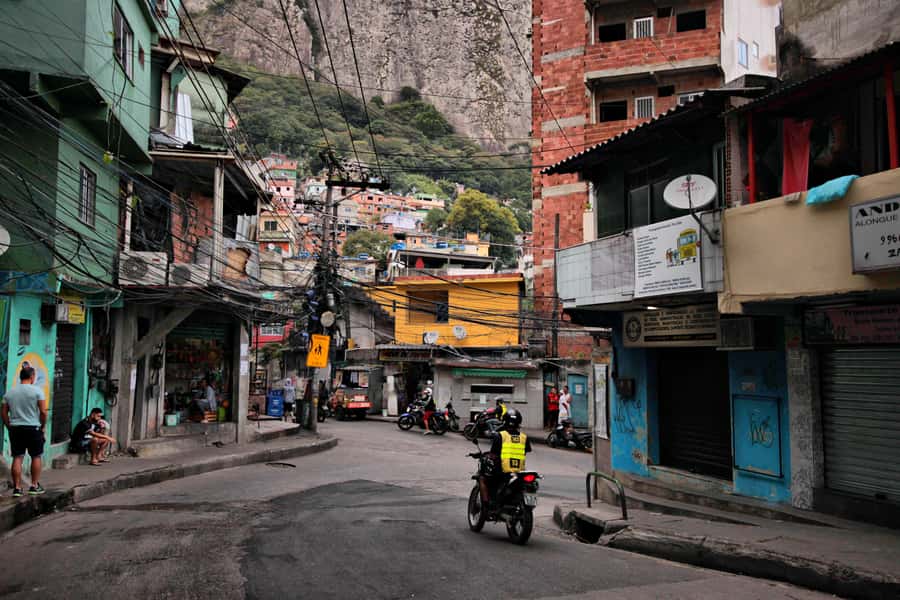
The first part of the tour is about getting oriented. Rocinha is presented not as a movie set or a dangerous curiosity, but as a large neighborhood shaped by work, family life, limited public services, and its own social structures.
Your guide explains how favelas developed and why they became such a major part of Rio. The discussion also covers social and economic challenges. That context matters because the buildings and crowded passages alone cannot explain the place. Without a guide, you might see only density and disorder. With a local explanation, you can begin to understand how people use the space and how the community functions.
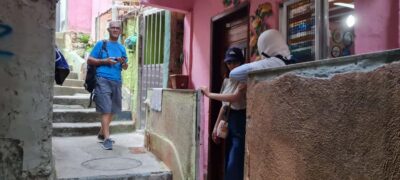
Walking is the strength of this route. A vehicle can carry you through Rocinha quickly, but it keeps you separate from the street. On foot, you move through back lanes and stairways at the pace of the neighborhood. You may stop to hear a story, ask about a building, or notice how homes, small businesses, and public spaces fit together.
The tradeoff is comfort. Some routes include steep steps up and down, narrow alleys, and uneven surfaces. This is not a gentle city stroll. You need reliable shoes, reasonable stamina, and confidence on stairs. The experience is not suitable for wheelchair users or people with mobility impairments, recent surgery, or significant knee problems.
Local stories that cut through the stereotype

The tour’s strongest feature is the chance to hear Rocinha explained by someone who knows it from the inside. A local guide can discuss not only difficult subjects, but also pride, work, humor, family, music, and the ordinary routines that news reports rarely show.
That personal view helps correct the image created by films and sensational headlines. Rocinha has been linked in popular culture to City of God, but a film cannot tell you how people actually organize their lives day by day. The walking tour gives you a more grounded picture.
Expect the conversation to include hardship. The guides explain social and economic pressures rather than pretending that every part of life is easy. That balance is important. A good tour should not replace one stereotype with another. It should show a real neighborhood with problems, strengths, tension, creativity, and people trying to make good lives for their families.
Some guides add personal stories. Alberto has described his own experience of living in Rocinha for decades. Other guides, including Wellington and Daniel, are praised for making the history personal and for taking time with questions. If you care most about conversation, ask questions as you walk. The value of this tour grows when you treat it as a discussion rather than a checklist of photo stops.
A few more Rio De Janeiro trips to weigh up
- Sunrise and Sunrise Walk Two Brothers with Local Guide
★ 5.0 · 193 reviews - Rio de Janeiro: Little Africa Heritage Walking Tour
★ 4.9 · 177 reviews - Learn the History of Rio with an Unforgettable City Center Walking Tour
★ 5.0 · 82 reviews - Rio’s city walking tour: a glimpse of history and olympic legacy
★ 4.5 · 78 reviews
The rooftop stop and Rio from above

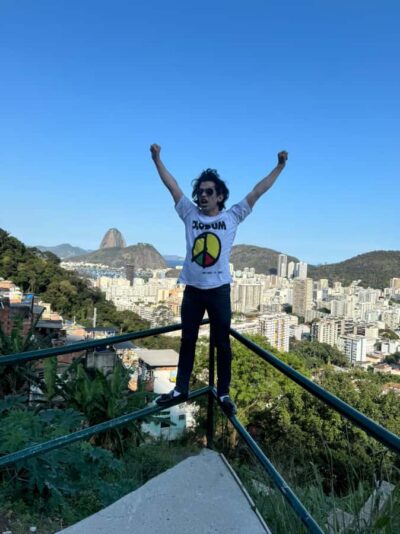
A rooftop bar or viewpoint can be one of the tour’s most memorable pauses. From high in Rocinha, you may get a broad view over the tightly packed neighborhood, with Rio’s larger city scene beyond it. The contrast between Rocinha and the wealthy districts nearby is especially striking from above.
This stop gives your eyes a break from the close quarters of alleys and stairs. It also helps explain the location of the favela within Rio. You are not viewing an isolated settlement far from the city. You are seeing a neighborhood pressed against some of Rio’s most famous and affluent areas.
Drinks are generally purchased separately. A caipirinha or beer can make this a pleasant pause, but budget a little extra for anything you want to buy. One route has also offered a drone video for around R$200. Treat that as an optional extra, not part of the tour price, and ask about the current cost before agreeing.
The viewpoint may involve another climb, so it is not a rest stop in the usual sense. Still, the view is a fair reason to bring your camera. Keep personal belongings secure and follow the guide’s advice about where to stand and what to photograph.
Capoeira, music, and community culture
A visit to a capoeira school adds a cultural side that many city tours miss. Capoeira combines movement, music, rhythm, and martial arts, and the local demonstration shows how it is taught and passed on within the community.
The session may involve local children, instruments, samba, or a chance for you to try a few simple movements. Tiane and her team have led sessions that include music and an explanation of capoeira’s background. This is more than a performance break. It shows how a cultural practice can serve as a point of pride and a place for young people to learn together.
You may be asked for a donation, and that is separate from the advertised tour price. Carry some Brazilian reais if you want to support the school or buy a drink at the rooftop stop. The exact presentation can vary with the day and the guide, so do not expect a fixed stage show with identical timing every time.
For many people, this is the most enjoyable part of the outing. It also keeps the tour from focusing only on poverty and hardship. Music, dance, and capoeira are part of the wider story of Rio, and this stop lets you see that culture in the place where it is practiced.
Safety, respect, and what the guide can control

Safety is a major reason to take a guided walk rather than enter Rocinha alone. The guides know the area, manage the route, and help you move through it without drawing unnecessary attention. Many visitors feel well looked after, particularly with guides who live in or grew up in the community.
That said, no tour can remove every risk from a large urban neighborhood. Conditions can change, and the guide’s instructions matter. Stay with the group, avoid wandering off for photos, and do not bring expensive jewelry or display large amounts of cash.
The non-intrusive promise also depends on your behavior. Ask before taking close-up pictures of residents. Keep the group’s voice down near homes. Do not treat armed security, political markings, or sensitive areas as photo opportunities. The guide will decide which streets and stops are appropriate on the day.
The tour may pass through areas that outsiders associate with gang control. Some guests have felt safe even in difficult sections because the guide was known and respected locally. That is reassuring, but it should not be read as a guarantee. The responsible choice is to accept that the route may change if local conditions require it.
Is $35 a good value?
At $35 per person, this is reasonably priced for a three-hour guided experience in Rio. You are paying for a local guide, interpretation, route planning, and a contribution to the community. You also get a type of access that is difficult to arrange responsibly on your own.
The value is strongest if you want context and conversation. If your goal is only a dramatic rooftop photograph, you can find cheaper viewpoints elsewhere. If you want to understand Rocinha, hear local stories, and see how the neighborhood fits into Rio, the price makes more sense.
Remember that food and drinks are not included. Any rooftop beverage, capoeira donation, or optional drone video costs extra. Those additions can be worthwhile, but they should not surprise you at the end of the afternoon.
The tour is also good value compared with a vehicle-based favela visit because walking gives you more contact with the streets. On the other hand, you pay with physical effort. A three-hour drive would be easier on your knees, but far less direct.
Who should book this walking tour?

I would recommend it to adults and older teenagers who want a more complete picture of Rio. It suits people who enjoy local history, social questions, photography, music, and guided walks that are not polished for mass tourism.
It is especially useful early in your Rio visit. The tour can change how you read the city afterward, particularly the sharp contrast between wealthy coastal neighborhoods and Rocinha’s dense hillside streets. You may also gain a better understanding of why music and dance are so central to Rio’s identity.
It is not a good choice for young children under six, wheelchair users, people with mobility limits, or anyone who cannot manage steep stairs. The booking information also gives age and weight restrictions, with slightly different upper limits listed, so check the current terms before paying if that applies to you.
English, Spanish, and Portuguese are available. If you need a particular language or hope for a specific guide such as Wellington, Daniel, Alberto, or Martin, confirm availability rather than assuming it is guaranteed.
Practical tips before you go
- Wear shoes with a firm grip. Sandals and smooth soles are a bad match for steep steps.
- Dress for warm-weather walking, with comfortable clothes and light layers.
- Bring water, sunscreen, and a small camera or phone.
- Carry modest cash in Brazilian reais for drinks, donations, or optional extras.
- Ask before photographing residents, homes, children, or community activities.
- Keep valuables out of sight and stay close to the group.
- Arrive at the Ibrahim Sued statue before 13:25, especially if you are crossing Rio from another district.
- Leave room in your schedule for the tour to run at a relaxed walking pace.
Should you book the Rocinha tour?
Book it if you want to meet Rio through local stories rather than headlines. The combination of a walking route, local guides, rooftop views, and capoeira gives you a fuller visit than a quick drive through the streets.
Skip it if stairs are a serious problem, if you want a highly polished sightseeing circuit, or if you are uncomfortable visiting a living neighborhood under any circumstances. For everyone else, this is a thoughtful way to approach Rocinha, provided you arrive with respect, listen carefully, and accept that the route may adapt to local conditions.
FAQ
How long does the Rocinha walking tour last?
The tour lasts three hours.
Where does the tour meet?
Meet at 13:25 in front of the Belmond Copacabana Palace Hotel at Avenida Atlantica 1702 in Copacabana. Wait beside the Journalist Ibrahim Sued statue, on the same sidewalk as the hotel’s main entrance.
Is hotel pickup included?
No. Hotel pickup is not included, so you must make your own way to the Copacabana meeting point.
Which languages are available?
The live tour guide service is available in English, Spanish, and Portuguese.
What should I wear?
Wear comfortable clothes and comfortable walking shoes. The route includes narrow alleys, stairs, and physically demanding sections.
Is the tour suitable for people with mobility problems?
No. It is not recommended for people with knee problems or mobility issues, wheelchair users, or people with recent surgeries. The route includes steep stairs and narrow passages.
Can I cancel the booking?
You can cancel up to 24 hours in advance for a full refund. A reserve now and pay later option is also available.
More Half-Day in Rio De Janeiro
- Rio: Half-Day Jeep Tour at Floresta da Tijuca
★ 4.5 · 353 reviews - Two of Rio’s Best: Christ the Redeemer & Sugarloaf Mountain Half-Day Tour
★ 4.5 · 294 reviews - Rio de Janeiro: Historic Rio and Santa Teresa Half-Day Tour
★ 4.4 · 228 reviews - Sugar Loaf Mountain Half-Day Tour
★ 4.0 · 217 reviews
Just added around Rio De Janeiro
- Vidigal Favela Tour★ 4.4 · 26 reviews
- Hang gliding flight in Rio de Janeiro★ 5.0 · 6 reviews
- Rio de Janeiro: Zip Lining and Canopy Tree Tour★ 3.3 · 6 reviews
- Rio de Janeiro: Attend a Vasco da Gama game with local guide★ 4.8 · 9 reviews
- Unforgettable Boat Party★ 5.0 · 3 reviews
- Tijuca Forest Hike – Waterfalls & Caves, Nature & Wild Life!★ 5.0 · 51 reviews
- Rio Highlights: Christ, Sugarloaf, and More in a Private Tour★ 5.0 · 36 reviews
- Tijuca Forest w/ Chinese View,cascatinha Taunay,horto waterfall and parque laje★ 4.5 · 29 reviews
Favela Tours, compared.

Favela Rocinha Tour with Local Guide & Secret Spots
Read our review →

Favela Tour The Original, Rocinha & Vila Canoas since 1992
Read our review →

Sunrise at Morro 2 Irmãos – Vidigal – Rio de Janeiro
Read our review →Browse the lists this tour appears in