
Reviewed · FAVELA TOURS
Rio de Janeiro: Favela Santa Marta Tour with Resident Guide
The most valuable part of this Santa Marta tour is the person leading it. Gilson Fumaça was born and raised in the favela, still lives there, knows his neighbors, and has worked on community projects for decades. He does not simply point out views. He explains how Santa Marta functions, shares his own story, and introduces you to daily life on the hill.
I like the local leadership and the chance to see the community through someone who belongs there. I also like the links to Rio’s wider culture, from Michael Jackson’s 1996 video to local football, music, education, and environmental work. The main drawback is physical: Santa Marta involves steep streets, stairs, and plenty of walking, which can be tiring in hot weather.
In This Review
- Key points at a glance
- Why a resident guide changes the visit
- Starting at Santa Marta and getting oriented
- The cable car and the climb through Santa Marta
- Viewpoints toward Christ the Redeemer and Sugarloaf
- Michael Jackson Square and the pop-culture connection
- Gilson’s home and the famous clock collection
- Football, children, and everyday life
- Social projects with a practical purpose
- Safety, comfort, and responsible behavior
- Is $27 a fair price?
- Should you book the Santa Marta tour?
- FAQ
- How long does the Santa Marta tour last?
- Who guides the tour?
- What languages are available?
- Does the tour include a cable car ride?
- Can I see Christ the Redeemer and Sugarloaf Mountain?
- Is the tour suitable for wheelchair users?
- What is included in the price?
Key points at a glance
- Gilson Fumaça leads from personal experience: He grew up in Santa Marta, lives there with his family, and has guided visitors since the community tourism project began in 2010.
- This is social and community tourism: Your visit supports educational, cultural, language, and environmental projects connected with local residents.
- Expect real neighborhood contact: You may meet families, see a local school and post office, visit Gilson’s home, and possibly join children for a football game.
- Michael Jackson’s connection is a highlight: The tour visits the square and locations linked with the filming of They Don’t Care About Us.
- The views are excellent: From higher points, you can look toward Christ the Redeemer and Sugarloaf Mountain.
- Plan for stairs and heat: The tour is not suitable for wheelchair users or people with mobility impairments.
Why a resident guide changes the visit
Santa Marta is not a museum set up for outsiders. It is a working neighborhood where people live, study, socialize, and earn a living. That makes a resident guide especially important. Gilson can explain the place without reducing it to crime, poverty, or postcard scenery.
He is known locally as Fumaça, a nickname used by people in the community. The company describes him as a certified tourism guide and a community leader involved in social work for more than 30 years. That background gives the walk a personal center. You hear about his childhood, youth, and adult life, as well as the changes Santa Marta has faced.
I find this more useful than a quick ride through a favela with a guide who stays outside the community. Gilson can greet people by name, explain local projects, and answer questions about how life works inside Santa Marta. Several parts of the visit are built around this personal connection, including a look inside his family home.
The tour also addresses difficult subjects. You learn about the favela’s social and economic development, its struggles, its resistance, and the effect of police and gangs on community life. The tone is not presented as a simple success story. Santa Marta is shown as a place with serious challenges, but also with pride, humor, creativity, and organized local effort.
More favela tours in Rio De Janeiro:
- Rio de Janeiro: Rocinha Favela Walking Tour with Local Guide
★ 4.8 · 3,052 reviews - Rio De Janeiro: Half-Day Rocinha Favela Walking Tour
★ 4.7 · 2,272 reviews - Rio de Janeiro: Favela Santa Marta Top Tour with Local Guide
★ 4.9 · 488 reviews
Starting at Santa Marta and getting oriented
The meeting point may be the tourist information office at R. São Clemente, 320, depending on the option you select. From there, the tour moves toward Favela Santa Marta and begins with a short safety briefing.
That briefing matters. A favela is not a normal sightseeing district, and good conduct is part of responsible tourism. Listen to Gilson about where to walk, how to behave around residents, and when photography is appropriate. Keep your camera and phone use respectful, especially around homes, children, and people going about their routines.
The visit is designed as a small-scale, personal experience rather than a quick photo stop. Exact group size is not provided, but one guest specifically appreciated being in a small group. That format should make it easier to ask questions and avoid turning residents into scenery.
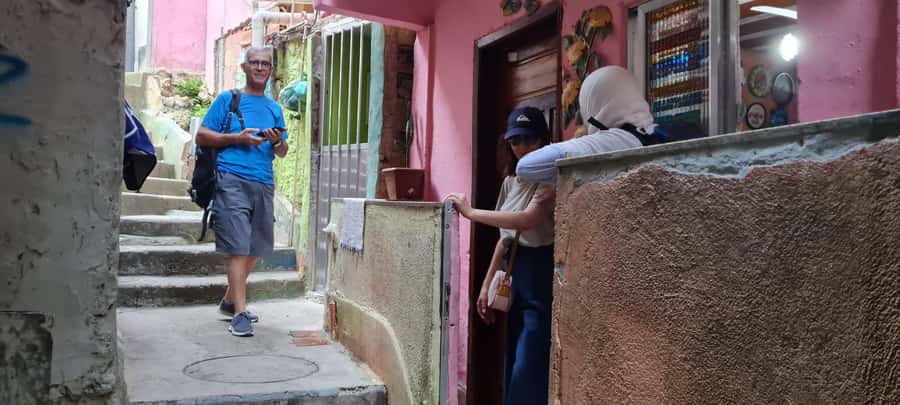
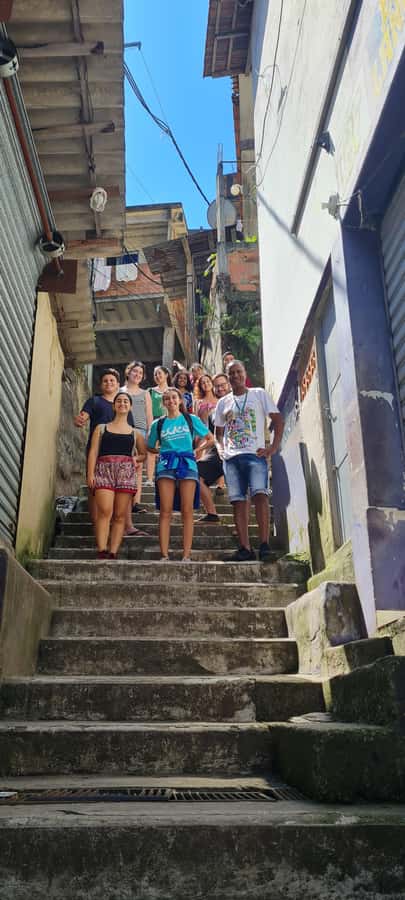
The first part may feel more like a neighborhood walk than a conventional tour. You move through narrow lanes and passages, see homes built into the hill, and get a sense of how the community connects its streets, houses, social areas, and public spaces.
The cable car and the climb through Santa Marta
A cable car ride is included in the route and takes about 20 minutes. It helps with the steep terrain and gives you a practical look at how people move around the hillside.
Do not assume the cable car removes all physical effort. The walking route still includes uphill and downhill sections, stairs, and uneven surfaces. One older participant found the combination of heat and steps too demanding and ended the visit early, returning by cable car. If temperatures are above 30 degrees Celsius, an earlier or cooler start may be more comfortable.
The cable car is also useful for perspective. From below, Santa Marta can seem like a maze of lanes and tightly packed homes. From higher up, you begin to understand its position within Rio, with famous mountains and landmarks nearby. The contrast between the favela and the wealthy, heavily visited parts of the city is part of the lesson.
Wear shoes with a firm grip and bring water. Bottled water is included, but sun protection and light clothing are sensible choices. The tour lasts about two to two and a half hours, though one booking extended much longer because the group stayed to talk, play football, and enjoy the community. Treat the stated duration as a guide, not a guarantee that every social moment will fit neatly into a clock.
Viewpoints toward Christ the Redeemer and Sugarloaf
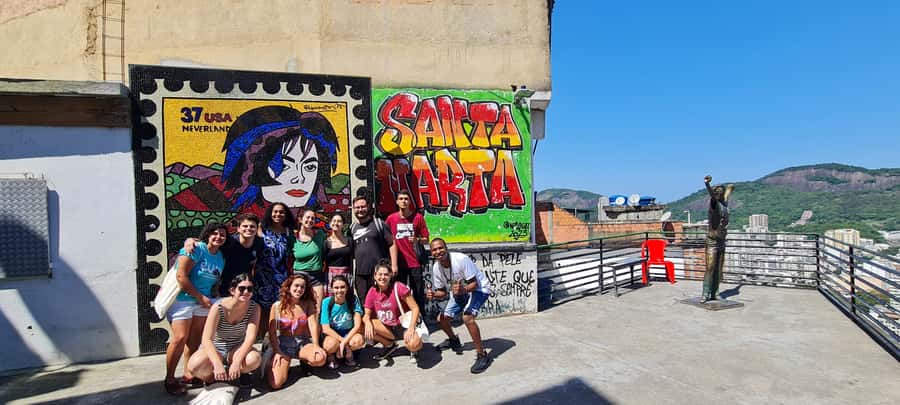
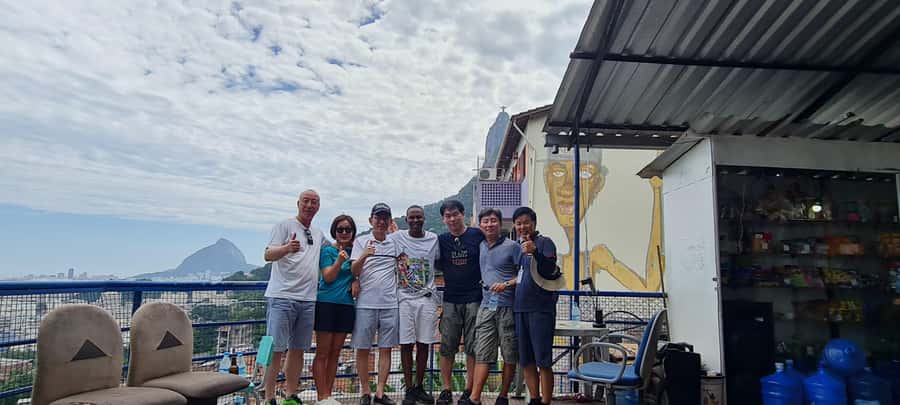
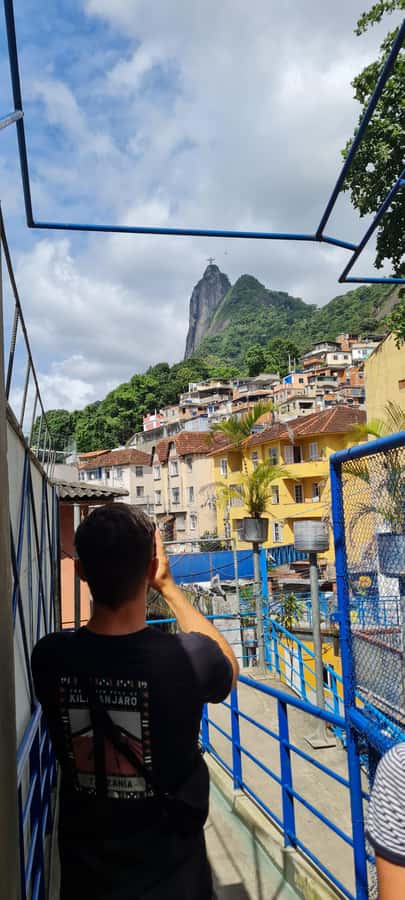
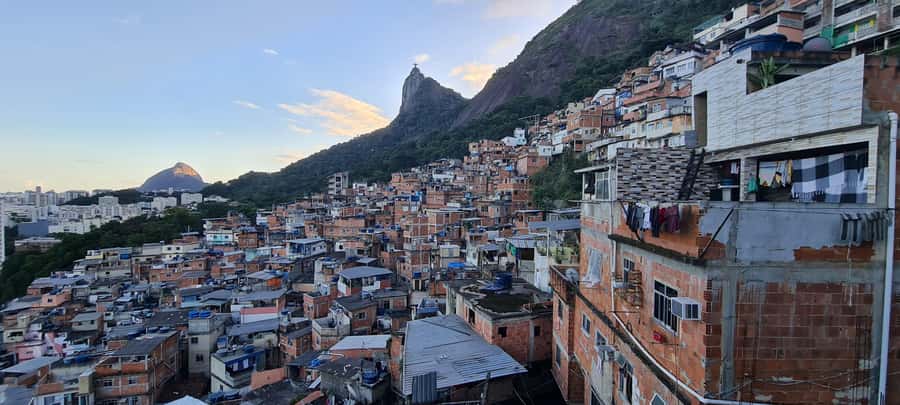
The route includes a viewpoint and a separate stop on R. da Paciência, with time for photographs and scenic views along the way. On a clear day, you can see Christ the Redeemer and Sugarloaf Mountain from the upper part of Santa Marta.
These views are not the sole reason to book the tour, but they add a strong Rio moment. You see two of the city’s best-known symbols from a neighborhood that is often left out of the standard sightseeing circuit.
Weather matters here. Cloud, rain, or haze can reduce the view, so you may want to choose a day with clear conditions if photography is important. Even in poor weather, the route still offers cultural value, but the lookout portion will be less rewarding.
Allow time for photos without making the visit only about photos. The guide’s explanations about the community and its location are what give the views meaning. You are not simply looking down from a hill. You are seeing how Santa Marta sits within the wider city.
A few more Rio De Janeiro trips to weigh up
- Rio de Janeiro: Guided Jeep Tour through Tijuca Rainforest
★ 4.3 · 740 reviews - Jeep Adventure: Guided Tour through Tijuca Rain Forest
★ 4.0 · 554 reviews - Rio: Favela Rocinha Tour with Local Guide & Secret Spots
★ 4.7 · 218 reviews - Rio de Janeiro: Private Guided City Tour
★ 4.6 · 207 reviews
Michael Jackson Square and the pop-culture connection
Santa Marta became internationally familiar after Michael Jackson filmed parts of They Don’t Care About Us there in 1996. The tour visits Michael Jackson Square and scenes connected with the video.
This stop works on two levels. Music fans get a recognizable Rio location, while everyone else gets a clear example of how the favela has entered global popular culture. Gilson was present during the filming and appears in the video, according to the experience description. His first-hand connection gives the story more weight than a standard plaque or photograph.
The square also provides a break, some free time, and an opportunity to shop. The visit is planned for about 15 minutes, so it is not a long commercial stop. Use the time to look around, take pictures respectfully, or ask Gilson about the filming and its effect on the neighborhood.
The tour also connects Santa Marta with other productions and public figures. Gilson has worked on local production projects involving Joe Biden, Cara Delevingne, Seu Jorge with director Spike Lee, Tito Jackson, and Italian musicians. These details show how his community role extends beyond guiding, but the Michael Jackson story remains the clearest link for most visitors.
Gilson’s home and the famous clock collection
One of the most personal parts of the visit is a stop at Gilson’s home and his mother Maria Helena’s house. She collects clocks, with more than 400 displayed throughout the home.
This is the sort of detail that makes the tour feel specific to Santa Marta and to Gilson’s family. You are not visiting a generic cultural center. You are being invited into a real family space, where an unusual collection becomes part of the neighborhood story.
The house also illustrates how buildings change over time. Gilson’s home now has three floors, including a home-stay area and a rooftop social food space with cold drinks, snacks, and views of Christ the Redeemer and Sugarloaf. The stop offers a look at domestic architecture and the way residents adapt limited hillside space.
You should enter this part of the tour with humility. A private home is not a public exhibit. Follow the guide’s lead, ask before taking photographs, and remember that the family is sharing personal space as part of a community-based visit.
Football, children, and everyday life
The description of the tour makes clear that social contact is encouraged, but it should happen naturally. Depending on the day, you might see children playing football, spin tops, play marbles, fly kites, or join a drumming session on a rooftop.
Football is the most frequently noted possibility. Several people ended up playing with local children at the court, sometimes in a spontaneous match. That can be a memorable part of the day, but it is not wise to treat it as a guaranteed performance arranged for visitors.
The best approach is to take part only when invited and to keep the interaction respectful. Children are not entertainment, and photography requires care. The point is to share a simple local activity, not to turn the community into a stage.
This part of the visit helps correct a narrow view of favela life. A neighborhood can face violence, poor services, and economic pressure while also having play, friendship, family life, and local pride. You see both sides more clearly when the guide explains them together.
Social projects with a practical purpose
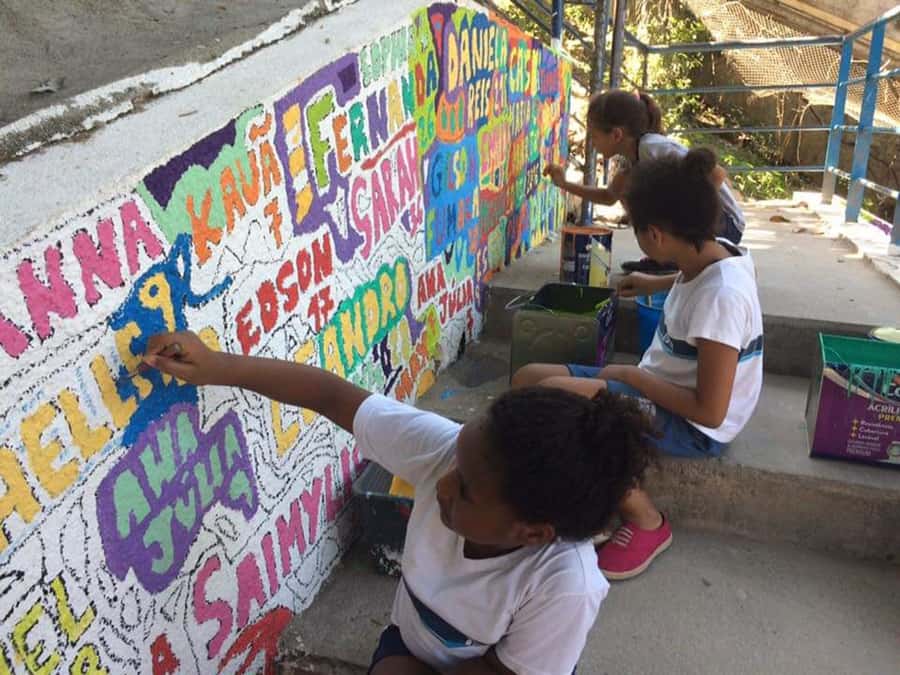
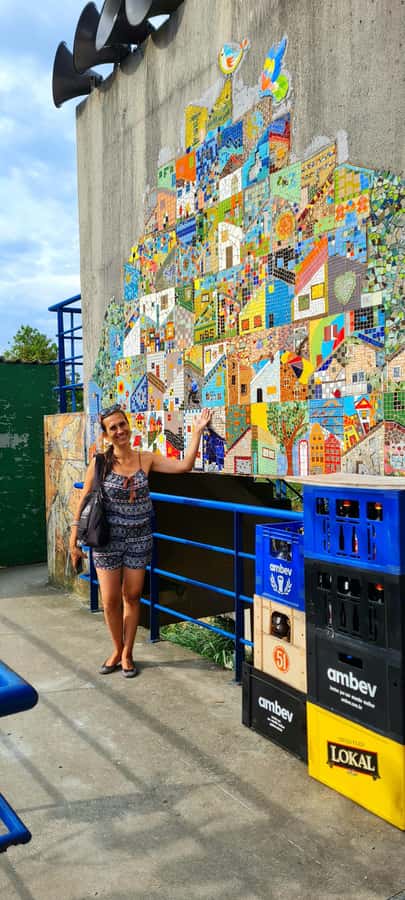
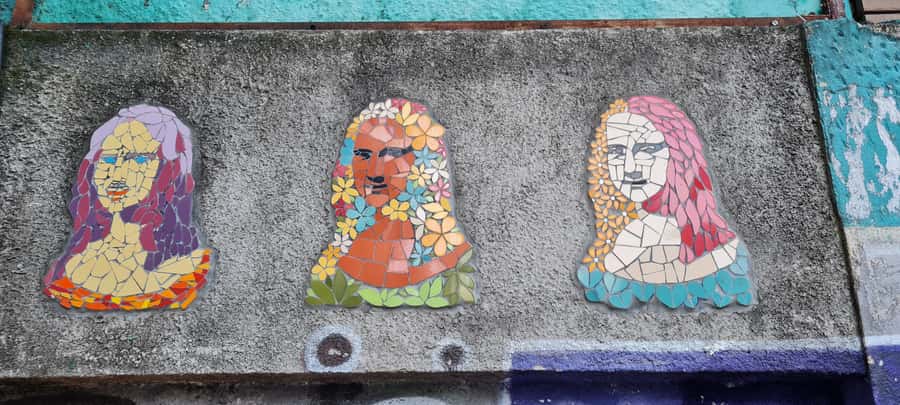
A major reason to choose this experience is its connection with the Instituto Gilson Fumaça and other community projects. The work includes educational, English, Spanish, artistic, musical, and environmental activities. Wall mosaics and planned cooking classes are among the examples connected with local inclusion and sustainability.
This gives the tour a purpose beyond sightseeing. The experience provider presents tourism as a way to help build these projects, and one description states that half of the earnings goes back into community work. That makes the $27 price reasonable if the contribution is important to you, though you should understand that the visit is still a paid commercial activity as well as a social one.
The stop at a local restaurant adds another piece of daily life. It is scheduled for about 20 minutes and may offer a chance to see how a neighborhood business fits into the community. Food or a full meal is not listed as included, so bring extra money if you want to buy something.
These projects are best understood through Gilson’s personal account. Ask what the classes are for, who they serve, and how local people take part. The more specific your questions, the more useful this section will be.
Safety, comfort, and responsible behavior
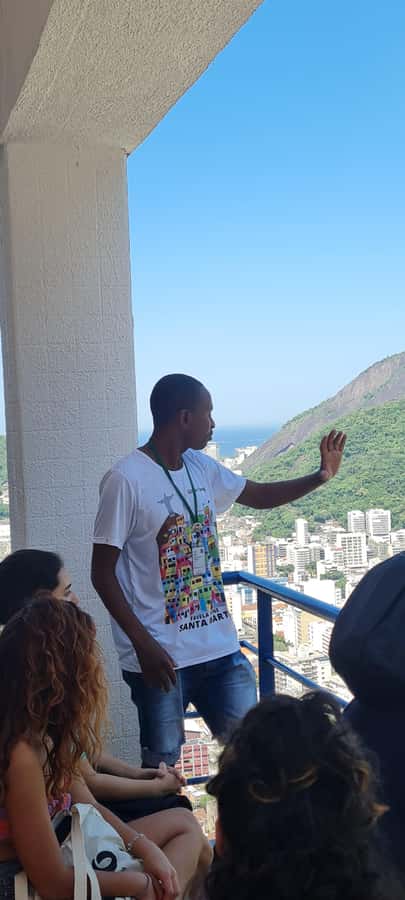
Safety is a common concern when visiting a favela. The tour includes a briefing, and Gilson’s long-standing role in Santa Marta means he knows the streets and local residents. The experience is presented as safe when taken with his guidance, and people who joined the tour often felt secure and welcomed.
That does not mean you should ignore normal city precautions. Keep valuables out of sight, follow the guide, do not wander off, and avoid photographing people or homes without permission. The community is a place of residence, not an open-air attraction.
Heat is the more predictable problem. Santa Marta’s stairs and steep paths can be demanding, particularly for anyone over 55 or anyone unused to climbing in hot weather. The tour is specifically not suitable for people with mobility impairments or wheelchair users.
English, Spanish, and Portuguese are available. If you understand Portuguese or Spanish, you may catch more of the neighborhood conversation, but the advertised language options make the tour accessible to a wider range of visitors.
Is $27 a fair price?
At $27 per person, this is good value if you want context and personal contact rather than a quick panoramic stop. The price includes a local guide and bottled water, and the route combines the cable car, viewpoints, local streets, the Michael Jackson site, a restaurant, and community projects.
The real value lies in Gilson’s access and personal history. You are paying for a guide who can introduce you to his own neighborhood, family, and social work. That is different from paying for a generic ride through Rio’s hillside communities.
It is less suitable if you want a polished, tightly timed attraction with guaranteed entertainment. The experience may slow down for conversations, family visits, football, or local interaction. One group stayed far longer than planned because the day developed naturally. That flexibility is a benefit for some people and a problem for anyone with a strict schedule.
Free cancellation up to 24 hours before the start and reserve-now, pay-later booking make it easier to fit into a Rio itinerary. Still, the practical questions are simple: can you walk stairs, tolerate heat, and approach a residential community with respect?
Should you book the Santa Marta tour?
I would book this if you want to understand a different part of Rio through a resident’s story. Gilson’s family connection, his role in local projects, the Michael Jackson history, and the chance of ordinary interaction make this more personal than a standard sightseeing loop.
You should skip it if stairs are difficult, you dislike informal visits, or you want a fixed route with no unscheduled pauses. For everyone else, the tour offers a thoughtful way to see Santa Marta without treating it as a spectacle.
Choose a comfortable day, wear sturdy shoes, carry sun protection, and leave room in your schedule. The strongest part of the experience is not one particular viewpoint. It is the chance to meet a guide who knows the place from childhood and wants you to see both its hardships and its humanity.
FAQ
How long does the Santa Marta tour last?
The advertised duration is between two and two and a half hours, depending on the selected start time and how the visit unfolds.
Who guides the tour?
The main guide is Gilson Fumaça, who was born and raised in Santa Marta, lives there, and has worked on community and social projects for many years.
What languages are available?
The tour is offered in English, Spanish, and Portuguese.
Does the tour include a cable car ride?
Yes. The itinerary includes a cable car segment of about 20 minutes.
Can I see Christ the Redeemer and Sugarloaf Mountain?
The route includes viewpoints where you can see Christ the Redeemer and Sugarloaf Mountain, especially in clear weather.
Is the tour suitable for wheelchair users?
No. The experience is not suitable for wheelchair users or people with mobility impairments because it includes steep paths and stairs.
What is included in the price?
A local guide and bottled water are included. Food at the local restaurant and other personal purchases are not listed as included.
Just added around Rio De Janeiro
- Vidigal Favela Tour★ 4.4 · 26 reviews
- Hang gliding flight in Rio de Janeiro★ 5.0 · 6 reviews
- Rio de Janeiro: Zip Lining and Canopy Tree Tour★ 3.3 · 6 reviews
- Rio de Janeiro: Attend a Vasco da Gama game with local guide★ 4.8 · 9 reviews
- Unforgettable Boat Party★ 5.0 · 3 reviews
- Tijuca Forest Hike – Waterfalls & Caves, Nature & Wild Life!★ 5.0 · 51 reviews
- Rio Highlights: Christ, Sugarloaf, and More in a Private Tour★ 5.0 · 36 reviews
- Tijuca Forest w/ Chinese View,cascatinha Taunay,horto waterfall and parque laje★ 4.5 · 29 reviews
Favela Tours, compared.
Favela Rocinha Tour with Local Guide & Secret Spots
Read our review →
Favela Tour The Original, Rocinha & Vila Canoas since 1992
Read our review →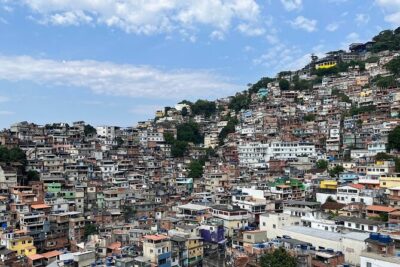

Sunrise at Morro 2 Irmãos – Vidigal – Rio de Janeiro
Read our review →Browse the lists this tour appears in