
Reviewed · TIJUCA FOREST TOURS
Jeep Adventure: Guided Tour through Tijuca Rain Forest
Rio’s Tijuca Rain Forest begins surprisingly close to the city, just about ten minutes from the center. This four-hour tour takes you from hotel pickup to an open-top Jeep, a short forest walk, waterfalls, old landmarks, and high views across the city. It is less a wildlife safari than a guided nature outing through one of Rio’s great green spaces.
I like the easy 15 to 30-minute hike, which gives you real rainforest time without demanding a full day of hiking. I also like the mix of forest education and city history, especially at Vista Chinesa, Mayrink Chapel, and Emperor’s Table. The main caution is pickup communication: some bookings have involved confusion about the meeting hotel or long waits, so confirm the exact pickup point before the day.
In This Review
- Key points to know before booking
- What this Tijuca Forest tour is really like
- Entering Tijuca National Park from the city
- A short lesson at the Tijuca Visitor Center
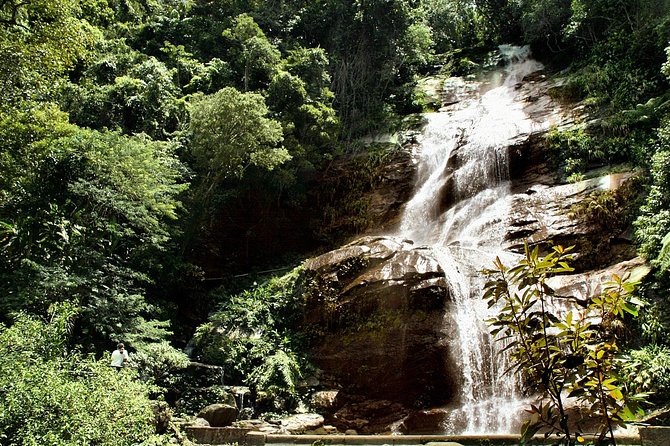
- Cascatinha Taunay and the first waterfall stop
- The gentle hike to Cachoeira dos Macacos
- Emperor’s Table, a royal picnic viewpoint
- Mayrink Chapel in the trees
- Vista Chinesa and Rio’s big postcard view
- Cachoeira dos Primatas and the final forest look
- How much is the open Jeep worth?
- Pickup, timing, and the practical snags
- Who will enjoy this rainforest outing?
- Should you book the Tijuca Jeep tour?
- FAQ
- How long does the Tijuca Rain Forest Jeep tour last?
- Where does hotel pickup take place?
- Is the hike difficult?
- What waterfalls does the tour visit?
- Can I see monkeys or sloths?
- Is Vista Chinesa open every day on this tour?
- What languages are available?
- Are food and drinks included?
- How many people can join the tour?
Key points to know before booking

- Tijuca is urban rainforest: You reach the park quickly from Rio, making this a smart half-day outing.
- The walk is gentle: Expect gradual trails rather than a strenuous trek, with waterfalls along the way.
- City views are a major reward: Vista Chinesa looks toward Ipanema, Copacabana, Guanabara Bay, and Niterói.
- The Jeep is open-top: It adds fresh air and fun, but the small bench seats are not the most comfortable.
- Wildlife is possible, not promised: You might spot monkeys, sloths, coatis, birds, butterflies, lizards, or hummingbirds.
- Weekend access can change: Vista Chinesa is unavailable on Saturdays, Sundays, and holidays because of park rules.
What this Tijuca Forest tour is really like
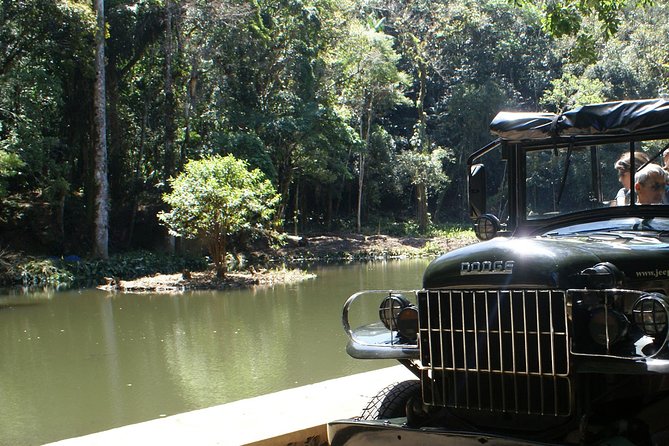
This is a compact introduction to Rio’s rainforest, not a full-scale animal-spotting expedition. The open Jeep carries you through the park roads, while the main forest experience comes on foot at the waterfall stops and short trails.
That distinction matters. If you picture a Jeep driving deep into thick vegetation while you search for monkeys and sloths, you may find the format underwhelming. One booking described the Jeep as fun but unnecessary because much of the forest portion was done walking. If you want an easy outing that combines trees, water, history, and viewpoints, the format makes good sense.
Pickup is offered from selected hotels in Downtown Rio, the South Zone, and Barra da Tijuca. The full outing lasts about four hours, though the actual time can vary with hotel pickups and the pace of the group. The maximum group size is 20 people, so this is not a private tour.
Guides can work in English, Spanish, German, Italian, French, and Portuguese. Guides named in booking feedback include Eddie, Everton, George, Lucy Morozini, Myriam, Mario, and Andrea. The guide you receive will vary, but the best part of the experience depends heavily on that person’s ability to explain the forest, local wildlife, and Rio’s past.
More tijuca forest tours in Rio de Janeiro:
- Rio de Janeiro: Christ, Selaron Steps, and Tijuca Park Tour
★ 4.7 · 857 reviews - Rio de Janeiro: Guided Jeep Tour through Tijuca Rainforest
★ 4.3 · 740 reviews - Rio: Tijuca Forest Small Group Hike to Caves and Waterfalls
★ 4.9 · 536 reviews
Entering Tijuca National Park from the city
The first surprise is how quickly Rio changes. You leave the city streets and soon reach Tijuca National Park, a large protected forest within the metropolitan area. The drive itself is short, but your guide uses it to explain the Mata Atlântica, or Atlantic Forest, ecosystem.
This forest once covered much of Brazil’s eastern coast. The tour also explains Tijuca’s reforestation program, an important part of the park’s story. Rio’s surrounding hills were heavily altered over time, and restoring native forest helped protect water sources and bring back habitat close to the city.
I find this context useful because it changes how you look at the trees. You are not simply driving through a patch of greenery. You are seeing a major conservation effort in the middle of one of Brazil’s biggest cities.
The Jeep has an open top, so you get moving air, a clear view upward, and a better sense of the forest canopy. Bring a hat that fits securely, sunscreen, sunglasses, and water. The vehicle’s small bench seats may feel cramped, especially if you are expecting a roomy safari-style Jeep.
A short lesson at the Tijuca Visitor Center
The Visitor Center is scheduled as a brief 15-minute stop. It gives you a quick introduction to the park’s plants, animals, and protected status before the walking portions begin.
Do not expect a long museum visit. This is a short orientation, but it helps place the rest of the tour in context. You may hear about the forest’s biodiversity and the work involved in protecting it.
The guide is the key here. Several highly rated outings singled out the explanations of local flora, fauna, Brazilian culture, and reforestation. George, Everton, Eddie, and Lucy Morozini were each praised for giving clear information and answering questions. A good guide can turn a simple trail into a more rewarding experience.
Cascatinha Taunay and the first waterfall stop

Cascatinha Taunay is one of the park’s most attractive quick stops. The waterfall is described as clear and picturesque, and you walk toward it rather than simply viewing it from the Jeep.
The stop is listed at about ten minutes, so this is a photo break, not a long swim or riverside picnic. Food and drinks are not included, and the tour does not promise swimming time. Carry your own water, especially on a hot Rio day.
The waterfall gives you an early taste of the forest’s appeal: cool water, thick plant life, and a quiet setting not far from the city. You might see butterflies, birds, lizards, or other small creatures. Larger animals such as monkeys, sloths, and coatis are possible, but sightings are chance events.
Several bookings described seeing only a few animals, while others noted a coati, raccoon, vultures, hummingbirds, fish, or lizards. Go for the forest itself, not a guaranteed animal list.
A few more Rio de Janeiro trips to weigh up
- Rio de Janeiro: Rocinha Favela Walking Tour with Local Guide
★ 4.8 · 3,052 reviews - Rio de Janeiro: Favela Santa Marta Top Tour with Local Guide
★ 4.9 · 488 reviews - Rio de Janeiro: Favela Santa Marta Tour with Resident Guide
★ 4.6 · 220 reviews - Rio: Favela Rocinha Tour with Local Guide & Secret Spots
★ 4.7 · 218 reviews
The gentle hike to Cachoeira dos Macacos

The main walk leads toward Cachoeira dos Macacos, also called the Waterfall of the Monkeys. The trail is gradual, and the walking section generally lasts 15 to 30 minutes. It is a good fit for people who want contact with nature but do not want a demanding hike.
You should still wear proper walking shoes. Forest trails can feel uneven, and comfortable clothing will make the outing easier. The supplied advice is simple and sensible: wear comfortable shoes and clothing, carry water, and protect yourself from the sun.
The name may raise expectations of monkey sightings, but it refers to the waterfall, not a wildlife guarantee. Your guide may point out animal sounds or signs of life, and you may spot monkeys, sloths, birds, or butterflies. Yet the experience remains mainly botanical and scenic.
This is where the tour divides people. Nature lovers who enjoy learning about trees and plants tend to appreciate the slow pace. If your main goal is to photograph animals, you may feel there is not much to see. The tour description is most accurate when you think of it as a rainforest walk with waterfalls.
Emperor’s Table, a royal picnic viewpoint
Emperor’s Table sits around 487 meters above sea level and provides a strong contrast between forest and city. The site is linked with Brazil’s royal family, especially Dom Pedro I, who reportedly traveled from Quinta da Boa Vista for meals in this scenic area.
Today, the appeal is the viewpoint. Stairs around the parapet lead toward the edge, where you can take in Rio’s hills and built-up areas. The stop is short, about ten minutes, so you will have time for photographs but not a long visit.
Access can change on weekends. One booking noted that Emperor’s Table was reached on foot during a weekend outing, so do not assume every stop works in exactly the same way every day. The route also depends on park regulations and local conditions.
The stop works best as part of the larger story. You see how Rio’s historic elite used the forest for leisure, then look out at a modern city spreading below the hills.
Mayrink Chapel in the trees
Capela Mayrink is a small pink chapel built in 1860. It was originally connected with the farm of the Portuguese banker Viscount de Souto and is now one of Tijuca National Park’s historic attractions.
The chapel is a five-minute stop, so this is a quick look rather than a long religious or art visit. Inside are reproductions of sacred panels by Cândido Portinari. The surrounding details include Carrara marble and a tiled patio tub with a frowning spout, while the garden design is linked to Roberto Burle Marx.
That is a lot of history for a tiny stop, and it gives the tour variety. After waterfalls and forest trails, you get architecture, art, and a reminder that Tijuca was also part of Rio’s old estates and royal leisure grounds.
You may find the chapel closed or viewed only from outside depending on timing and local conditions. Even so, the pink building makes a memorable photograph against the dark green forest.
Vista Chinesa and Rio’s big postcard view
Vista Chinesa is the tour’s strongest lookout. The pagoda-style shelter was built between 1902 and 1906 to honor Chinese workers associated with tea cultivation in Brazil during the early 19th century.
At about 380 meters above sea level, the viewpoint looks across Ipanema and Copacabana, Guanabara Bay, and potentially toward Niterói. On a clear day, this is the point where the forest outing connects most clearly with Rio’s famous urban views.
The structure is made of bamboo and cement and has an oriental design. It is more than a photo platform, though photographs are certainly part of its appeal. Your guide can explain the site’s background while you get your bearings over the city.
There is one important scheduling restriction: Vista Chinesa cannot be visited on Saturdays, Sundays, or holidays because of forest regulations. If this view is a priority, book a weekday. Rain can also soften the view, though one outing still found the forest and scenery worthwhile in wet weather.
Cachoeira dos Primatas and the final forest look
Cachoeira dos Primatas is another waterfall seen during the hike. The scheduled stop is brief, about five minutes, but it adds one more chance to see the forest close up.
Do not expect a long break beside the water. The tour moves through several points, so the day is built around short visits rather than one extended walk. That pacing helps you see more of Tijuca in four hours, but it can feel rushed if you prefer to linger.
The guide may identify plants, animal calls, or small wildlife along the way. The strongest outings use these moments well, turning a passing sound or leaf into a lesson about the Mata Atlântica.
How much is the open Jeep worth?
At $88.21 per person, this is not the cheapest way to reach a city park. You are paying for roundtrip hotel transport, a multilingual guide, the Jeep ride, the park visit, and a guided walk within a four-hour package.
The value is strongest if you are staying in Downtown Rio, the South Zone, or Barra da Tijuca and want a simple half-day plan. You do not need to arrange transport into the hills, work out the park stops, or find your own way back to the hotel.
The price is less convincing if you mainly want a long hike or a dedicated wildlife search. The walk is short, the Jeep seats are basic, and animals are not guaranteed. One booking considered the tour overpriced for what was essentially a forest walk, while others found the views, guide, and convenience worth the cost.
I would judge the price by your priorities. For a first visit to Rio, the mix of nature and viewpoints is useful. For experienced hikers or safari-minded visitors, the tour may feel too light.
Pickup, timing, and the practical snags
Hotel pickup is convenient, but it is also the area where you need to be most careful. There are different pickup options connected to hotel location, and they may carry different prices. Some bookings involved a wait of nearly 30 minutes for late pickup arrivals. Others reported waiting at the hotel when the vehicle did not appear or being directed to a different hotel about 15 minutes away.
Confirm the exact pickup location, neighborhood, and departure time after booking. Keep your phone available and ask the operator to state the meeting point plainly. Do not treat a vague hotel reference as good enough, especially if you have a flight, cruise, or another tour later that day.
The specific departure time is determined after reconfirmation. The tour lasts about four hours, but hotel collection and drop-off can stretch the morning or afternoon. I would leave a generous buffer around any fixed plans.
Free cancellation is available up to 24 hours before the start time. Changes or cancellations inside that 24-hour window are not accepted for a refund.
Who will enjoy this rainforest outing?
I would recommend this tour to first-time Rio visitors, couples, families, and solo visitors who want a manageable introduction to Tijuca. It also suits anyone with only half a day available and a preference for guided transport rather than independent planning.
It works especially well for people who enjoy plants, waterfalls, historic sites, and wide city views. The multilingual format is useful for mixed-language groups, and guides such as Andrea have helped solo participants with photographs and practical suggestions.
I would think twice if you want a serious hike, comfortable vehicle seating, or a high chance of seeing monkeys and sloths. The forest is the main attraction, not a controlled animal encounter. Rain, weekend closures, and pickup delays can also affect the day.
Should you book the Tijuca Jeep tour?
Book it if you want a convenient, easy rainforest introduction with several photo stops and a guide who can explain Rio’s ecology and past. The waterfalls and Vista Chinesa give the four-hour route a good mix, and Tijuca’s location makes it possible to see nature without leaving the city for the day.
Before paying, confirm your pickup point and choose a weekday if Vista Chinesa matters to you. Bring water, sun protection, and walking shoes. If you approach this as a scenic nature walk with a fun open Jeep ride, the $88.21 price can be fair. If you expect a true wildlife safari, choose a different type of excursion.
FAQ
How long does the Tijuca Rain Forest Jeep tour last?
The tour lasts approximately four hours, including hotel pickup, the Jeep ride, forest stops, the walk, and hotel drop-off.
Where does hotel pickup take place?
Pickup is available from selected hotels in Downtown Rio, Rio’s South Zone, and Barra da Tijuca. There are different pickup options based on your hotel neighborhood, so confirm the exact location after booking.
Is the hike difficult?
The hike is described as easy, with a gradual trail and about 15 to 30 minutes of walking. Comfortable clothing and shoes are recommended.
What waterfalls does the tour visit?
The route includes Cascatinha Taunay, Cachoeira dos Macacos, and Cachoeira dos Primatas.
Can I see monkeys or sloths?
You might see monkeys, sloths, butterflies, birds, coatis, lizards, hummingbirds, or other wildlife, but animal sightings are not guaranteed.
Is Vista Chinesa open every day on this tour?
No. Due to forest regulations, Vista Chinesa cannot be visited on Saturdays, Sundays, or holidays.
What languages are available?
The tour is available in English, Spanish, German, Italian, French, and Portuguese.
Are food and drinks included?
No. Food and drinks are not included, so bring your own water and any snacks you may need.
How many people can join the tour?
The tour has a maximum group size of 20 people.
Just added around Rio de Janeiro
- Vidigal Favela Tour★ 4.4 · 26 reviews
- Hang gliding flight in Rio de Janeiro★ 5.0 · 6 reviews
- Rio de Janeiro: Zip Lining and Canopy Tree Tour★ 3.3 · 6 reviews
- Rio de Janeiro: Attend a Vasco da Gama game with local guide★ 4.8 · 9 reviews
- Unforgettable Boat Party★ 5.0 · 3 reviews
- Tijuca Forest Hike – Waterfalls & Caves, Nature & Wild Life!★ 5.0 · 51 reviews
- Rio Highlights: Christ, Sugarloaf, and More in a Private Tour★ 5.0 · 36 reviews
- Tijuca Forest w/ Chinese View,cascatinha Taunay,horto waterfall and parque laje★ 4.5 · 29 reviews
Tijuca Forest Tours, compared.



Tijuca Forest Small Group Hike to Caves and Waterfalls
Read our review →

Rio de Janeiro Botanical Garden & Tijuca Forest Tour
Read our review →

Browse the lists this tour appears in