
Reviewed · CYCLING TOURS
São Paulo: Downtown Historical Bike Tour
São Paulo is huge, and this three-hour bike tour gives you a smart way to connect its far-flung districts. You move from Paulista Avenue to the old center, then on to Luz, Sé, and Liberdade, covering ground that would take much longer on foot.
I like the thoughtful mix of major sights and everyday city life, from MASP and the Copan Building to parks, viaducts, cafés, and busy streets. I also like the small-group setup, with no more than 10 people and guides such as Juliana, Arthur, Pedro, and Roberto who explain the city’s past and present in clear, personal terms.
The trade-off is simple: you need to be comfortable riding in an enormous city. Much of the route uses bike paths, but traffic, pedestrians, hills, and crowded stretches still demand attention. The ride covers about 9 to 12 miles, so this is sightseeing with exercise included.
In This Review
- Key points to know before you ride
- Why a bike is a good match for São Paulo
- Portinha183 Café and the ride toward Paulista Avenue
- Paulista Avenue: Casa das Rosas, Trianon Park, and MASP
- Copan Building and the changing face of downtown
- Vale do Anhangabaú and the historic center
- Luz Station, Pinacoteca, and Luz Park
- Pátio do Colégio and Sé Cathedral
- Liberdade’s Japanese-Brazilian character
- What the $85 price gets you
- Guides, pace, and languages
- Who should book this ride?
- Should you book the São Paulo Downtown Historical Bike Tour?
- FAQ
- Where does the bike tour start?
- How long is the tour?
- How far will I ride?
- What languages are available?
- How many people can join the group?
- Is bike experience required?
- What is included in the price?
- Can children join the tour?
Key points to know before you ride
- Start with Brazilian coffee: Portinha183 Café in Vila Mariana provides a friendly meeting point, plus iced mate and pão de queijo before or after the ride.
- Cover São Paulo’s big districts fast: The route links Paulista Avenue, the historic center, Luz, Sé, and Liberdade in one outing.
- Expect a small group: Up to 10 participants makes it easier to ask questions and keep the group together.
- Ride with practical support: Bike rental, helmet, water bottle, raincoat if needed, a guide, and a small souvenir are included.
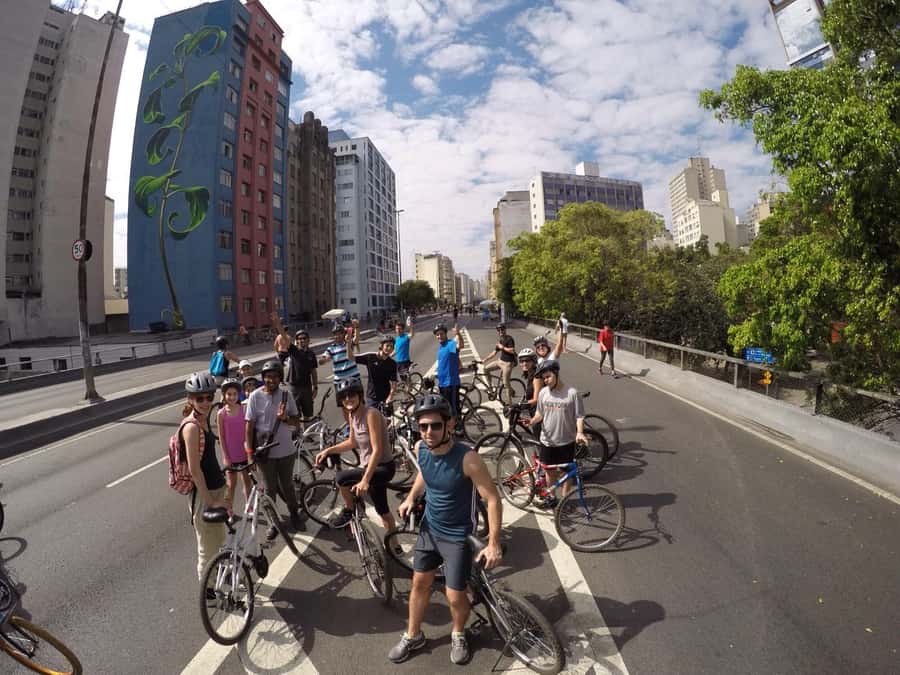
- Use Sunday to your advantage: One rider found the roads easier when São Paulo closed some traffic lanes on Sunday.
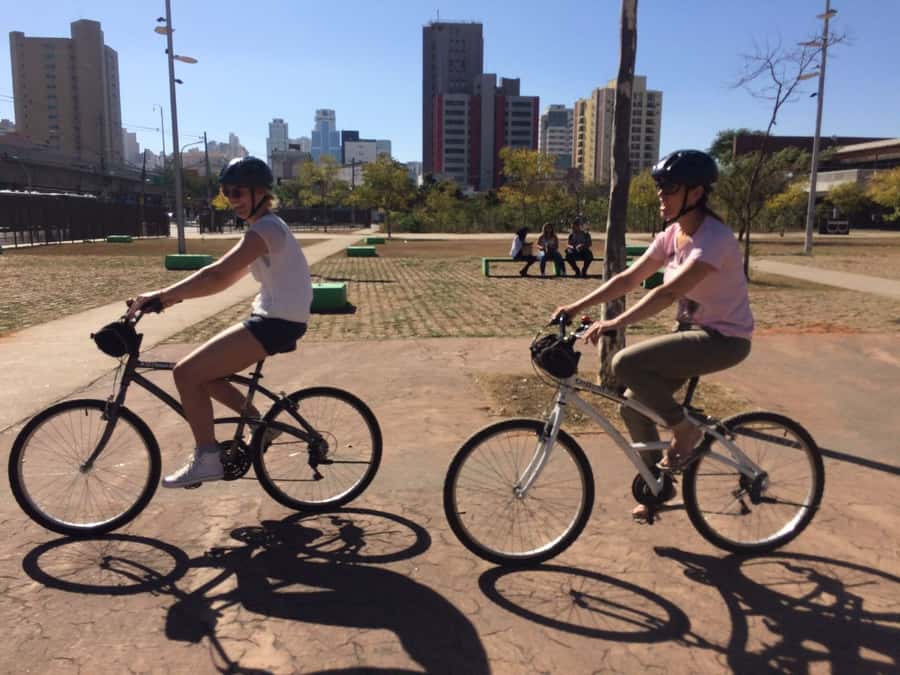
- Plan for city traffic: The route is often on bike paths, but you still need basic road awareness and confidence on a bicycle.
Why a bike is a good match for São Paulo
São Paulo is not a city that reveals itself in one tidy historic quarter. Its sights are spread across a vast urban area, and a car can leave you staring at traffic while walking covers only a fraction of the ground.
A bicycle solves part of that problem. You can move through several districts, stop often, and see how glass towers, old railway buildings, parks, museums, churches, and immigrant neighborhoods fit together. I especially like this format for a first day in town, when you want a mental map before choosing where to return.
The pace is active but not presented as a race. Guides stop for photographs and explanations, and the route is designed to keep the group together. Previous outings have included extra support at the back of the group, which matters on city streets. Guides have also adjusted the pace for different abilities.
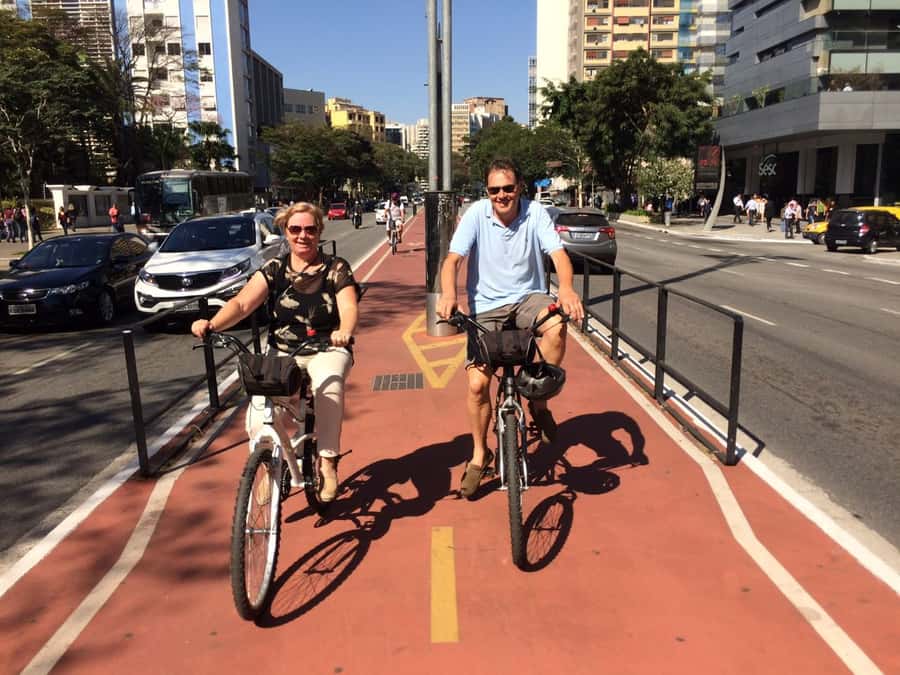
You should still take the safety advice seriously. Knowing how to ride is essential. Bring sunscreen, wear clothes you can pedal in, and keep your phone or camera secure. One rider found the traffic demanding enough that road awareness sometimes took priority over sightseeing. That is a fair description of urban cycling here.
A few more Sao Paulo trips to weigh up
- Street Art and Park Bike Tour
★ 5.0 · 56 reviews - Sao Paulo: The Coolest Urban Scenes Bike Tour
★ 5.0 · 22 reviews - São Paulo: Street Art Bike Tour
★ 5.0 · 19 reviews
Portinha183 Café and the ride toward Paulista Avenue
The tour begins at Portinha183 Café on Rua França Pinto, in Vila Mariana, about five minutes from Ana Rosa Station on the Blue and Green subway lines. Arrive 10 minutes before departure so there is time to meet the guide, receive your bicycle and helmet, and make sure the bike feels right.
The café is more than a place to wait. It gives the tour a relaxed local start, with Brazilian coffee, juice, iced mate tea, and pão de queijo available as part of the experience. You can also return here for ice cream, açaí, or another coffee at the end.
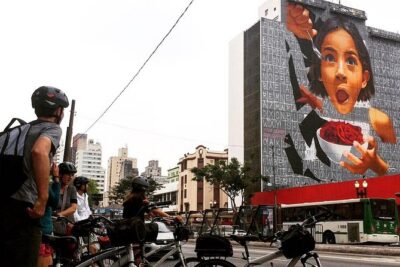
From Vila Mariana, the route heads toward Paulista Avenue. This shift is part of the appeal. You begin in a neighborhood setting, then reach one of São Paulo’s best-known city corridors, where office towers, cultural buildings, parks, and heavy traffic share the same space.
Paulista Avenue: Casa das Rosas, Trianon Park, and MASP
Paulista Avenue is the first major sightseeing section, and it gives you an immediate sense of São Paulo’s scale and energy. The avenue is a business center, cultural route, and popular gathering place, but the tour does not treat it as one long photo stop.
Casa das Rosas adds an older, more decorative note. This French-style mansion, now a cultural center, offers a useful contrast to the modern buildings around it. The planned stop lasts about 20 minutes, enough for photographs and a short explanation without turning the morning into a formal museum visit.
Nearby, Trianon Park provides a welcome green pause. The park is an oasis beside the avenue, and the tour allows about 20 minutes to stop and look around. I value this kind of break on a bike ride because it lets you slow your breathing, refill your water, and take in a different side of the city.
MASP, the São Paulo Museum of Art, is the visual star of Paulista Avenue. Its bold structure is instantly recognizable, and the building itself deserves attention even if you do not enter the museum during this tour. The visit is mainly a photo stop, so you should not book this ride expecting time for the art collection.
Augusta Park continues the contrast between urban streets and small areas of greenery. It is a lively public space where nature and city life meet, with good chances for photographs and a short rest. This part of the ride works well because you see Paulista Avenue as a lived-in public corridor, not only as a line of famous buildings.
Copan Building and the changing face of downtown
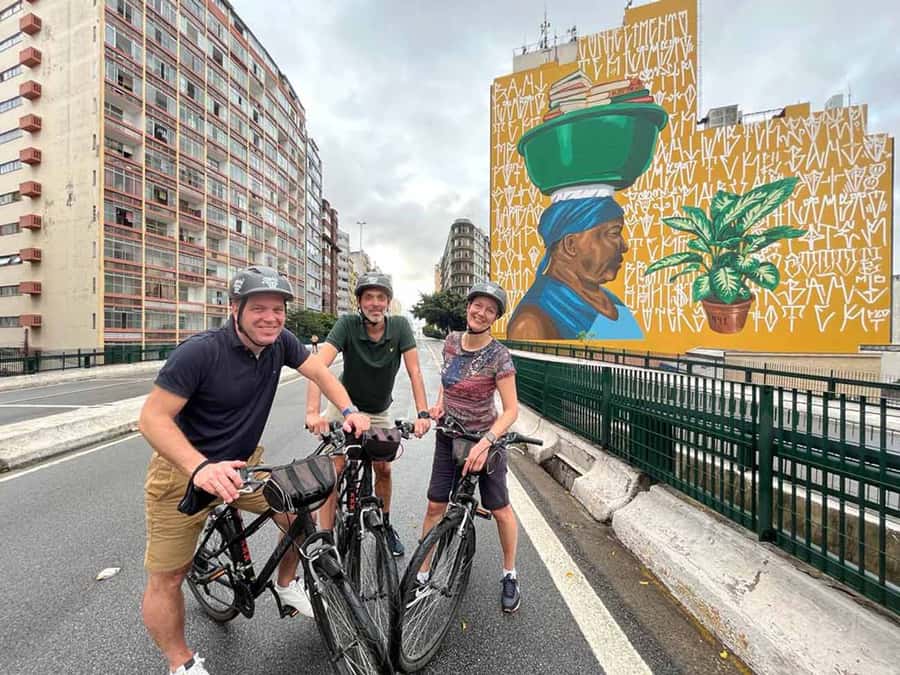
The route then shifts into central São Paulo, where the architecture becomes older, denser, and more varied. The Copan Building is a highlight for many people, and the 20-minute stop gives you time to study its great curving form.
Designed by Oscar Niemeyer, Copan is a modernist landmark with a shape unlike the more formal buildings around it. The surrounding area also helps explain why this stop matters. Here, you are not looking at an isolated monument. You are seeing a major piece of city architecture in the middle of working downtown.
This was one of the places I would mark for a return visit. The tour provides the overview, while a later walk lets you spend more time noticing street life and nearby buildings at your own pace. One guide, Pedro, has been praised for connecting architecture with economic cycles and major periods in São Paulo’s development. That kind of context makes the city easier to read.
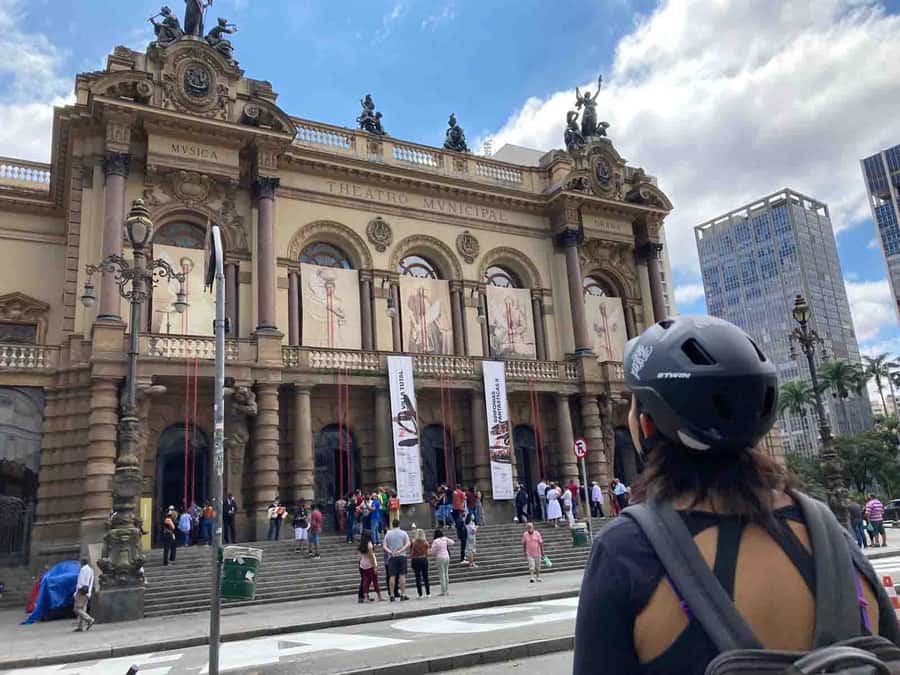
The ride continues through Praça Ramos de Azevedo and past the Municipal Theater. The theater’s grand European-inspired design can feel almost surprising in the middle of the modern metropolis. At the square, you get time to take in the façade and understand how this part of the center once served as a formal civic and cultural heart.
Same city, a completely different kind of day:
- São Paulo: Main City Sights in 7 Hours – Shared Group Tour
★ 4.9 · 587 reviews - São Paulo: City Highlights Guided Tour
★ 4.5 · 307 reviews - Private São Paulo City Tour
★ 4.8 · 264 reviews - From São Paulo: Santos, São Vicente & Guarujá Day Trip
★ 4.7 · 165 reviews
Vale do Anhangabaú and the historic center
Vale do Anhangabaú is one of the city center’s key public spaces. Political gatherings, cultural events, and major public moments have taken place here, so the stop offers more than another attractive building.
This is also where the bike format helps. From the saddle, you can sense the size of the space and the relationship between the valley, surrounding towers, and historic streets. The planned stop lasts around 20 minutes, enough for photographs and a short talk.
São Paulo’s center can be confronting. You may encounter poverty and signs of social strain alongside impressive architecture. That contrast is not something to gloss over, and a good guide can help you understand the colonial past, economic changes, and social issues that shaped the city.
Guides such as Jefferson and Raul have been praised for addressing those subjects directly, including the effects of Brazil’s colonial legacy on marginalized communities. If you want only polished sightseeing, this may feel serious at times. If you want a more honest introduction to São Paulo, it is one of the tour’s strengths.
Luz Station, Pinacoteca, and Luz Park
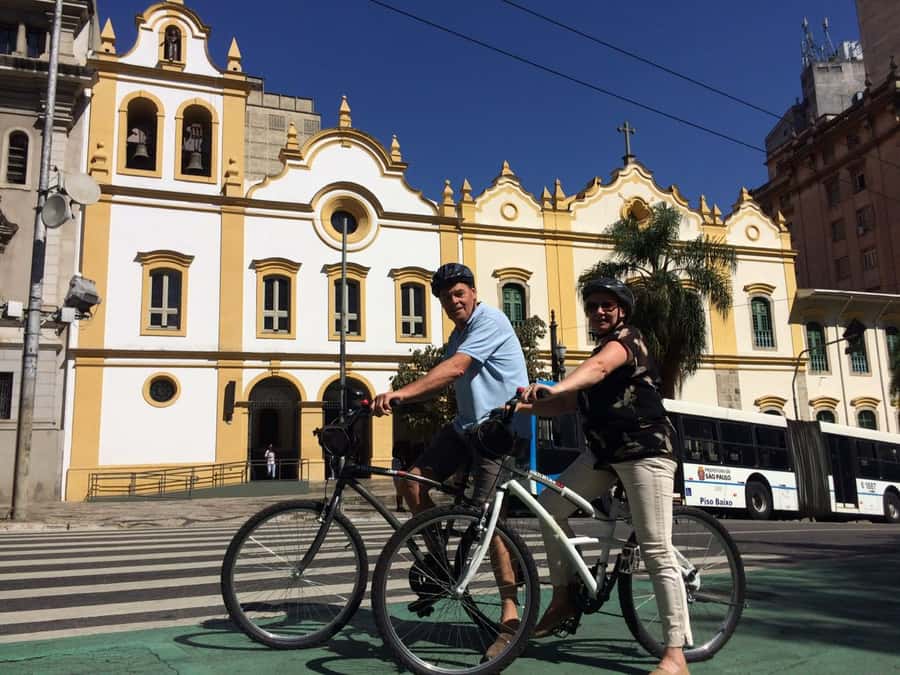
The next stretch leads toward Luz Station, a striking 19th-century railway station. Its architecture recalls the era when rail travel and coffee wealth helped shape São Paulo’s growth. The stop is brief, about 10 minutes, but the building is worth having your camera ready for.
Close by is the Pinacoteca de São Paulo, one of Brazil’s major art museums. Again, this tour offers an outside view and a quick stop rather than a full museum visit. If Brazilian art is a priority, note the museum’s location and return later with more time.
Luz Park gives the group another quiet pause. After central streets and traffic, the park allows you to reset before the final historic-center section. The route then crosses the Santa Ifigênia Viaduct, a useful viewpoint over the old center and a good place to appreciate how much ground you have covered.
The combination of station, museum, park, and viaduct is one of the route’s best sequences. You see transport, culture, open space, and city views within a short distance.
Pátio do Colégio and Sé Cathedral
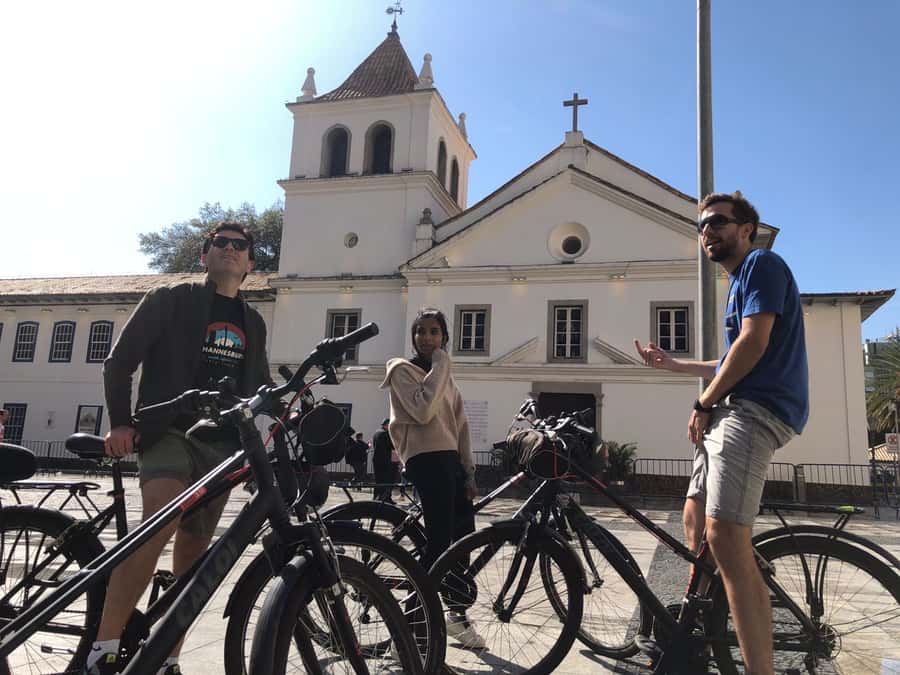
Pátio do Colégio is the symbolic starting point of São Paulo, founded in 1554. The stop is short, around 10 minutes, but it anchors the city’s story. After seeing the modern avenue and modernist Copan Building, you are now at the place tied to the city’s earliest foundation.
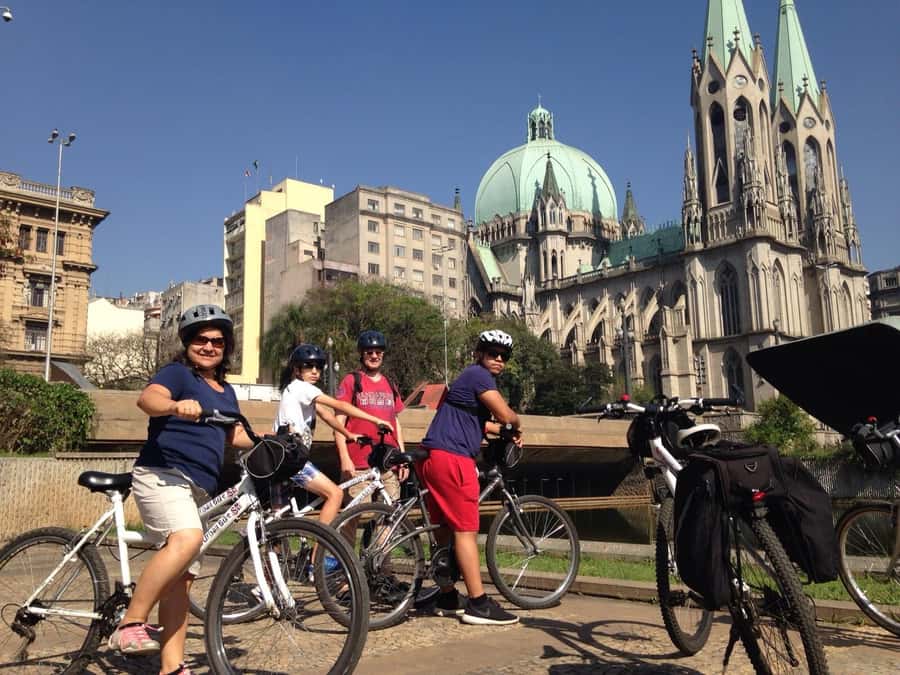
A few steps away, Sé Cathedral gives the tour a grand finish to the historic core. Its neo-Gothic design, tall columns, and stained-glass windows create a strong visual contrast with the surrounding streets. The visit is mainly a photo stop, so treat it as an introduction rather than a detailed interior tour.
I like the way these stops put the city’s age into perspective. São Paulo can feel like a modern business machine, but the Pátio do Colégio and Sé sections show that its story reaches much further back.
Liberdade’s Japanese-Brazilian character
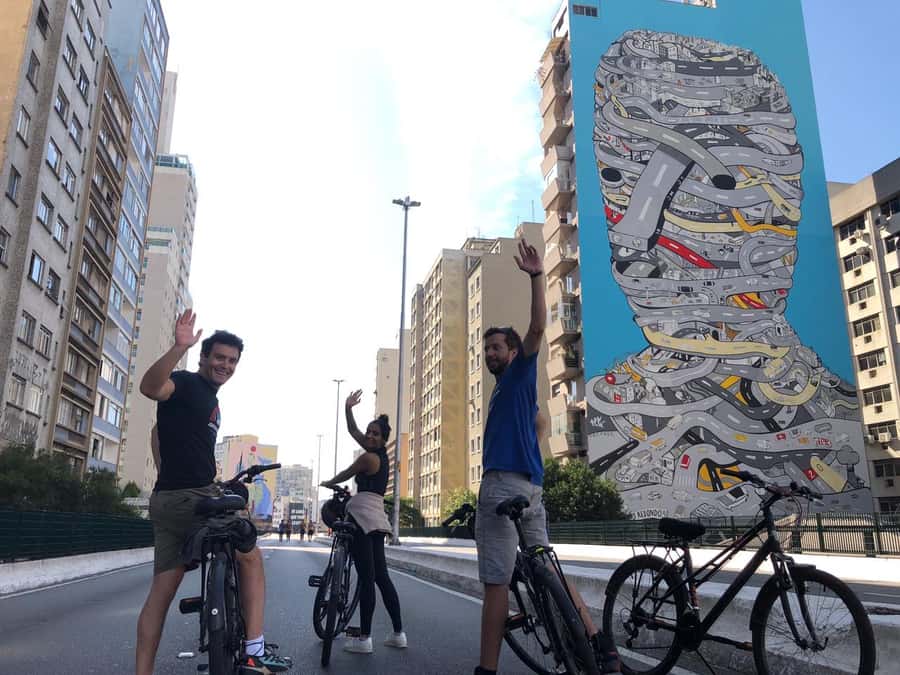
Liberdade is the final major neighborhood, and it changes the tone again. It is home to the largest Japanese community outside Japan, with streets marked by lanterns and torii gates. The result is not a copy of Japan. It is a distinctly Brazilian neighborhood shaped by Japanese traditions.
The 30-minute stop gives you time for photographs and a look at the area’s visual details. You may also encounter local food and small treats during the wider route. Past outings have included sugarcane water and fresh coconut, while this experience includes iced mate and pão de queijo at Portinha183.
Liberdade is especially useful as a reminder that São Paulo’s identity comes from many communities. The tour does not reduce the neighborhood to decoration. It places Liberdade within the city’s wider story of migration, culture, and daily life.
What the $85 price gets you
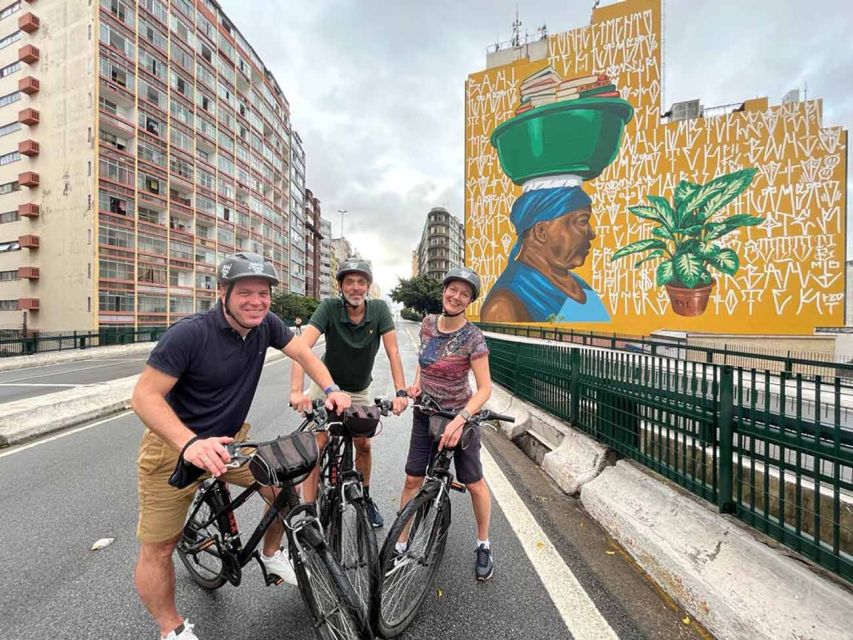
At $85 per person, this is not the cheapest way to see São Paulo. The value depends on how much you want from three hours.
You receive the bicycle, helmet, water bottle, raincoat if needed, guide, souvenir, iced mate, and pão de queijo. More important, you get a route that links districts too far apart for a comfortable walking tour. A guide also removes much of the work involved in planning a safe, logical path through a complicated city.
The small group, limited to 10 people, helps justify the price. You can ask questions, hear the guide, and stop without managing a large crowd. Some departures may be even smaller, and a few people have ended up with a private-style outing when demand was low.
I would see this as good value for a short stay, a first day in São Paulo, or a business trip with limited free time. If you are staying longer and already know the city well, you may prefer to explore the museums and neighborhoods independently.
Guides, pace, and languages
The tour runs in English, Spanish, or Portuguese. Guide quality matters greatly here because the ride covers so many places, and the strongest guides bring the city’s history into the streets.
Juliana has been praised for making the ride feel friendly and personal, while also sharing clear background on São Paulo. Arthur is known for his enthusiasm and for helping people feel safe. Pedro focuses well on architecture, history, and economic change. Roberto has been singled out for his passion, clear stories, and care with water breaks and group pace.
The practical pattern is consistent: test the bikes before leaving, keep a moderate speed, and use support at the back when available. One guide even sent a Strava link after the ride, which is a useful way to save the route and see how much of the city you covered.
The ride is not described as especially hilly, but some sections can be steep depending on your experience. Morning departures may be more comfortable in warm weather. Sunday can also be a smart choice because some traffic lanes close, leaving more room for bicycles.
Who should book this ride?
I would recommend it to solo visitors who want company without joining a huge group. It also suits couples, friend groups, and business visitors who need a fast introduction to São Paulo.
It works particularly well if you have one day in the city. You will not tour every museum or study each neighborhood in detail, but you will see the major districts and learn where to return.
You should be at least 13 years old and able to ride confidently. This is not the place to learn basic cycling skills. If heavy traffic makes you nervous, remember that much of the route uses bike paths, but not every moment will feel separated from cars and pedestrians.
Cancellation is free up to 24 hours before the start, and you can reserve now and pay later. The meeting point is easy to reach from Ana Rosa Station, but allow extra time if you are unfamiliar with the subway.
Should you book the São Paulo Downtown Historical Bike Tour?
Book it if you want broad city coverage, local context, and a manageable small group in three hours. The mix of Paulista Avenue, Copan, Luz, Sé, and Liberdade gives you a stronger sense of São Paulo than a short central walking route.
Skip it if you dislike cycling in traffic, want long museum visits, or are looking for a slow food tour. For everyone else, especially first-time visitors and people with limited time, the $85 cost is reasonable for the equipment, guide support, refreshments, and distance covered. Choose a cooler morning or a Sunday when possible, wear sunscreen, and bring curiosity along with your legs.
FAQ
Where does the bike tour start?
It starts at Portinha183 Café, Rua França Pinto, 183, in Vila Mariana, São Paulo. The café is about five minutes from Ana Rosa Subway Station on the Blue and Green lines.
How long is the tour?
The tour lasts three hours. Starting times vary, so you need to check availability when booking.
How far will I ride?
Expect to ride between 9 and 12 miles during the experience.
What languages are available?
Live guides are available in English, Spanish, and Portuguese.
How many people can join the group?
The tour is limited to 10 participants, making it a small-group experience.
Is bike experience required?
Yes. You must know how to ride a bike before joining.
What is included in the price?
Bike rental, a helmet, water bottle, raincoat if needed, a guide, and a souvenir are included. You also receive iced mate tea and pão de queijo before or after the ride.
Can children join the tour?
Children under 13 are not permitted to join.
Just added around Sao Paulo
- REIKI – Crystal Therapy – by Venus’ Secret Spa – San Francisco★ 5.0 · 41 reviews
- Private Half-Day Guided Tour to São Paulo★ 5.0 · 50 reviews
- Private Street Art Tour of São Paulo with Batman´s Alley Visit★ 5.0 · 30 reviews
- Private Tour: São Paulo’s Top Attractions–6 Hours, Hotel/Airport★ 5.0 · 50 reviews
- Full Day Private Beach Tour Santos & Guarujá – Combine Culture, History & Beach★ 5.0 · 37 reviews
- Downtown Photo Tour★ 5.0 · 45 reviews
- Gastronomic Tour São Paulo – Culture & History Through The Art Of Food – Private★ 5.0 · 50 reviews
- Facial Energization – by Venus’ Secret Spa – São Paulo★ 5.0 · 43 reviews
Cycling Tours, compared.
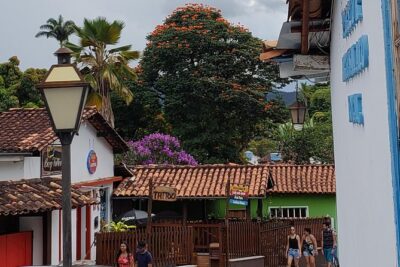
Pirenópolis, the charming baroque city inaugurated in 1723 in the gold cycle
Read our review →Browse the lists this tour appears in