
Reviewed · WORKSHOPS
Salvador: CAPOEIRA CLASS – CULTURAL
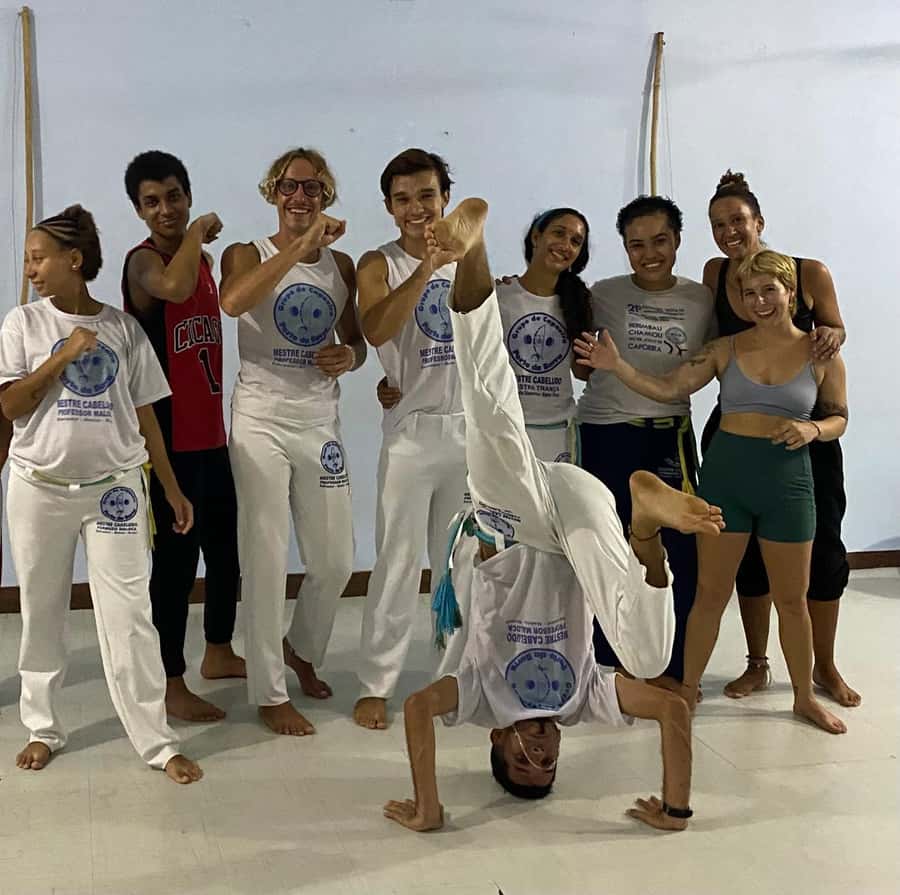
Capoeira is part martial art, part dance, part musical conversation. In Salvador, this 90-minute class lets you learn the basics while hearing how the art grew from resistance and empowerment into a living part of Brazilian culture. The session includes warm-up drills, kicks, spins, acrobatics, songs, and instruments.
I like the small group of up to eight, which gives the instructor room to watch your form. I also like that the class does not treat capoeira as a simple workout. You get physical training along with music, history, and the meaning behind the movements.
The main thing to consider is language. The class is taught in Portuguese, so you will need to follow demonstrations and gestures if you do not speak it. That has not stopped English and French speakers from enjoying the class, but it is worth knowing before you book.
In This Review
- Key points at a glance
- Why this Salvador capoeira class is more than exercise
- Starting with movement at Hostel Nomads
- Learning kicks, spins, and capoeira’s flowing style
- When kicks meet songs and instruments
- What the Portuguese-only instruction means for you
- The value of a $17 cultural workout
- Who will enjoy the class most
- Timing your evening in Salvador
- What the 90 minutes can realistically teach you
- My call: book it if you want to take part
- FAQ
- When is the capoeira class held?
- How long does the activity last?
- Where is the meeting point?
- What language does the instructor speak?
- How many people are in the group?
- What is included in the price?
Key points at a glance
- Monday and Wednesday at 7:30 PM: The evening schedule fits neatly into a day of sightseeing in Salvador.
- A real capoeira workout: Expect agility, flexibility, coordination, kicks, spins, and some acrobatic movement.
- Music is part of the lesson: You may learn songs and try the instruments used to accompany capoeira.
- Portuguese instruction: The master instructor teaches in Portuguese, with movement demonstrations helping bridge the language gap.
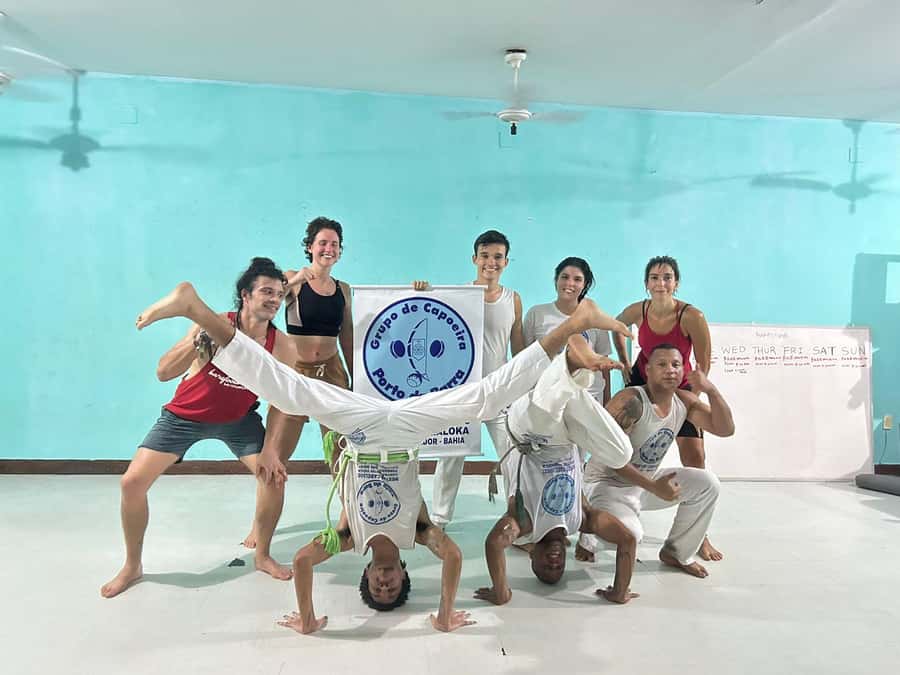
- Small group setting: With no more than eight participants, the class should feel more personal than a large tourist workshop.
- $17 for 90 minutes: The price is modest for a guided cultural activity that includes the class, workout tools, and water.
Why this Salvador capoeira class is more than exercise
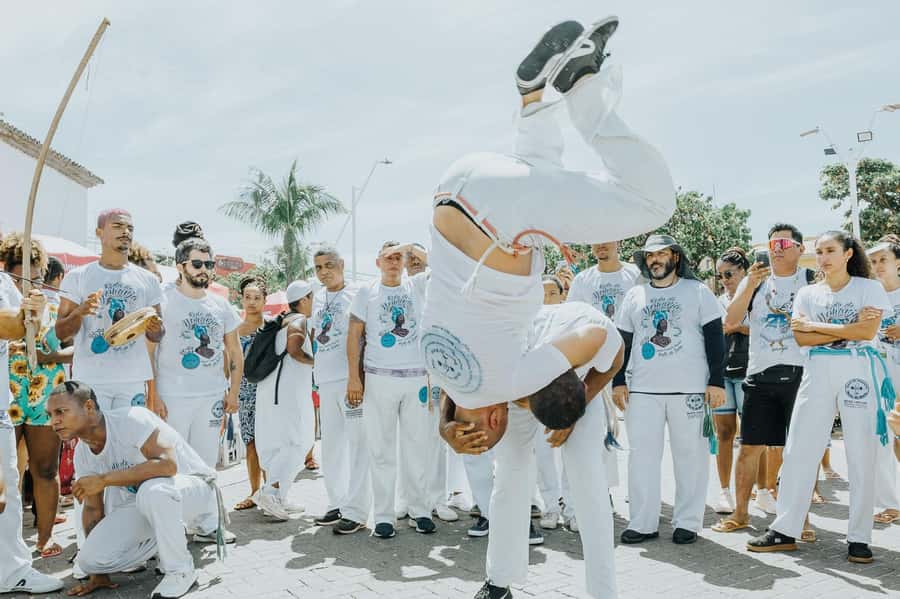
Capoeira can look mysterious when you first see it. Two people circle one another, trading kicks and evasive movements while music sets the pace. It is not quite a dance show and not quite a conventional martial arts lesson. The point is the conversation between bodies, rhythm, and timing.
That makes this class a good choice if you want to meet Salvador through something people do, not just something you look at. The activity connects movement with a story of resistance, strength, and cultural identity. You are not simply memorizing a fitness routine. You are learning why the art matters.
I especially like the balance between body, mind, and music. You work on balance and coordination, but you also have to listen, react, and express yourself. Even the basic movements ask you to think about rhythm and space.
The class is held every Monday and Wednesday at 7:30 PM at Hostel Nomads. That fixed evening time is useful. You can spend the day exploring Salvador and still have a structured local activity later on. It also gives you a chance to do something active after a day that may have involved plenty of walking.
A few more Salvador trips to weigh up
- Salvador: Capoeira Class at Mestre Bimba’s 1st Ever School.
★ 4.9 · 34 reviews - Salvador: Traditional Drumming and Percussion Workshop
★ 4.4 · 10 reviews - Salvador: 3-Hour Percussion Class
★ 4.9 · 10 reviews
Starting with movement at Hostel Nomads
The class begins with a lively warm-up. This part focuses on agility, flexibility, and coordination, which are the building blocks for capoeira. Do not think of it as filler before the real lesson. If your legs, shoulders, and hips are not ready, capoeira’s flowing movements become awkward fast.
You can expect the opening work to prepare you for the basic physical demands of the class. The emphasis is on getting your body moving and helping you find control. For beginners, this is important because capoeira asks you to shift direction, lower your body, and coordinate your arms and legs at the same time.
The instructor also introduces the cultural and historical context as the class progresses. That adds meaning to the exercise. You learn that capoeira developed through struggle and resistance, then became a strong part of present-day Brazilian culture.
The available information does not give the instructor’s name, but it identifies the teacher as an experienced master in capoeira. The teaching language is Portuguese. If you speak no Portuguese, you may miss some verbal detail, but the movements themselves are shown physically, and the class can still be followed through demonstration.
Learning kicks, spins, and capoeira’s flowing style
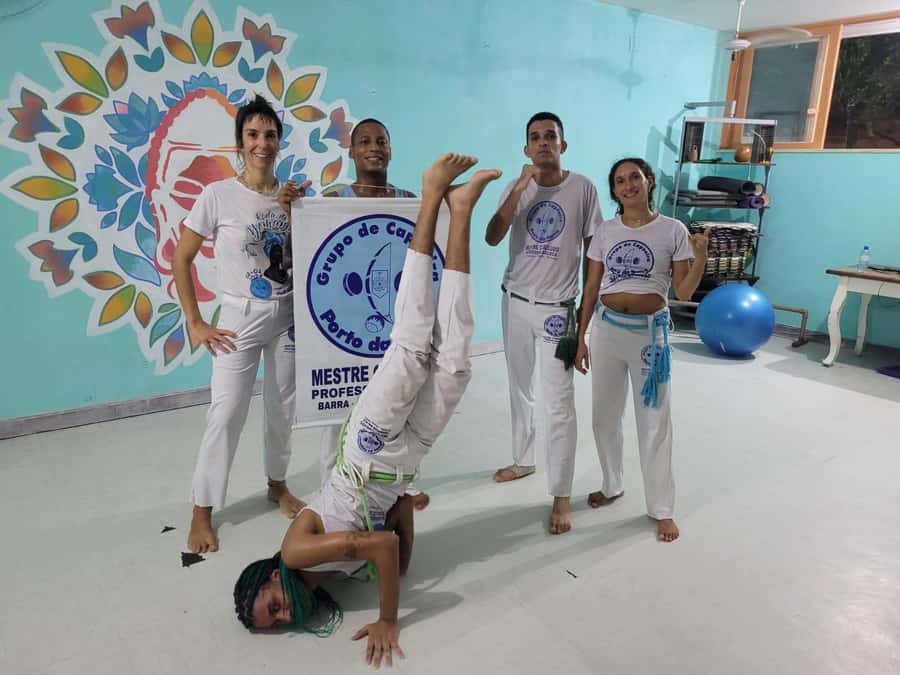
After the warm-up, the instructor guides you through sequences of kicks, spins, and acrobatic movements. The goal is not to turn you into a skilled capoeirista in one evening. It is to give you a clear first taste of the art and help you understand how the movements connect.
The word flow matters here. Capoeira is not presented as a row of stiff, isolated techniques. You learn to link movements and keep moving. A kick can become a turn, a defensive motion can lead into another step, and the rhythm helps keep the sequence alive.
That can be demanding for beginners. The activity is listed as a cultural class, but it is also a genuine workout. One participant described the 90 minutes as intensive and fun, with enough instruction to learn the basics and become interested in continuing. That is a fair way to think about the pace: accessible, but not passive.
You should expect to work at your own level. The class includes physical conditioning and may feature acrobatics, but the available details do not promise a particular level of acrobatic difficulty. If you are cautious about those movements, pay attention to the instructor and do only what feels suitable for your ability.
The small group size helps here. Eight people is enough for a social class, but not so many that you disappear in a crowd. The instructor can demonstrate, watch the group, and help participants keep the movements under control.
When kicks meet songs and instruments
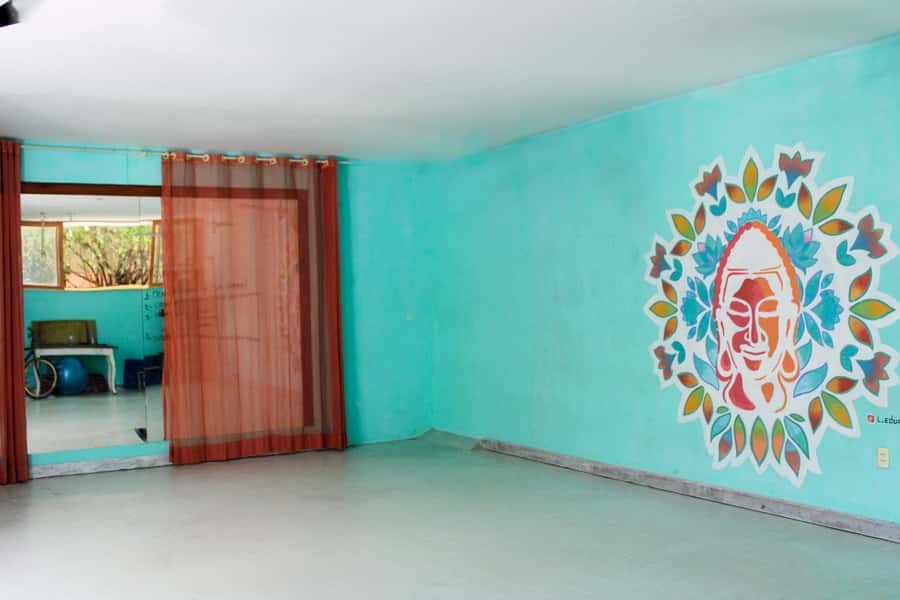
The music side is one of the most appealing parts of this activity. Capoeira is tied to rhythm and song, so the lesson includes more than physical technique. One participant specifically described learning songs and getting a chance to play the instruments.
That detail changes the feel of the class. You are not just copying a kick and waiting for the next exercise. You begin to see how movement, sound, and community fit together. Even a short lesson can show why capoeira is often described as both fight and dance.
You may not become comfortable singing in Portuguese after one session, but you can still take part in the musical side. The instructor can show you how the rhythm supports the movement. You also get a more honest picture of capoeira as a social practice rather than a gym routine with Brazilian decoration added afterward.
This is where the Portuguese language becomes less of a barrier and more of a cultural detail. You may not understand every word, but the songs belong to the tradition being taught. If you enjoy learning through sound and movement, this part will likely be a highlight.
Same city, a completely different kind of day:
- From Salvador: Schooner Tour to Frades Islands and Itaparica
★ 3.9 · 98 reviews - Afro-Brazilian Roots Private City Tour in Salvador
★ 4.7 · 88 reviews - Salvador Historic Walking Tour – Pelourinho
★ 4.8 · 62 reviews - Salvador de Bahia African Culture Tour
★ 4.5 · 60 reviews
What the Portuguese-only instruction means for you
The class is conducted in Portuguese, and this is the clearest practical drawback. You should not book it expecting a full explanation in English, French, or another language. The available information confirms Portuguese as the class language.
Still, the format may work well for people who do not speak Portuguese. Capoeira is highly visual. The instructor demonstrates kicks, spins, and sequences, and you copy the movement. A participant who did not speak a word of Portuguese still found the class worthwhile.
I would approach it with the right expectations. If you want detailed verbal corrections, historical explanation, or technical terminology in English, this may not be the best fit. If you are comfortable watching closely, repeating movements, and learning by doing, the language issue is easier to manage.
A few simple Portuguese words could help, but no language preparation is required by the activity details. More important is your willingness to pay attention. Watch the instructor’s feet, hands, posture, and timing. In a physical class, those visual cues often matter as much as spoken instructions.
The value of a $17 cultural workout
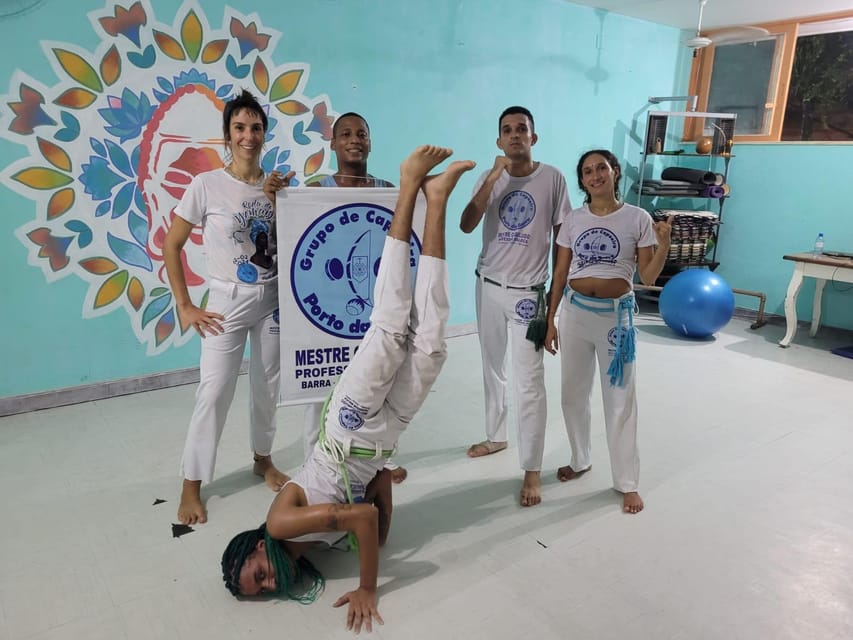
At $17 per person, the class is priced as an affordable introduction rather than a major splurge. You receive 90 minutes with a master capoeira instructor, workout tools, and water. The small group size adds value because your time is not spent standing behind a large crowd.
The price also covers two kinds of learning. You get physical instruction in basic capoeira movements, plus an introduction to the art’s history, songs, and instruments. If you booked a standard gym session, you might get the workout but not the cultural setting. If you watched a performance, you might get the spectacle but not the chance to try it yourself.
That combination makes the cost reasonable for a short Salvador activity. I would not judge it as a full capoeira course. Ninety minutes is enough for a first lesson, not enough to build advanced technique or serious acrobatic skill.
The best value comes if you take part fully. Watch the demonstrations, try the sequences, join the music, and ask for corrections when possible. If you stand back because the movements feel unfamiliar, the price may seem less attractive. This activity rewards participation.
Who will enjoy the class most
This class suits you if you like cultural activities that involve your whole body. You do not need to be an experienced martial artist or dancer. The session is designed to introduce the basics, and the teaching includes a warm-up before the more specific movements begin.
It is also a good pick for solo visitors and small groups. With up to eight participants, the class has a social feel without the scale of a big organized outing. You may also find it a useful way to meet people at Hostel Nomads while doing something distinctively connected to Salvador.
You will probably enjoy it most if you like:
- Active cultural experiences rather than passive sightseeing
- Music and rhythm as part of learning
- Beginner-level instruction with a real physical challenge
- Small groups and direct guidance
- Trying something that may feel unfamiliar at first
It may be less suitable if you want a quiet evening, dislike exercise, or need instruction in English. The class includes conditioning, kicks, spins, and acrobatic movement, so it is not a gentle lecture about capoeira.
The provided information does not state a minimum fitness level or specific accessibility arrangements. If you have concerns about movement or acrobatics, ask the provider before booking and let the instructor know at the start.
Timing your evening in Salvador
The 7:30 PM start gives this experience a clear place in your schedule. You can use the afternoon and early evening for other plans, then head to Hostel Nomads for the class. Since the activity lasts 90 minutes, it should finish at about 9 PM, though the stated duration is the only timing detail provided.
I would avoid packing a demanding late-night plan immediately afterward. The class can be intensive, and you may want time to cool down, drink water, and change before continuing your evening.
The two weekly sessions, Monday and Wednesday, offer some flexibility but not unlimited choice. Check the date carefully before you build your Salvador plans around it. The activity includes free cancellation up to 24 hours in advance for a full refund, and you can reserve now and pay later, which helps if your schedule is still shifting.
The meeting point is Hostel Nomads. Make sure you know how to reach that point before the start time, since the supplied details do not include hotel pickup or transportation. The activity is presented as a class at the hostel, not as a city tour with transfers.
What the 90 minutes can realistically teach you
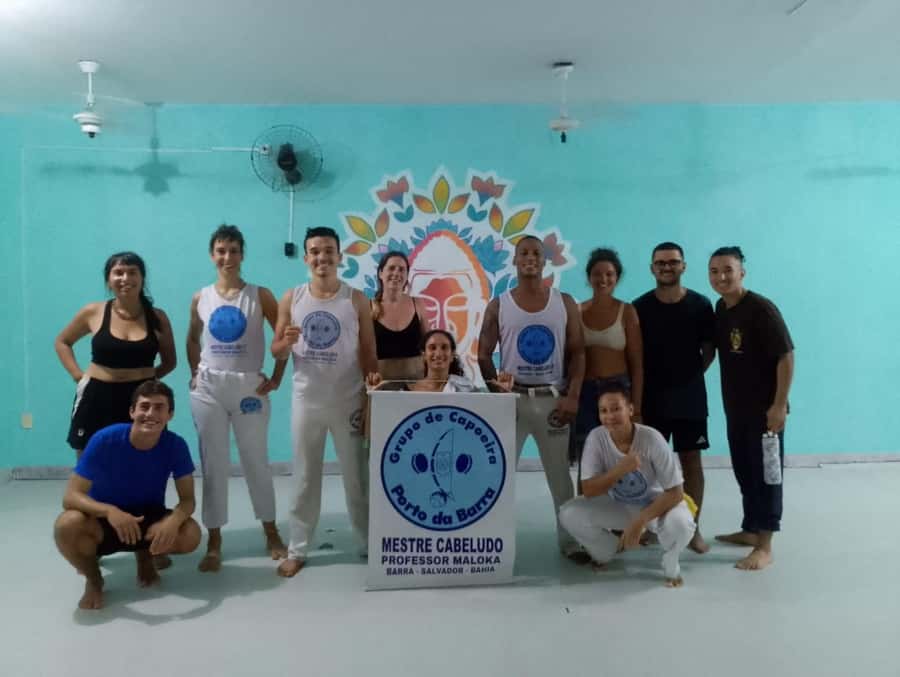
A single session can introduce the foundation of capoeira: warm-up and conditioning, basic movement sequences, kicks, spins, acrobatics, rhythm, and songs. It can also show you how the art combines physical skill with cultural expression.
What it cannot do is provide mastery. Capoeira takes repetition, strength, timing, and body awareness. Treat this class as an open door. You get enough instruction to understand the appeal and decide if you want to continue learning.
That modest goal is a strength, not a weakness. The class does not need to promise a transformation in one night. It gives you a real try at the basics and lets you feel the rhythm for yourself.
The strongest praise for this activity centers on the instructor’s care, energy, and teaching style. The teacher is described as attentive, professional, and good at helping beginners learn. Another participant called the class fun and said it provided a solid workout. Those qualities matter more than a long list of difficult moves.
My call: book it if you want to take part
I would book this Salvador capoeira class if you want a hands-on cultural activity and are happy to learn in Portuguese. The $17 price is fair, the 90-minute format is manageable, and the small group makes the lesson more personal.
Book it especially if you are curious about the connection between martial arts, dance, music, and Brazilian history. You will get more from the class if you join the songs and instruments instead of treating the session as a standard exercise class.
Skip it if you need English instruction, want a polished performance, or have no interest in physical movement. For everyone else, this is a lively and affordable way to spend a Salvador evening, with enough cultural depth to make the workout memorable.
FAQ
When is the capoeira class held?
The class is held every Monday and Wednesday at 7:30 PM.
How long does the activity last?
The class lasts 90 minutes.
Where is the meeting point?
The meeting point is Hostel Nomads.
What language does the instructor speak?
The instructor teaches in Portuguese.
How many people are in the group?
The group is limited to eight participants.
What is included in the price?
The booking includes the capoeira class, a master in capoeira instructor, tools to work out, and water.
Just added around Salvador
- Salvador: Schooner Cruise with Pickup and Itaparica Stop★ 3.8 · 5 reviews
- Salvador: Walking Tour Through Pelourinho★ 5.0 · 49 reviews
- Salvador: Cultural Treasure – Samba de Roda.★ 4.9 · 51 reviews
- Salvador: Traditional Drumming and Percussion Workshop★ 4.4 · 10 reviews
- Salvador: Cultural Night of Capoeira, Samba, and Drumming★ 4.9 · 17 reviews
- Salvador: 4-Hour Candomblé Mysteries Tour★ 4.3 · 34 reviews
- Salvador: Capoeira Class at Mestre Bimba’s 1st Ever School.★ 4.9 · 34 reviews
- Salvador, Bahia: A amazing Walking Tour!★ 5.0 · 14 reviews
Workshops, compared.

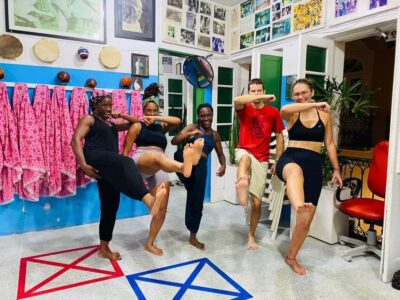
Capoeira Class at Mestre Bimba’s 1st Ever School.
Read our review →
Surf lessons with local instructors in Copacabana/ipanema!
Read our review →
Surf Lesson with Qualified Instructor in Florianópolis
Read our review →Browse the lists this tour appears in