
Reviewed · WORKSHOPS
Salvador: 3-Hour Percussion Class
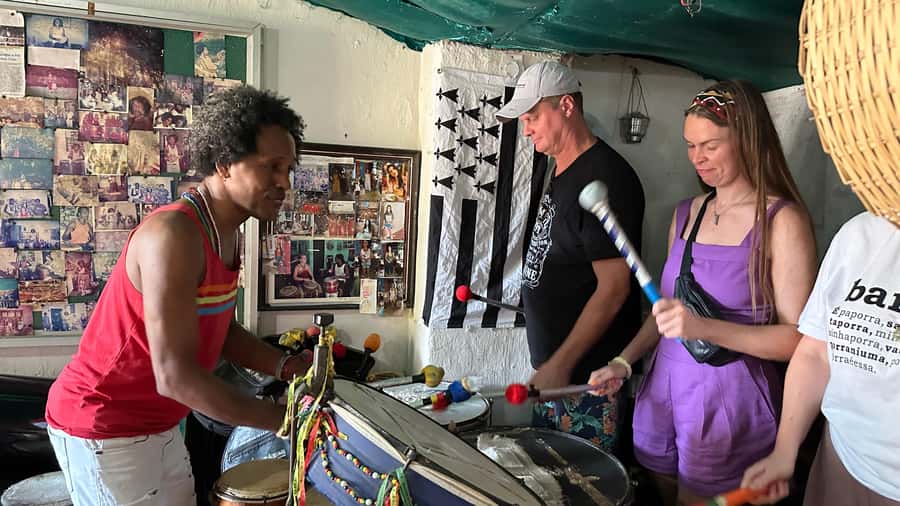
Salvador’s music is not just something you hear from a stage. It is part of public life, religious ceremony, and neighborhood culture. This class puts you inside that sound, with hands-on time on Brazilian drums and instruction from maestro Macambira, a patient teacher who works with beginners and experienced players alike. I especially like the chance to play several instruments and the small maximum of six people, which gives the session a personal feel.
I also like the local interpretation. The guide can translate Macambira’s demonstrations, so you are not left guessing at the technique or the meaning behind the rhythms. The main caution is the timing: the advertised three hours includes transport, and several people received only about one and a half to one hour and 45 minutes of class.
In This Review
- Key points to know before booking
- Why Bahia percussion matters beyond the beat
- Meeting the musicians and getting settled
- Learning from maestro Macambira
- Playing different drums instead of watching from the side
- Samba, samba reggae, and the sound of Salvador
- What the three hours really mean
- Who will enjoy this class most
- Practical planning for your Salvador day
- Is the $90 price worth it?
- Should you book the Salvador percussion class?
- FAQ
- How long is the Salvador percussion class?
- What musical styles will I learn?
- Who teaches the percussion class?
- What languages are available?
- How many people can join the class?
- Is hotel transportation included?
- Can I cancel for a full refund?
Key points to know before booking
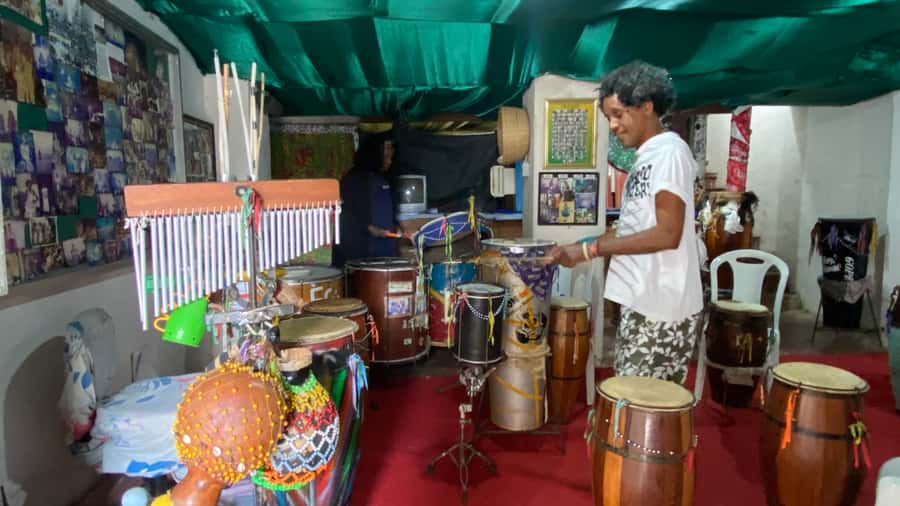
- Maestro Macambira leads the percussion class, with a guide helping translate demonstrations and explanations.
- You play several kinds of drums and work through Brazilian rhythms rather than simply watching a performance.
- Samba reggae is a major focus, linking Bahia’s African-influenced sound to the rhythm that drew Michael Jackson’s attention.
- The group is limited to six people, although the experience can also work well as a one-on-one class.
- Hotel pickup and drop-off are included, making the activity easy to fit into a Salvador itinerary.
- The real class time may be shorter than three hours, since the stated duration includes transportation.
Why Bahia percussion matters beyond the beat
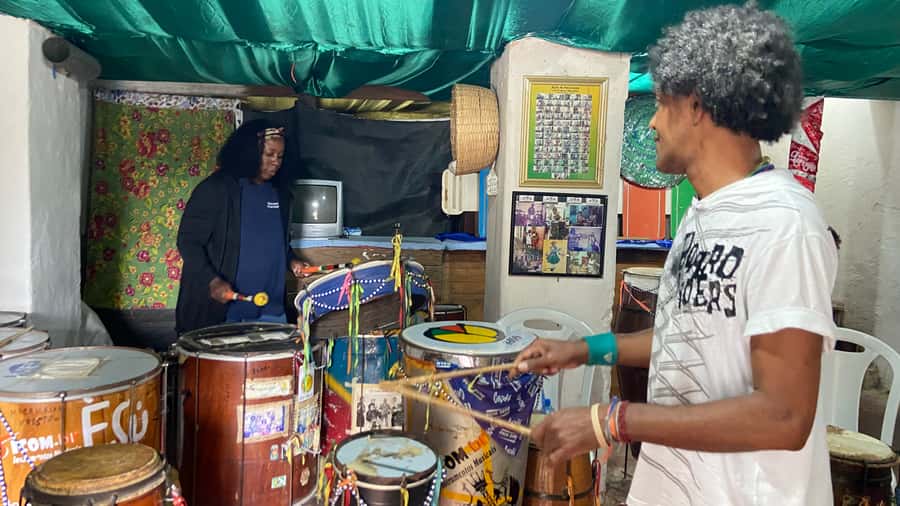
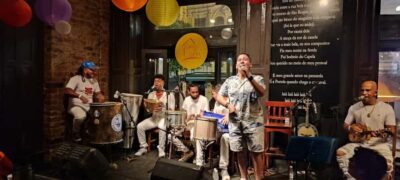
Percussion in Bahia carries more than melody. It gives songs their pulse, supports dance, and brings people together for events such as samba de roda and Candomblé ceremonies. It can also change the mood of a room quickly. A steady beat turns a collection of people into a group with one shared focus.
That context matters because this is not simply a lesson in hitting a drum. You are learning a small part of a musical culture shaped by African traditions and developed in Brazil. The class gives you a practical way to hear the difference between rhythms, feel their patterns in your hands, and understand why percussion has such a strong place in Bahian life.
You should not expect a formal concert with a long cultural lecture. The useful part is the physical work. You listen, copy a pattern, adjust your hands, and try again. For many people, that direct contact says more than a museum label ever could.
The class also introduces the range of Brazilian musical production. The advertised scope runs from samba reggae to jazz, with samba as a central reference point. That range helps show that Brazilian percussion is not one single sound. The instruments and patterns can support street music, dance, religious practice, arranged performance, and more polished musical forms.
A few more Salvador trips to weigh up
- Salvador: Capoeira Class at Mestre Bimba’s 1st Ever School.
★ 4.9 · 34 reviews - Salvador: CAPOEIRA CLASS – CULTURAL
★ 4.6 · 13 reviews - Salvador: Traditional Drumming and Percussion Workshop
★ 4.4 · 10 reviews
Meeting the musicians and getting settled
Your hotel lobby is the pickup point, and transport to and from the class is included. That removes one of the small stresses of booking an activity in an unfamiliar city. You do not need to arrange a separate taxi or work out how to reach the teaching space.
The exact starting time depends on availability, so you need to check the schedule when you book. The three-hour length can sound like a substantial morning or afternoon class, but the timing needs careful reading. The stated duration includes the journey, not three full hours with instruments.
Several participants received about 90 minutes of instruction, while another reported roughly one hour and 45 minutes in total. That difference may reflect transport or the day’s arrangements, but you should plan with a shorter hands-on session in mind. If you are booking mainly for a serious drumming lesson, this is the most important point to clarify before paying.
Once you arrive, the small format should help the class feel less like a public demonstration and more like a shared workshop. The maximum is six participants. One person also had a one-on-one morning, showing that the session can be especially personal when no larger group is present.
Learning from maestro Macambira
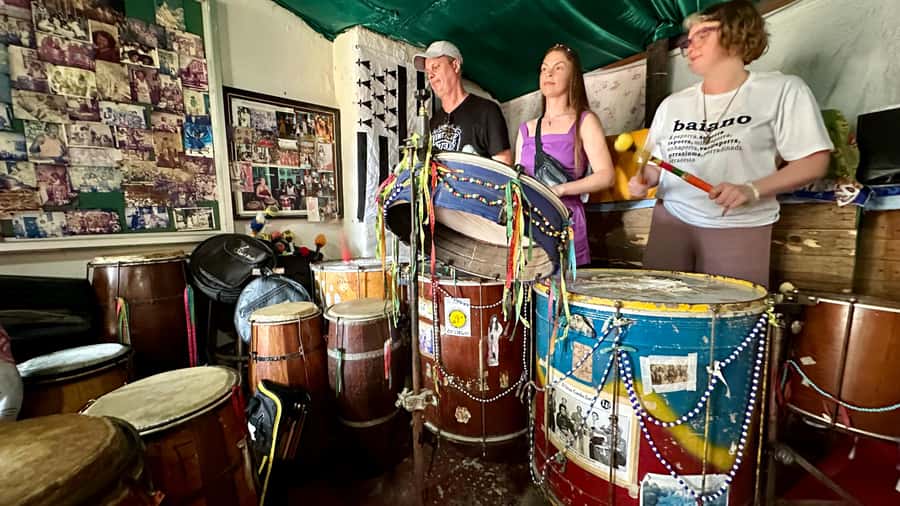
Maestro Macambira is the central figure in the class. The available information describes him as patient and friendly, and that matters when the subject is rhythm. Beginners often need repeated demonstrations, slower counts, and permission to make mistakes without feeling awkward.
You may start by watching his hands and listening for the shape of a pattern. Then you try it yourself. The guide translates what Macambira demonstrates, which is useful for both instructions and cultural explanation. English, Portuguese, and Spanish are available for the tour, so you should be able to communicate in one of those languages.
The translation is not a minor extra. Percussion instruction depends on timing, and a missed explanation can leave you playing the right instrument with the wrong pattern. Having someone interpret the lesson lets you ask questions and understand what you are meant to hear.
The teaching also appears to suit mixed ability levels. Someone with a strong interest in percussion can try several instruments and work on different rhythms, while a complete beginner can follow a patient demonstration. Do not expect an advanced conservatory course, though. The class is designed as a cultural activity with practical participation, not as a long-term technical program.
Playing different drums instead of watching from the side
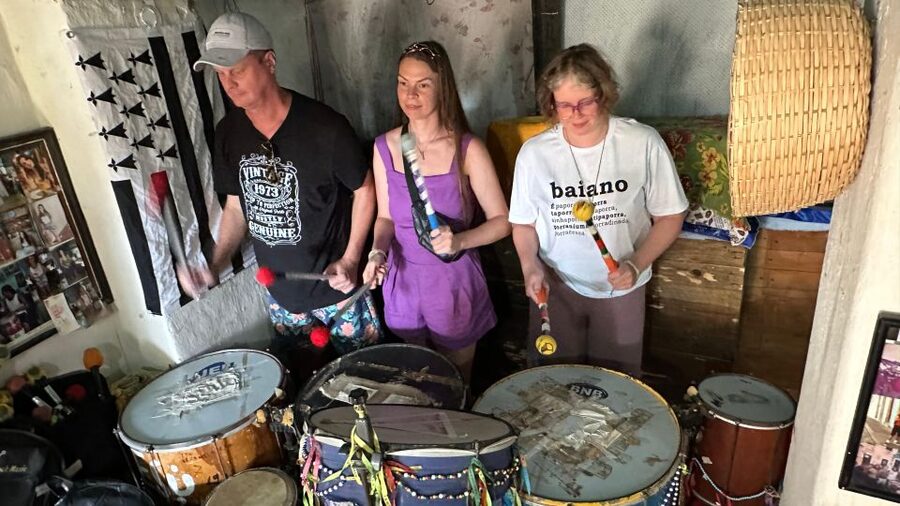
The hands-on element is the strongest reason to book. You get to play different drums and join the group in a shared rhythm. That changes the experience from a performance you observe into a sound you help create.
There is a simple pleasure in hearing the beat come together. You may begin with separate attempts, each person finding the timing at a different speed. Then the parts start to fit, and the group produces a fuller sound. Even a short session can leave you with a clear memory of the rhythm because your hands, ears, and attention all take part.
The session may not offer a long list of instruments. One participant felt that not enough instruments were tried and that the beats stayed quite simple. That is a fair concern if you already play percussion or hope for a demanding technical lesson.
For a first encounter, simple beats can be useful. They give you a chance to understand the pulse and take part without spending the entire session correcting mistakes. More experienced players may find the material basic, especially if they are expecting a broad survey of Brazilian instruments or complex arrangements.
The best fit is someone who wants a focused introduction and a memorable cultural activity. You will likely get more from it if you listen closely, ask questions, and treat the class as a chance to feel Bahia’s rhythm rather than as a test of musical ability.
Same city, a completely different kind of day:
- From Salvador: Schooner Tour to Frades Islands and Itaparica
★ 3.9 · 98 reviews - Afro-Brazilian Roots Private City Tour in Salvador
★ 4.7 · 88 reviews - Salvador Historic Walking Tour – Pelourinho
★ 4.8 · 62 reviews - Salvador de Bahia African Culture Tour
★ 4.5 · 60 reviews
Samba, samba reggae, and the sound of Salvador
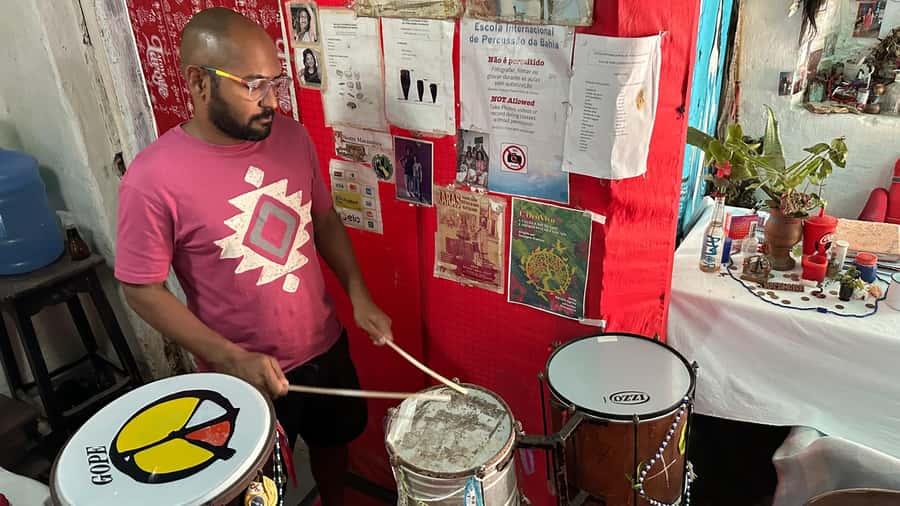
Samba is one of the main rhythms discussed in the class. You learn how its pattern works and why it has such a central place in Brazilian music. The lesson then places samba reggae within the wider story of Bahia’s sound.
Samba reggae combines the drive of reggae with Brazilian percussion traditions. The result is a strong, layered rhythm associated with Bahia and its public musical life. The class connects this style to the international attention it received, including Michael Jackson’s interest in the sound.
That detail gives the lesson a useful bridge between local culture and global popular music. You are not only learning an isolated beat. You are hearing how a Bahian rhythm became recognizable far beyond Brazil.
The class may also touch on jazz and the wider flexibility of Brazilian musical production. The information provided does not promise a full lesson in each style, so you should not book it expecting equal time on samba, samba reggae, and jazz. Think of those forms as part of the musical setting around the workshop.
The African connection is also important. Bahia’s rhythms were shaped by African musical traditions, and percussion remains linked to dance, ceremony, and community. The session introduces that influence without requiring you to be a music scholar. You learn through sound, repetition, and brief explanations.
What the three hours really mean
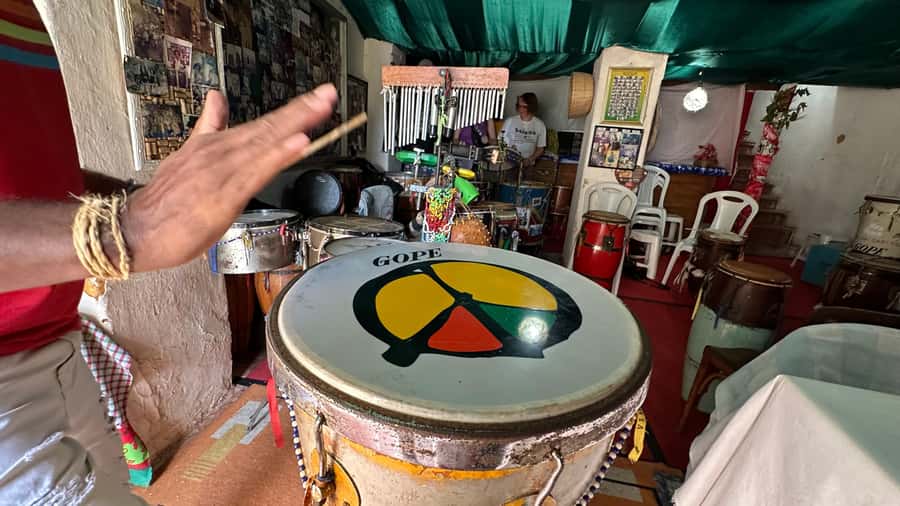
The advertised duration is three hours, but you should separate travel time from lesson time. Hotel pickup and drop-off are included, which is convenient, yet it means the activity may not provide three hours at the drums.
The clearest pattern from the available feedback is a class of about 90 minutes, with one person reporting around one hour and 45 minutes overall. That makes the activity shorter than the headline duration for anyone measuring time by instruction rather than door-to-door transport.
This matters for value. At $90 per person, the price is not cheap for a short music lesson. You are paying for transport, a professional guide, access to the teaching session, and the chance to work with a local percussionist. A small class also costs more than a large group show because you receive more direct attention.
Still, the price can feel high if you receive only the shorter class length and do not use the cultural explanation or transport service. I would consider it a reasonable splurge for a visitor who places high value on music and wants a personal activity. I would be less quick to recommend it to someone comparing it with several longer, lower-cost activities in Salvador.
Ask about the expected hands-on duration before booking if the price is a concern. The cancellation terms allow a full refund when you cancel at least 24 hours in advance, and you can reserve now and pay later. Those terms give you some flexibility, but they do not change the need to judge the class on its actual instruction time.
Who will enjoy this class most
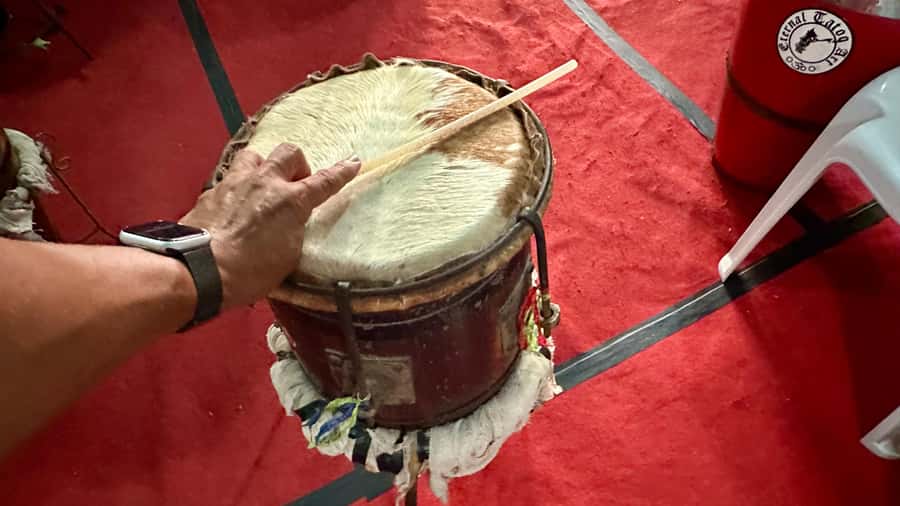
This experience suits you if you have an active interest in percussion, Brazilian music, or Afro-Brazilian culture. You do not need to play an instrument. The class is built around demonstration and participation, so beginners can take part.
It is also a good choice for a couple, family, or small group that wants to make music together. The small-group limit makes it easier for people to hear the teacher and get time with the instruments. A multigenerational group has taken part successfully, so the activity can work across ages when everyone is willing to participate.
You may enjoy it less if you want a long, demanding course. The material can remain simple, and the class may last closer to 90 minutes than three hours. Advanced musicians should set modest expectations and focus on the cultural setting, the teacher’s approach, and the chance to play Brazilian rhythms with local guidance.
The language setup helps widen the appeal. Instruction is available in English, Portuguese, and Spanish, with the guide translating the teacher’s demonstrations when needed. That is especially useful for anyone who does not speak Portuguese but still wants to understand the lesson rather than copy movements without context.
Practical planning for your Salvador day
Because pickup and drop-off take place at your hotel lobby, the activity is easy to place in a day of sightseeing. Check the available start times and leave room around the pickup window. Since transport is part of the three-hour estimate, avoid booking another fixed activity immediately afterward.
Food and drinks are not included. Plan to eat before or after the class, depending on the departure time. There is no need to build the day around a meal at the workshop itself.
The class cannot accommodate wheelchairs. If you use a wheelchair, this activity will not meet your access needs. The supplied information does not give further details about other mobility requirements, so you should ask the provider directly if you need specific assistance.
Wear something that lets you sit and move your arms comfortably. The information does not specify a dress code or equipment list, so you do not need to arrive expecting a formal performance outfit. The important thing is being ready to handle instruments and follow repeated demonstrations.
You should also keep your expectations clear about the setting. This is a cultural workshop in an area associated with musical production, not a sightseeing route through a list of Salvador landmarks. The main attraction is the lesson itself and the contact with local musicians.
Is the $90 price worth it?
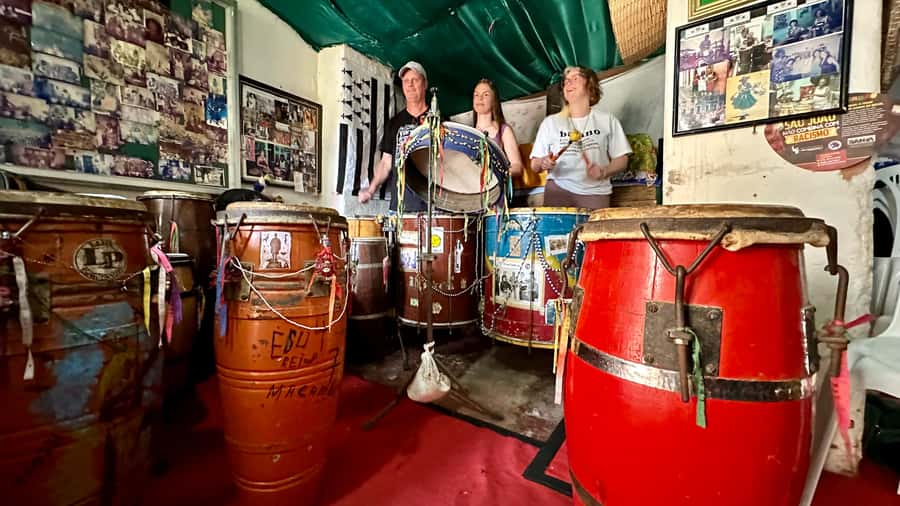
I see this as a specialized Salvador experience rather than a general city tour. The price includes hotel transport, entrance fees, and a professional guide, but the real value comes from the music session with Macambira and the translation that makes the teaching accessible.
For someone who loves drums, that personal contact can justify the cost. You handle multiple instruments, learn recognizable Brazilian rhythms, and take part in a group jam. Those are hard to replace with a standard performance where you remain in the audience.
For a casual visitor, the calculation is less clear. The reported lesson length of 90 minutes to one hour and 45 minutes makes $90 feel expensive, especially when the beats may stay basic. You should book because the subject interests you, not because the three-hour label suggests a long class.
The strongest parts are the teacher, the chance to play, the local interpretation, and the small group. The weakest parts are the uncertain class length and limited depth for advanced players. I would call it worthwhile for music-focused visitors, but only after confirming how much time will be spent actively drumming.
Should you book the Salvador percussion class?
Book it if you want to do more than watch Salvador’s music from the sidelines. You will get a direct, friendly introduction to samba and samba reggae, a chance to play different drums, and help from a guide who translates the lesson. The small group is a real advantage.
Skip it if you need a full three-hour class, advanced instruction, or a low-cost activity. At $90, the experience depends on your interest in percussion and the value you place on personal cultural contact.
My practical advice is simple: confirm the expected hands-on class time before you commit. If you are happy with roughly 90 minutes to one hour and 45 minutes of instruction, this can be one of Salvador’s more memorable music activities. If you expect three full hours at the drums, the experience may leave you wanting more.
FAQ
How long is the Salvador percussion class?
The activity is advertised as three hours, including transportation. The hands-on class may last about 90 minutes to one hour and 45 minutes.
What musical styles will I learn?
The class focuses on Brazilian rhythms, including samba and samba reggae. The wider musical context can range from samba reggae to jazz.
Who teaches the percussion class?
The class is taught by maestro Macambira. A guide helps translate his demonstrations and explanations when needed.
What languages are available?
The tour is available in English, Portuguese, and Spanish.
How many people can join the class?
The activity is limited to a maximum of six participants. It can also take place as a one-on-one session.
Is hotel transportation included?
Yes. Pickup and drop-off at your hotel lobby are included.
Can I cancel for a full refund?
Yes. You can cancel up to 24 hours in advance for a full refund. You can also reserve now and pay later.
Just added around Salvador
- Salvador: Schooner Cruise with Pickup and Itaparica Stop★ 3.8 · 5 reviews
- Salvador: Walking Tour Through Pelourinho★ 5.0 · 49 reviews
- Salvador: Cultural Treasure – Samba de Roda.★ 4.9 · 51 reviews
- Salvador: Traditional Drumming and Percussion Workshop★ 4.4 · 10 reviews
- Salvador: CAPOEIRA CLASS – CULTURAL★ 4.6 · 13 reviews
- Salvador: Cultural Night of Capoeira, Samba, and Drumming★ 4.9 · 17 reviews
- Salvador: 4-Hour Candomblé Mysteries Tour★ 4.3 · 34 reviews
- Salvador: Capoeira Class at Mestre Bimba’s 1st Ever School.★ 4.9 · 34 reviews
Workshops, compared.

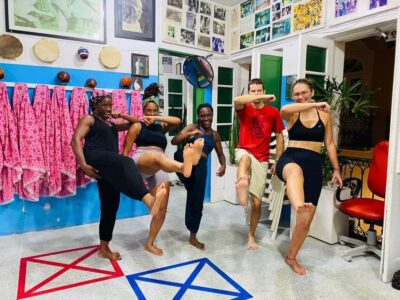
Capoeira Class at Mestre Bimba’s 1st Ever School.
Read our review →
Surf lessons with local instructors in Copacabana/ipanema!
Read our review →
Surf Lesson with Qualified Instructor in Florianópolis
Read our review →Browse the lists this tour appears in