
Reviewed · WORKSHOPS
Salvador: Capoeira Class at Mestre Bimba’s 1st Ever School.
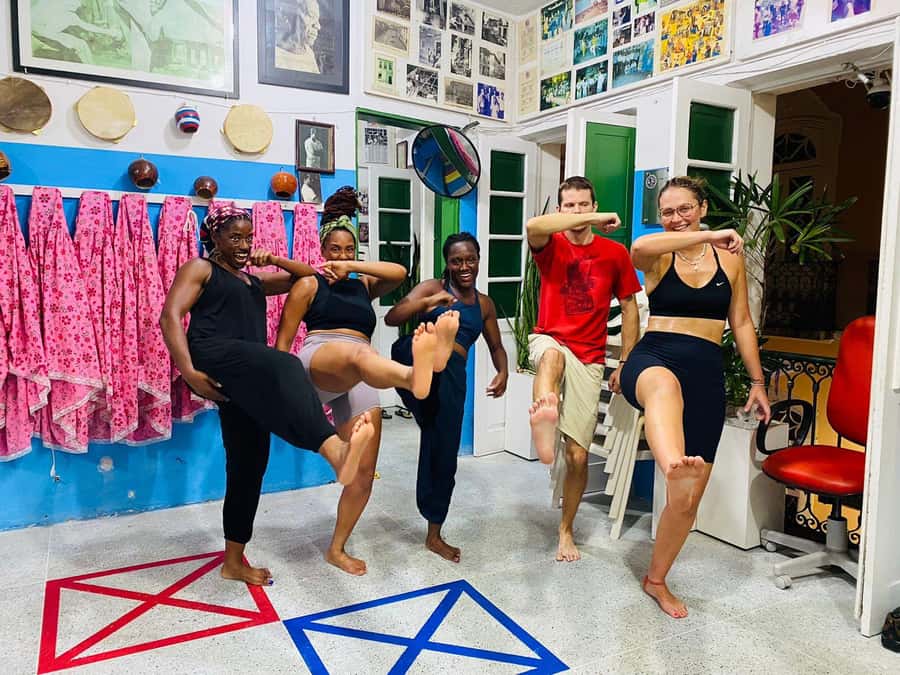
Capoeira here is more than a workout. You learn at the first capoeira school in Brazil, founded by Mestre Bimba in 1937, where the lesson connects movement with Afro-Brazilian culture. I like that beginners are the focus, and I like that Yasmin explains the story behind the art instead of rushing straight into exercise. The main thing to consider is the pace: one hour can be physically demanding, especially for your legs.
I also like the welcoming tone. First-timers, families, and people with no martial arts background can join without feeling out of place. You should still expect to sweat, wear comfortable sports clothes, and leave some energy in reserve for Salvador’s heat.
In This Review
- Key points to know before booking
- Why this Salvador class feels different
- Meeting the class near Largo do Terreiro de Jesus
- The opening: culture before movement
- Learning the first attacks and defenses
- Finding the flow between martial art and dance
- What the one-hour format gives you
- The physical side: come ready to sweat
- Yasmin’s teaching style for first-timers
- Is $43 good value for one hour?
- Who should book this class?
- Final decision: book it if you want to participate
- FAQ
- Do I need previous capoeira experience?
- How long does the class last?
- How much does the class cost?
- Which languages does the instructor speak?
- What does the lesson teach?
- Where do I meet the instructor?
- Is transportation or pickup included?
Key points to know before booking
- The class takes place at Mestre Bimba’s first school, the Associação de Capoeira Mestre Bimba, founded in 1937.
- You need no previous capoeira experience. The lesson is made for people who have never trained.
- Yasmin teaches attacks, defenses, and flow movements in English and Portuguese.
- The lesson links physical training to Afro-Brazilian ancestry, music, dance, and culture.
- The one-hour class costs $43 per person and includes bottled water.
- You meet at the school in Largo do Terreiro de Jesus, near Ó Paí Ó Restaurante and São Domingos Gusmão Church.
Why this Salvador class feels different
Salvador is one of the best places to learn capoeira because the art is tied closely to the city’s Afro-Brazilian identity. This class gives you a physical way to understand that connection. You are not simply copying a few kicks for a photo. You are learning why capoeira carries martial arts, dance, music, discipline, self-defense, and ancestry in the same circle.
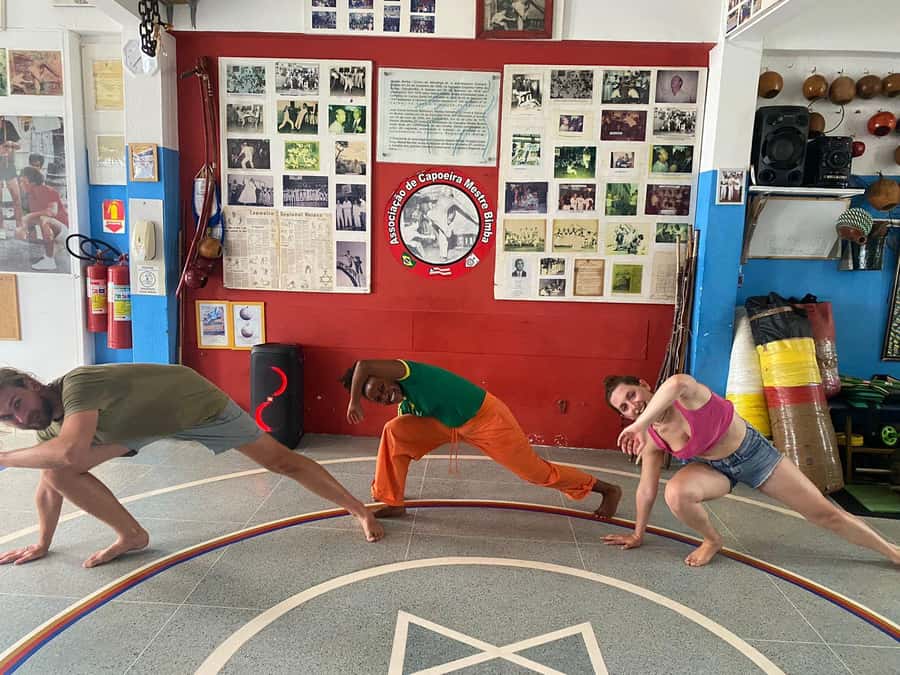
The setting matters, too. This is not a generic fitness studio with a capoeira theme added afterward. The Associação de Capoeira Mestre Bimba traces its teaching tradition to 1937, when Mestre Bimba founded the first capoeira school in Brazil. That history gives the hour a sense of place that a standard gym class cannot provide.
I would choose this activity if you want to understand Salvador through participation instead of only looking at monuments. You will still learn the basics of the movements, but the lesson also gives you a compact introduction to an art form that has shaped Brazilian culture.
The class has earned a 4.9 rating from 34 reviews, with particularly strong praise for Yasmin’s patience, encouragement, and clear demonstrations. That matters for a beginner class. Capoeira can look fast and complicated when you first see it, so having an instructor who waits until everyone understands makes a real difference.
A few more Salvador trips to weigh up
- Salvador: CAPOEIRA CLASS – CULTURAL
★ 4.6 · 13 reviews - Salvador: Traditional Drumming and Percussion Workshop
★ 4.4 · 10 reviews - Salvador: 3-Hour Percussion Class
★ 4.9 · 10 reviews
Meeting the class near Largo do Terreiro de Jesus
You make your own way to the Associação de Capoeira Mestre Bimba. There is no pickup service, so allow time to find the school before the scheduled start. The meeting point is in Largo do Terreiro de Jesus, a useful historic-area location with clear nearby landmarks.
If you need help finding the entrance, use Ó Pai Ó Restaurante or São Domingos Gusmão Church as reference points. These landmarks are specifically noted as being close to the association. I would save the meeting details on your phone before leaving your accommodation, especially if you are navigating Salvador’s older streets for the first time.
Because the class lasts only one hour, arriving late takes a noticeable bite out of the lesson. You want time to locate the school, settle in, and start without feeling hurried. The booking information does not give a required arrival time, so check your confirmation for the exact meeting instructions.
The opening: culture before movement
The lesson begins with context about capoeira’s cultural and historical importance. That introduction is one of the best reasons to book this particular class instead of treating capoeira as just another exercise session.
You learn that capoeira is an Afro-Brazilian martial art combining fight, culture, dance, music, and acrobatics. Its physical vocabulary makes more sense when you understand that it is connected to Afro-Brazilian ancestry and identity. This background also helps you see why capoeira does not fit neatly into one category. It is not only a combat system, not only a dance, and not only a performance.
Yasmin has been praised for explaining the history clearly and making sure the physical lesson does not lose that cultural side. Her teaching is especially useful if you know little about Brazil or have never seen capoeira outside a performance. The historical explanation gives the movements a purpose before you begin practicing them.
Instruction is offered in English and Portuguese. That makes the class practical for international visitors, while the Portuguese setting keeps the lesson connected to Salvador rather than turning it into a fully detached tourist activity.
Learning the first attacks and defenses
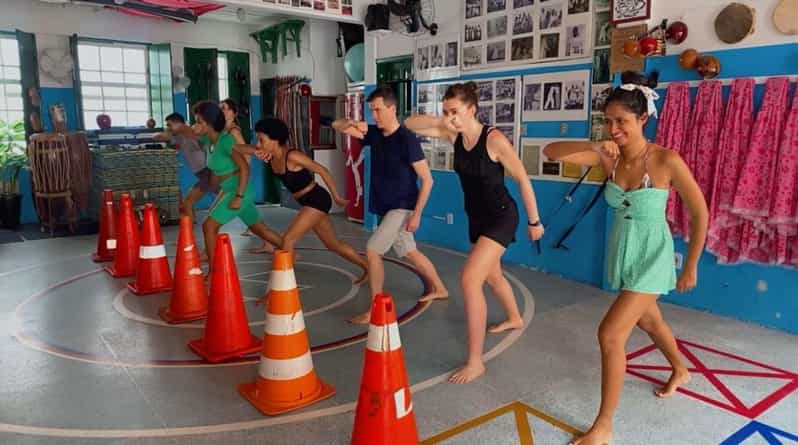
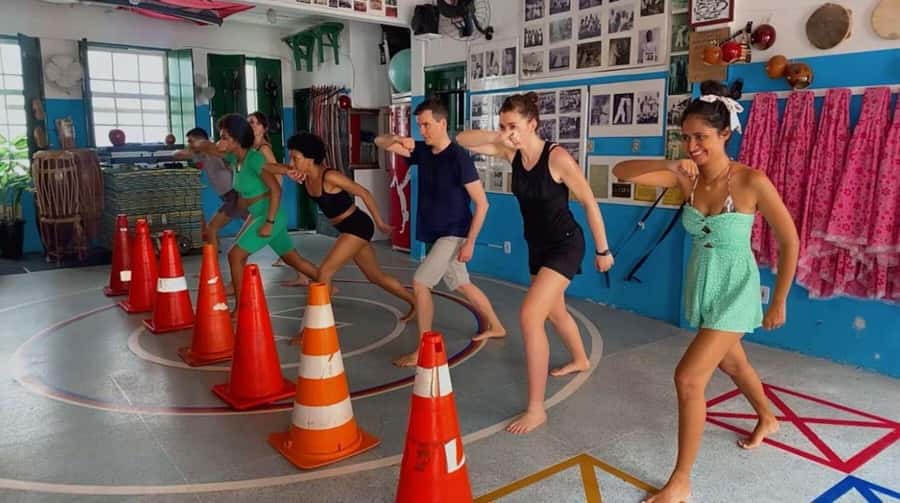
Once the introduction is complete, Yasmin teaches basic attacks and defenses. You do not need prior martial arts training, flexibility, or capoeira knowledge. The class is designed for people who have never trained in the art.
The key benefit is structure. Instead of being asked to imitate a complicated sequence, you learn individual movements and build from there. Yasmin has been praised for demonstrating patiently and checking that people understand before moving on. For a first lesson, that approach is more important than showing off advanced tricks.
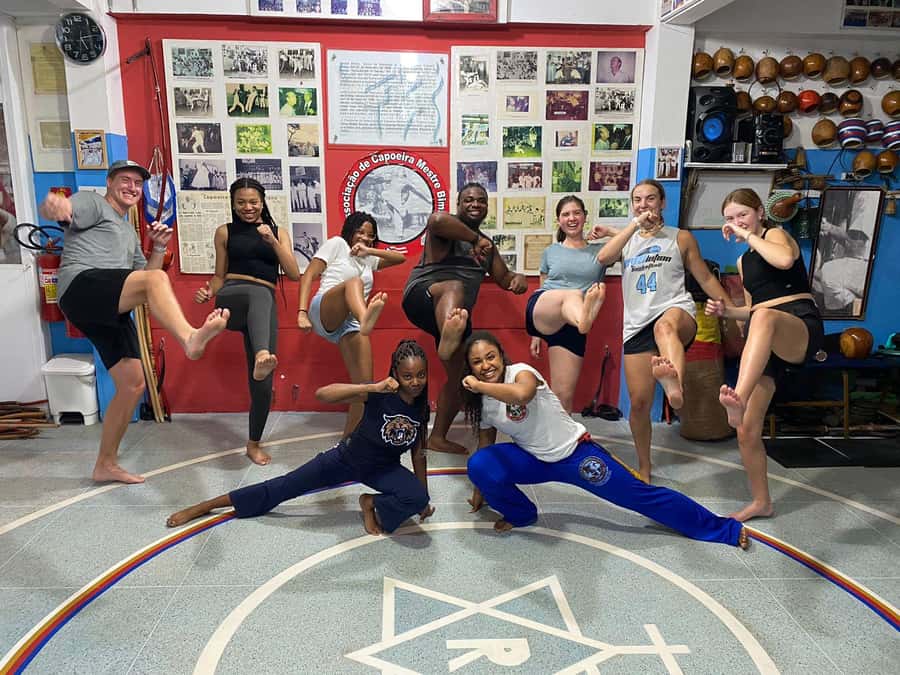
Expect the work to involve your legs and core. Capoeira uses a low, mobile stance, and even basic movements can feel strenuous when repeated. One participant described the class as an intense workout, with tired legs lasting for days. That is useful advice, not a warning to stay away. It means you should treat the lesson as physical activity, even though the cultural material gives it a wider purpose.
You control your own effort. Beginners should focus on learning the movement cleanly rather than trying to match the speed of experienced students. The class environment has been described as kind and inclusive, with beginners able to participate alongside people who already know more.
Same city, a completely different kind of day:
- From Salvador: Schooner Tour to Frades Islands and Itaparica
★ 3.9 · 98 reviews - Afro-Brazilian Roots Private City Tour in Salvador
★ 4.7 · 88 reviews - Salvador Historic Walking Tour – Pelourinho
★ 4.8 · 62 reviews - Salvador de Bahia African Culture Tour
★ 4.5 · 60 reviews
Finding the flow between martial art and dance
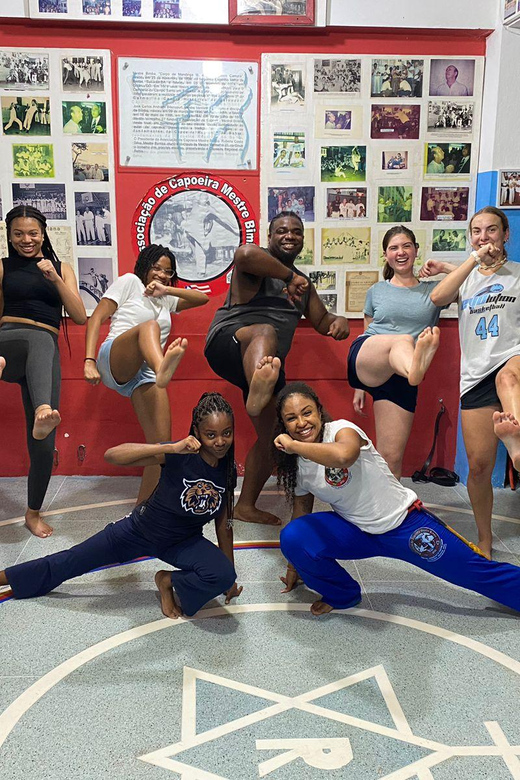
The next part brings the movements together. Capoeira’s flow is what gives the art its distinctive character. You are not simply standing in place and performing isolated attacks. You learn to move continuously, shifting weight, responding, and connecting one action to the next.
This is where many first-timers begin to understand why capoeira is often described through several words at once. The movements can look like dance, but they have a martial purpose. The rhythm and flow can feel playful, but the lesson still teaches discipline, defense, and body control.
Do not expect to master acrobatics in one hour. The advertised focus is on beginner attacks, defenses, and flow movements, not advanced flips. That is a strength. You get an achievable introduction rather than a risky attempt to perform techniques meant for experienced students.
The physical challenge also makes the cultural ideas more memorable. You are not only hearing about discipline and movement. You are using your balance, breathing, legs, and attention to experience a small part of what capoeira demands.
What the one-hour format gives you
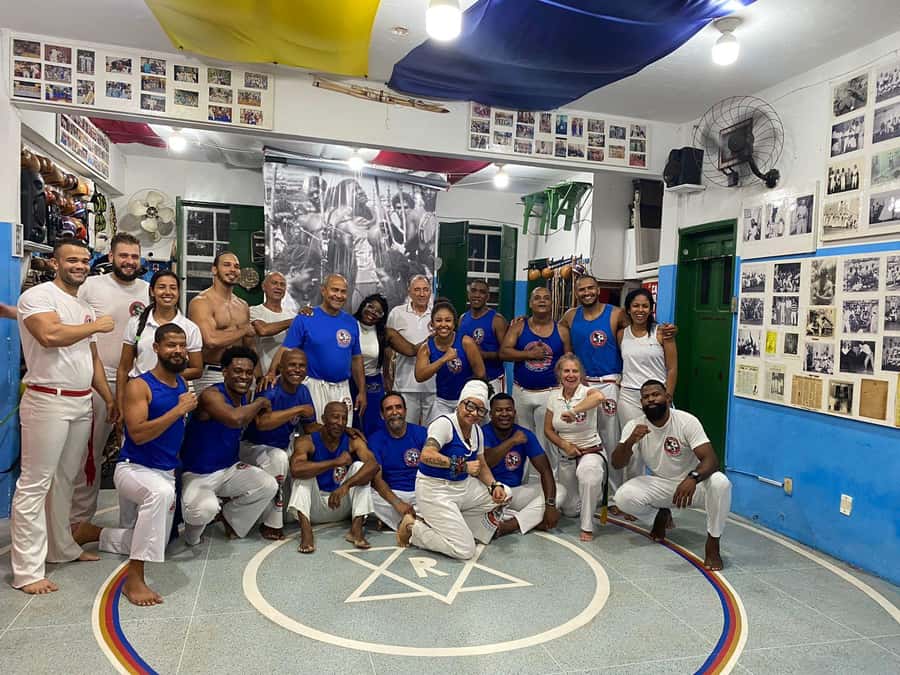
An hour is short, but it suits a busy Salvador schedule. You can fit the class between sightseeing in the historic center, a meal, or another activity without giving up half a day. It also keeps the introduction focused for people who want to try capoeira without committing to a longer course.
The tradeoff is that you receive a starting point, not full training. You will learn basic movements and leave with a clearer sense of capoeira, but you should not expect extensive practice or advanced technique. If you already train capoeira, the class may feel introductory. The lesson is deliberately aimed at complete beginners.
For someone with more than one day in Salvador, I consider this a strong use of an hour. It gives you a hands-on connection to the city and may encourage you to seek out another capoeira or dance class. One participant enjoyed the session enough to return for a second class and noted that the school also teaches samba and other dance styles. Those additional offerings are not part of this booking, but you can ask about them if you want to continue.
The physical side: come ready to sweat
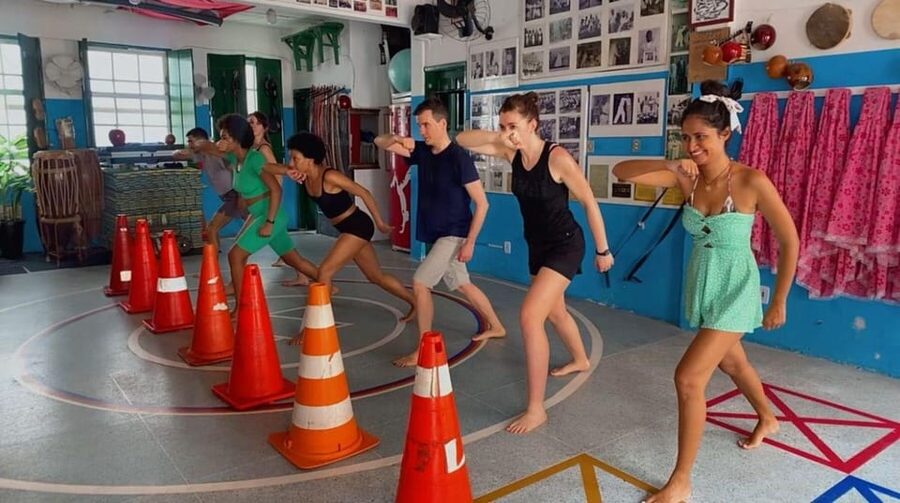
This is not a gentle cultural talk with a few token movements. You should expect real exercise. Several people found the class energizing and physically demanding, while one specifically advised wearing comfortable sports clothes and preparing to sweat a lot.
I would wear loose, comfortable clothing that allows your legs and hips to move freely. The supplied information does not specify a dress code, so there is no need to buy special equipment. Bottled water is included, but bringing a water bottle of your own is still sensible, especially if you are spending the rest of the day walking around Salvador.
Your fitness level does not need to be high. The class is open to people regardless of fitness, and the teacher’s patient approach helps you work at a sensible level. Still, do not book it expecting no exertion. If your legs are already tired from a full day of walking, you may feel the class more sharply.
The most sensible approach is to pace yourself. Learn the stance, listen to the instructions, and keep your movements controlled. You will gain more from understanding the basics than from pushing until your form falls apart.
Yasmin’s teaching style for first-timers
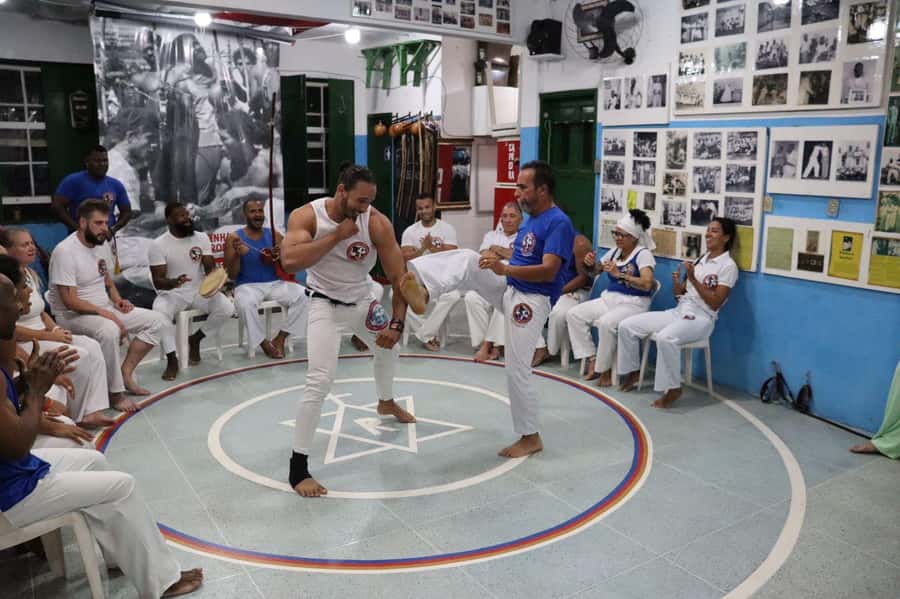
The instructor is listed as teaching in English and Portuguese, and the strongest personal praise centers on Yasmin. She is described as warm, patient, supportive, demonstrative, and encouraging. Those qualities suit a lesson where many participants arrive unsure of what capoeira will demand.
I especially value the emphasis on explanation. Yasmin does not simply show a movement and expect you to copy it. She also shares historical material and makes sure the class understands before progressing. That makes the lesson approachable for a parent and child, couples, solo visitors, and people who have never tried a martial art.
The inclusive atmosphere is another important point. A beginner may feel self-conscious when more experienced students are nearby. The class has been described as welcoming, with experienced participants treating newcomers kindly. You can focus on learning instead of worrying about looking polished.
The exact mix of participants may vary by session. The provided information does not state the group size or whether every class includes experienced students, so you should not assume a private lesson. What you can count on is a beginner-focused format and instruction in English or Portuguese.
Is $43 good value for one hour?
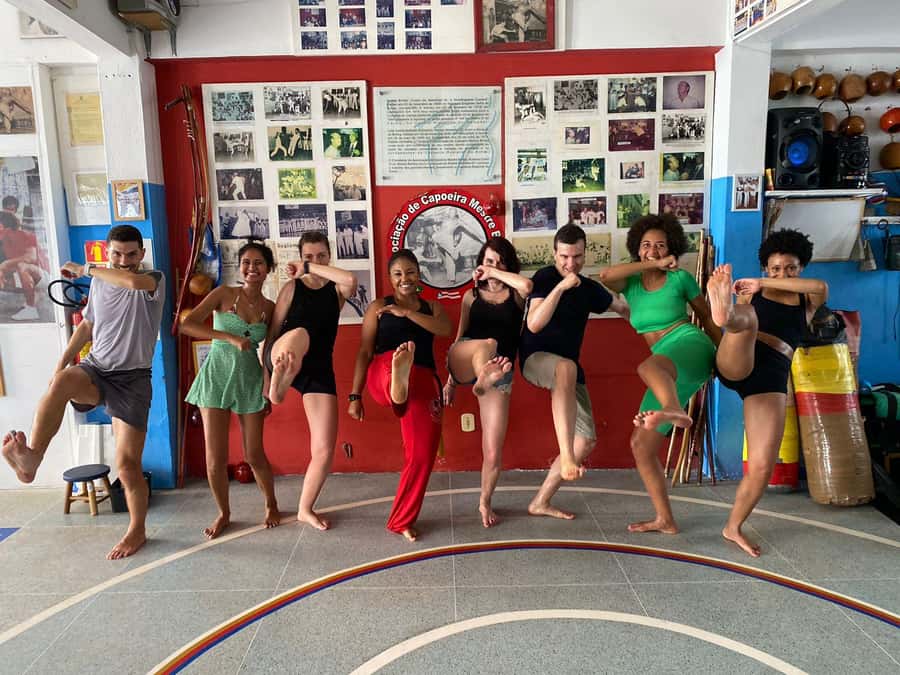
At $43 per person, this is not the cheapest way to spend an hour in Salvador. The value comes from the combination of instruction, cultural context, and the historic school rather than from the length alone.
A basic exercise class might cost less, but it would not give you the same connection to Mestre Bimba’s teaching tradition or Salvador’s Afro-Brazilian culture. A sightseeing stop can show you the historic center, but it cannot give you the physical understanding that comes from learning the art yourself.
The price also includes bottled water, though that is a small part of the overall value. The main benefit is access to a structured beginner lesson led by an instructor who can teach in English and Portuguese. If you want a memorable activity that feels specific to Salvador, the cost is easier to justify.
I would hesitate only if you want a long training session, advanced capoeira, or a full-day cultural program. This is a compact introduction. It works best when you value place, instruction, and participation more than minutes on the clock.
The booking terms add useful flexibility. You can cancel up to 24 hours before the activity for a full refund, and you can reserve now and pay later. Check availability for the starting time because the duration is fixed at one hour.
Who should book this class?
I recommend it to first-timers who want something active and tied to local culture. It is a particularly good fit for:
- Couples or families looking for a shared activity
- Solo visitors who want an easy way to meet the culture through movement
- People curious about martial arts but unsure about committing to formal training
- Visitors who want an alternative to another walking tour
- Anyone interested in Afro-Brazilian ancestry, music, dance, or physical practice
You do not need to be fit, flexible, or experienced. You do need to be open to a workout and willing to follow instructions.
I would choose a different activity if you have an injury that makes leg work or low movements difficult, but the supplied information does not give medical or accessibility guidance. If that matters to you, ask the provider before booking.
Final decision: book it if you want to participate
Book this capoeira class if you want a distinctly Salvador experience that combines history with movement. The first-school setting gives the lesson a strong sense of place, and Yasmin’s patient teaching makes it approachable when you are starting from zero.
Just keep your expectations realistic. One hour will not make you an expert, and the workout may leave your legs tired. For $43, you are paying for a focused introduction to capoeira, cultural explanation, bilingual guidance, and the chance to learn inside a school founded by Mestre Bimba in 1937.
For most first-time visitors with an extra hour in Salvador, that is a worthwhile trade.
FAQ
Do I need previous capoeira experience?
No. The class is directed at beginners who have never trained in capoeira, and no previous experience is required.
How long does the class last?
The class lasts one hour.
How much does the class cost?
The listed price is $43 per person.
Which languages does the instructor speak?
Instruction is available in English and Portuguese.
What does the lesson teach?
You will learn basic capoeira attacks, defenses, and flow movements, along with information about capoeira’s cultural and historical importance.
Where do I meet the instructor?
The meeting point is the Associação de Capoeira Mestre Bimba in Largo do Terreiro de Jesus. Ó Pai Ó Restaurante and São Domingos Gusmão Church are nearby landmarks.
Is transportation or pickup included?
No. Pickup service is not offered, so you must make your own way to the association.
Just added around Salvador
- Salvador: Schooner Cruise with Pickup and Itaparica Stop★ 3.8 · 5 reviews
- Salvador: Walking Tour Through Pelourinho★ 5.0 · 49 reviews
- Salvador: Cultural Treasure – Samba de Roda.★ 4.9 · 51 reviews
- Salvador: Traditional Drumming and Percussion Workshop★ 4.4 · 10 reviews
- Salvador: Cultural Night of Capoeira, Samba, and Drumming★ 4.9 · 17 reviews
- Salvador: CAPOEIRA CLASS – CULTURAL★ 4.6 · 13 reviews
- Salvador: 4-Hour Candomblé Mysteries Tour★ 4.3 · 34 reviews
- Salvador, Bahia: A amazing Walking Tour!★ 5.0 · 14 reviews
Workshops, compared.

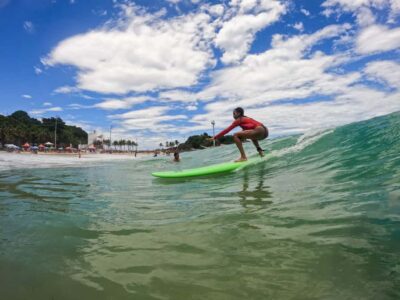
Surf lessons with local instructors in Copacabana/ipanema!
Read our review →
Surf Lesson with Qualified Instructor in Florianópolis
Read our review →
Browse the lists this tour appears in