
Reviewed · WORKSHOPS
Salvador: Traditional Drumming and Percussion Workshop
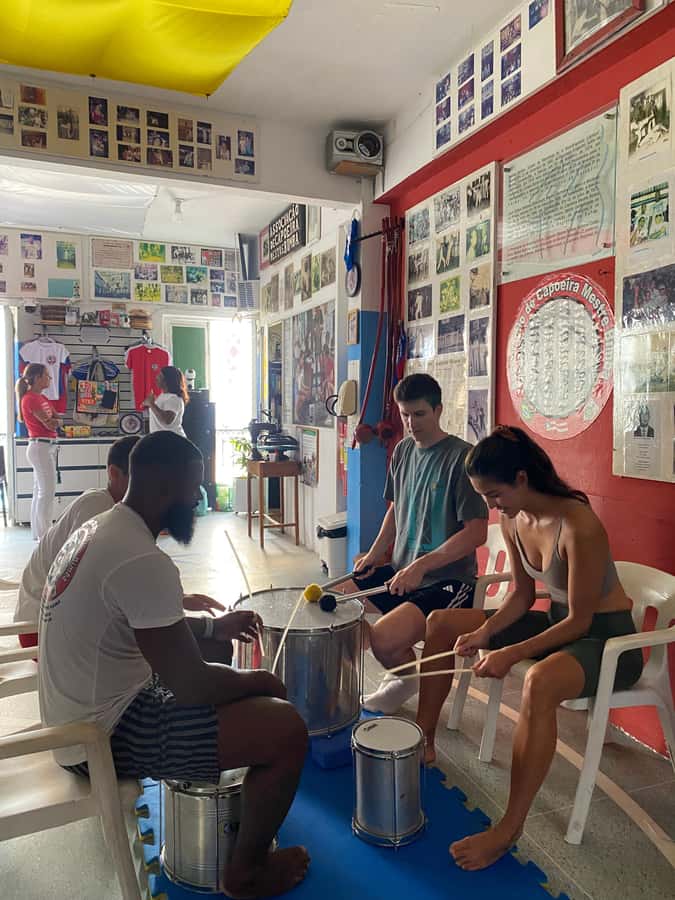
At Mestre Bimba’s First Ever School, an hour of drumming becomes a close look at how Afro-Brazilian music survived punishment and prejudice to become part of Brazil’s national identity. You’ll learn rhythms and basic technique in the same historic center where Capoeira, Samba, and percussion remain part of daily culture.
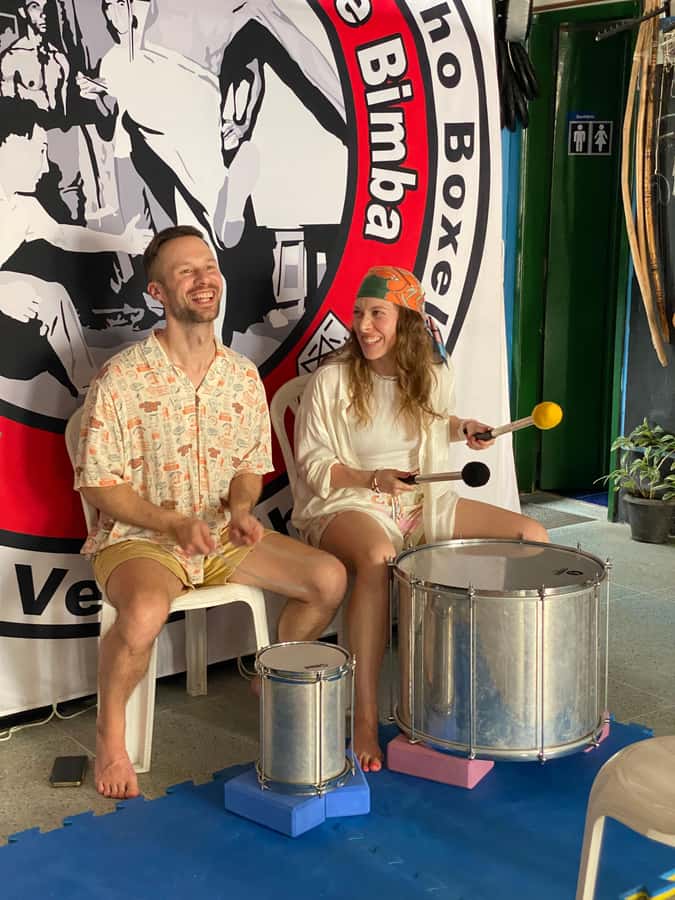
I like the hands-on format and the patient teaching. One recent class with Yasmin included several Capoeira percussion instruments, careful corrections of posture and hand movements, and enough history to give the beats meaning. I also like the location in Pelourinho, where this activity fits neatly into an afternoon of sightseeing.
The main thing to consider is language. Portuguese and English are listed, but one booking in English was taught without an English-speaking instructor. If clear English instruction is essential, confirm it before you go.
In This Review
- Key points to know
- Why this one-hour class matters in Salvador
- Arriving at Associação de Capoeira Mestre Bimba
- What happens during the percussion lesson
- The instructors and the language question
- Small groups make beginner instruction easier
- What makes the instruments worth trying
- How the workshop fits into a day in Pelourinho
- Is $43 a fair price?
- Who should book this experience?
- Booking details that matter
- Should you book the drumming workshop?
- FAQ
- Where does the drumming workshop meet?
- Is hotel pickup available?
- How long does the activity last?
- Do I need musical experience?
- Which languages are available?
- How many people can join the class?
- What is included in the price?
- Are food and drinks included?
- How much does the workshop cost?
- Can I cancel the booking?
Key points to know
- Mestre Bimba’s First Ever School: Visit an important place linked to Capoeira and Afro-Brazilian cultural resistance.
- Several percussion styles: Practice more than one rhythm and learn different ways to play the instruments.
- No musical background needed: The class begins with simple guidance, so beginners can take part.
- Small group setting: Up to 10 people means you should have room to follow corrections and ask questions.
- One hour is enough: The session gives you a focused introduction without taking over your day.
- Pelourinho location: Meet at Associação de Capoeira Mestre Bimba near Largo do Terreiro de Jesus.
Why this one-hour class matters in Salvador
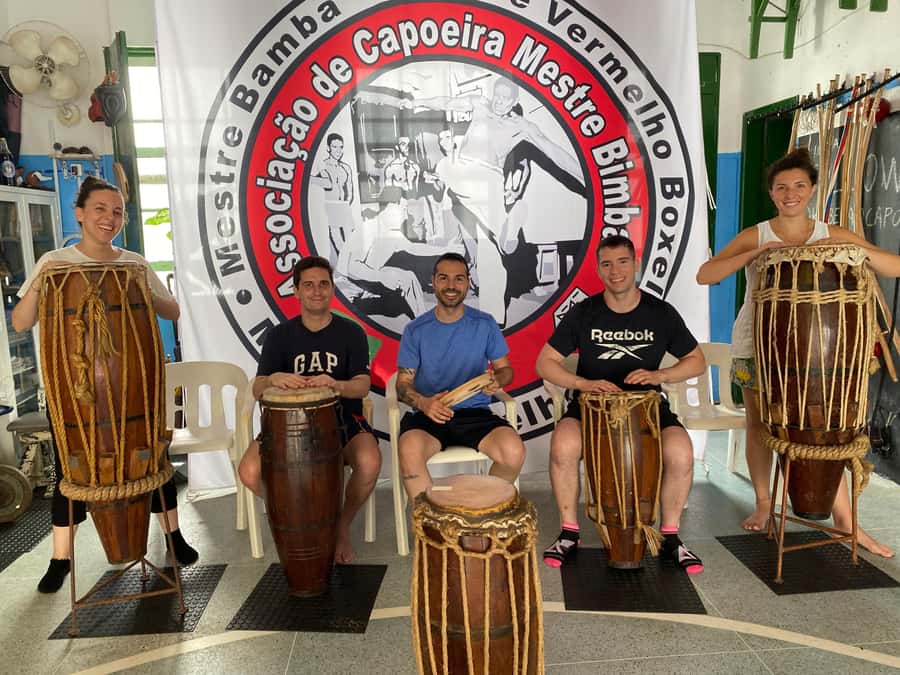
Salvador’s music is not just a soundtrack for the city. Its rhythms carry links to Afro-Brazilian communities, religious practice, Capoeira, dance, and resistance. This workshop gives you a way to hear those connections while also trying the instruments yourself.
The school is presented as a Quilombo of resistance and resilience. In Brazil, the word refers to communities formed by people escaping slavery and defending their freedom and culture. Here, the idea connects to the survival of Capoeira, Samba, and drumming, practices that faced suspicion and were criminalized in the late 19th century.
That background gives the class more weight than a simple rhythm lesson. You are not only copying a beat. You are learning why these sounds matter, and how traditions once pushed aside became symbols of Brazilian identity.
I appreciate that the history is tied to the activity rather than treated as a lecture on its own. You hear about the cultural setting, then put your hands on the instruments and feel how demanding a basic rhythm can be. That combination helps the past make sense.
A few more Salvador trips to weigh up
- Salvador: Capoeira Class at Mestre Bimba’s 1st Ever School.
★ 4.9 · 34 reviews - Salvador: CAPOEIRA CLASS – CULTURAL
★ 4.6 · 13 reviews - Salvador: 3-Hour Percussion Class
★ 4.9 · 10 reviews
Arriving at Associação de Capoeira Mestre Bimba
You meet at Associação de Capoeira Mestre Bimba, in Salvador’s historic Pelourinho district. There is no hotel pickup, so plan your route before leaving your accommodation.
The school is near Largo do Terreiro de Jesus. The listing specifically suggests using Ó Paí Ó Restaurante or São Domingos Gusmão Church as nearby landmarks. Those references are useful because Pelourinho’s streets can feel confusing when you are trying to find a particular doorway among churches, restaurants, and brightly painted colonial buildings.
Give yourself enough time to locate the meeting point. The activity lasts only one hour, so arriving late would cut into the part you paid to experience. The meeting point also makes the workshop easy to pair with other sights in the historic center.
The location is one of the strongest parts of the booking. You do not have to set aside a full day or travel far outside the center. After class, you can continue exploring Largo do Terreiro de Jesus and the surrounding Pelourinho streets.
What happens during the percussion lesson
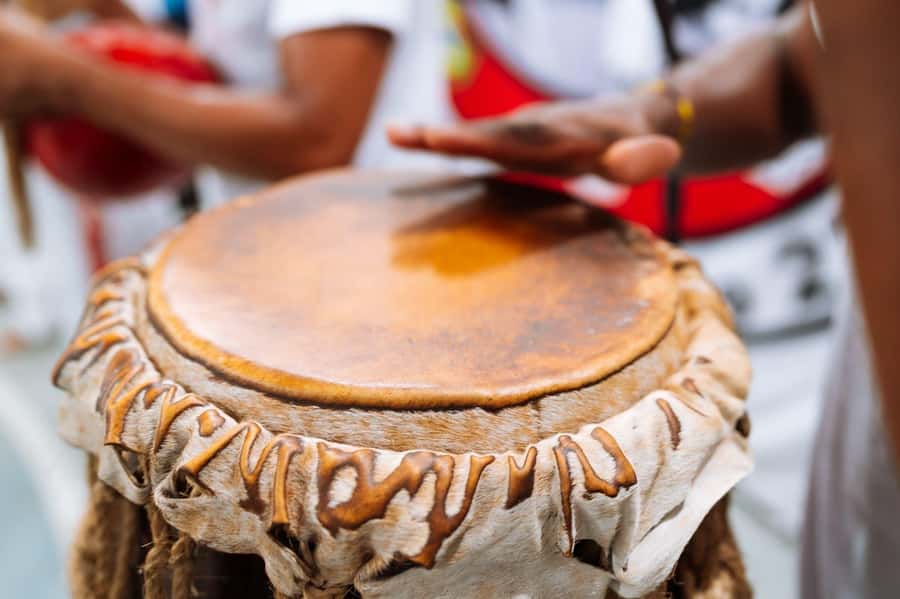
The workshop is built for participation. You do not need to read music, play an instrument, or know Capoeira before arriving. The basic requirement is willingness to follow instructions and try the rhythm several times.
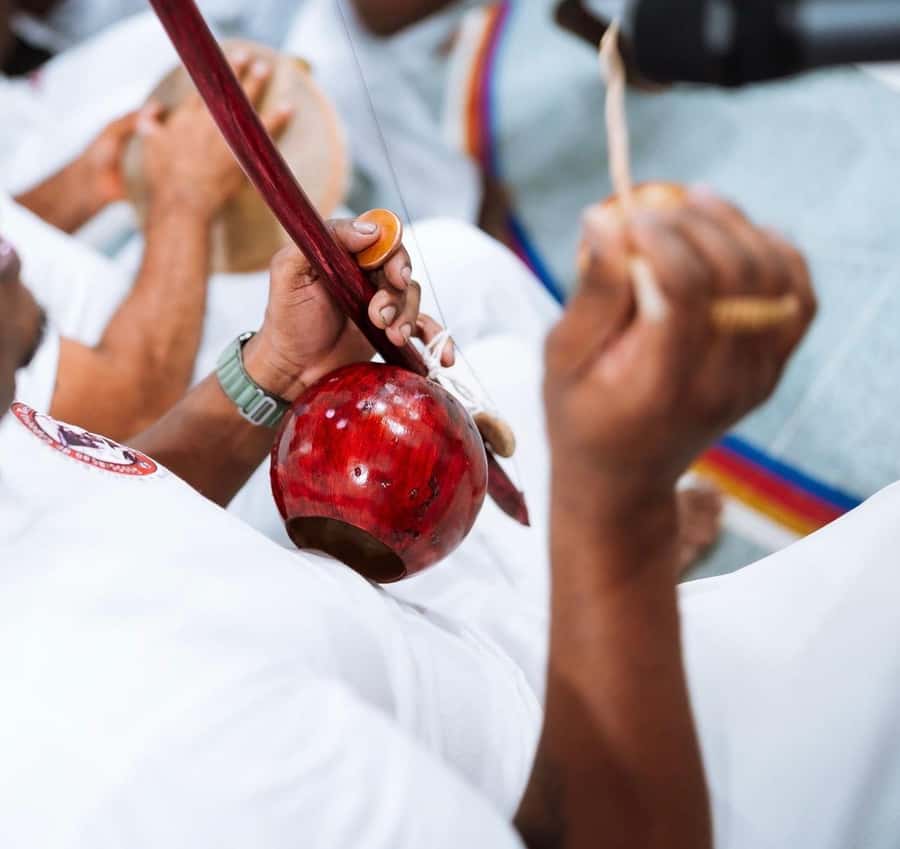
Expect the instructor to introduce the instruments and demonstrate the movements before you play. A previous one-hour lesson with Yasmin covered Capoeira percussion instruments, including drums, and included several different ways to create the rhythms.
The lesson also pays attention to how you use your body. Yasmin was praised for correcting hand movements and posture, then showing the technique again when needed. That kind of correction matters for beginners. Without it, you can easily strike too hard, hold the instrument awkwardly, or lose the rhythm while trying to watch everyone else.
You will likely work through simple patterns before combining them into fuller rhythms. The supplied details do not promise a particular instrument for every participant, so the exact selection may depend on the session. Still, you should expect actual playing time rather than simply watching a performance.
The one-hour length works well here. It is long enough to learn a few basic patterns, try different instruments, and hear cultural explanations. It is not long enough to become tiring or technical. One French participant felt an hour was sufficient, and I agree that this is best viewed as an introduction rather than a serious music course.
The instructors and the language question
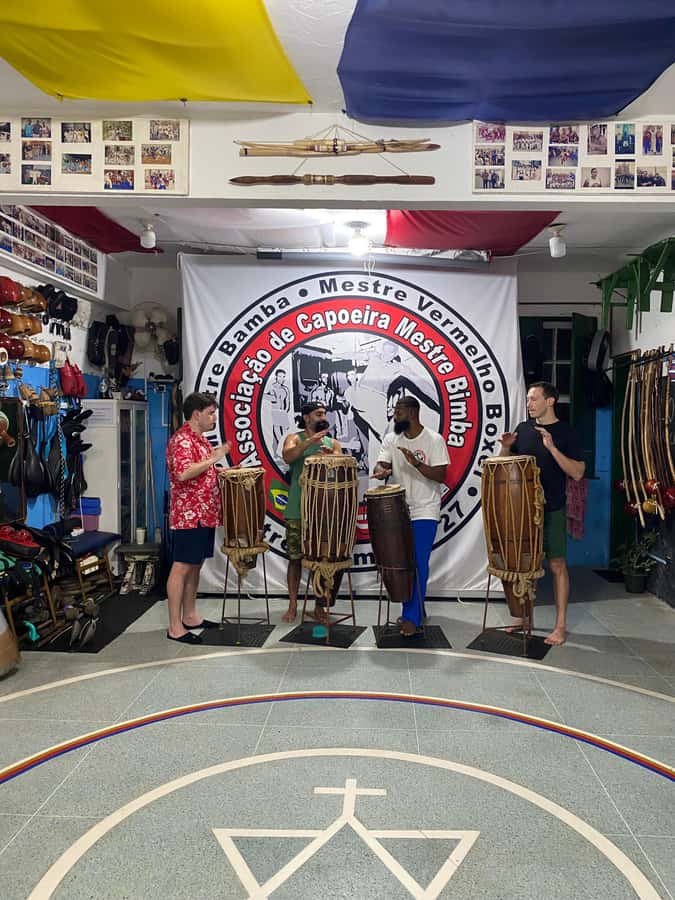
The instructors are described as professional teachers who care about sharing their heritage. Yasmin is the only instructor named in the available information, and her class combined patient instruction with explanations of the instruments’ cultural background.
That combination is important. A teacher who only counts beats can help you copy a pattern, but a teacher who explains the role of the music gives you a better connection to Salvador. The class aims to provide both.
Portuguese and English are listed as the available languages. However, you should not assume that an English booking guarantees every part of the session will be delivered in English. One participant who booked an English class found that the instructor could not speak English.
This is the clearest weakness in the experience. You can still follow a drumming demonstration without perfect language skills, but historical explanations, questions, and technical corrections are harder. If you speak Portuguese, the issue is less serious. If you do not, contact the provider before booking and confirm the instructor’s language for your date.
Same city, a completely different kind of day:
- From Salvador: Schooner Tour to Frades Islands and Itaparica
★ 3.9 · 98 reviews - Afro-Brazilian Roots Private City Tour in Salvador
★ 4.7 · 88 reviews - Salvador Historic Walking Tour – Pelourinho
★ 4.8 · 62 reviews - Salvador de Bahia African Culture Tour
★ 4.5 · 60 reviews
Small groups make beginner instruction easier
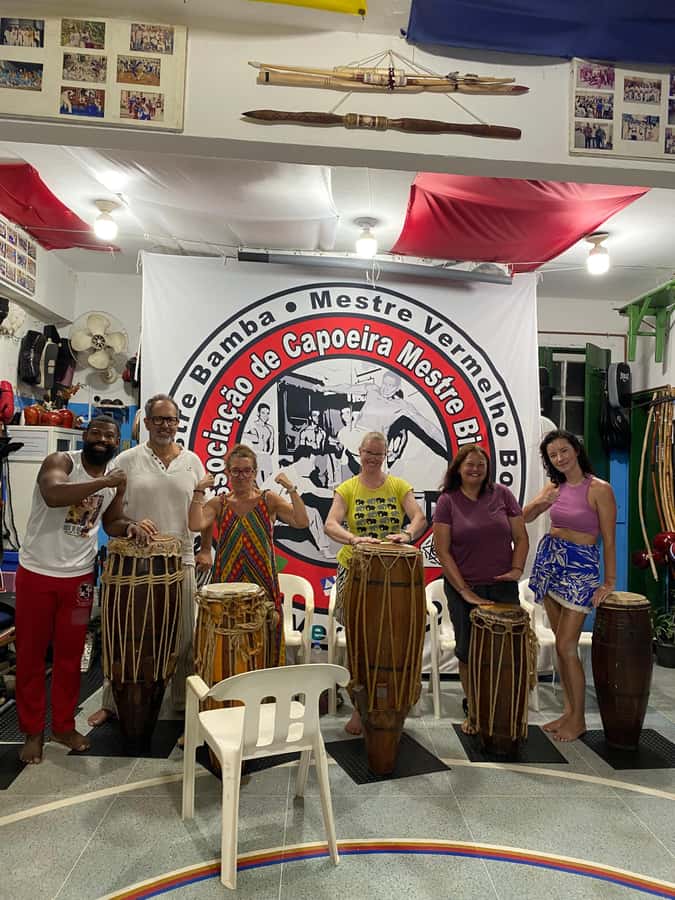
The group limit is 10 participants. That is small enough to make a difference, especially when everyone is learning a physical skill at the same time.
In a large class, beginners can hide in the back and leave without knowing what they did wrong. With fewer people, the instructor has a better chance of noticing your posture, timing, and grip. The reported one-to-one lesson with Yasmin shows how personal the teaching can become, though you should not assume every booking will be private.
A group of 10 also gives the class some shared energy. Drumming is more fun when you hear other people attempting the same pattern, missing a beat, and trying again. The setting should feel more like a working cultural class than a formal concert.
Still, the experience is not designed for advanced musicians. If you already play percussion, you may find the material basic. Its value is in the introduction, the setting, and the cultural explanation, not in mastering complex arrangements in 60 minutes.
What makes the instruments worth trying
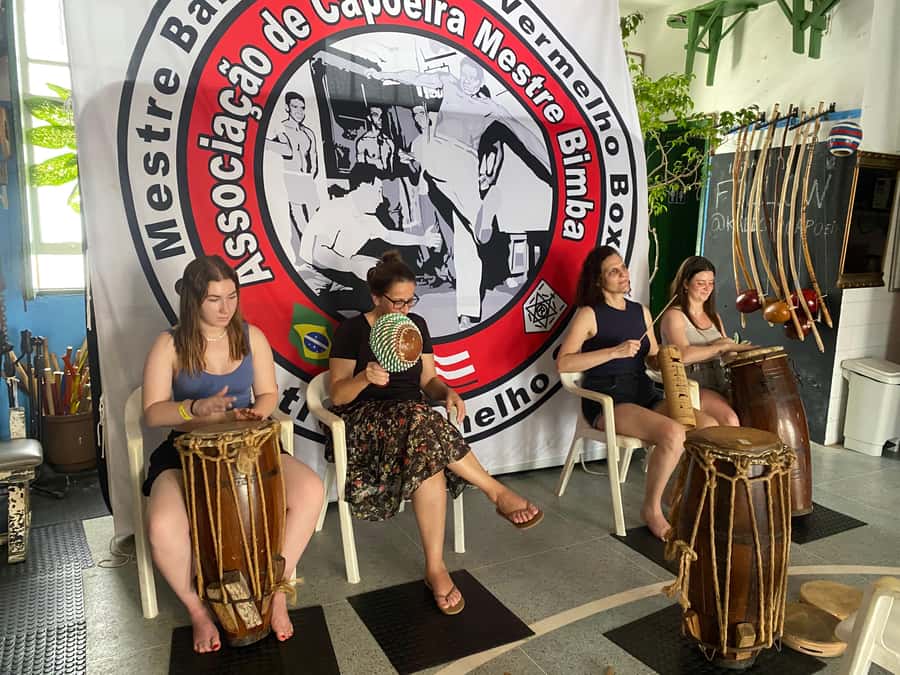
The percussion element is broader than simply sitting down with one drum. The experience includes Brazilian Capoeira percussion instruments, and the class can show different methods and rhythms.
That variety helps you understand how a musical group works. A rhythm is not just one repeated sound. The tone, timing, and force of each instrument contribute to the overall pattern. Even a beginner can start to hear how separate parts fit together after trying them one at a time.
You may also find that the instruments are more demanding than expected. One participant arrived worried about failing, then managed to play better than expected after patient instruction. That is a useful reminder not to judge yourself during the first few minutes. Beginners often need time to coordinate both hands, keep a steady tempo, and listen at the same time.
The class does not promise that you will leave as a Capoeira musician. It does give you a practical memory of Salvador: the feel of the instrument, the sound of a shared rhythm, and a clearer sense of how Afro-Brazilian music is made.
How the workshop fits into a day in Pelourinho
Because the activity lasts one hour and takes place in the historic center, it is easy to combine with sightseeing. The school is close to Largo do Terreiro de Jesus, and one participant used the class as part of an afternoon in Pelourinho during Carnival celebrations.
That timing can be especially useful if you want more than photographs and church visits. A short class adds participation to your day. Instead of only looking at Salvador’s culture, you spend an hour learning from people connected to one of its important traditions.
You should keep the schedule practical. The class has a set starting time, and there is no hotel transfer to absorb delays. Leave space before the session to find the school, then avoid booking another activity immediately afterward if you want time for the class to run at a comfortable pace.
Food and drinks are not included. That is easy to manage in Pelourinho, where the meeting point is near restaurants, but budget for your own meal or refreshment. Ó Paí Ó Restaurante is also listed as a nearby landmark, which may help you orient yourself.
Is $43 a fair price?
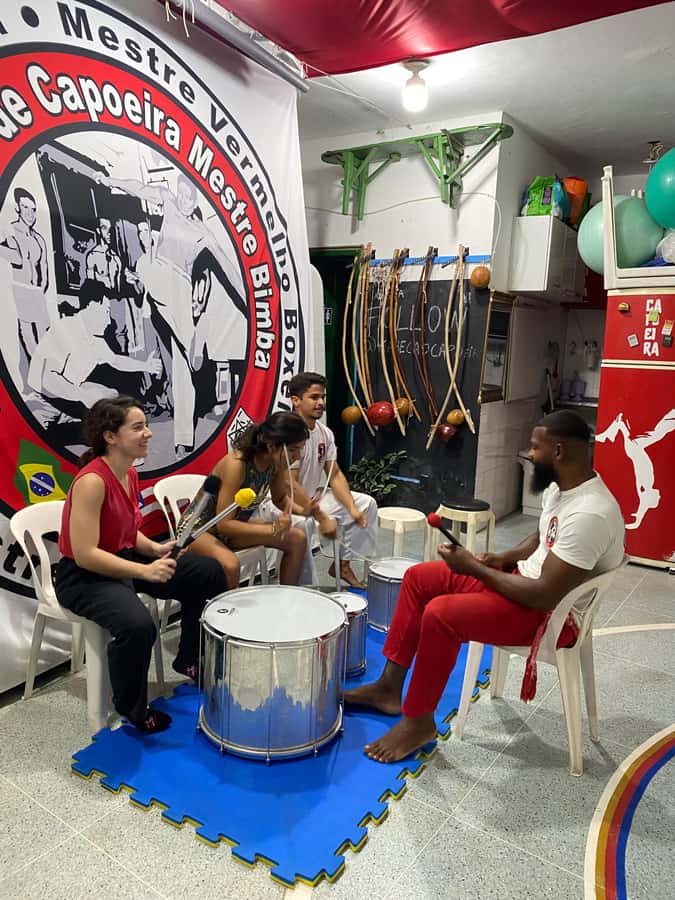
At $43 per person, this is not the cheapest way to spend an hour in Salvador. You can walk through Pelourinho for free, and a one-hour class may seem brief when compared with a longer tour.
The value comes from the combination of access, instruction, and context. You are paying for a teacher, a hands-on activity, and entry to Mestre Bimba’s First Ever School, a place tied to the preservation of Capoeira and Afro-Brazilian cultural practice. The small group limit also gives the price more weight than a large demonstration where you only watch.
I would consider it good value if you want an active cultural experience and have limited time. It is less compelling if you only want entertainment, if you already have strong percussion skills, or if you expect a long workshop with advanced instruction.
The location adds practical value. You can fit the class into a day in Pelourinho without arranging transport across Salvador. In that sense, the workshop can serve two purposes: a cultural lesson and a short break from ordinary sightseeing.
Who should book this experience?
This class suits first-time visitors who want a direct connection to Salvador’s Afro-Brazilian culture. It is also a good choice for people who enjoy learning by doing rather than sitting through a long talk.
Families and mixed-age groups may appreciate the simple format, though the supplied information does not specify a minimum age. Music lovers will get more from the session if they listen closely to the different rhythms and ask about the instruments.
You should also consider it if you are visiting during Carnival season or another lively period in Salvador. The workshop can help you recognize the role of percussion when you hear music elsewhere in the city.
I would be more cautious if you need guaranteed English instruction. The advertised language is English and Portuguese, but the language problem reported in one booking is specific enough to check before paying. I would also skip it if you want a full Capoeira performance rather than a lesson. This is a workshop, and your own beginner attempts are the main event.
Booking details that matter
The price is $43 per person, and the group is limited to 10 participants. The activity runs for one hour, with starting times available according to the date you select.
The instructor and drumming workshop are included. Hotel pickup, drop-off, meals, and beverages are not included, so you must reach the meeting point independently and plan any food around the class.
You can cancel up to 24 hours in advance for a full refund. A reserve-now, pay-later option is also available, which helps if your Salvador schedule is still changing.
The most important practical step is confirming the meeting point and language. Use Associação de Capoeira Mestre Bimba as the destination, with Ó Paí Ó Restaurante or São Domingos Gusmão Church in Largo do Terreiro de Jesus as nearby reference points.
Should you book the drumming workshop?
I would book this class if you want a short, meaningful activity in Pelourinho that lets you take part in Afro-Brazilian culture instead of only observing it. The patient teaching, several percussion instruments, and connection to Mestre Bimba’s school give the hour real substance.
I would not book without checking the language if you depend on English explanations. You should also keep your expectations realistic: this is a beginner lesson, not a professional music course.
For $43, the best case is a focused hour with an attentive instructor, some surprising success at the instruments, and a better ear for Salvador’s rhythms. If that sounds like a worthwhile addition to your day, this is a smart small-scale experience to add near Largo do Terreiro de Jesus.
FAQ
Where does the drumming workshop meet?
The meeting point is Associação de Capoeira Mestre Bimba in Pelourinho. Nearby landmarks include Ó Paí Ó Restaurante and São Domingos Gusmão Church in Largo do Terreiro de Jesus.
Is hotel pickup available?
No. Hotel pickup and drop-off are not offered, so you must make your own way to the meeting point.
How long does the activity last?
The workshop lasts one hour.
Do I need musical experience?
No. The class is designed for people without previous musical experience.
Which languages are available?
Portuguese and English are listed as the activity languages. Because one English booking did not have an English-speaking instructor, confirm language availability before booking if this is important to you.
How many people can join the class?
The group is limited to 10 participants.
What is included in the price?
The drumming workshop and instructor are included.
Are food and drinks included?
No. Meals and beverages are not included.
How much does the workshop cost?
The listed price is $43 per person.
Can I cancel the booking?
Yes. You can cancel up to 24 hours in advance for a full refund. A reserve-now, pay-later option is also available.
Just added around Salvador
- Salvador: Schooner Cruise with Pickup and Itaparica Stop★ 3.8 · 5 reviews
- Salvador: Walking Tour Through Pelourinho★ 5.0 · 49 reviews
- Salvador: Cultural Treasure – Samba de Roda.★ 4.9 · 51 reviews
- Salvador: Cultural Night of Capoeira, Samba, and Drumming★ 4.9 · 17 reviews
- Salvador: CAPOEIRA CLASS – CULTURAL★ 4.6 · 13 reviews
- Salvador: 4-Hour Candomblé Mysteries Tour★ 4.3 · 34 reviews
- Salvador: Capoeira Class at Mestre Bimba’s 1st Ever School.★ 4.9 · 34 reviews
- Salvador, Bahia: A amazing Walking Tour!★ 5.0 · 14 reviews
Workshops, compared.

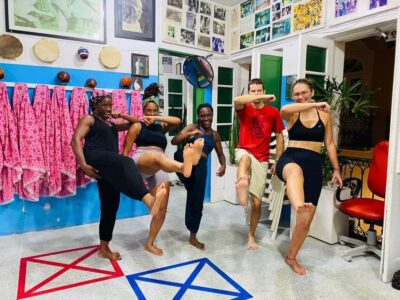
Capoeira Class at Mestre Bimba’s 1st Ever School.
Read our review →
Surf lessons with local instructors in Copacabana/ipanema!
Read our review →
Surf Lesson with Qualified Instructor in Florianópolis
Read our review →Browse the lists this tour appears in