
Reviewed · SAMBA SHOWS
Rio: Carnival Backstage Tour at Samba City with Cocktail
Rio’s Carnival is not just a parade. It is a year-round project of design, carpentry, sewing, choreography, music, and intense competition. At Cidade do Samba, you get behind the colored feathers and giant floats to see how a samba school prepares its annual show, then try on a costume and learn a few samba steps yourself.
I like two things especially: the close look at float and costume preparation, and the way the tour turns into a hands-on party with costumes, dancing, and a drink. The main drawback is practical: the meeting point can be hard to spot among the port warehouses, and the tour is non-refundable, so plan carefully.
In This Review
- Key points to know before you go
- Why Cidade do Samba changes how you see Carnival
- Inside Grande Rio’s Carnival factory
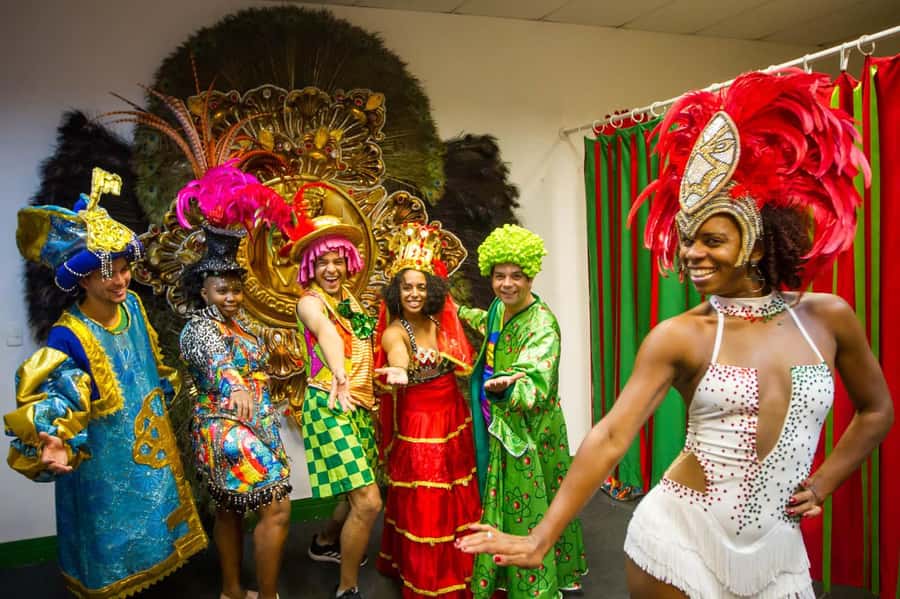
- Costumes, photos, and the most playful part
- A samba lesson with a professional dancer
- Ending with a caipirinha
- Is $27 a fair price?
- Finding the entrance at Cidade do Samba
- How long the visit takes
- Who will enjoy this most?
- My practical verdict
- FAQ
- Where does the Carnival backstage tour meet?
- How do I find the tour team?
- Is transportation included?
- What languages are available?
- Can I take photographs during the tour?
- Is a nonalcoholic drink available?
Key points to know before you go
- Grande Rio’s workshop: Visit the factory of the samba school that won Rio’s 2022 Carnival competition.
- Costumes you can wear: Try authentic parade outfits and take pictures during the permitted parts of the visit.
- Samba with a professional: A short lesson and live dance element give the tour its playful finish.
- More than a parade: Learn how planning begins soon after the previous Carnival ends and how thousands of costumes support one show.
- A caipirinha at the end: Water and an alcoholic welcome drink are included, with a nonalcoholic option available.
- Easy port-area connection: Cidade do Samba is near AquaRio, Rio Star, and the Cidade do Samba VLT station.
Why Cidade do Samba changes how you see Carnival
From the street, Rio Carnival can look effortless: towering floats roll past, dancers sparkle, and the samba seems to happen by instinct. Inside Cidade do Samba, you see the work behind that illusion.
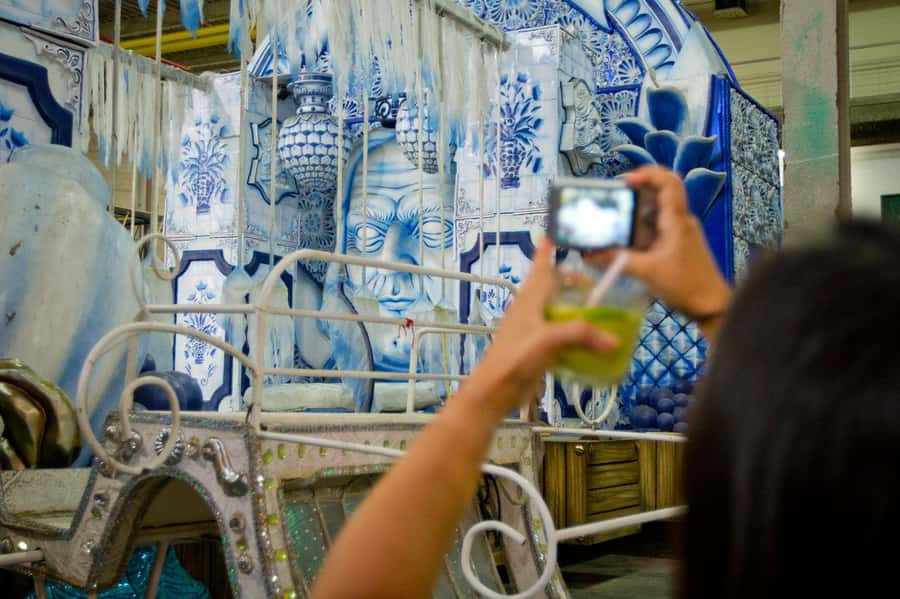
The complex is made up of large, light-brown warehouses in Rio’s port district. Each samba school uses its space to build, store, and prepare the pieces needed for the parade. The tour takes you into the Grande Rio facility, where you can see floats and Carnival decorations up close instead of watching them pass at speed in the Sambadrome.
That close view matters. A float that appears simple from the stands may contain layers of design, painted surfaces, large sculptural elements, and careful engineering. Costumes also need to work as part of a much larger visual story. The guide explains how the school develops its theme, organizes its groups, and prepares the costumes and floats for a parade that is judged as a competition.
I find this part more useful than a basic museum display because the setting is still tied to production. You are not only looking at old Carnival objects. You are entering a working samba-school complex, though the amount of active construction you see may vary by season.
More samba shows in Rio De Janeiro:
- Rio de Janeiro: Beginner Samba Lesson in Ipanema
★ 4.9 · 1,071 reviews - Rio: Pub Crawl in Lapa with Cachaça Tasting and Live Samba
★ 4.7 · 881 reviews - Hop-ON Hop-OFF Sightseeing Bus in Rio de Janeiro – Rio Samba Bus
★ 3.5 · 457 reviews
Inside Grande Rio’s Carnival factory
The guided visit focuses on the preparation process for the parade. You learn that the next Carnival does not begin when the music starts. Planning for one edition begins almost as soon as the previous one ends.
The scale is one of the tour’s best surprises. The experience describes production of more than 3,000 costumes, along with floats and other parade pieces. That number helps explain why Carnival is not simply a city party. It is a major collective production that involves design choices, materials, labor, rehearsal, storage, and strict timing.
The guide also places the work in the story of samba and Rio Carnival. You hear how samba schools function and why the annual parade carries such importance for the people involved. The explanation is aimed at first-time visitors, so you do not need prior knowledge of Brazilian Carnival to follow it.
Some guides add a lot of personality. Sol is remembered for creating a cheerful atmosphere, while Ton, Lea, Jaquel, and Lias have each been praised for bringing energy and clear explanations. Guide language depends on the departure, but tours are offered in English, Portuguese, Spanish, French, German, Hebrew, and Italian.
Do not expect a full lesson in every technical stage of costume making. The focus is on the overall process, the school, the designs, and the meaning of the parade. If you want to see individual costumes being sewn from start to finish, that may not be part of your visit.
Costumes, photos, and the most playful part
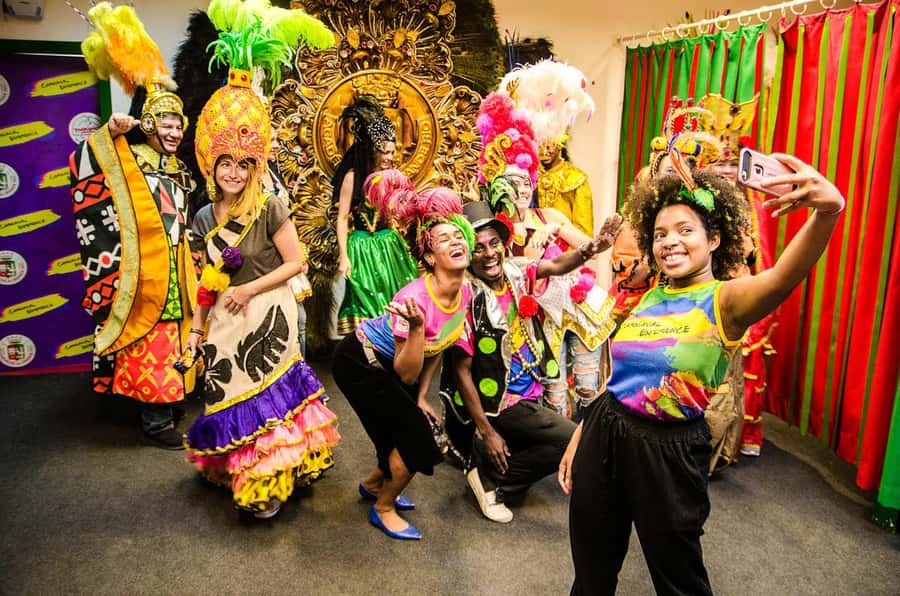
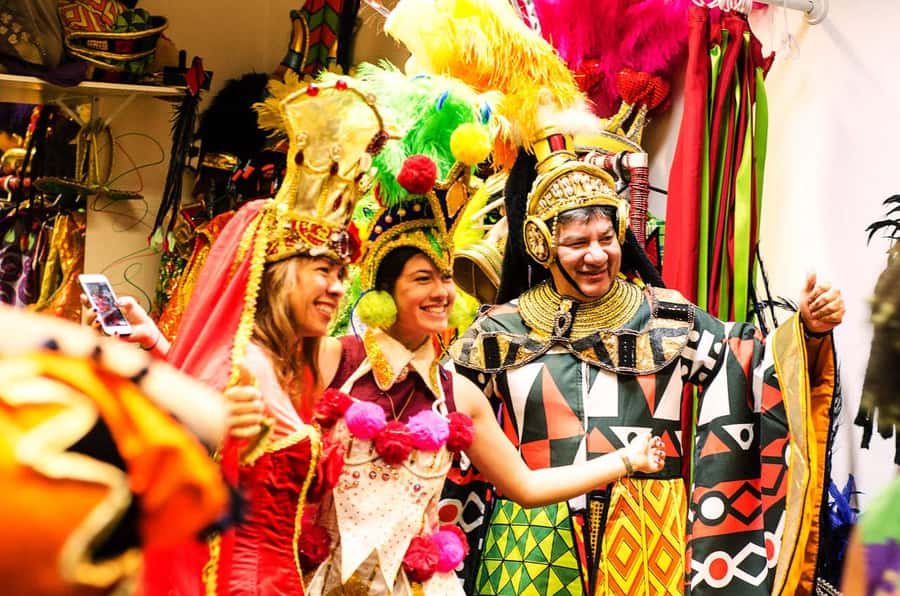
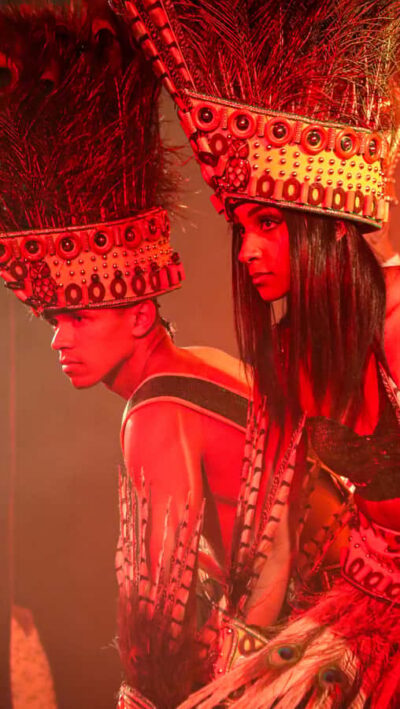
At some point, the tour shifts from watching to taking part. You can try on selected Carnival costumes and have your picture taken while wearing them. This is a lighthearted activity, but it also helps you understand what a parade costume is meant to do.
The outfits are made to be seen from a distance. Feathers, bright colors, decorative details, and exaggerated shapes have to read clearly under parade lights and in a moving crowd. Wearing one gives you a better sense of the scale and weight of the visual style than simply seeing a costume behind glass.
This is also the section most likely to appeal to families and mixed-age groups. You do not need to be a dancer or performer. The point is to join the fun for a few minutes, not to produce a polished stage performance.
Pay close attention to the photography rule. Photography is not allowed inside, but the costume activity includes opportunities for pictures where permitted. Ask the guide before taking out your phone, especially near work areas or current designs. Carnival schools may keep parts of their upcoming parade plans private, so the restrictions are there for a reason.
A samba lesson with a professional dancer
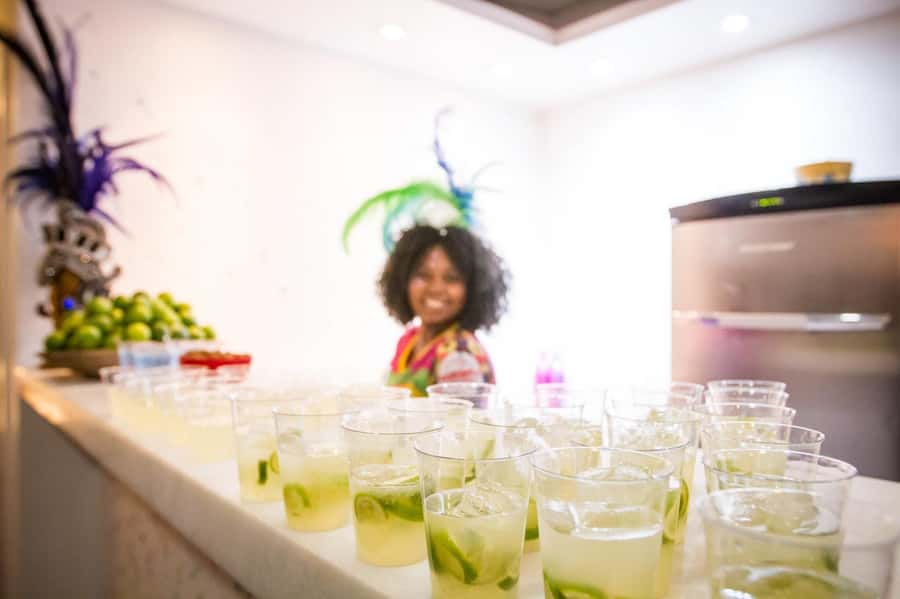
The dance section keeps the visit from feeling like a walk through a warehouse. A professional samba dancer demonstrates movements and leads a short workshop, giving you a chance to try the basic rhythm and footwork.
The lesson is informal and suitable for beginners. You might feel awkward for the first few steps, but the atmosphere is meant to be friendly rather than demanding. The live dance element can also be a welcome surprise, especially when the dancer shows the difference between watching samba and trying to follow it.
One important correction for your expectations: this is a samba activity, not a formal ballroom class. You will not leave as a trained dancer, but you will have a better feel for the music and movement that drive the parade.
The guides help here by keeping the pace lively. Several have been praised for their humor and enthusiasm, and that matters in a participatory activity. A flat presentation could make the dancing feel forced. A warm guide makes it easier for the whole group to join in.
A few more Rio De Janeiro trips to weigh up
- Rio de Janeiro: Private Guided City Tour
★ 4.6 · 207 reviews - Rio de Janeiro: Half-Day Christ the Redeemer and City Tour
★ 4.4 · 101 reviews - Petrópolis: Imperial City Tour
★ 3.7 · 95 reviews - Rio Samba Bus: hop-on hop-off city tour in Rio de Janeiro
★ 3.8 · 94 reviews
Ending with a caipirinha
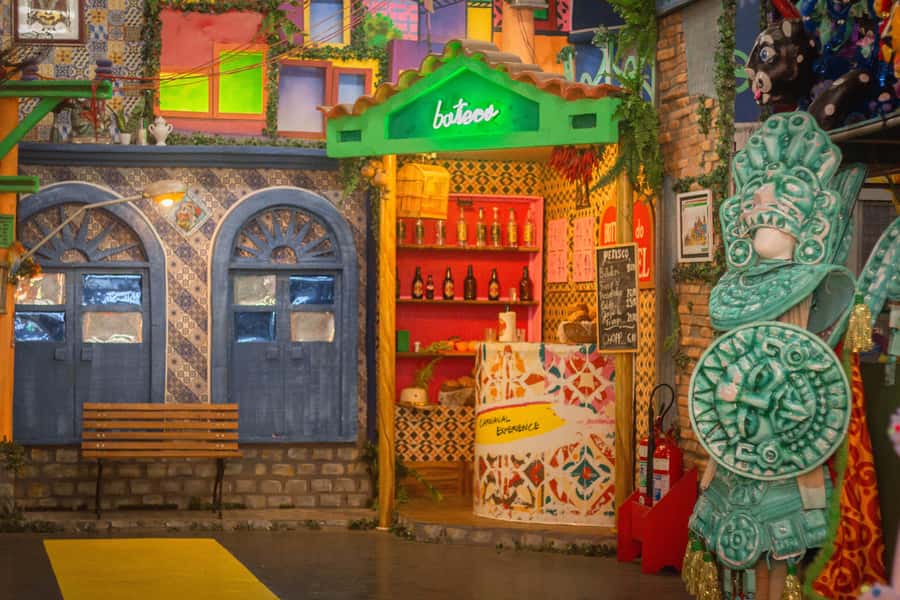
The tour ends with a caipirinha, Brazil’s familiar cocktail made with cachaça, lime, and sugar. Water is also included, and a nonalcoholic version is available if you do not drink.
The drink is a small detail, but it rounds out the visit well. After learning about samba, trying on a costume, and moving through the workshop, you get a relaxed moment to talk with the guide and other people in the group.
I would not book this experience for the cocktail alone. At $27 per person, the drink is best viewed as an extra, not the main value. The real worth comes from combining the backstage visit, cultural explanation, costume activity, and samba lesson in roughly two hours.
Is $27 a fair price?
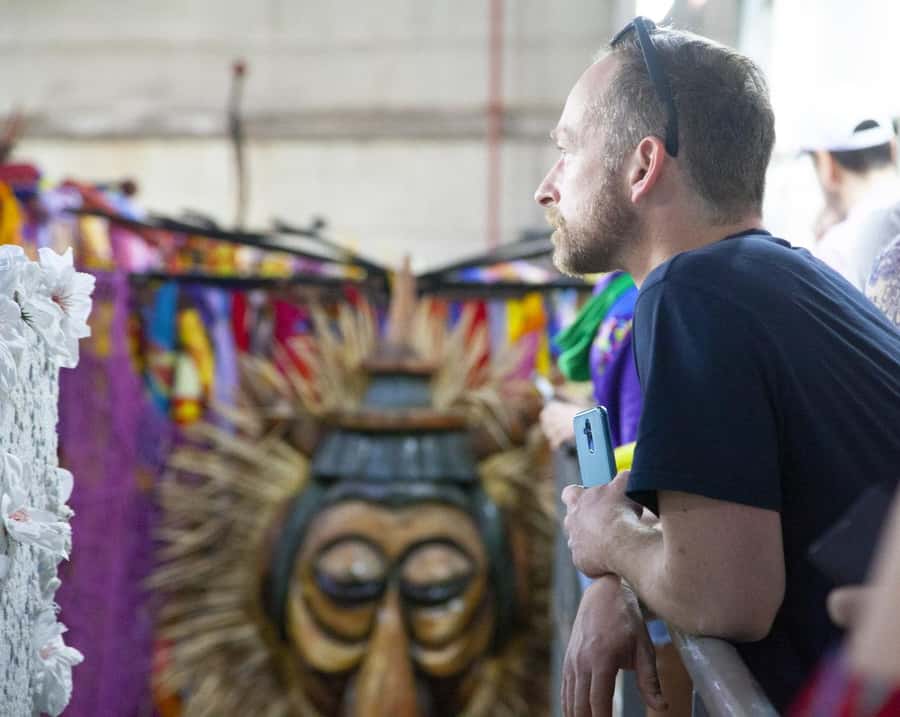
For Rio, $27 is a reasonable price for an experience that includes a guided visit, a bilingual guide, water, a drink, costume try-on, and a dance activity. Transportation is not included, so you need to allow for the cost of reaching Cidade do Samba.
The price makes the most sense if you are also planning to attend a parade at the Sambadrome. The backstage visit explains what you are looking at later: the groups, costumes, floats, and competitive structure. Several people find it especially helpful before seeing a parade because the spectacle becomes easier to read.
It is also good value for a short rainy-day or midday activity in the port district. You can combine it with nearby sights such as AquaRio, Rio Star, and the Museum of Tomorrow, although those admissions and visits are separate.
The tour is less suitable if you want a long technical workshop or a private behind-the-scenes visit. It is designed as a lively introduction, with a mix of explanation and entertainment. Small-group departures are available, but group size and availability should be checked when you book.
Finding the entrance at Cidade do Samba
The meeting point is at the main entrance to Cidade do Samba on Binário do Porto Avenue, about 200 meters from AquaRio. The entrance is close to the Rio Star ferris wheel and directly near the Cidade do Samba VLT station.
The complex can look confusing when you first arrive. You are heading toward a group of warehouses, not a bright storefront with a large tour sign. Look for the Carnaval Experience team in colorful shirts, either in the square or in front of the Grande Rio warehouse.
If you use the VLT, get off at Cidade do Samba. By car, taxi, Uber, Waze, or Google Maps, search for Carnaval Experience or Cidade do Samba main entrance. Paid street parking is available at 60 Rivadávia Corrêa, but driving adds one more detail to manage in the port area.
I would arrive early enough to get your bearings. A clear sign or staff member can be easy to miss, and some people have had trouble locating the entrance. The provider can also arrange optional pickup. If you choose it, confirm the exact hotel meeting point in advance and wait in the lobby entrance. The driver is scheduled to arrive 15 minutes before the tour.
How long the visit takes
The stated duration is 90 to 150 minutes. That range is wide enough to matter when planning the rest of your day.
A shorter visit may work well if the group moves quickly through the factory and activities. A longer one gives more room for questions, costumes, dancing, and the final drink. Starting times vary, so check availability before booking and avoid placing a tight reservation immediately afterward.
The experience is mostly on foot inside the complex. Wear comfortable shoes and be ready for an active, social visit. Drones and indoor smoking are not allowed. Photography is limited, so do not assume you can record every part of the factory.
Who will enjoy this most?
I would recommend the tour to first-time visitors who want context before attending Rio Carnival. It is also a strong choice if you are in Rio outside Carnival season, since the factory, past costumes, and planning process still show why the event takes so much work.
Families can enjoy the costumes and dancing, while culture-focused visitors will get more from the explanations of samba schools and the judging competition. The activity also suits people who prefer participation to a standard sightseeing stop.
You may want to skip it if you dislike group activities, do not want to dress up, or expect unrestricted photography. The tour has a playful side, and you should be comfortable joining in at least a little.
My practical verdict
Book this if you want to understand the effort behind Rio Carnival rather than simply admire the finished parade. The strongest parts are the look at Grande Rio’s production spaces, the explanation of how thousands of costumes and floats come together, and the chance to wear a costume and dance with a professional.
The main cautions are the difficult-to-find entrance, the variable 90 to 150 minute length, limited photography, and non-refundable booking terms. If you plan around those points, $27 buys a cheerful and useful introduction to one of Rio’s defining traditions.
FAQ
Where does the Carnival backstage tour meet?
The meeting point is at the main entrance to Cidade do Samba on Binário do Porto Avenue in Rio’s port district. It is about 200 meters from AquaRio, near Rio Star and the Cidade do Samba VLT station.
How do I find the tour team?
Look for the Carnaval Experience staff in colorful shirts. They may be in the square or in front of the Grande Rio warehouse.
Is transportation included?
No. Transportation is not included in the standard tour. Optional pickup is available if arranged in advance with the activity provider.
What languages are available?
Live guides are available in French, Portuguese, English, Spanish, German, Hebrew, and Italian.
Can I take photographs during the tour?
Photography inside is not allowed. The costume activity includes photo opportunities where permitted, so ask the guide when taking pictures is acceptable.
Is a nonalcoholic drink available?
Yes. The tour includes a caipirinha, and a nonalcoholic version is available. Water is also included.
Just added around Rio De Janeiro
- Vidigal Favela Tour★ 4.4 · 26 reviews
- Hang gliding flight in Rio de Janeiro★ 5.0 · 6 reviews
- Rio de Janeiro: Zip Lining and Canopy Tree Tour★ 3.3 · 6 reviews
- Rio de Janeiro: Attend a Vasco da Gama game with local guide★ 4.8 · 9 reviews
- Unforgettable Boat Party★ 5.0 · 3 reviews
- Tijuca Forest Hike – Waterfalls & Caves, Nature & Wild Life!★ 5.0 · 51 reviews
- Rio Highlights: Christ, Sugarloaf, and More in a Private Tour★ 5.0 · 36 reviews
- Tijuca Forest w/ Chinese View,cascatinha Taunay,horto waterfall and parque laje★ 4.5 · 29 reviews
Samba Shows, compared.


Pub Crawl in Lapa with Cachaça Tasting and Live Samba
Read our review →
Santa Teresa, Lapa, and Cinelândia with Tram Ride and Selarón Steps
Read our review →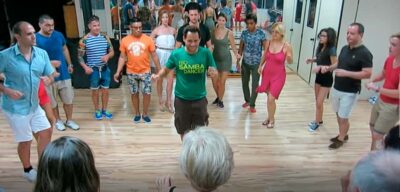

Ginga Tropical – Brazilian Samba and Folklore Show
Read our review →
Pedra do Sal: Live Samba Night with Local Guide & Drink
Read our review →
Browse the lists this tour appears in