
Reviewed · HISTORICAL TOURS
Historic City Tour in Salvador
Salvador’s story comes into focus as you move from the Barra Lighthouse to the old streets of Pelourinho. In four hours, this tour links the modern city, the upper and lower levels of Salvador, and some of Bahia’s most important landmarks.
I like the route for two reasons: the Bay of All Saints view from the Lacerda Elevator gives you an instant sense of the city, and the walk through Terreiro de Jesus and Pelourinho brings you close to its churches, colorful buildings, and Afro-Brazilian cultural setting. The main drawback is that the schedule may leave little time inside each site, and language arrangements can vary.
The experience costs $24 per person and includes hotel pickup, drop-off, and a guide in Spanish or Portuguese. That is fair value if you want an introduction to Salvador without arranging transport, but it is less suitable if you want long visits inside every church or a slow, detailed walking tour.
In This Review
- Key points to know before booking
- From Barra Lighthouse to Salvador’s modern center
- Municipal Square and the view from Lacerda Elevator
- Terreiro de Jesus and Salvador Cathedral
- St. Francis Church and Portuguese Baroque detail
- Pelourinho, color, culture, and Jorge Amado
- What the four-hour format really gives you
- Guides, languages, and the service question
- Is $24 a fair price?
- How to prepare for the day
- Who should book this Salvador city tour?
- FAQ
- How long is the Historic City Tour in Salvador?
- What is the price?
- Is hotel pickup included?
- What languages are available?
- What time does the tour start?
- Does the tour visit the Barra Lighthouse?
- Will I see the Lacerda Elevator?
- Which historic churches are included?
- Is lunch included?
- What should I bring?
- Should you book it?
Key points to know before booking
- Barra Lighthouse begins the story: You start at one of Salvador’s best-known landmarks before heading toward the upper city.
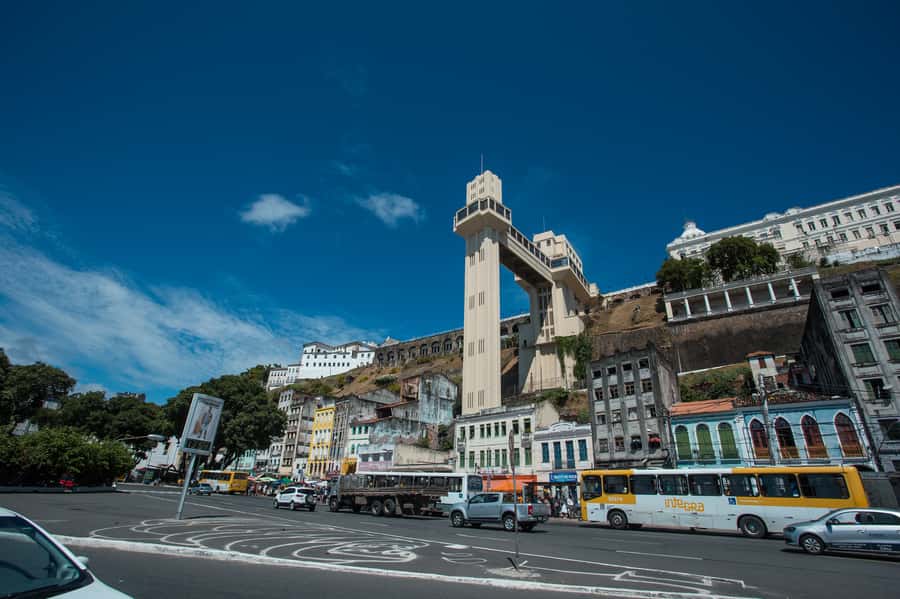
- The Lacerda Elevator gives the big picture: Its viewpoint connects the upper city, lower city, Bay of All Saints, and Pelourinho.
- St. Francis Church is a major interior highlight: It is known for its lavish Portuguese Baroque design.
- The route mixes driving and walking: Several places may be viewed quickly rather than explored at length.
- Spanish service needs confirmation: One booking made for Spanish ended up mostly in Portuguese, with only short explanations in Spanish.
- Hotel transport adds real value: Pickup and return are included for centrally located hotels in Salvador.
From Barra Lighthouse to Salvador’s modern center
The tour begins with pickup at your centrally located hotel. The exact time comes after booking, so you will want to keep your morning open rather than plan a tight connection afterward.
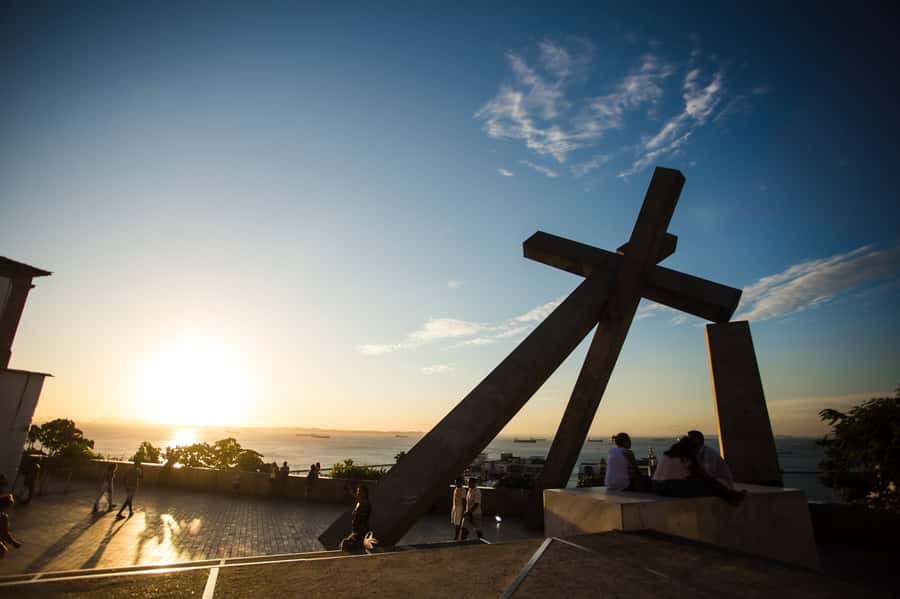
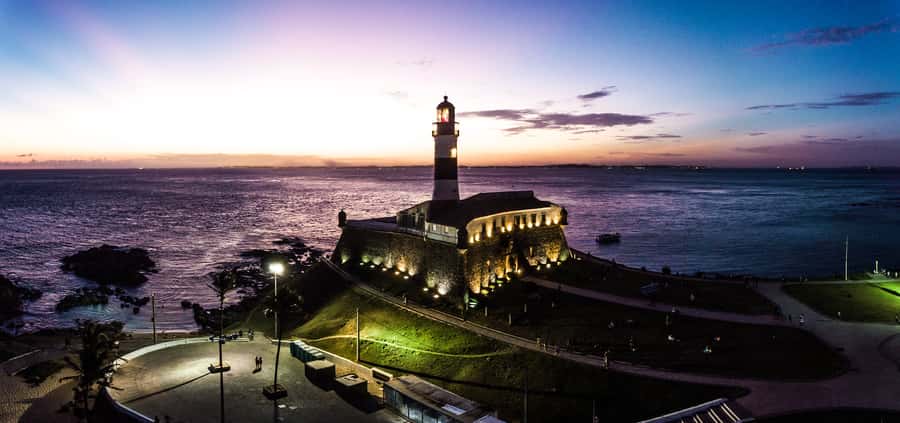
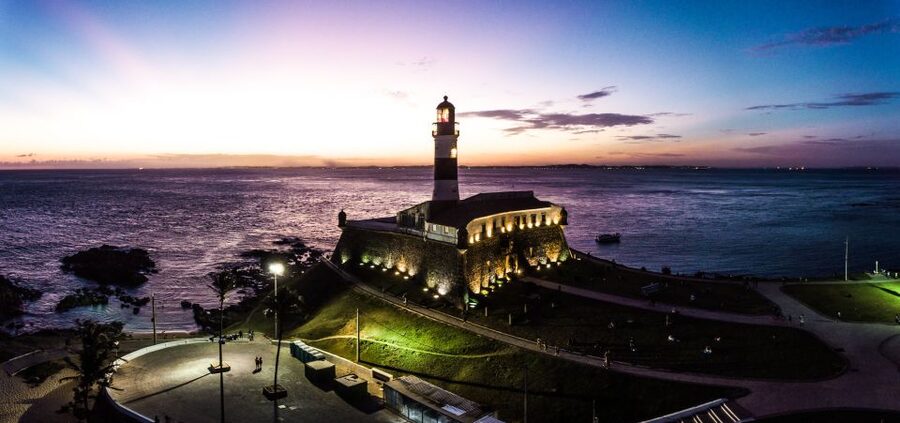
The first major stop is Barra Lighthouse, at the entrance to the Bay of All Saints. It gives the tour a strong opening because Salvador is not just an old colonial quarter. It is a large coastal city with a modern commercial center, older neighborhoods, churches, and two distinct levels linked by steep streets and the Lacerda Elevator.
From Barra, the vehicle follows the Corredor da Vitória toward Campo Grande and Piedade. This part of the route introduces the newer side of Salvador, with tall buildings, shopping areas, and the city’s economic activity. I like having this contrast early in the tour. Without it, Pelourinho can seem like an isolated historic district rather than one part of a much larger city.
Do not expect a long stop at every point along this opening stretch. The tour’s purpose is to connect the main areas in a short time. You will get a broad orientation, but the schedule is not built for extended visits at Barra Lighthouse or detailed exploration of the modern districts.
A few more Salvador trips to weigh up
- Salvador Historic Walking Tour – Pelourinho
★ 4.8 · 62 reviews - From Salvador: Quilombo Heritage Daytrip with Lunch
★ 3.4 · 3 reviews - Rio de Janeiro: Historic Rio and Santa Teresa Half-Day Tour
★ 4.4 · 228 reviews
Municipal Square and the view from Lacerda Elevator
The route continues to Municipal Square, where you see the Rio Branco Palace and Salvador’s City Hall. This is an important civic center, and it helps explain how the upper city functions as more than a collection of churches and old façades.
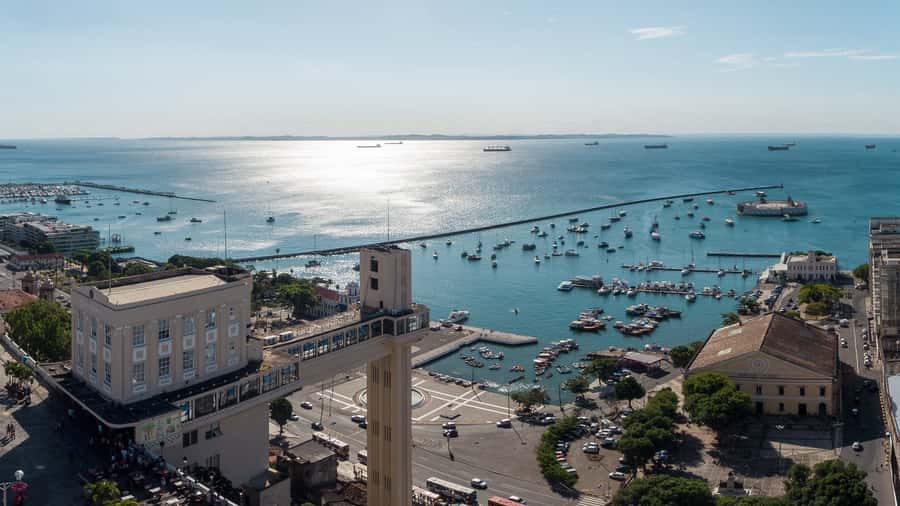
The Lacerda Elevator is beside the square. Its practical purpose is to connect Cidade Alta, the upper city, with Cidade Baixa, the lower city. For you, its main value on this tour is the view from the balustrades. From here, you can look across the Bay of All Saints and down toward the lower part of Salvador.
This is the point where the city’s layout becomes easiest to understand. You can see the upper city behind you, the lower city below, and the streets and houses of Pelourinho nearby. Bring a phone or camera, but keep your attention on the view itself. The panorama is more useful than a quick photograph because it shows how Salvador’s neighborhoods relate to one another.
There is one practical concern here. A group can spread out around the elevator and viewpoints. One serious complaint described several families being left behind after the group moved on, including families with young children. I would stay close to the guide, confirm the next meeting point, and make sure the guide sees you before leaving an area.
Terreiro de Jesus and Salvador Cathedral
From the elevator area, the tour continues into Terreiro de Jesus. This square is one of the central gathering points in the upper city, and it places several important religious buildings within a short walk.
The Cathedral Basilica of the Savior is here. Its scale and position make it a useful stop for understanding the importance of Catholic institutions in colonial Salvador. The itinerary includes the cathedral as part of the walking route, but the available details do not promise a long interior visit or a dedicated guided lecture inside.
That distinction matters. The tour offers a compact introduction, not an all-day study of Salvador’s religious architecture. If your main goal is to examine chapels, altars, and artwork at leisure, you may find the pace quick. If you want to identify the major buildings and understand where they sit in the old city, the stop should serve you well.
The guide is an important part of this section. A German-speaking customer praised the amount of information provided about Brazil, Bahia, and Salvador, as well as the guide’s care and willingness to answer questions. That points to the best version of this tour: a good guide can turn a series of façades into a readable story about the city.
St. Francis Church and Portuguese Baroque detail
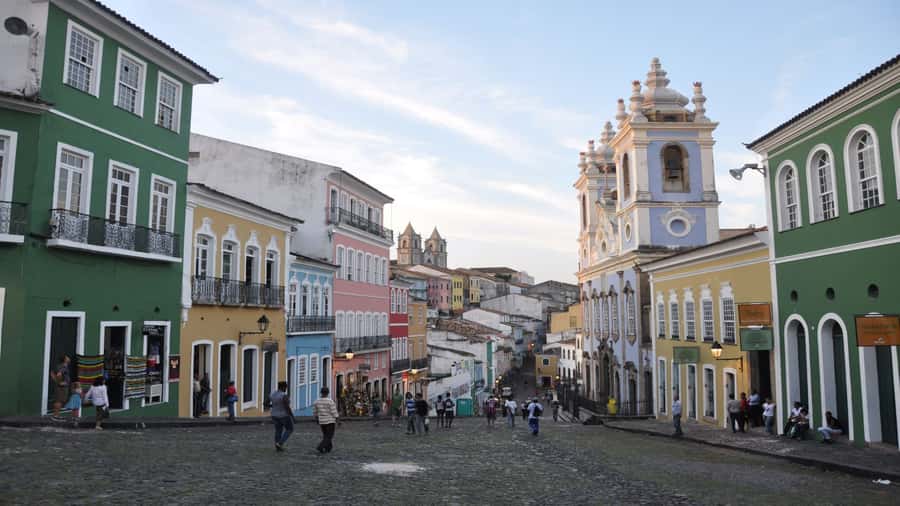
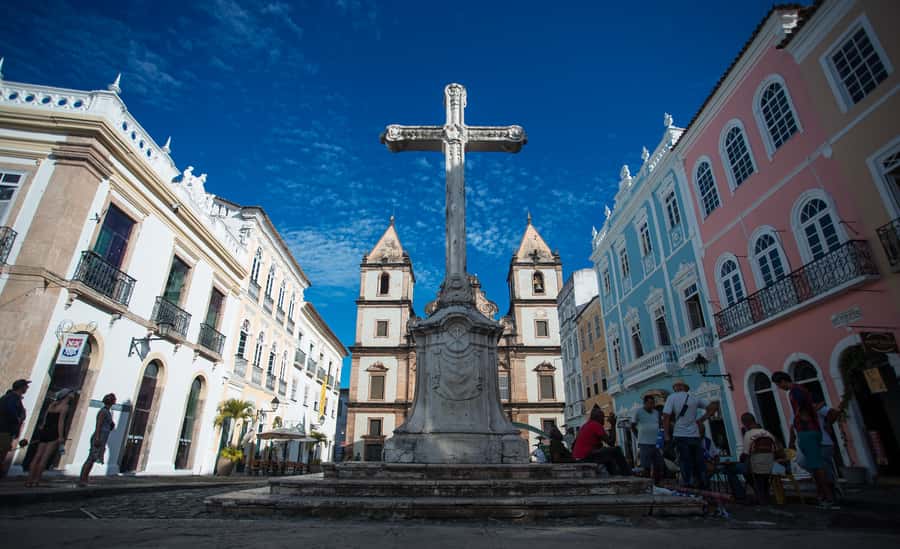
St. Francis Church is one of the tour’s most important architectural stops. It is known as one of Brazil’s wealthiest churches and as a prime example of Portuguese Baroque design.
Even a short visit can be worthwhile here because the church offers a clear contrast with the public squares outside. Terreiro de Jesus gives you the city’s open civic setting. St. Francis brings you into a more concentrated display of religious decoration and Portuguese influence.
The itinerary does not specify how much time is reserved inside the church. Keep that in mind when setting expectations. Some departures may allow a proper look, while others may move quickly to keep the four-hour schedule. The tour is strongest when you treat this as a first introduction and note which places you want to revisit independently.
Comfortable shoes matter. The tour includes walking through the upper city and Pelourinho, and the old center is better enjoyed when you are not distracted by sore feet or unsuitable clothing. Comfortable clothes are also recommended, and you should bring a passport or identification card.
Same city, a completely different kind of day:
- From Salvador: Schooner Tour to Frades Islands and Itaparica
★ 3.9 · 98 reviews - Afro-Brazilian Roots Private City Tour in Salvador
★ 4.7 · 88 reviews - Salvador de Bahia African Culture Tour
★ 4.5 · 60 reviews - Salvador: Praia Do Forte and Guarajuba Beach Day Trip
★ 4.1 · 56 reviews
Pelourinho, color, culture, and Jorge Amado
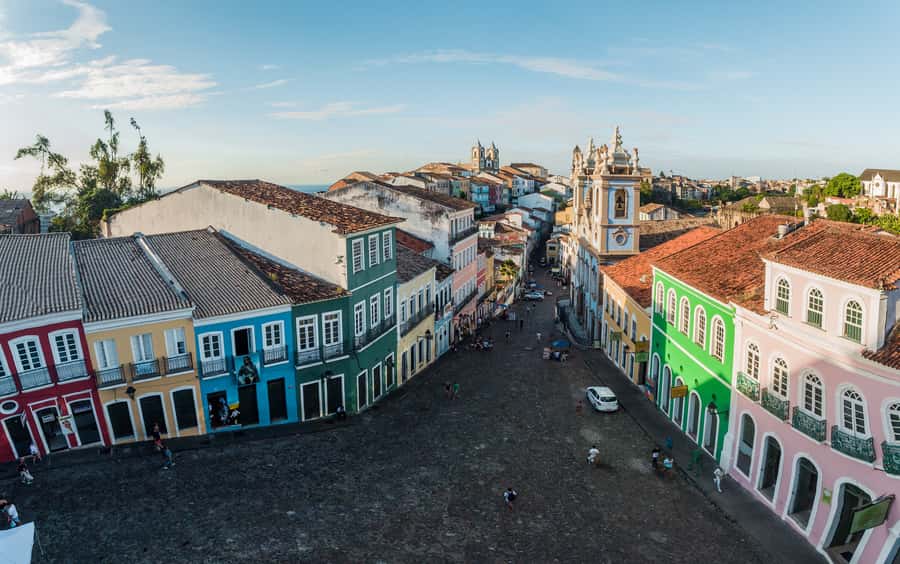
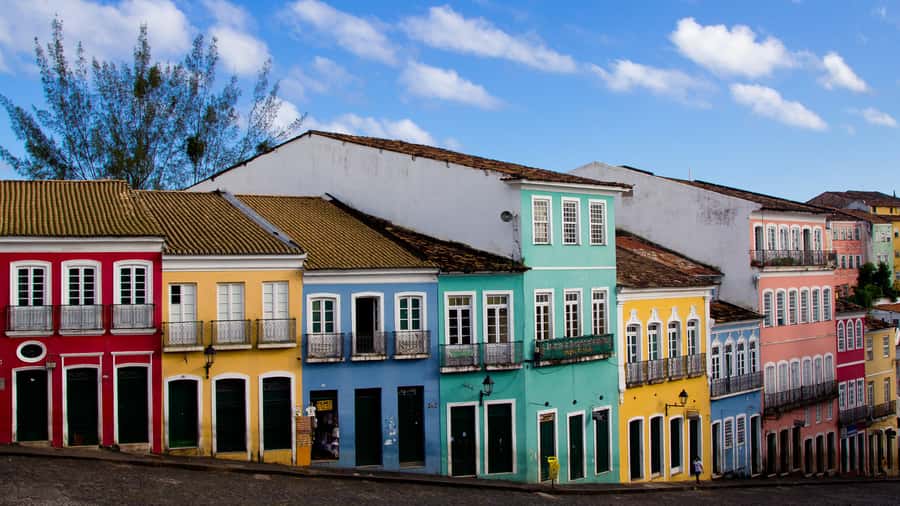
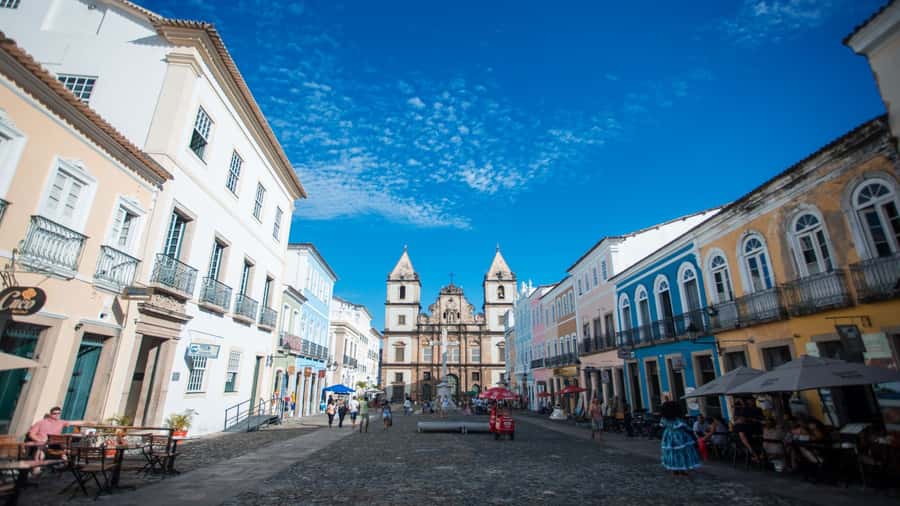
The final major area is Largo do Pelourinho, the square that gives the district its name. This is where the tour’s different threads come together: colonial buildings, public squares, churches, music and cultural associations, and the literary image of Salvador connected with Jorge Amado.
Pelourinho is a UNESCO World Heritage Site, and the designation reflects the importance of its urban setting and historic buildings. You will see the district as a living part of Salvador, not simply as a museum stop. Its colors and busy public life make it one of the most memorable parts of the route.
I especially like that Pelourinho comes after the Lacerda viewpoint and the cathedral area. By then, you have seen the city from above and crossed several important spaces. The old streets make more sense when you understand their position within the upper city.
Still, the tour may not give you much unstructured time here. One person described a trip with too much shopping and too little history, while another found that many historic sites were viewed from outside or passed during the walk. If you want time to browse slowly, enter every building, or stop for local food, you may need to return to Pelourinho on your own.
The square is also the place to pay attention to the guide’s meeting instructions. Keep the group in sight, especially if you are traveling with children or anyone who walks slowly. The earlier problem with scattered families is not a small detail, and clear regrouping matters in a dense old quarter.
What the four-hour format really gives you
Four hours is long enough for a useful first look at Salvador, especially with transport between the main districts. It is short enough that the tour has to make choices.
You will cover:
- Barra Lighthouse and the route through the newer city
- Corredor da Vitória, Campo Grande, and Piedade
- Municipal Square, Rio Branco Palace, and City Hall
- The Lacerda Elevator viewpoint
- Terreiro de Jesus and the Cathedral Basilica
- St. Francis Church
- Largo do Pelourinho
- Return transport to your hotel
That is a generous list for half a day. The tradeoff is depth. You should expect a mixture of vehicle sightseeing, short walks, landmark explanations, and selected visits. You should not assume that each church or public building receives a long interior tour.
I would book this early in a Salvador stay. It can help you learn the city’s basic layout before you explore alone. Afterward, you can decide where to spend more time, perhaps returning to Pelourinho or revisiting the Lacerda area at a slower pace.
Guides, languages, and the service question
The experience is offered with Spanish or Portuguese guiding, and the listing also describes English, Spanish, and Portuguese guide support in the included services. Since the detailed activity information names Spanish and Portuguese, I would confirm the language at booking if English is important to you.
Spanish-speaking visitors should be especially careful. One booking made specifically for Spanish had only two Spanish-speaking participants, while the main commentary was delivered in Portuguese with short Spanish explanations. That can make a major difference on a tour built around history and context.
The guide named Painho received a mixed assessment. The transfer was described as punctual and his initial manner as friendly, but a later failure to regroup part of the party led to a serious complaint about communication and tone. This does not prove every departure will have the same issue, but it gives you a practical step: ask where to meet before leaving each stop, and do not assume the vehicle or guide will automatically notice that you are behind.
Other feedback is more encouraging. A German-speaking customer praised the guide for explaining Brazil, Bahia, and Salvador and for answering questions. A Spanish-speaking customer booked the outing for her parents and said they had a very good time. The overall rating is 3.6 from 17 ratings, so the service is not uniformly praised. Your experience will depend heavily on the guide’s language ability, pace, and care with group control.
Is $24 a fair price?
At $24 per person, the tour is priced as an affordable orientation rather than a private deep study of Salvador. Hotel pickup and drop-off make the price more useful because you do not need to arrange transport between Barra, the upper city, and Pelourinho.
The value is strongest for:
- First-time visitors who want the main landmarks in one morning
- Couples or families who prefer organized transport
- People who want a quick view of Salvador before exploring independently
- Visitors comfortable seeing some sites from outside or on a short walk
- Spanish or Portuguese speakers who confirm the guide language in advance
The value is weaker if you want to enter every historic building, spend a long time photographing details, or receive continuous commentary in a specific language. In that case, a private or more specialized walking tour may suit you better, though the price would likely be different.
Lunch and beverages are not included. Plan for those separately after the tour, since the return to your hotel concludes the experience rather than adding a meal stop.
How to prepare for the day
Wear comfortable shoes and comfortable clothing. The route includes walking in the historic center, and the best parts of Pelourinho are seen on foot.
Bring a passport or ID card, as requested in the practical information. Carry only what you need, keep track of your belongings, and stay aware of the guide’s location in crowded areas.
Because the pickup time is provided after booking, avoid scheduling another activity too close to the tour. The duration is four hours, but hotel pickups can make the morning feel less exact than a tour that begins at one fixed meeting point.
If you have mobility concerns, the available information does not provide specific accessibility details. Ask the operator before booking rather than assuming that every section of the route will be easy.
Who should book this Salvador city tour?
I would choose it if I wanted a low-cost overview with transport and a clear list of major sights. The Lacerda viewpoint, St. Francis Church, and Pelourinho give you several memorable anchors, while the drive through Barra and the newer districts helps you see Salvador as a full city.
I would be more cautious if I were booking mainly for detailed historical interpretation. The schedule can be brisk, and some stops may be drive-by or walk-by experiences. I would also confirm the language in writing, especially for Spanish or English, and ask how the group will regroup at each stop.
Families can enjoy the route, but adults should keep children close around the elevator, squares, and old streets. The four-hour length is manageable, yet a family separated from the group could face a stressful end to the outing.
FAQ
How long is the Historic City Tour in Salvador?
The tour lasts four hours.
What is the price?
The stated price is $24 per person.
Is hotel pickup included?
Yes. Pickup and drop-off are included for centrally located hotels in Salvador.
What languages are available?
The activity information lists Spanish and Portuguese live guides. The included services also refer to English, Spanish, and Portuguese guide support, so confirm the language you need before booking.
What time does the tour start?
Starting times vary. The exact pickup time is provided after booking.
Does the tour visit the Barra Lighthouse?
Yes. The route begins with the Barra Lighthouse before continuing through the Corredor da Vitória, Campo Grande, and Piedade.
Will I see the Lacerda Elevator?
Yes. The tour goes to the Lacerda Elevator and includes the panoramic viewpoint over the Bay of All Saints.
Which historic churches are included?
The route includes the Cathedral Basilica of the Savior at Terreiro de Jesus and St. Francis Church.
Is lunch included?
No. Lunch and beverages are not included.
What should I bring?
Bring a passport or ID card, comfortable shoes, and comfortable clothes.
Should you book it?
Book this tour if you want Salvador’s main historic areas connected in one affordable half-day outing. You will get the city’s key viewpoints, a look at its modern center, important churches, and time in Pelourinho without having to arrange the route yourself.
Before paying, confirm the guide language and ask how much time is planned inside the churches. Stay close to the group and make sure you know each meeting point. With those precautions, this is a useful first look at Salvador and a sensible choice for visitors who value transport and broad orientation over slow, detailed sightseeing.
Just added around Salvador
- Salvador: Schooner Cruise with Pickup and Itaparica Stop★ 3.8 · 5 reviews
- Salvador: Walking Tour Through Pelourinho★ 5.0 · 49 reviews
- Salvador: Cultural Treasure – Samba de Roda.★ 4.9 · 51 reviews
- Salvador: Traditional Drumming and Percussion Workshop★ 4.4 · 10 reviews
- Salvador: Cultural Night of Capoeira, Samba, and Drumming★ 4.9 · 17 reviews
- Salvador: CAPOEIRA CLASS – CULTURAL★ 4.6 · 13 reviews
- Salvador: 4-Hour Candomblé Mysteries Tour★ 4.3 · 34 reviews
- Salvador: Capoeira Class at Mestre Bimba’s 1st Ever School.★ 4.9 · 34 reviews
Historical Tours, compared.
Scenic Train ride to historical cities of Morretes and Antonina
Read our review →
From Foz do Iguazu: Triple Frontier Landmark Ticket
Read our review →
Explore Little Africa : Unveiling Afro Heritage in Rio de Janeiro
Read our review →
Downtown-Center History Walking Tour – in English
Read our review →Browse the lists this tour appears in