
Reviewed · HISTORICAL TOURS
Explore Little Africa : Unveiling Afro Heritage in Rio de Janeiro
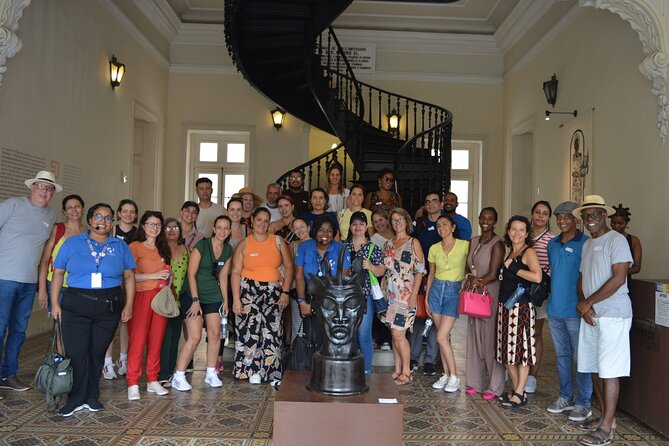
Rio’s Little Africa is not a theme park or a neatly packaged old quarter. It is a living part of central Rio where churches, archaeological sites, museums, public squares, and music landmarks tell the story of Afro-Brazilian life. This 3.5-hour walking tour gives that story a clear shape, moving from Santa Rita to the port district and ending at Largo da Prainha.
I like the way the tour connects difficult history with present-day culture, rather than treating slavery as a closed chapter. I also like the small-group limit of 20 people, the included museum admission, and the short VLT ride that saves your feet between parts of the route. The main drawback is the amount of walking, along with the fact that most stops are outside visits, so museum closures and weather can affect the experience.
In This Review
- Key points to know before you book
- Why Little Africa deserves a place in your Rio plans
- Santa Rita begins the story at street level
- IPN brings archaeology into the conversation
- MUHCAB expands the story beyond suffering
- Valongo Wharf makes the port’s history visible
- Pedra do Sal links memory, faith, and music
- Largo da Prainha ends the walk with room to breathe
- What the $82.53 price really covers
- Timing, walking, and practical comfort
- Who will appreciate this tour most
- Should you book Little Africa in Rio?
- FAQ
- How long does the Little Africa tour last?
- How much does the tour cost?
- Where does the tour start?
- Where does the tour end?
- Is transportation included?
- Is museum admission included?
- Does the tour run on Sundays?
- Are the museums open during Carnival and the holiday period?
- Can I cancel for a refund?
Key points to know before you book
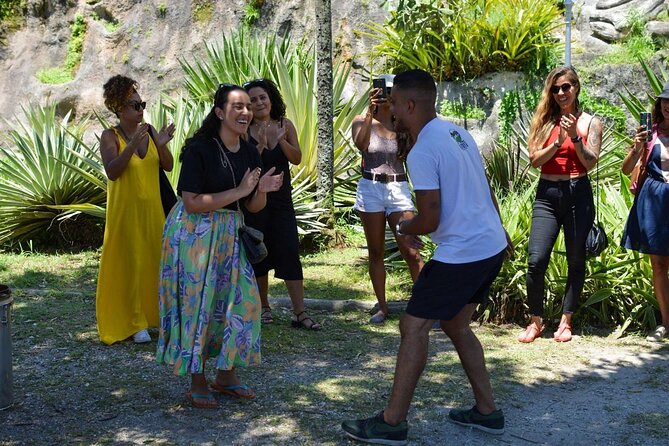
- Six stops in about three and a half hours: The route covers Santa Rita, IPN, MUHCAB, Valongo Wharf, Pedra do Sal, and Largo da Prainha.
- A serious look at Afro-Brazilian history: The tour addresses enslavement, Black identity, African origins, cultural survival, and inequality without softening the subject.
- Guides make the difference: Carolina, Rafael, Malu, and Val have all led tours, with particular praise for clear explanations, warmth, and enthusiasm.
- Walking shoes are essential: You will walk between several sites and take a short VLT ride during the route.
- Afternoon timing has a purpose: The schedule helps avoid Rio’s worst heat and gives you time to eat before the walk, though late light can make photographs less appealing.
- The tour ends in a useful place: Largo da Prainha is close to restaurants and the atmosphere of Pedra do Sal, giving you an easy way to continue exploring.
Why Little Africa deserves a place in your Rio plans
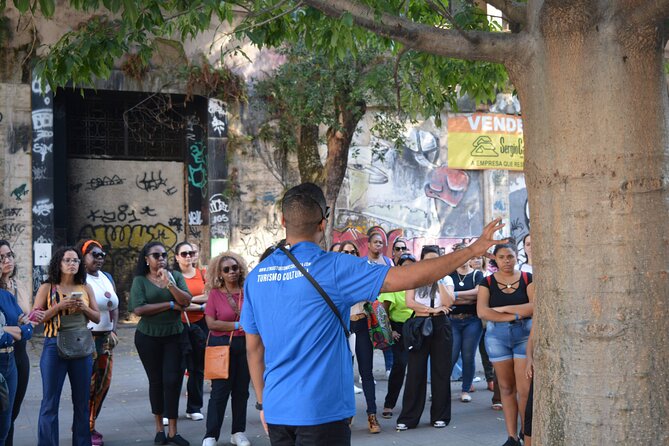
Rio’s famous sights are easy to name: Christ the Redeemer, Sugarloaf Mountain, Copacabana. Little Africa asks for a different kind of attention. Here, the important views are often not grand panoramas but a church facade, a stone wharf, a museum floor, or a square where Black culture remains visible.
I value this experience because it helps you read central Rio with more care. The guide does not simply point at buildings and recite dates. The route uses each stop to explain how Afro-Brazilian communities shaped the city, how African peoples arrived in Brazil, and how the effects of forced labor still connect to inequality today.
The subject can be painful. The tour deals openly with the cruelty of the slave era, so this is not a light sightseeing walk. Yet the tone is described as professional, humane, and respectful. You get hard facts, but also attention to survival, faith, community, music, and the people who kept their culture alive.
The guiding team is a major part of the experience. Carolina has been praised for careful pacing and clear explanations, including when older relatives needed a gentler rhythm. Rafael has been singled out for making the subject both informative and enjoyable. Malu and Val have also led tours in English, and the tour has included guides with strong personal connections to teaching and Afro-Brazilian culture.
A few more Rio de Janeiro trips to weigh up
- Rio de Janeiro: Historic Rio and Santa Teresa Half-Day Tour
★ 4.4 · 228 reviews - Rio de Janeiro: Little Africa Heritage Walking Tour
★ 4.9 · 177 reviews - Learn the History of Rio with an Unforgettable City Center Walking Tour
★ 5.0 · 82 reviews
Santa Rita begins the story at street level
The meeting point is the Santuário de Santa Rita, at Largo de Santa Rita in central Rio. The first stop is an external visit lasting about 20 minutes, with cultural and heritage material presented through a decolonial viewpoint.
That approach matters. Instead of beginning with a polished official version of Rio’s past, the guide asks you to notice whose stories were preserved, whose were pushed aside, and how Black presence shaped this part of the city. The church itself is not treated as an isolated monument. It becomes a starting point for discussing faith, power, community, and the city’s changing identity.
Since this is an outside visit, do not expect a long indoor church tour. The value is in the explanation and the way the guide places the site within the larger route. This is also a good moment to ask questions, since the tour builds its ideas step by step from here.
IPN brings archaeology into the conversation
The next stop is the Instituto de Pesquisa e Memória Pretos Novos, usually known as IPN. The visit lasts about 40 minutes and includes admission.
IPN is one of the most important parts of the route because it gives physical evidence to a history that can otherwise feel abstract. The site is connected to the archaeological memory of the Pretos Novos, and the guide explains why this place matters within Rio’s port district and the wider story of African people brought to Brazil.
This is not a stop to rush through. Allow yourself to listen closely, even when the material is uncomfortable. The museum visit gives the tour a solid center, linking the ground beneath your feet to the human cost of the slave trade.
The included ticket improves the value of the $82.53 price. You are not paying only for a guide-led walk. You are also getting access to a specialized institution that would be easy to miss if you explored the area without context.
MUHCAB expands the story beyond suffering
At MUHCAB, the Museu da História e da Cultura Afro-Brasileira, the focus shifts toward Afro-Brazilian history and culture in the Gamboa area. The visit takes about 40 minutes, with admission listed as free.
This balance is one of the tour’s strongest features. IPN and Valongo Wharf force you to confront the violence of enslavement. MUHCAB helps you see what came after and alongside that violence: cultural practices, community life, artistic expression, faith, memory, and identity.
The museum is described as a territory museum, so the neighborhood itself is part of the subject. That makes the visit feel connected to the streets rather than sealed away from them. Your guide helps you understand why the surrounding area matters, rather than treating the museum as a stand-alone indoor attraction.
Museum hours are important here. The museums close on Sundays, from December 16 through January 5, and during Carnival season. Confirm the operating date before you book, especially if your Rio trip falls near a major holiday.
Same city, a completely different kind of day:
- Rio de Janeiro: 6-Stop Highlights of Rio with Lunch
★ 4.4 · 5,157 reviews - Christ the Redeemer Entry Ticket by Corcovado Train
★ 4.4 · 4,476 reviews - Rio de Janeiro: Rocinha Favela Walking Tour with Local Guide
★ 4.8 · 3,052 reviews - Rio de Janeiro: Sugarloaf Cable Car Official Ticket
★ 4.6 · 2,873 reviews
Valongo Wharf makes the port’s history visible
Cais do Valongo is a former wharf in Rio’s port district, between the present-day Coelho e Castro and Sacadura Cabral streets. The stop lasts about 30 minutes and is free.
The site is powerful partly because it is open and exposed. You stand in an ordinary urban setting while the guide explains the role this port area played in the arrival of enslaved Africans. That contrast can be jarring. Modern Rio continues around you, but the ground carries a much darker memory.
This is one of the places where a guide adds real value. Without explanation, the remains and street setting may not tell you enough. With context, you can see the wharf as part of a much wider story about forced migration, commerce, race, and the making of Brazil.
Bring water and comfortable shoes. The stop itself is not long, but it comes as part of a route with repeated walking and standing. If you are sensitive to heat, the afternoon schedule may be easier than a midday walk. The tour provider has explained that Rio can pass 40 degrees Celsius, and that people often struggle to focus when they are hungry and overheated.
Pedra do Sal links memory, faith, and music
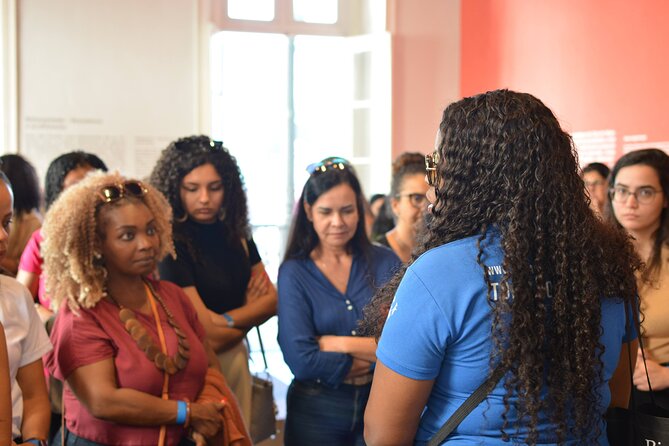
The route then reaches Pedra do Sal in the Saúde neighborhood, near Largo da Prainha. This is an external visit of about 25 minutes.
Pedra do Sal is presented as both a historical and religious landmark. It also carries a strong connection to Black cultural life and music. You are not simply stopping for a photograph. The guide explains how the place fits into the identity of Little Africa and why it remains meaningful today.
This is a good point to compare the different kinds of sites on the tour. The museums preserve objects and formal records. Valongo Wharf carries archaeological memory. Pedra do Sal shows how history can remain active in a public place, expressed through gathering, belief, music, and neighborhood identity.
The stop may appeal most to you if you want a link between the past and present. It is less suited to anyone seeking a purely architectural tour. The main attraction is the meaning attached to the place.
Largo da Prainha ends the walk with room to breathe
The final stop is Largo São Francisco da Prainha, also called Largo da Prainha. The visit lasts about 20 minutes, and the tour ends here at R. São Francisco da Prainha, 7.
The square was once a symbolic part of Little Africa, shaped by Black presence and the zungus, communal spaces associated with Black life. Today it is also known as one of Rio’s appealing places for food and nightlife. That combination gives the ending a useful sense of continuity.
I like finishing here because the tour does not leave you at the last museum door. You end in a public square where you can continue thinking about the route, get something to eat, or explore nearby on your own. Restaurants are closer to the end of the tour, which is another reason the afternoon schedule can work well.
A short VLT ride is included during the experience. It breaks up the walking and gives you a practical taste of Rio’s public transport. The ride is brief, but it helps connect the port-area stops without turning the tour into a long march.
What the $82.53 price really covers
At $82.53 per person, this is not the cheapest way to see central Rio. The price makes more sense if you want interpretation rather than a self-guided walk.
You are paying for about 3.5 hours with a guide, all listed fees and taxes, admission to IPN, and the included VLT ride. MUHCAB and the outdoor sites do not add admission costs. Lunch and tips are not included, so budget for a meal after the tour and a gratuity if your guide provides the kind of careful service this experience is designed around.
The maximum group size is 20. That is not an intimate private tour, but it is small enough to allow questions and keep the group together on city streets. The quality of the day depends heavily on the assigned guide. The strongest accounts describe guides who speak clearly, answer basic questions without condescension, and adjust the pace when needed.
The tour is especially good value for you if you would otherwise miss the significance of these sites. A map can show you where Pedra do Sal and Valongo Wharf are. It cannot easily explain how they fit together.
Timing, walking, and practical comfort
Most of the route is on foot, with a short VLT ride. Wear shoes you can walk in for several hours, and bring water. The tour is not recommended for people with disabilities, according to the stated participation guidance, though one guide was able to adjust the pace for a family member who could not manage all the walking.
The afternoon start has both strengths and weaknesses. You are less likely to be walking in the hottest part of the day, and you can eat before setting out. On the other hand, the light can fade toward the final stops, which is not ideal if photography is a priority.
English interpretation is available, but guide fluency can vary. The guiding team has successfully led English-language tours, and the strongest experiences came when the guide’s command of the language matched the subject knowledge. If language is a major concern, confirm the available language when booking.
Rain can cancel the experience. If poor weather forces a cancellation, you are offered another date or a full refund. Otherwise, you can cancel up to 24 hours before the start time for a full refund. Sunday closures and the annual museum closure period are the other dates to watch.
Who will appreciate this tour most
I would choose this tour if you want Rio to be more than beaches, viewpoints, and famous monuments. It suits you if you care about African diaspora history, colonialism, religion, public memory, social justice, or the way culture survives pressure.
Families can enjoy it, especially with a guide who keeps younger people involved and adjusts the pace. Older adults should think honestly about the walking time, though a thoughtful guide may be able to make reasonable adjustments. Solo visitors and couples also fit the format well, since the group setting makes it easy to ask questions without arranging a private tour.
This is not the best choice if you want a relaxed sightseeing loop with little walking or if you prefer every attraction to be open and highly visual. Several stops are outside visits, and the subject requires concentration. You should come ready to listen.
Should you book Little Africa in Rio?
Yes, if you want to understand a part of Rio that standard sightseeing often skips. The tour is strongest when you let the guide connect the sites: Santa Rita’s decolonial framing, IPN’s archaeological memory, MUHCAB’s cultural focus, Valongo Wharf’s painful port history, Pedra do Sal’s living identity, and Largo da Prainha’s social energy.
Book it early if your dates fall near Sunday, Carnival, or the December 16 to January 5 closure period. Choose sturdy shoes, eat before the afternoon start, and leave space afterward for food near Largo da Prainha.
I would not make this your only Rio experience. Pair it with the city’s famous natural sights. But I would make room for it, because Little Africa gives you the human story behind the city.
FAQ
How long does the Little Africa tour last?
The experience lasts approximately 3 hours and 30 minutes.
How much does the tour cost?
The listed price is $82.53 per person.
Where does the tour start?
It starts at the Santuário de Santa Rita, at Largo de Santa Rita, Centro, Rio de Janeiro.
Where does the tour end?
The tour ends at Largo da Prainha, at R. São Francisco da Prainha, 7, in the Saúde neighborhood.
Is transportation included?
Yes. The tour includes a short ride on Rio’s VLT public transport, and that ride is included in the final price.
Is museum admission included?
All fees and taxes are included, along with a ticket for the New Black Institute. MUHCAB and the outdoor stops have no admission charge listed.
Does the tour run on Sundays?
The New Black Institute is closed on Sundays, so you should not book this experience for Sunday without confirming availability.
Are the museums open during Carnival and the holiday period?
The museums are closed from December 16 to January 5 and during Carnival season.
Can I cancel for a refund?
You can cancel up to 24 hours before the start time for a full refund. Cancellations or changes made less than 24 hours before the start time are not accepted, and poor-weather cancellations offer a different date or a full refund.
Just added around Rio de Janeiro
- Vidigal Favela Tour★ 4.4 · 26 reviews
- Hang gliding flight in Rio de Janeiro★ 5.0 · 6 reviews
- Rio de Janeiro: Zip Lining and Canopy Tree Tour★ 3.3 · 6 reviews
- Rio de Janeiro: Attend a Vasco da Gama game with local guide★ 4.8 · 9 reviews
- Unforgettable Boat Party★ 5.0 · 3 reviews
- Tijuca Forest Hike – Waterfalls & Caves, Nature & Wild Life!★ 5.0 · 51 reviews
- Rio Highlights: Christ, Sugarloaf, and More in a Private Tour★ 5.0 · 36 reviews
- Tijuca Forest w/ Chinese View,cascatinha Taunay,horto waterfall and parque laje★ 4.5 · 29 reviews
Historical Tours, compared.

Scenic Train ride to historical cities of Morretes and Antonina
Read our review →
From Foz do Iguazu: Triple Frontier Landmark Ticket
Read our review →
Downtown-Center History Walking Tour – in English
Read our review →
Learn the History of Rio with an Unforgettable City Center Walking Tour
Read our review →Browse the lists this tour appears in