
Reviewed · WALKING TOURS
São Paulo: Paulista Avenue Walking Tour
Paulista Avenue is São Paulo in one long, walkable slice: old mansions, modern cultural centers, public art, museums, offices, shops, and one of Brazil’s best-known art museums. This three-hour private walking tour gives you a clear route through that mix while a guide explains how the avenue changed over time.
I like the strong lineup of stops, especially MASP, Casa das Rosas, Trianon Park, and the Eduardo Kobra murals. I also like the steady pace and built-in breaks for photos, snacks, a little shopping, or simply watching the city move around you. The main drawback is that this is an outdoor overview, not a museum tour, so admission to paid sights is not included and you should not expect to go inside them.
In This Review
- Key points at a glance
- Why Paulista Avenue works so well on foot
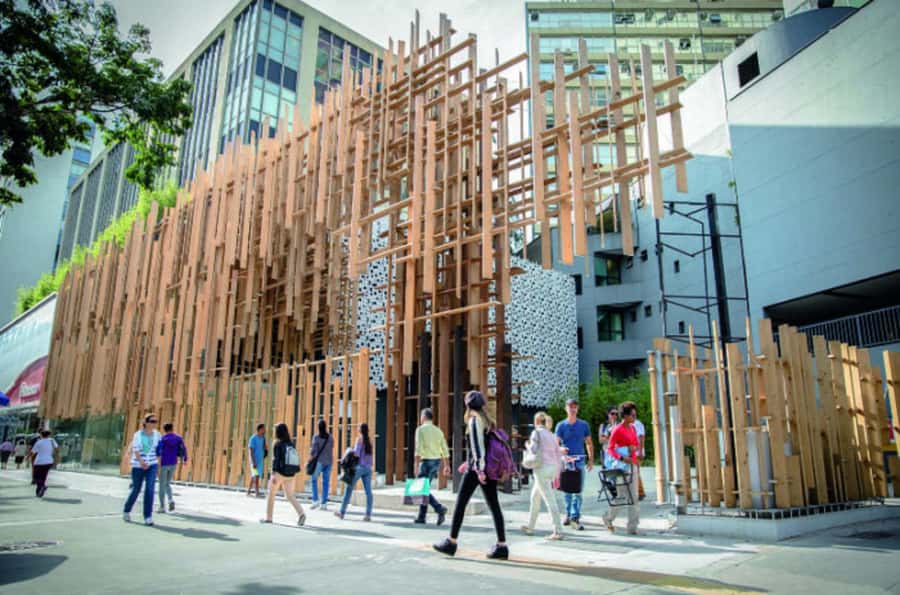
- Starting at Japan House on Paulista Avenue
- Santa Catarina Hospital, Casa das Rosas, and early Paulista landmarks
- Eduardo Kobra murals and the city’s public art
- Itau Cultural Institute, Rodrigues Alves School, and the Pasteur Institute
- FIESP and the São Paulo Museum of Art
- Trianon Park and the July 9 viewpoint
- Gazeta Building, Rocha Azevedo, and Joaquim Franco de Melo Residence
- Augusta Street, Conjunto Nacional, and Livraria Cultura
- Instituto Moreira Salles and the final stretch
- What the guides add to the experience
- Price, pace, and practical value
- Should you book the Paulista Avenue walk?
- FAQ
- Where does the Paulista Avenue walking tour begin?
- How long does the tour last?
- How many sights are included?
- Which languages are available?
- Is the tour private?
- Are museum entrance fees included?
- Is food included?
- Is the tour wheelchair accessible?
Key points at a glance
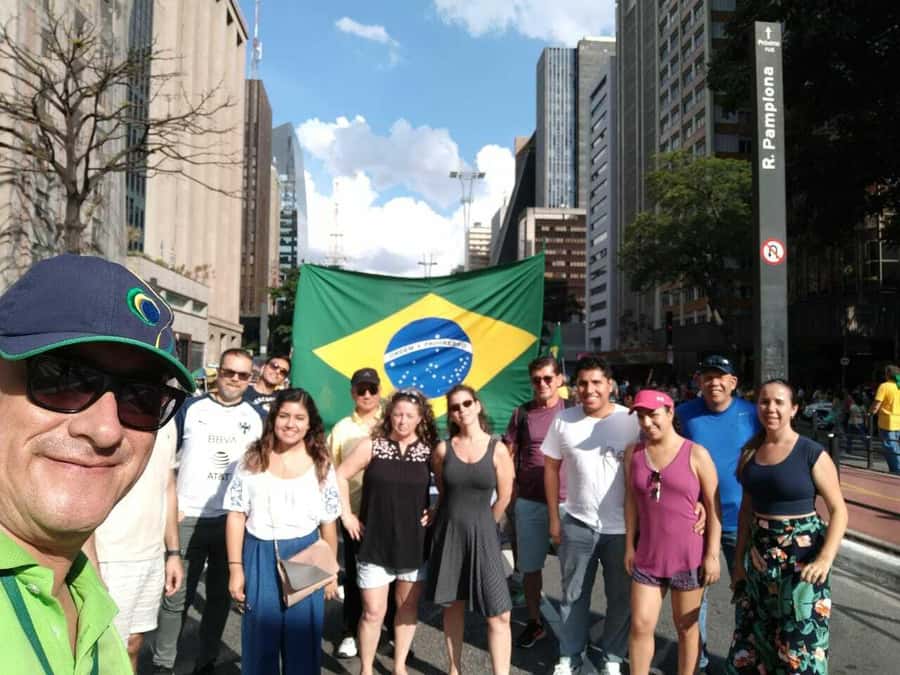
- Eighteen Paulista Avenue sights: See major landmarks such as MASP, FIESP, Sesc Avenida Paulista, the Pasteur Institute, and Instituto Moreira Salles.
- A private guide in three languages: Tours are offered in English, Spanish, and Portuguese, with guides including Priscila, Doris, Renato, Ilan, and Laura.
- A useful first-day orientation: The route helps you understand Paulista Avenue before returning on your own to museums, shops, and restaurants.
- Outdoor city history: Learn how the avenue developed while moving between grand residences, public institutions, art spaces, and business buildings.
- Time for photos and pauses: The walk includes stops for contemplation, snacks, exploration, and souvenir shopping.
- Wheelchair accessible and weather-ready: The tour operates in all weather, so comfortable shoes, sunscreen, sunglasses, and suitable clothing matter.
Why Paulista Avenue works so well on foot
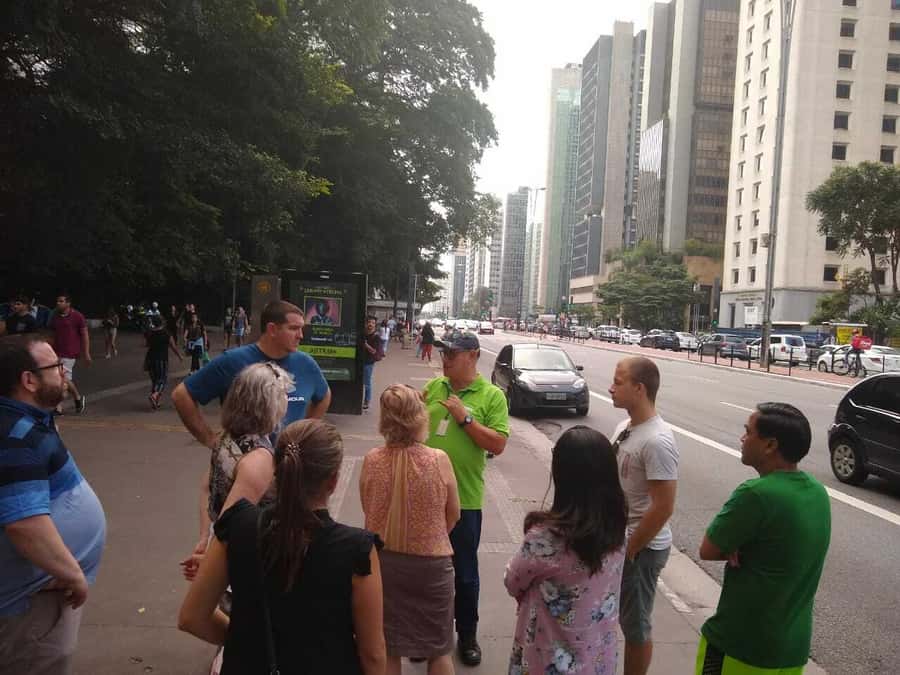
Paulista Avenue can feel like a collection of unrelated sights if you explore it without context. One block brings a grand former residence, the next a concrete cultural center, then a large mural, a park, or a building tied to São Paulo’s business world.
A guide helps connect those pieces. Instead of simply checking off buildings, you hear why this avenue became such an important part of the city and how its public spaces, cultural venues, and major institutions shaped its identity.
The route is also practical for a first visit. After three hours, you should know where the key buildings are and have a better idea of which places deserve a return visit. One participant used the walk early in a stay and found it useful for choosing what to see later along the avenue.
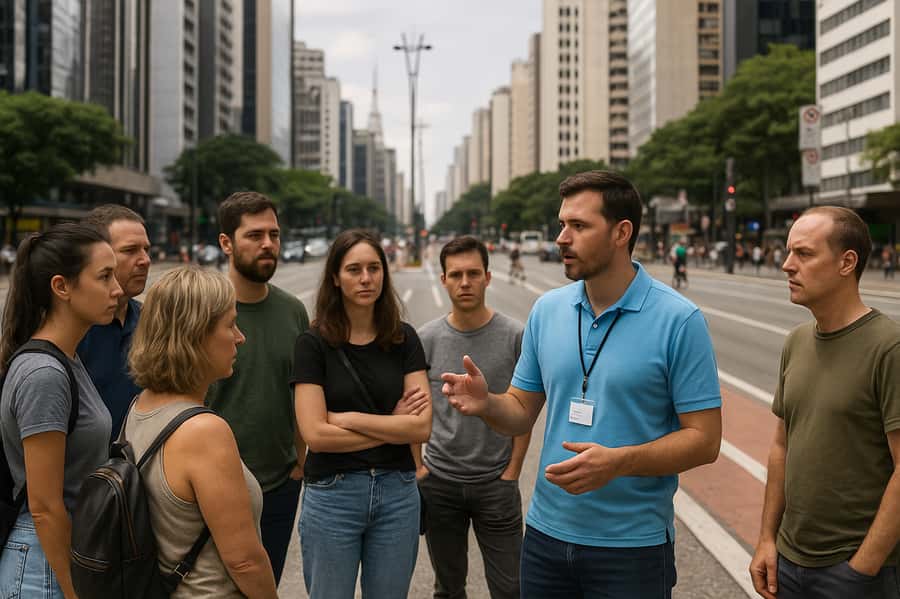
The experience is private, which matters in a city walk. You can ask questions, slow down for a photograph, or spend a little more time at a stop without being tied to a large group. The pace is described as smooth rather than strenuous, but you are still on your feet for three hours.
A few more São Paulo trips to weigh up
- Sao Paulo: Downtown-Center History Walking Tour – in English
★ 5.0 · 91 reviews - Sao Paulo: Downtown-Center Walking Tour | 2 Hours – English
★ 4.9 · 84 reviews - Ecological walk in sao paulo
★ 5.0 · 61 reviews
Starting at Japan House on Paulista Avenue
The walk begins at Japan House, a fitting starting point for an avenue where old São Paulo and newer cultural ideas meet. Your guide provides background on the area before setting off, giving you a frame for the buildings ahead.
Japan House is also a useful meeting point because the route immediately places you on Paulista Avenue. One practical note comes from the tour’s operating history: if Japan House is closed for construction, the guide may adapt the start and show you other parts of town instead. It is worth checking the meeting instructions close to your date.
From here, the walk begins with a broad look at the avenue. Your guide can point out how the buildings, institutions, and public spaces fit together, rather than treating each stop as an isolated photo opportunity.
Santa Catarina Hospital, Casa das Rosas, and early Paulista landmarks
Santa Catarina Hospital is one of the first notable stops. It gives the walk a useful reminder that Paulista Avenue is not only about museums and offices. Medical institutions are part of the avenue’s daily life and its long development as a central city corridor.
Casa das Rosas offers a sharp change of mood. Its historic character and more graceful architecture contrast with the larger modern buildings nearby. This is one of the stops where a guide’s explanation adds real value, especially if you want to understand how older properties survived as São Paulo grew upward and outward.
Sesc Avenida Paulista then brings you back into the present-day cultural side of the avenue. Sesc centers are known for public programming and community use, and this stop helps show how Paulista remains a place for culture rather than simply a business address.
You should have time for photographs along this section. The tour is not a race from one landmark to the next, and the pauses are part of the design. Still, if you want to enter every cultural center or spend a long time inside a museum, this is not the right format.
Eduardo Kobra murals and the city’s public art
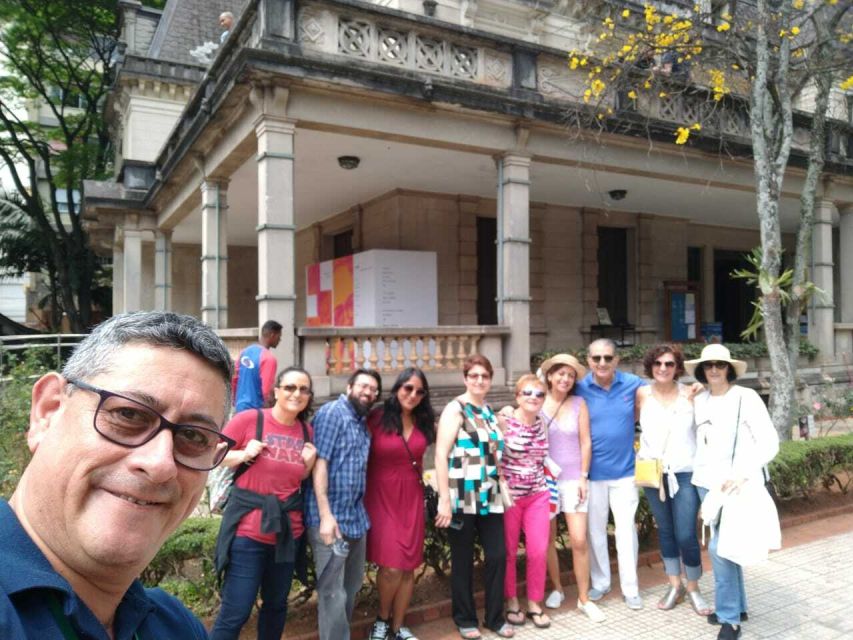
The Eduardo Kobra murals add color and scale to the route. His large street works are made for the urban setting, and they give you a different way to read São Paulo. Instead of looking only at famous facades, you see how art appears on the avenue itself.
This is also a good point to ask your guide about the changing role of public art in the city. The tour promises historical explanations, and the murals provide a natural bridge between Paulista Avenue’s older landmarks and its newer cultural energy.
The walk includes time for photos, but light and street conditions can affect what you capture. If you care about getting your best pictures, bring sunglasses and keep your phone or camera ready without letting it distract you from the guide.
Same city, a completely different kind of day:
- São Paulo: Main City Sights in 7 Hours – Shared Group Tour
★ 4.9 · 587 reviews - São Paulo: City Highlights Guided Tour
★ 4.5 · 307 reviews - Private São Paulo City Tour
★ 4.8 · 264 reviews - São Paulo: Downtown Historical Bike Tour
★ 4.9 · 191 reviews
Itau Cultural Institute, Rodrigues Alves School, and the Pasteur Institute
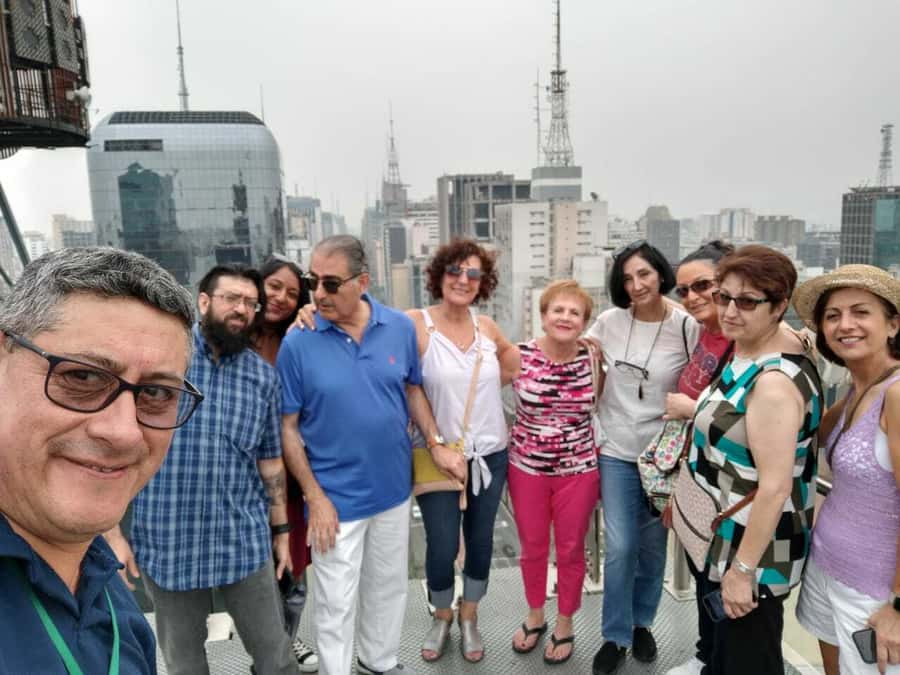
The Itau Cultural Institute adds another cultural stop, with a focus on Brazil’s artistic and cultural life. You will not be touring paid attractions as part of the walk, but the outside visit and guide commentary can help you decide if this is somewhere you want to revisit.
The State School Rodrigues Alves shifts the focus toward education. It is a useful reminder that Paulista Avenue serves residents and students as well as office workers and sightseers. Seeing these different types of institutions in one route makes the avenue easier to understand.
The Pasteur Institute continues that public-service theme. Together, these stops show the avenue as a working part of São Paulo, not a museum district built only for visitors.
This middle portion may appeal most to people who like cities through their institutions. If your main goal is a long museum visit, you may find the outside viewing too brief. If you like architecture, urban change, and local context, the variety is a strength.
FIESP and the São Paulo Museum of Art
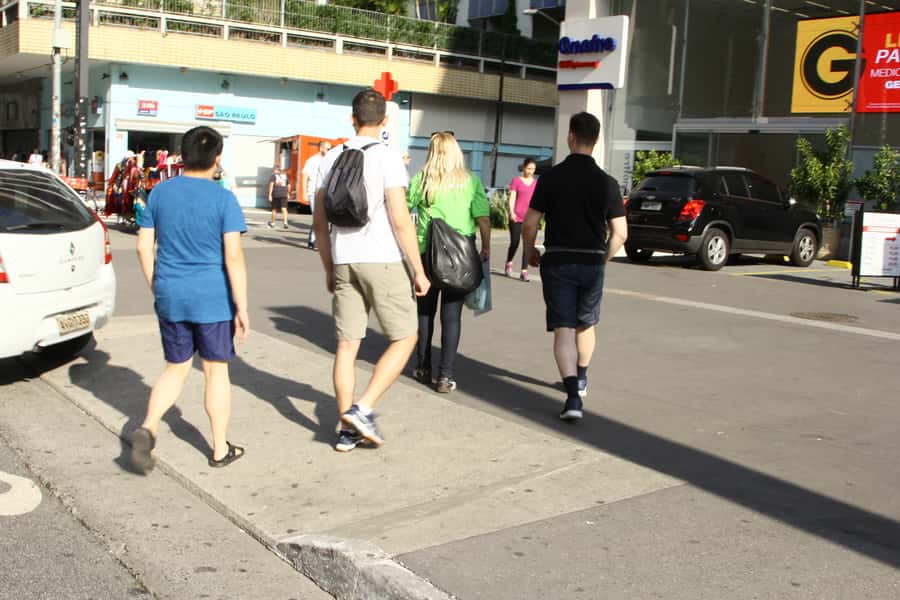
FIESP is one of the route’s major modern landmarks. Its strong geometric form is easy to recognize, and its place along Paulista Avenue reflects the district’s connection to business, industry, and public culture.
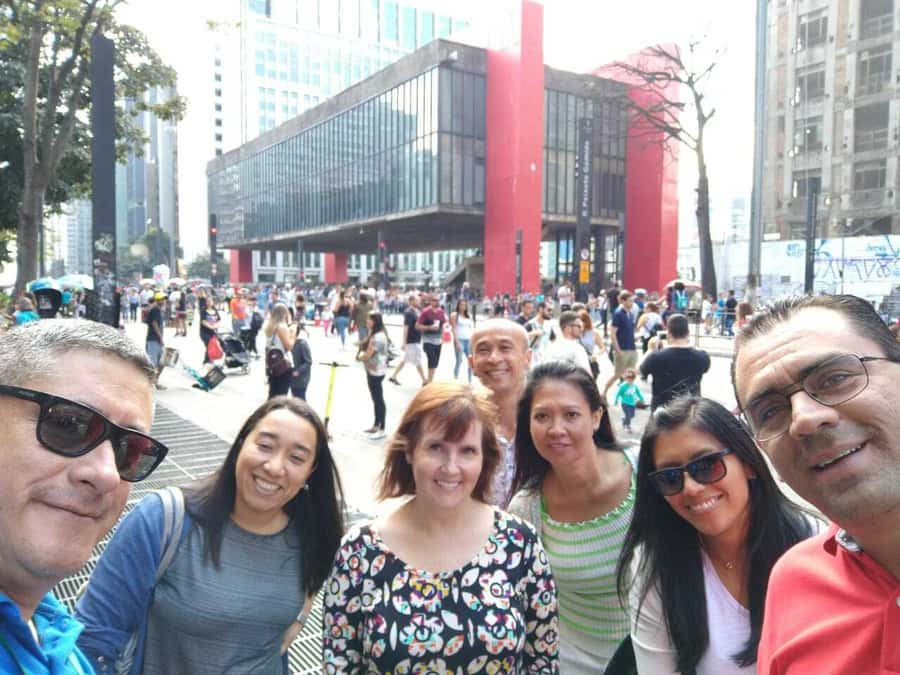
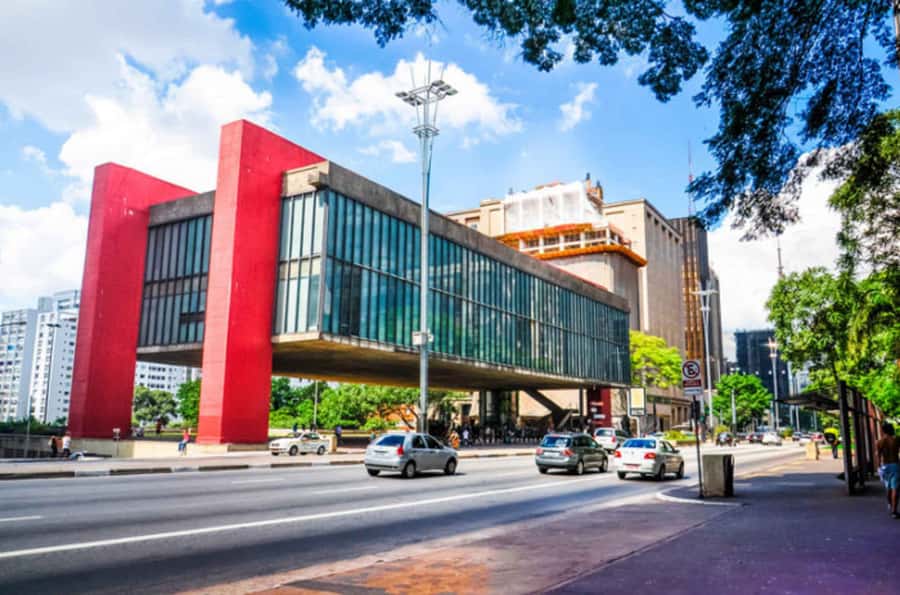
Then comes MASP, the São Paulo Museum of Art. Even if you do not enter, the building is a major visual stop. The open space beneath it gives the avenue a memorable public setting, and the museum’s architecture is as important to the scene as the art inside.
The guide’s explanation is especially useful here because MASP is more than a quick photograph. You can learn how it fits into São Paulo’s cultural life and why its position on Paulista Avenue matters.
Admission is not included, and the walk is not designed to take you through the museum. If MASP is high on your list, plan a separate visit. The walking tour can serve as your orientation, while another day or a later time gives you room to see the collections at a proper pace.
Trianon Park and the July 9 viewpoint
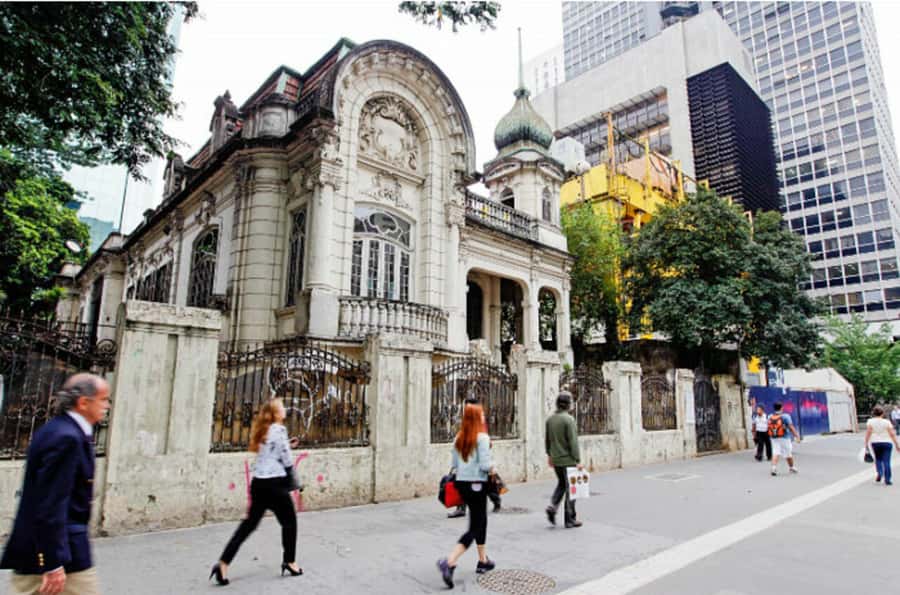
Trianon Park offers a change from concrete, traffic, and tall buildings. The stop gives you a chance to slow down and take in a pocket of greenery along the avenue. It is also one of the better places for a short break during a three-hour walk.
The July 9 belvedere viewpoint adds a different perspective. Rather than focusing on one facade, you get a chance to pause and consider the broader city around Paulista Avenue. The tour description specifically allows time for contemplation, and this is the kind of stop where that promise makes sense.
You should bring sunscreen and sunglasses, even on a cooler day. The walk operates in all weather, and the itinerary includes open-air sections. A light rain layer may also be sensible, since the activity does not stop simply because the forecast is uncertain.
Gazeta Building, Rocha Azevedo, and Joaquim Franco de Melo Residence
The Gazeta Building continues the tour’s look at the avenue’s media and business presence. It is one more example of how Paulista combines working institutions with public attractions.
Alameda Ministro Rocha Azevedo provides a change in street character. Moving slightly away from the main avenue helps you see the surrounding area rather than only the headline landmarks. This side-street portion can be valuable if you want a sense of how Paulista connects with nearby streets and neighborhoods.
The Residência Joaquim Franco de Melo brings the focus back to historic residential architecture. Its presence helps you picture a time when the avenue had a very different role and appearance. I like this part of the route because it prevents the tour from becoming a simple parade of large modern buildings.
For architecture fans, these less famous stops may be as rewarding as MASP. They also show why a guide matters. Without explanation, you might walk past a residence or side street without realizing its place in the avenue’s story.
Augusta Street, Conjunto Nacional, and Livraria Cultura
Augusta Street gives the walk another change of atmosphere. It connects Paulista Avenue with a street known for shops, culture, and city life. The stop broadens the experience beyond one straight avenue and helps you understand the area as a network of nearby streets.
Conjunto Nacional is one of the route’s key later stops. Its scale and mixed-use character show how Paulista developed into a place where offices, retail, culture, and everyday city business share the same address.
Livraria Cultura, located within the complex, adds a pleasant literary note. If you enjoy browsing bookstores, this is a natural place to consider returning to after the tour. The walking experience does not include purchases, so bring a payment method if you plan to shop.
This section may also be a good time to grab a snack or drink. Food and beverages are not included, but the itinerary allows stops for refreshments. Ask your guide about timing so you do not lose the historical commentary while taking a break.
Instituto Moreira Salles and the final stretch
The Instituto Moreira Salles completes the listed route with another important cultural address. Like the other centers on Paulista Avenue, it is best treated as a place to note for a later visit rather than an included museum admission.
By the final stretch, the different themes of the walk begin to line up: historic homes, public institutions, large business buildings, parks, murals, bookstores, viewpoints, and art centers. You get a much fuller picture of Paulista Avenue than you would from visiting only MASP.
The final stop also leaves you well placed to continue exploring on your own. Your guide can suggest places to visit along the avenue, and one guide, Renato, was praised for offering useful ideas for later stops. That kind of practical advice is one of the strongest reasons to take the tour near the beginning of your São Paulo stay.
What the guides add to the experience
The guide is the heart of this tour. The experience is offered in English, Spanish, and Portuguese, and named guides connected with the tour include Priscila, Doris, Renato, Ilan, and Laura.
The strongest praise centers on historical explanation, clear context, kindness, and personal attention. Renato is noted for detailed explanations of Paulista Avenue and its landmarks. Ilan is praised for explaining the history of the buildings and how the area changed over time. Priscila and Laura are also described as warm, attentive, and energetic.
Those details matter because the route has many stops. Without a good guide, eighteen sights could become a blur of names and photographs. With clear commentary, the variety becomes the point.
The private format should help if you have specific interests. You can ask about architecture, public art, local institutions, or places to return to. The tour is not presented as a lecture, though, and its smooth pace with several breaks should suit people who want information without spending the full three hours standing in one place.
Price, pace, and practical value
At $100 per person, this is not a cheap casual stroll. The price makes more sense if you value a private group, a licensed professional guide, and a carefully arranged route through eighteen sights.
You are paying for interpretation and orientation, not entry tickets. Food, drinks, souvenirs, and museum admissions cost extra. If you plan to enter MASP, Instituto Moreira Salles, or another cultural venue, budget separately and allow extra time beyond the three-hour walk.
The tour can be good value on your first day in São Paulo. It gives you a working map of Paulista Avenue and may help you avoid wasting time later. It is less useful for someone who only wants unhurried museum visits or already knows the avenue well.
The walk is wheelchair accessible, but the tour still takes place outdoors and includes several stops along a major city avenue. Confirm the exact route and conditions if you have particular mobility needs. Comfortable shoes are essential, and sunscreen, sunglasses, and weather-appropriate clothing are specifically recommended.
Free cancellation is available up to 24 hours before the start time, and you can reserve now and pay later. Those terms are helpful if your schedule is still taking shape, but the key decision remains the same: do you want a guided overview or independent time inside the sights?
Should you book the Paulista Avenue walk?
Book it if you want to understand Paulista Avenue quickly, prefer a private guide, and enjoy architecture, public art, city history, and cultural institutions. It is especially useful near the start of your stay, when guide suggestions can shape the days that follow.
I would also choose it for a first visit after a long flight. The route offers a gentle way to get oriented without demanding a full museum day, and the frequent stops keep the pace manageable.
Skip it if you want included admissions, long interior visits, or a low-cost group walk. For everyone else, the mix of eighteen landmarks, flexible pauses, and strong guide-led context makes this a practical introduction to one of São Paulo’s most important avenues.
FAQ
Where does the Paulista Avenue walking tour begin?
The tour begins at Japan House on Paulista Avenue.
How long does the tour last?
The walking tour lasts three hours.
How many sights are included?
The route includes eighteen famous sights and landmarks along Paulista Avenue and nearby streets.
Which languages are available?
The tour is offered in English, Spanish, and Portuguese.
Is the tour private?
Yes. It operates as a private group experience.
Are museum entrance fees included?
No. Entrance fees are not included, and the tour is not designed to take you inside museums or other sights that charge admission.
Is food included?
No. Food and drinks are not included, though the route includes opportunities to stop for refreshments.
Is the tour wheelchair accessible?
Yes. The activity is listed as wheelchair accessible. It operates in all weather, so you should dress appropriately and bring comfortable shoes, sunglasses, and sunscreen.
Just added around São Paulo
- REIKI – Crystal Therapy – by Venus’ Secret Spa – San Francisco★ 5.0 · 41 reviews
- Private Half-Day Guided Tour to São Paulo★ 5.0 · 50 reviews
- Private Street Art Tour of São Paulo with Batman´s Alley Visit★ 5.0 · 30 reviews
- Private Tour: São Paulo’s Top Attractions–6 Hours, Hotel/Airport★ 5.0 · 50 reviews
- Full Day Private Beach Tour Santos & Guarujá – Combine Culture, History & Beach★ 5.0 · 37 reviews
- Downtown Photo Tour★ 5.0 · 45 reviews
- Gastronomic Tour São Paulo – Culture & History Through The Art Of Food – Private★ 5.0 · 50 reviews
- Facial Energization – by Venus’ Secret Spa – São Paulo★ 5.0 · 43 reviews
Walking Tours, compared.


Sunrise and Sunrise Walk Two Brothers with Local Guide
Read our review →
Downtown-Center History Walking Tour – in English
Read our review →
Downtown-Center Walking Tour | 2 Hours – English
Read our review →
Learn the History of Rio with an Unforgettable City Center Walking Tour
Read our review →Browse the lists this tour appears in