
Reviewed · HISTORICAL TOURS
Rio: Historical Walking Tour
Rio’s center is where the city’s grand public buildings, imperial landmarks, churches, and old commercial lanes come together. This tour makes the journey practical by taking you downtown by subway, then covering the sights on foot with a guide who can explain how Rio developed as Brazil’s former capital.
I like the mix of famous stops and easy-to-miss details, especially the 1894 Confeitaria Colombo and the narrow Travessa do Comercio. I also like the small-group format and the chance to ask questions about history, politics, and the country’s economy. The drawback is clear: four hours on foot, with cobblestones and several historic buildings, is not a good fit if you have mobility difficulties.
In This Review
- Key points to know before booking
- Starting in Copacabana and riding into Rio’s center
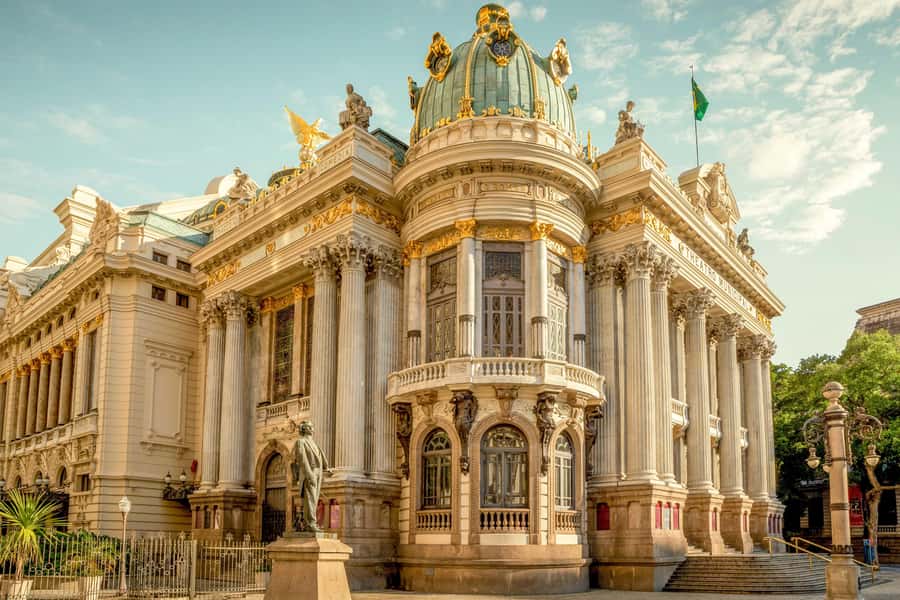
- Cinelândia and the French influence
- Confeitaria Colombo, a 1894 Rio institution
- Tiradentes Palace and Praça XV
- Travessa do Comercio and Carmen Miranda’s former residence
- Churches, cultural centers, and the Candelaria finish
- How much explanation can you expect?
- Is four hours enough for this route?
- Is the $79 price good value?
- Who will enjoy this downtown walk?
- Booking flexibility and practical details
- Should you book the Rio Historical Walking Tour?
- FAQ
- How long does the Rio Historical Walking Tour last?
- Where does the tour start and finish?
- Which languages are available?
- Is subway transportation included?
- Are meals and drinks included?
- Is the tour suitable for wheelchair users?
Key points to know before booking
- Subway access makes downtown practical: You travel from the Copacabana area to Cinelândia Station with your guide rather than arranging separate transport.
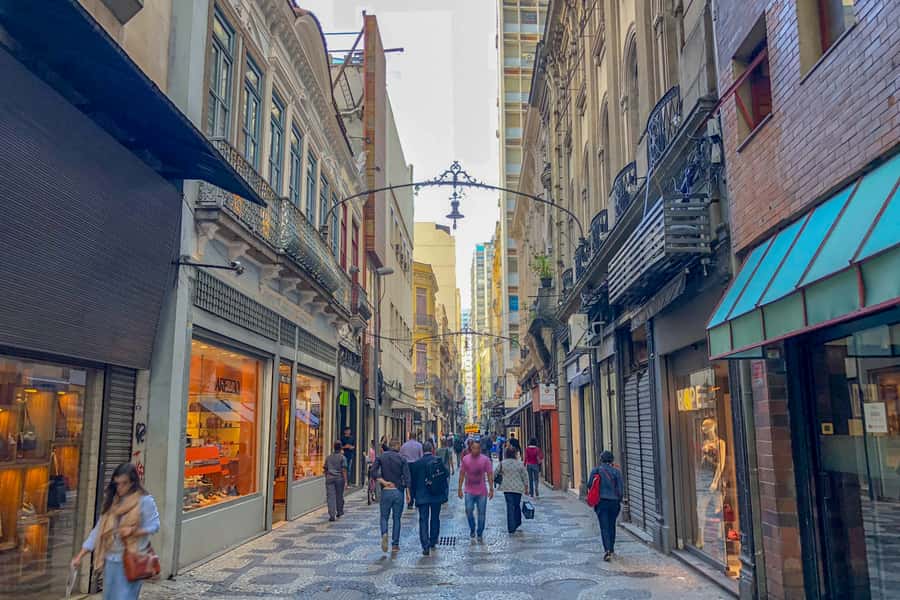
- The route covers several historic districts: Expect Cinelândia, Carioca Square, Praça XV, Largo da Candelaria, and old commercial streets.
- Confeitaria Colombo is a major stop: The ornate 1894 café gives the walk a welcome change of pace and a look at Rio’s traditional social life.
- The churches and civic buildings vary in style: French influence, imperial architecture, religious art, and grand public institutions all appear along the route.
- Guide quality shapes the experience: Lucien, Monique, Ernani, and Mathilda are among the guides praised for clear explanations and flexibility.
- Plan for walking, not just sightseeing: The tour is unsuitable for wheelchair users and people with mobility impairments.
Starting in Copacabana and riding into Rio’s center

The experience begins at one of two possible meeting points, with the stated option at Av. Atlântica, 1702, at Copacabana Palace, A Belmond Hotel. Since the exact meeting point can vary with the option you book, check your confirmation carefully before setting out.
The subway ride is part of the design, not a minor transfer. You leave the beach districts behind and arrive at Cinelândia Station, placing you near one of central Rio’s most striking clusters of public buildings. I like this approach because it connects the modern visitor base in Copacabana with the older civic heart of the city.
You should expect the guide to lead the group through the transport portion and then continue on foot. The tour lasts four hours in total, so the subway helps preserve time for the historic center instead of using a private vehicle to cover the same distance.
A few more Rio De Janeiro trips to weigh up
- Rio de Janeiro: Historic Rio and Santa Teresa Half-Day Tour
★ 4.4 · 228 reviews - Rio de Janeiro: Little Africa Heritage Walking Tour
★ 4.9 · 177 reviews - Explore Little Africa : Unveiling Afro Heritage in Rio de Janeiro
★ 5.0 · 97 reviews
Cinelândia and the French influence
Cinelândia introduces the architectural tone of the walk. The area contains relics of French influence, giving you a useful first lesson in how Rio’s public spaces were shaped by European models and local ambitions.
From there, the route moves toward Carioca Square. Along the way, you pass the Naval Club, the Monastery Church of Santo Antônio, and the Ordem Terceira de São Francisco da Penitência.
These stops are valuable because they show three different sides of central Rio in a short stretch. The Naval Club connects the area with the country’s maritime identity. The monastery church and the Franciscan order’s church bring religious architecture into the same city story.
The tour is strongest when you pause to look above street level. Grand façades can be easy to rush past, especially in a busy downtown area, but a guide helps you notice why certain buildings matter and how the center once functioned as the country’s political and social stage.
Confeitaria Colombo, a 1894 Rio institution
Confeitaria Colombo is one of the route’s most appealing stops. Built in 1894, the café gives you a chance to see a historic interior associated with Rio’s old café culture and formal public life.
The experience includes entrance fees, but drinks and meals are not included. That distinction matters here. You can visit the Confeitaria Colombo without committing to a meal, or you can budget separately if you want to order something during the stop.
I would treat this as a sightseeing visit first, not a guaranteed dining break. The tour has a fixed four-hour schedule and many stops, so the amount of time available inside may depend on the guide, the day, and how the group moves.
Still, the café adds welcome variety. After churches, squares, and civic buildings, you get an indoor landmark with a different mood. It also gives you a strong visual reminder that Rio’s center was once a place for formal meetings, business, coffee, and public display.
Tiradentes Palace and Praça XV
The walk continues to Tiradentes Palace, identified here as the State Hall, and then to Praça XV. This part of the route shifts from café and church interiors to the city’s imperial and governmental story.
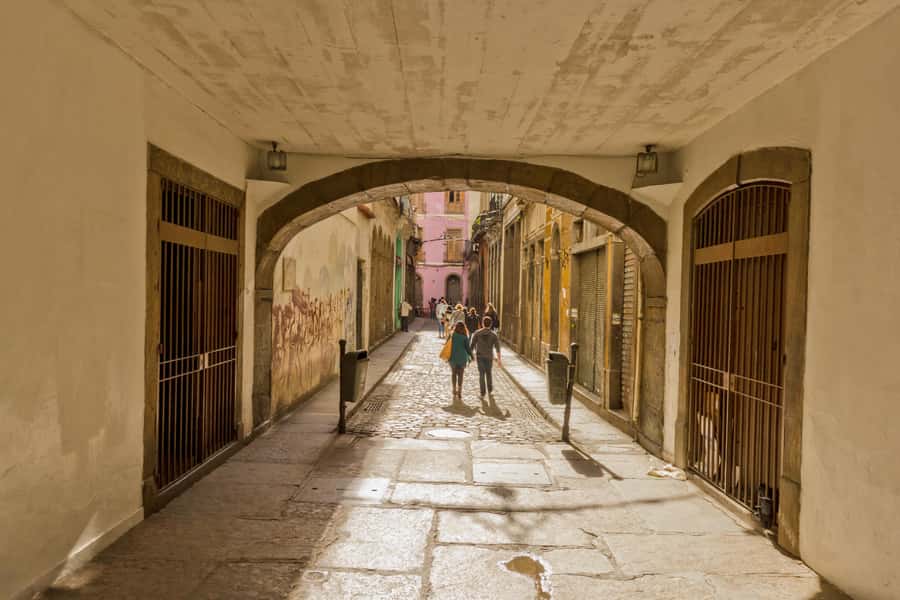
Praça XV brings several important sights into view, including the Imperial Palace, the statue of General Osório, Mestre Valentim’s Fountain, and the Teles Arch. Each item is more useful when seen as part of the square rather than as an isolated photo stop.
The Imperial Palace connects the area to Brazil’s monarchy. The statue of General Osório points to the country’s military past, while Mestre Valentim’s Fountain adds a work of public art and urban decoration. The Teles Arch leads you toward an older street pattern that feels different from the grander open spaces.
This is where a guide’s commentary can make a real difference. A bare list of names would not tell you much. A good guide can connect the palace, military figure, fountain, and arch to the changing role of the city center. Several guides, including Mathilda, have been praised for answering questions and adapting the walk to what the small group wants to understand.
Same city, a completely different kind of day:
- Rio de Janeiro: 6-Stop Highlights of Rio with Lunch
★ 4.4 · 5,157 reviews - Christ the Redeemer Entry Ticket by Corcovado Train
★ 4.4 · 4,476 reviews - Rio de Janeiro: Rocinha Favela Walking Tour with Local Guide
★ 4.8 · 3,052 reviews - Rio de Janeiro: Sugarloaf Cable Car Official Ticket
★ 4.6 · 2,873 reviews
Travessa do Comercio and Carmen Miranda’s former residence
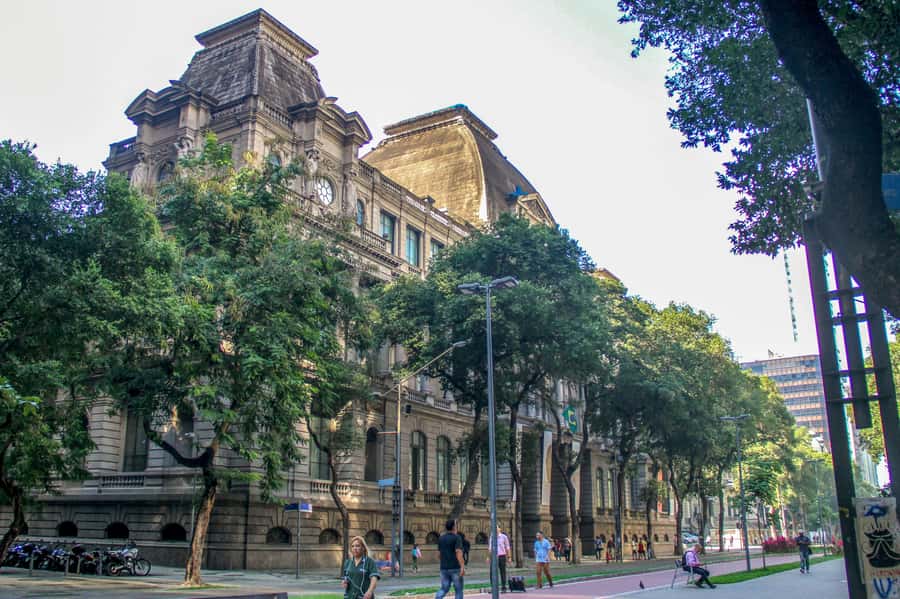
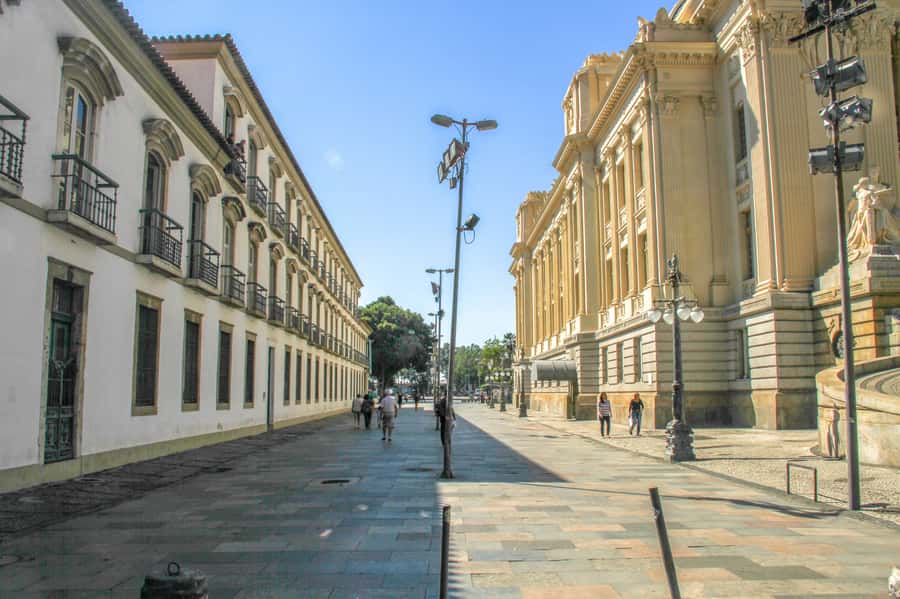
The route reaches Travessa do Comercio, a cobble-stoned lane that offers a more intimate look at central Rio. Its scale is a useful contrast to the formal squares and large institutional buildings earlier in the walk.
Cobblestones also bring a practical warning. They can be uneven, and the tour includes a good deal of walking. Wear firm, comfortable shoes, and do not book this experience if you need a wheelchair-accessible route or have difficulty walking for several hours.
The walk also passes the former residence of Carmen Miranda. This adds a link to Brazilian popular culture and gives the tour a personal, human detail amid the palaces, clubs, churches, and public offices.
I like this kind of stop because it widens the story beyond official architecture. Rio’s past is not only about rulers and institutions. It also includes performers, artists, merchants, religious communities, and ordinary streets where city life took place.
Churches, cultural centers, and the Candelaria finish
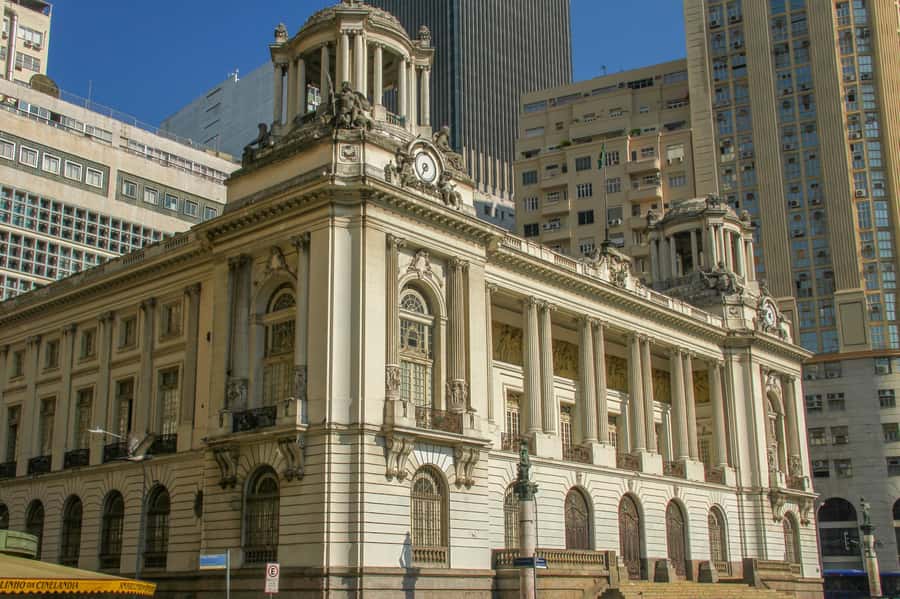
The final section includes the Church of Our Lady of the Merchants, the Post Office Cultural Center, France-Brazil House, the Bank of Brasil Cultural Center, and Candelaria Church. Some interiors are visited only when open, so you should see this as a planned route with possible variations rather than a promise that every door will be accessible on every departure.
The Church of Our Lady of the Merchants brings the commercial history of the center into the religious side of the tour. Its presence near old trade routes helps explain why churches were closely tied to the city’s working life.
The Post Office Cultural Center and the Bank of Brasil Cultural Center show how historic buildings can take on new public roles. Instead of treating downtown as a museum frozen in time, the route lets you see old structures being used for culture and public life.
France-Brazil House adds another architectural and cultural connection between Brazil and France. Since access depends on opening hours, the exterior and surrounding streets may be the main part of the visit if the building is closed.
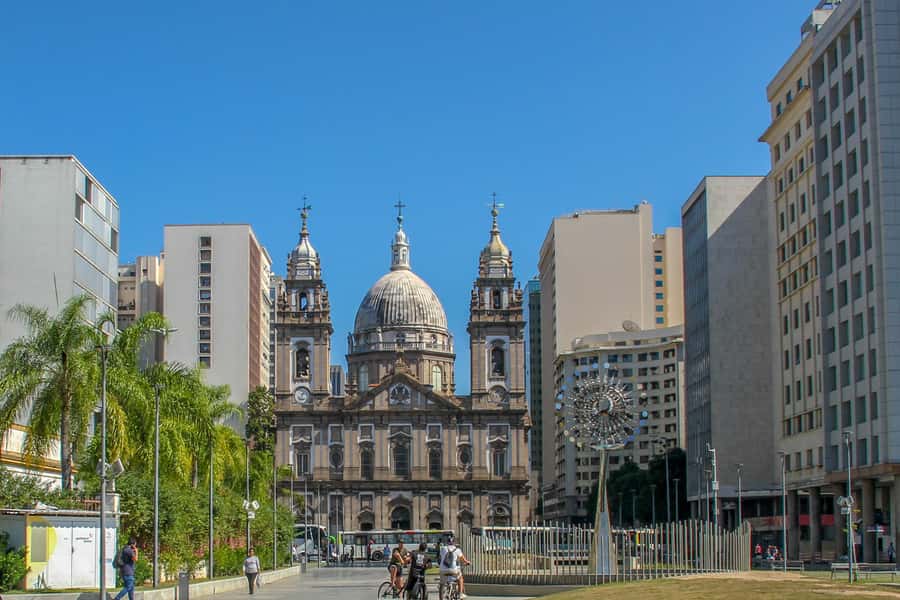
Candelaria Church provides a memorable closing point. Located near Largo da Candelaria, it belongs to one of the most important historic areas on the route. The church is also subject to opening hours, so your guide may need to adjust the interior visit.
After the downtown walk, you return to your hotel by subway. The stated finish is Copacabana Palace, A Belmond Hotel, which keeps the tour simple for people staying in or near the Copacabana area.
How much explanation can you expect?
The most highly praised part of this experience is the guide’s commentary. Sudipto Roy specifically valued the detailed cultural and historical explanations, while Elizaveta appreciated discussions that reached into history, politics, and the economy.
That is useful information when choosing a city tour. This is not just a transport-assisted photo walk. The route contains many names and dates, and the quality of the explanation will determine whether the stops feel connected or simply pass by in a blur.
The guide roster can vary, but Lucien, Monique, Ernani, and Mathilda have each received positive individual mention. Mathilda was described as flexible with a very small group, combining requested sights with additional places the couple would not have found alone. That suggests the tour may work especially well when you arrive with a few subjects you want to ask about.
The language choices are Spanish, English, and Portuguese. Make sure you select the language you want when booking. If you enjoy asking questions, use the small-group setting to do so. The strongest reports point to guides who welcome questions rather than delivering a fixed speech and moving on.
Is four hours enough for this route?
Four hours gives you a useful introduction to central Rio, but it is not enough for a slow museum visit at every stop. The route covers a lot: Cinelândia, Carioca Square, several churches, Confeitaria Colombo, Tiradentes Palace, Praça XV, Travessa do Comercio, cultural centers, and Candelaria.
Think of the tour as a guided overview with selected entrances, not a full study of every building. You will see the outside of many sites and enter some places when they are open. The guide’s timing may change based on opening hours, group pace, and how much discussion develops.
I like the length for a first day in Rio because it gives you a clear map of the central area without taking the entire day. It also leaves time afterward for your own plans. If you want to linger over every church interior or cultural exhibit, you may find the schedule tight.
The walking pace is another consideration. Even if the route is not described as strenuous, four hours through downtown, including cobblestones, requires steady mobility. Comfortable shoes are essential, and people with walking difficulties should choose another activity.
Is the $79 price good value?
At $79 per person, the price is reasonable if you want a guided introduction that combines transportation, commentary, and several entrance fees. You are paying for a professional guide, subway transport, a small-group format, and included entrance fees, not simply for a self-guided walk.
The value improves if you are staying in Copacabana and would otherwise need to work out the subway route, identify each building, and research which sites are open. The guide also gives context that is difficult to gain from façades alone.
The price does not include meals or drinks. That matters most at Confeitaria Colombo, where you may be tempted to sit down for something. Budget separately if you want a snack or beverage there.
The value is weaker if you only want to see central Rio from outside and are comfortable researching the area yourself. It is also weaker for anyone who cannot handle several hours of walking. No tour price is good value if the physical demands do not suit you.
Who will enjoy this downtown walk?
I would recommend it to first-time Rio visitors who want more than beaches and viewpoints. It is particularly useful if you want a guided introduction to the former capital’s public buildings, churches, imperial connections, and cultural institutions.
It also suits people who like asking questions. The available comments point to guides who can discuss more than architecture, including politics, economics, and national history. A small group gives you a better chance to steer part of the conversation.
The tour is a good match for visitors staying in Copacabana who want a straightforward way to reach downtown. The subway ride also makes the movement between neighborhoods part of the experience.
I would not choose it for a relaxed café morning, a dedicated museum visit, or an accessible sightseeing outing. The route is active, some sites may be closed, and food is not included.
Booking flexibility and practical details
You can cancel up to 24 hours in advance for a full refund, and the reserve-now, pay-later option lets you hold a place without paying immediately. Starting times depend on availability, so check the calendar before planning the rest of your day.
The meeting point may vary with the booking option. Confirm it rather than assuming every departure begins at Copacabana Palace.
The tour is offered in English, Spanish, and Portuguese. It finishes at Copacabana Palace, A Belmond Hotel, and uses the subway for the return. Entrance fees and professional guiding are included, while meals and drinks are not.
Should you book the Rio Historical Walking Tour?
Book it if you want a well-organized introduction to downtown Rio and value explanation as much as sightseeing. The route gives you a broad look at Cinelândia, Praça XV, old lanes, churches, cultural centers, and the Candelaria area, with Confeitaria Colombo adding one of the most distinctive stops.
I would book with comfortable shoes, an open schedule, and a few questions ready. The best part of the experience is likely to be the guide’s ability to connect architecture, religion, government, commerce, and Brazilian culture. Skip it if walking is difficult or if you want long, unhurried visits inside each building.
FAQ
How long does the Rio Historical Walking Tour last?
The tour lasts four hours, including the subway journey, guided downtown walk, sightseeing stops, and return by subway.
Where does the tour start and finish?
One stated starting option is Av. Atlântica, 1702, at Copacabana Palace, A Belmond Hotel. The meeting point may vary depending on the option booked. The stated finish is Copacabana Palace.
Which languages are available?
Live guiding is available in English, Spanish, and Portuguese.
Is subway transportation included?
Yes. Subway transport to downtown and back to the hotel is included in the tour.
Are meals and drinks included?
No. Entrance fees, professional guiding, small-group touring, and subway transport are included, but drinks and meals are not.
Is the tour suitable for wheelchair users?
No. The experience is not suitable for wheelchair users or people with mobility impairments, and it is not recommended for people with walking difficulties.
Just added around Rio De Janeiro
- Vidigal Favela Tour★ 4.4 · 26 reviews
- Hang gliding flight in Rio de Janeiro★ 5.0 · 6 reviews
- Rio de Janeiro: Zip Lining and Canopy Tree Tour★ 3.3 · 6 reviews
- Rio de Janeiro: Attend a Vasco da Gama game with local guide★ 4.8 · 9 reviews
- Unforgettable Boat Party★ 5.0 · 3 reviews
- Tijuca Forest Hike – Waterfalls & Caves, Nature & Wild Life!★ 5.0 · 51 reviews
- Rio Highlights: Christ, Sugarloaf, and More in a Private Tour★ 5.0 · 36 reviews
- Tijuca Forest w/ Chinese View,cascatinha Taunay,horto waterfall and parque laje★ 4.5 · 29 reviews
Historical Tours, compared.

Scenic Train ride to historical cities of Morretes and Antonina
Read our review →
From Foz do Iguazu: Triple Frontier Landmark Ticket
Read our review →
Explore Little Africa : Unveiling Afro Heritage in Rio de Janeiro
Read our review →
Downtown-Center History Walking Tour – in English
Read our review →Browse the lists this tour appears in