
Reviewed · HISTORICAL TOURS
African Heritage: Gastronomy and Musicality Experience
Rio’s African heritage is not tucked away in a museum case. It lives in the food, music, street art, religious traditions, and neighborhoods of the city. This five-hour private tour brings those threads together, moving from the Museu de Arte do Rio and the Valongo Wharf to Pedra do Sal, where a meal and percussion workshop give the history a human, hands-on shape.
I especially like the Morrinho Project, which replaces the usual one-note image of favelas with a detailed model of daily life, and the visit to the Pretos Novos Institute, where archaeology makes Brazil’s forced-labor past painfully concrete. The tasting and drumming workshop also give the tour a welcome change of pace.
The main consideration is its emotional weight. The IPN and Cais do Valongo address enslavement, death, and racial injustice directly, so this is not a light sightseeing outing. You should also note that drinks are not included and the experience is not suitable for people with food restrictions.
In This Review
- Key points before you book
- Why this Rio tour feels different from a standard city walk
- MAR and the Morrinho model: seeing favela life beyond the stereotype
- Eduardo Kobra’s mural and the public face of ancestry
- IPN: the hardest stop on the route
- Cais do Valongo and the meaning of Little Africa
- Pedra do Sal: food, religion, and percussion
- Largo de São Francisco da Prainha: a short finish in old Rio
- What $110 includes, and where the value lies
- Timing, meeting point, and practical planning
- Who should book this experience?
- Should you book the African Heritage: Gastronomy and Musicality Experience?
- FAQ
- How long does the African Heritage: Gastronomy and Musicality Experience last?
- What time does the tour start?
- Where does the tour begin?
- Where does the tour end?
- Is the tour private?
- Is food included?
- Are drinks included?
- Is admission to the Pretos Novos Institute included?
- Can I cancel for a full refund?
Key points before you book
- A five-hour private route through Little Africa: The tour begins at Museu do Amanhã at 10 a.m. and ends at Largo de São Francisco da Prainha.
- Morrinho offers a different view of favela life: The model shows streets, residents, and everyday activity in Pereira da Silva rather than reducing favelas to stereotypes.
- IPN and Cais do Valongo bring difficult history into focus: You see an archaeological site and the remains of Africans found there, followed by the former landing area tied to the Atlantic slave trade.
- Pedra do Sal combines food, faith, and music: The three-hour portion includes Afro-Brazilian and Yoruba dishes plus a percussion workshop led by an African drummer and instructor.
- The experience is private: Only your group participates, which allows the guide to adjust explanations and conversation to your interests.
- Plan ahead: The tour costs $110 per person and is commonly booked about 69 days before the date.
Why this Rio tour feels different from a standard city walk
Many Rio tours focus on beaches, viewpoints, and famous landmarks. This one asks you to look at the city through the experience of its African descendants and the communities that carried their traditions forward.
That focus gives the route a clear purpose. You are not simply checking off several downtown stops. You are following a line from representation, to historical evidence, to living culture. The art at MAR introduces a fuller picture of community life. IPN and Cais do Valongo confront the violence that shaped Brazil. Pedra do Sal then shows how food, rhythm, and collective memory continue in the present.
I also like the private format. A subject this serious benefits from time for questions, especially if you are trying to understand the difference between Brazil’s official story and the experiences left out of it. Guides named Isabella and Jaíse are associated with the experience, and the strongest descriptions of the tour point to clear explanations, personal attention, and a strong commitment to Afro-Brazilian history.
The route is based in central Rio, so it is a useful choice if you want more than the usual Copacabana and Ipanema circuit. It does not try to cover every part of the city. Instead, it gives you a focused look at an area where African memory remains especially visible.
A few more Rio de Janeiro trips to weigh up
- Rio de Janeiro: Historic Rio and Santa Teresa Half-Day Tour
★ 4.4 · 228 reviews - Rio de Janeiro: Little Africa Heritage Walking Tour
★ 4.9 · 177 reviews - Explore Little Africa : Unveiling Afro Heritage in Rio de Janeiro
★ 5.0 · 97 reviews
MAR and the Morrinho model: seeing favela life beyond the stereotype
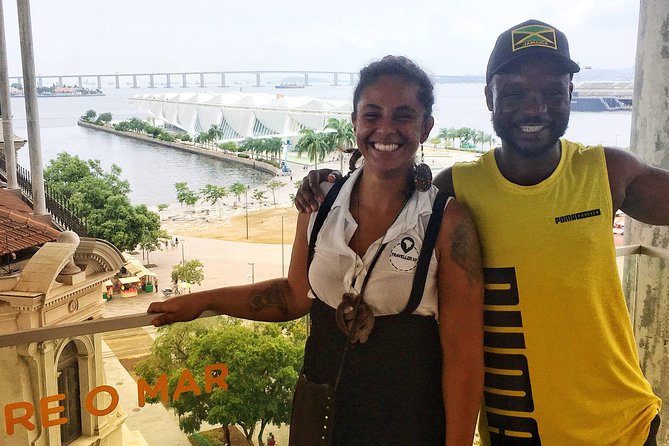
The first stop is the Museu de Arte do Rio, known as MAR. The featured work is the Morrinho Project, permanently displayed at the museum.
Morrinho is a detailed miniature recreation of the Pereira da Silva favela. Its streets, inhabitants, and ordinary scenes challenge the quick assumption that a favela can be understood only through poverty or violence. The model presents a place shaped by creativity, community, and resilience.
This is a smart way to begin. Before the tour turns to the history of enslavement, you first consider how communities are represented and who gets to define them. A scale model might sound modest compared with a large gallery or monument, but its detail gives the guide many openings to discuss daily life, social structure, and the cultural energy found in spaces often described from the outside.
You spend about 25 minutes here, with admission listed as free. That is enough time for an introduction rather than a full museum visit. If you hoped to tour MAR’s entire collection, you would need a separate visit. The purpose here is the Morrinho Project and the conversation around it.
Eduardo Kobra’s mural and the public face of ancestry
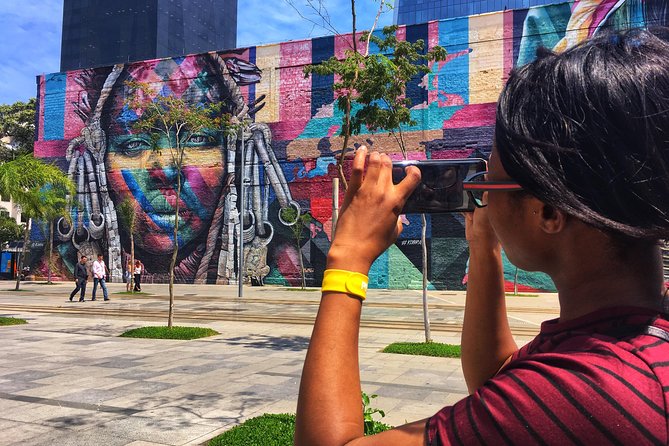
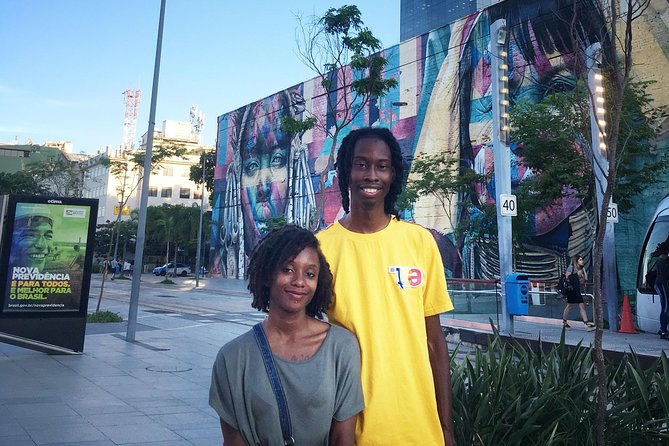
The route also includes a look at Eduardo Kobra’s enormous graffiti mural. It is described as the largest mural of its kind in the world, and its imagery draws attention to ancestral ethnic groups and ancient cultures connected, directly or indirectly, to Brazil’s past.
This outdoor art stop adds a visual break between museum visits and archaeological sites. It also makes a useful point: public walls can carry historical messages just as museums do. You can read the mural as a celebration of ancestry, but the guide’s explanation helps connect those images to Brazil’s wider story.
The supplied timing does not give a separate duration for this stop, so you should treat it as part of the walking route rather than a long scheduled visit. If you enjoy street art, this may be one of the most memorable visual moments. If you prefer extended time at each attraction, the quick pace may feel less satisfying.
IPN: the hardest stop on the route
At the Instituto de Pesquisa e Memória Pretos Novos, known as IPN, the tour visits an archaeological site and a permanent exhibition displaying bones of Africans found at the location.
This is where the subject becomes physical. Instead of learning about the slave trade only through dates and broad statistics, you confront evidence connected to individual human beings. The site helps explain the conditions faced by Africans brought to Brazil and the scale of the cruelty built into that system.
You spend about 40 minutes here. Admission is included, which matters because this is one of the tour’s central educational stops. The visit is likely to stay with you, but it can also be upsetting. I would not choose this outing if you want a carefree morning or if you prefer historical subjects presented gently.
The value here is not just the site itself. A strong guide can explain how the archaeological discovery changed understanding of the enslaved population and why this location matters to Afro-Brazilian identity today. Several of the tour’s strongest themes come together here: erased stories, physical proof, and the persistence of memory.
Same city, a completely different kind of day:
- Rio de Janeiro: 6-Stop Highlights of Rio with Lunch
★ 4.4 · 5,157 reviews - Christ the Redeemer Entry Ticket by Corcovado Train
★ 4.4 · 4,476 reviews - Rio de Janeiro: Rocinha Favela Walking Tour with Local Guide
★ 4.8 · 3,052 reviews - Rio de Janeiro: Sugarloaf Cable Car Official Ticket
★ 4.6 · 2,873 reviews
Cais do Valongo and the meaning of Little Africa
The short visit to Cais do Valongo follows naturally. This historical site marks the former Valongo Wharf, an arrival point connected to Africans forcibly brought to Brazil.
The stop lasts about 15 minutes, so do not expect a long museum presentation. Its power comes from location. You are standing in a place tied to one of the largest forced migrations in human history, then hearing how the surrounding area became known as Little Africa.
That name matters because the district was not only a point of arrival and suffering. It became a place where African customs, beliefs, music, food, and social ties survived and changed. The guide connects the site with local traditions and explains its importance to the history of humanity.
The short timing may leave you wanting more. Still, paired with IPN, Cais do Valongo gives the morning a strong structure. One stop presents archaeological remains. The next places you at the historic wharf. Together, they show both the human cost of enslavement and the cultural life that grew despite it.
Pedra do Sal: food, religion, and percussion
The longest part of the experience takes place at Pedra do Sal, with about three hours devoted to Afro-Brazilian culture, food, and music.
Pedra do Sal is associated with a remaining Quilombo community and with cultural resistance. In Brazil, quilombos are communities connected to the survival and resistance of Africans and their descendants. Here, the emphasis is on preserving heritage and giving Afro-Brazilian traditions a public place in Rio.
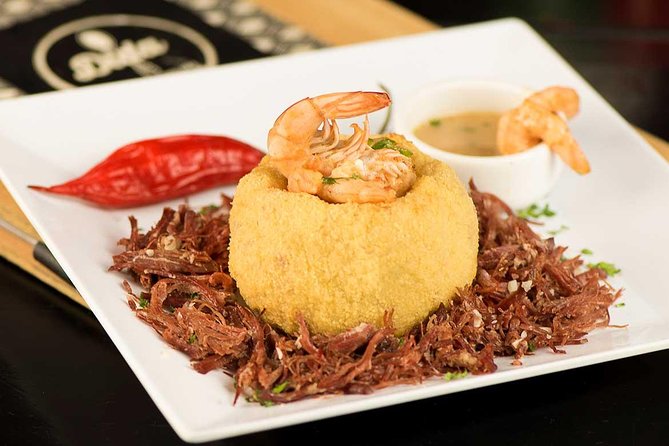
The meal focuses on typical dishes from Afro-Brazilian and Yoruba cuisine. These foods are linked to everyday religious practices among communities connected with African-origin faiths. That makes the tasting more than a break for lunch. It gives you a way to consider how belief, memory, and cooking travel together.
I appreciate that the food is included in the $110 price. Drinks are not, so bring extra money for beverages. The tour specifically warns that it is not suitable for people with food restrictions. If you have allergies, follow a vegetarian or vegan diet, or avoid certain ingredients for religious reasons, this is a point to clarify before booking rather than hoping the menu can be changed.
The musical section is a percussion workshop with an instructor and drummer from the African continent. You focus on the rhythms and musical traditions that continue to influence Brazilian life. A workshop is more involving than watching a performance. You are asked to listen, follow, and participate, which can make the connection between African and Brazilian music easier to understand.
The exact instruments and structure of the workshop are not specified, so you should not book expecting a particular style of drum lesson. The important promise is participation and cultural context. For many people, this will be the most enjoyable part of the day because it shifts the experience from receiving information to making sound together.
Pedra do Sal is also associated with weekly outdoor samba sessions. The tour description presents this as a place where Cariocas celebrate their Afro-Brazilian legacy. Depending on the date and timing, you may get a sense of that ongoing musical life, but the scheduled experience itself is the food tasting and workshop.
Largo de São Francisco da Prainha: a short finish in old Rio

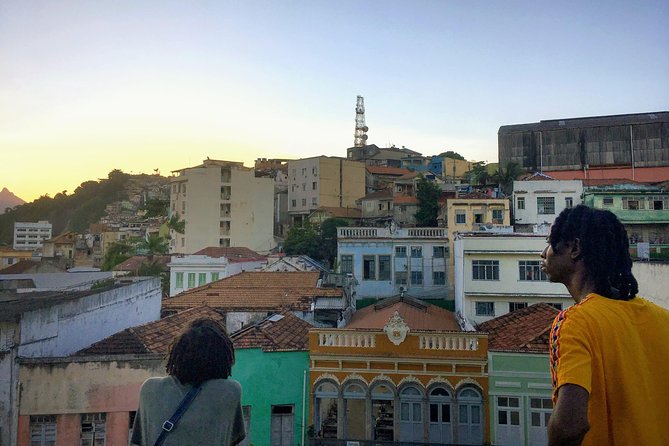
The final stop is Largo de São Francisco da Prainha, where the tour ends. The square sits near Morro da Conceição and is surrounded by Portuguese-style buildings.
Its atmosphere is shaped by music and outdoor social life. Samba, funk, jazz, and chorinho may be heard in the area, while local bars provide seating, cold beer, and snacks. The tour allows about 15 minutes here, so think of it as a closing orientation rather than a full evening in the square.
This is a good ending because it returns you to the present. After museums, archaeological remains, and a workshop, you finish in a public place where Rio’s music and social life continue around you. If you have time afterward, you could stay for a drink or snack, though those expenses are your own.
The Portuguese architecture also adds a visual reminder of Rio’s colonial past. It is not a full architectural tour, but the setting reinforces the way different eras overlap in central Rio.
What $110 includes, and where the value lies
At $110 per person, this is not the cheapest way to spend five hours in Rio. The price makes more sense if you value a private guide, included IPN admission, a food tasting, and a hands-on workshop rather than a simple walk between free landmarks.
Much of the route itself has no admission charge. The value comes from the interpretation and the way the stops connect. Without context, you could look at a mural, pass a historic site, and eat a dish without understanding how they relate. The guide supplies that thread.
The private format is important here. If only one or two people book, you get a more personal exchange. If you are traveling with family or friends, you can ask questions that fit your group rather than following a fixed lecture. The price becomes easier to justify for a small group that would otherwise arrange several separate visits.
I would compare this tour with a standard downtown sightseeing walk by asking what you want from Rio. If you mainly need famous landmarks and photographs, another tour may offer better value. If you want a serious look at African influence, social inequality, historical memory, and living culture, this experience covers ground that most general tours skip.
Timing, meeting point, and practical planning
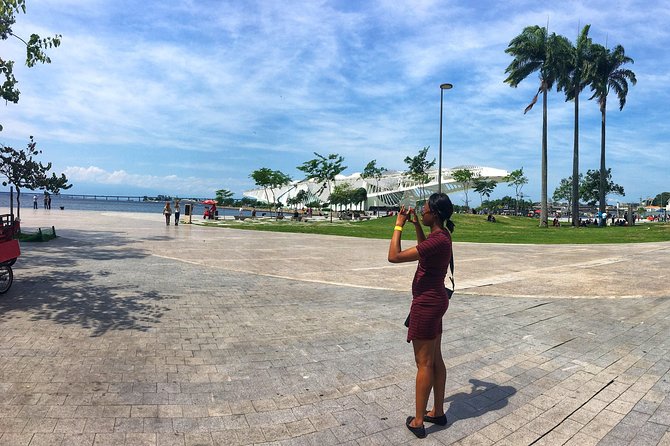
The meeting point is Museu do Amanhã, Praça Mauá 1, in central Rio. The start time is 10 a.m., and the tour ends at Largo de São Francisco da Prainha in Saúde.
Because the experience ends somewhere different from where it begins, plan your next stop from the final square rather than from the museum. The route is near public transportation, which helps with getting to the start and continuing afterward.
The full duration is about five hours. Several stops are brief, while Pedra do Sal takes three hours, so the experience has a clear centerpiece rather than equal time at every location. Wear comfortable footwear and expect a mix of museum viewing, outdoor stops, neighborhood movement, food, and music.
Most people can participate, and service animals are allowed. The activity requires good weather. If poor weather forces a cancellation, you are offered another date or a full refund. Cancellation is free up to 24 hours before the start time, but changes or cancellations inside that window are not accepted and are not refunded.
The tour is often reserved about 69 days ahead. That does not mean you must book that far out, but it is a useful signal if your Rio dates are fixed.
Who should book this experience?
I would choose this tour if you want Afro-Brazilian history presented as part of Brazil’s central story, not as a side note. It suits solo visitors, couples, families, and small groups who enjoy asking questions and spending time with one subject.
It is particularly useful for anyone interested in the African diaspora, public art, Brazilian food, music, religious traditions, and the social forces that shaped Rio. The tour’s strongest feature is its range: you see art, archaeology, a historic site, a community, food, and percussion in one morning and afternoon.
I would think twice if you have strict food restrictions, dislike emotionally difficult historical material, or want a relaxed sightseeing tour with little walking and no serious discussion. The route is educational and personal, not a quick list of postcard stops.
Should you book the African Heritage: Gastronomy and Musicality Experience?
Book it if you want to understand Rio through its African roots and are ready for both painful history and living culture. The Morrinho Project, IPN, and Cais do Valongo provide the historical spine, while Pedra do Sal brings the subject into food, rhythm, and community.
The $110 price is fair for a private five-hour experience with a food tasting, IPN admission, and a percussion workshop, though drinks and any extra time at the final square cost more. I would reserve ahead, especially since the experience is commonly booked well before the date.
This is not the right choice for every first day in Rio. But if you want a more thoughtful view of the city, and you value a guide who can connect the past with daily life, it is one of the more meaningful ways to spend a day in central Rio.
FAQ
How long does the African Heritage: Gastronomy and Musicality Experience last?
The experience lasts approximately five hours.
What time does the tour start?
It starts at 10 a.m.
Where does the tour begin?
The meeting point is Museu do Amanhã, Praça Mauá 1, Centro, Rio de Janeiro.
Where does the tour end?
The tour ends at Largo de São Francisco da Prainha in Saúde, Rio de Janeiro.
Is the tour private?
Yes. Only your group participates in the activity.
Is food included?
Yes. An Afro-Brazilian gastronomy tasting is included, with typical Afro-Brazilian and Yoruba dishes.
Are drinks included?
No. Drinks are not included in the price.
Is admission to the Pretos Novos Institute included?
Yes. IPN tickets are included.
Can I cancel for a full refund?
Yes, if you cancel at least 24 hours before the experience start time. Cancellations or changes made less than 24 hours before the start are not accepted or refunded.
Just added around Rio de Janeiro
- Vidigal Favela Tour★ 4.4 · 26 reviews
- Hang gliding flight in Rio de Janeiro★ 5.0 · 6 reviews
- Rio de Janeiro: Zip Lining and Canopy Tree Tour★ 3.3 · 6 reviews
- Rio de Janeiro: Attend a Vasco da Gama game with local guide★ 4.8 · 9 reviews
- Unforgettable Boat Party★ 5.0 · 3 reviews
- Tijuca Forest Hike – Waterfalls & Caves, Nature & Wild Life!★ 5.0 · 51 reviews
- Rio Highlights: Christ, Sugarloaf, and More in a Private Tour★ 5.0 · 36 reviews
- Tijuca Forest w/ Chinese View,cascatinha Taunay,horto waterfall and parque laje★ 4.5 · 29 reviews
Historical Tours, compared.

Scenic Train ride to historical cities of Morretes and Antonina
Read our review →
From Foz do Iguazu: Triple Frontier Landmark Ticket
Read our review →
Explore Little Africa : Unveiling Afro Heritage in Rio de Janeiro
Read our review →
Downtown-Center History Walking Tour – in English
Read our review →Browse the lists this tour appears in