
Reviewed · FOOD & DRINK
The Best Food Tour: Taste the Most Authentic Flavours of Rio
Rio’s best food lesson may begin with a bowl of tacacá, pass through fried cassava and feijoada, and finish with samba at Pedra do Sal. This four-hour tour links food from several Brazilian regions with the streets and stories of Little Africa, one of Rio’s most meaningful neighborhoods.
I like the wide range of tastings, with more than 10 samples rather than one large meal, and I like the way the tour uses a short metro ride to connect the restaurants. Guides such as Louis, Jurema, and Lia have led engaging outings, with useful background on Rio, Brazilian ingredients, and the area’s past.
The main consideration is that the restaurants and dishes can change without notice. If you need a fixed menu or want time at a food market, this may feel less complete, and the later tour can run into the busy samba period at Pedra do Sal.
In This Review
- Key points to know before you book
- Why this food tour works in Rio
- Starting with Tacacá do Norte Gourmet
- The 10-minute metro ride and the value of moving around
- Angu do Gomes: hearty food and familiar comfort
- Casa Porto and the sweet-savory tasting
- Da Pedra and the final bar tastings
- Pedra do Sal, samba, and Little Africa
- How much food do you really get for $75?
- Who will enjoy this experience most?
- Timing, language, and practical details
- Should you book the Rio food tour?
- FAQ
- How long does the Rio food tour last?
- Where does the tour meet?
- What food might I taste?
- Are the dishes guaranteed?
- What time should I choose?
- Is transportation included?
- What languages are available, and is the tour wheelchair accessible?
Key points to know before you book
- More than 10 tastings: Try small portions from northern, northeastern, and other Brazilian food traditions.
- Little Africa setting: The tour connects local restaurants and bars with the history of an important Rio neighborhood.
- Two starting times: Choose 12:30 PM for a leisurely afternoon afterward, or 4:00 PM to go straight toward samba.
- Pedra do Sal finale: Food and music come together at one of Rio’s traditional samba gathering places.
- Four-hour walking and metro experience: A 10-minute subway ride links parts of the route, with no hotel pickup included.
- Flexible language choice: Live guiding is available in English, Portuguese, and Spanish.
Why this food tour works in Rio
Many food tours give you a few standard dishes and a quick explanation of what is on the plate. This one aims for a broader picture. You taste food from different parts of Brazil, then connect those flavors to music, neighborhood life, and the history of Rio.
That format matters because Brazilian cooking is not one single cuisine. Ingredients, techniques, and favorite snacks change from region to region. On this tour, you might move from the northern Amazonian flavor of tacacá to the hearty comfort of angu, then on to pastries, coxinha, sweets, and bar food.
The portions are tastings, not full restaurant meals. I see that as a plus for curious eaters. You get room to try unfamiliar dishes without committing to one heavy plate for the whole afternoon. A lively group shares the samples, which also makes it easier to compare reactions and ask questions.
The food is only half of the plan. The route also takes you through Little Africa and ends around Pedra do Sal, where samba is part of the experience. You are not simply seated at a restaurant for four hours. You move through several places and see how food, music, and local identity overlap.
A few more Rio De Janeiro trips to weigh up
- Rio: Pub Crawl in Lapa with Cachaça Tasting and Live Samba
★ 4.7 · 881 reviews - Sunset Boat Tour with Beer, Water, Soda and Snacks included
★ 5.0 · 227 reviews - Petropolis The Imperial City with Beer tour and Lunch
★ 4.5 · 83 reviews
Starting with Tacacá do Norte Gourmet
The meeting point is inside Tacacá do Norte Gourmet at number 35 O. Pay close attention here, because there is also a Tacacá do Norte nearby. The tour begins inside the Gourmet location, not at the other restaurant.
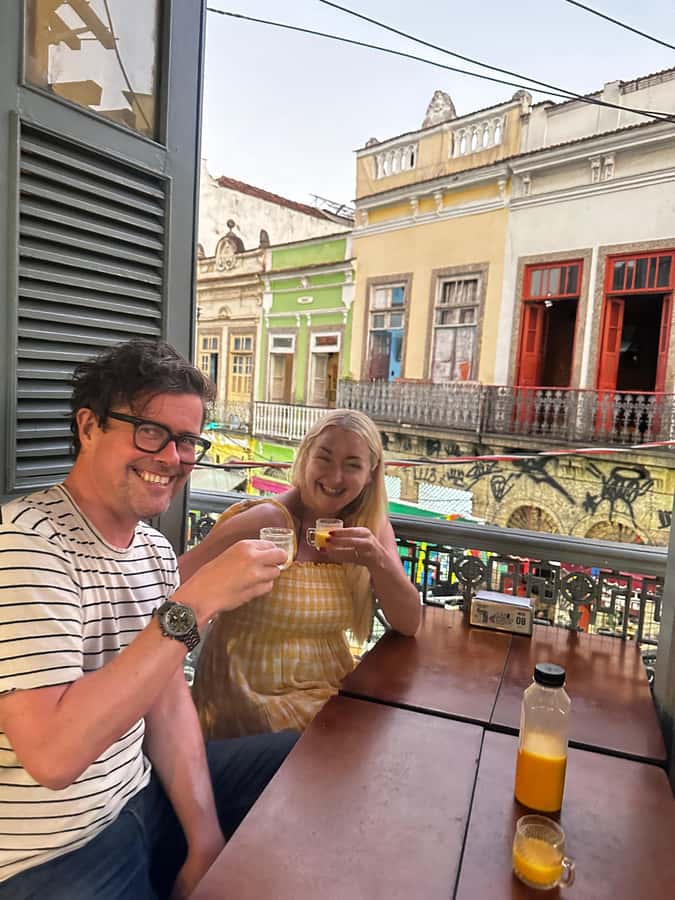
Your first tasting may include original açaí from northern Brazil, tacacá with or without shrimp, and Guaraná Jesus. These are useful opening flavors because they show how different Brazilian food and drink can be from the familiar beachside staples often associated with Rio.
Tacacá is a broth-based dish linked with northern Brazil, while açaí in this setting is presented in its original northern style. The exact preparation can depend on the restaurant’s availability, so you should not expect every item to appear every time.
The shrimp option gives you a clear choice if you eat seafood, while the version without shrimp keeps the tasting open to more people. The guide can explain the ingredients and regional background, which is especially helpful if these foods are new to you.
Guaraná Jesus adds a playful note to the beginning. It is a Brazilian soft drink with a distinctive identity, and tasting it alongside northern dishes helps set the tone for the rest of the afternoon: expect variety rather than a predictable menu.
The 10-minute metro ride and the value of moving around
A short metro journey, listed at about 10 minutes, links the opening stop with the next part of the route. That may sound like a small detail, but it changes the feel of the experience.
You are not being carried from one tourist restaurant to another in a private vehicle. The metro ride gives you a brief look at how the city connects, while also making it possible to cover more ground in a four-hour period. You should be comfortable with a little movement between stops.
The route is not described as a hotel pickup service, so plan to reach Tacacá do Norte Gourmet on your own. The same applies at the end: the tour returns to the Tacacá do Norte area, rather than dropping you at your hotel.
Because this is a food walk with a subway segment, wear comfortable shoes and avoid arriving overly full. You will get many small samples, and the pleasure comes from trying something new at each stop.
Angu do Gomes: hearty food and familiar comfort
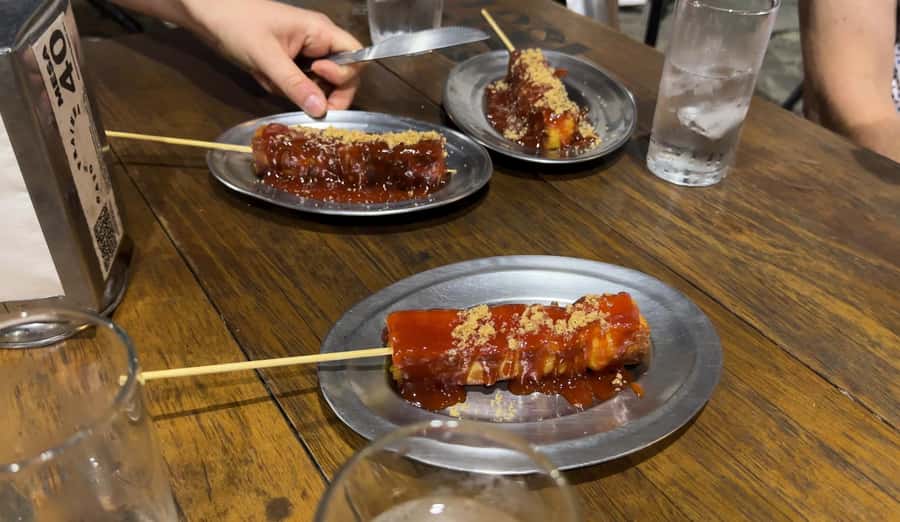
At Angu do Gomes, the tastings may include traditional or vegetarian angu, a feijoada ball, and fried cassava. This stop brings a more substantial, comfort-food side of Brazil to the table.
Angu is a soft cornmeal dish. The traditional version gives you a taste of the classic preparation, while the vegetarian option is useful if you do not eat meat. The availability of each version is not guaranteed, so tell your guide about dietary needs before the food begins.
The feijoada ball offers a compact way to sample the flavors associated with feijoada, one of Brazil’s best-known dishes. Fried cassava adds a crisp, starchy bite that works well as a snack and gives you a different texture from the softer angu.
I like this stop because it shows that a food tour does not need to rely only on exotic ingredients. Some dishes may be new to you, but others are warm, filling, and immediately approachable. That contrast keeps the tastings from becoming a parade of novelty.
You may spend around an hour at a local restaurant during this part of the tour. The time is not just for eating. Your guide is meant to explain the food, ingredients, and background, so use the stop to ask how the dishes fit into Brazilian regional cooking.
Same city, a completely different kind of day:
- Rio de Janeiro: 6-Stop Highlights of Rio with Lunch
★ 4.4 · 5,157 reviews - Christ the Redeemer Entry Ticket by Corcovado Train
★ 4.4 · 4,476 reviews - Rio de Janeiro: Rocinha Favela Walking Tour with Local Guide
★ 4.8 · 3,052 reviews - Rio de Janeiro: Sugarloaf Cable Car Official Ticket
★ 4.6 · 2,873 reviews
Casa Porto and the sweet-savory tasting
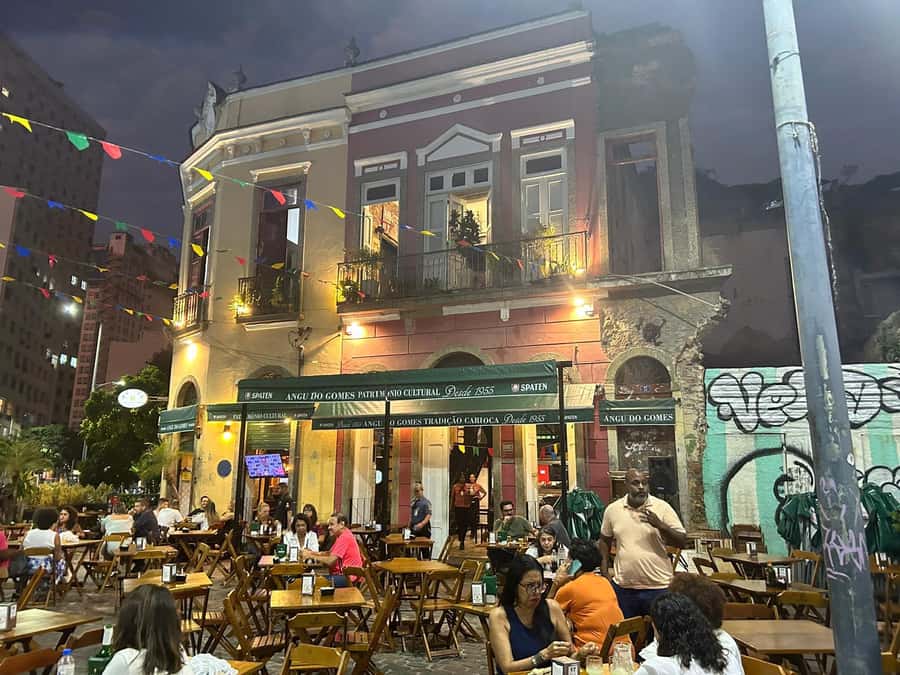
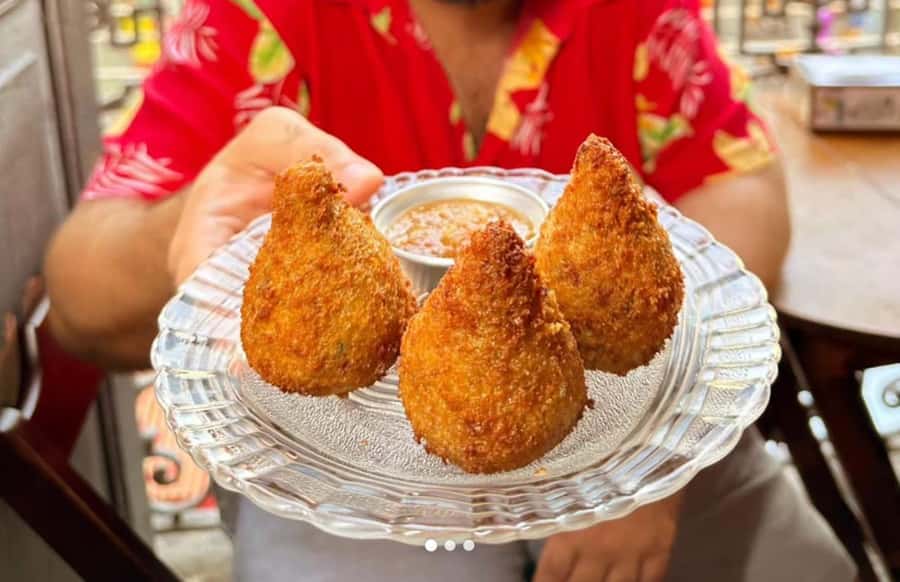
Casa Porto brings another set of small plates, including okra empada, Romeo and Juliet empada, coxinha de pernil without dough, and homemade passion fruit cachaça.
The empadas are especially useful for comparing flavors. The okra version brings a vegetable ingredient often treated with care in Brazilian cooking, while Romeo and Juliet pairs cheese with guava paste, a classic sweet and savory combination. It is the sort of pairing you may not think to order on your own.
The coxinha de pernil is served without dough, according to the planned tasting details. That makes it different from the standard breaded coxinha many people know. It gives you the seasoned pork filling without the full pastry shell.
The homemade passion fruit cachaça is the alcoholic tasting on the listed menu. You should pace yourself, since it comes alongside several other food and drink samples. If you do not drink alcohol, ask what alternative is available, keeping in mind that substitutions are not promised.
This stop also allows time for photos and a guided visit. The precise order of stops can shift, but the general idea is to move beyond a single famous Brazilian dish and show how local restaurants serve snacks, sweets, and drinks in their own way.
Da Pedra and the final bar tastings
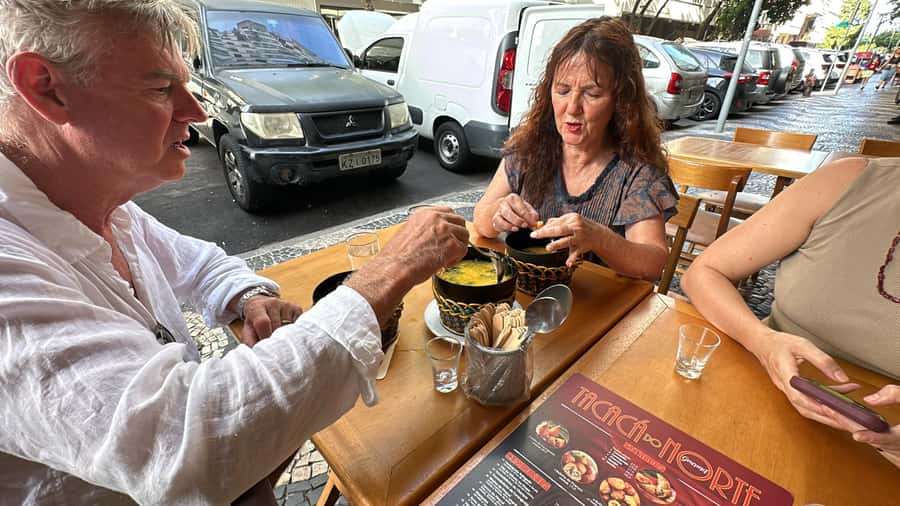
The last listed restaurant stop is Da Pedra, where tastings may include a pastry and bar food. These are less specific than the earlier dishes, and that is one place where the changing menu matters most.
Restaurants may change, and dishes may change without prior notice. I would book this tour for the overall food-and-music route, not because you need to receive one exact pastry or one guaranteed plate. The provider makes clear that availability can affect what you taste.
That uncertainty can work in your favor. A changing menu may reflect what the restaurants can serve that day instead of forcing every group through an identical set of items. Still, if you have your heart set on tacacá, vegetarian angu, or the Romeo and Juliet empada, treat those as possible tastings rather than promises.
By this point, the four-hour structure should make sense. You have sampled food from several restaurants, learned about ingredients and regional traditions, and left room for more snacks around Pedra do Sal.
Pedra do Sal, samba, and Little Africa
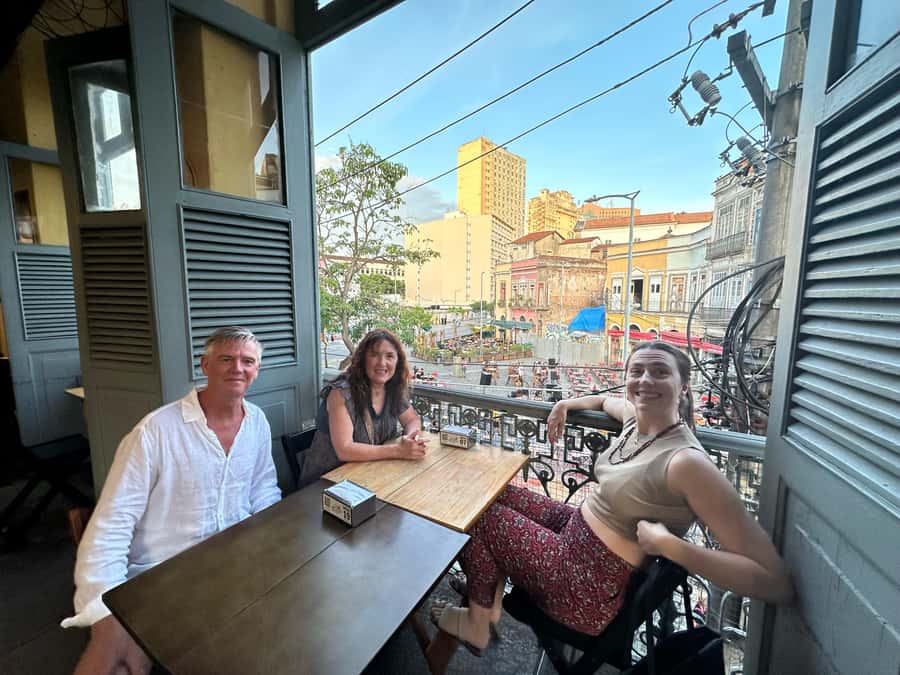
The tour follows the food toward Pedra do Sal, where samba becomes the main event. The timing is important: the samba circle usually starts around 6:00 PM.
If you choose the 4:00 PM start, the food route is designed to finish close to the samba period. That makes this the better choice if you want a continuous evening and do not want a large gap between the tour and the music.
The 12:30 PM option gives you more breathing room. You can enjoy the food around lunchtime, then explore the area at your own pace until samba begins, or leave for another part of Rio. This is the better fit if you prefer not to rush or already have evening plans.
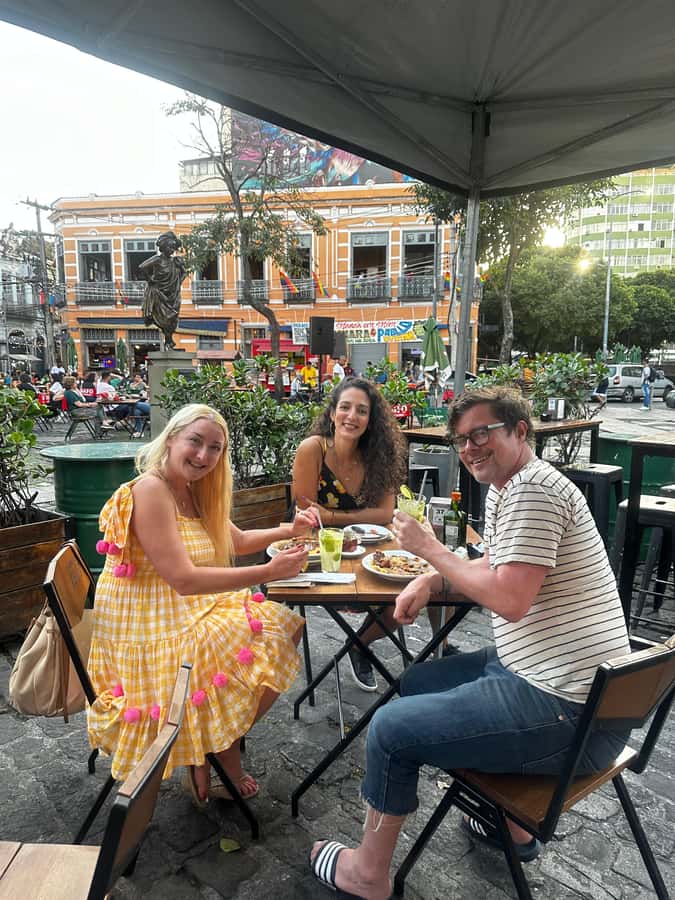
Around Pedra do Sal, the group tastes four more samples and visits traditional bars. The details of those bites can vary, but the setting is central to the appeal. Food is not presented as an isolated restaurant activity. It leads into music and the social side of the neighborhood.
Little Africa also gives the guide a chance to explain parts of Rio’s past that you might miss on a standard sightseeing route. Louis has been noted for explaining the history of the favelas and for sharing views from his home, while Lia has provided background on Rio during visits to several food and drink stops. Jurema has also led a relaxed outing with practical tips for the rest of a Rio visit.
Guide assignments can change, so do not book expecting one particular person. What you can reasonably look for is a guide working in English, Portuguese, or Spanish and offering context about the food, places, and history.
How much food do you really get for $75?
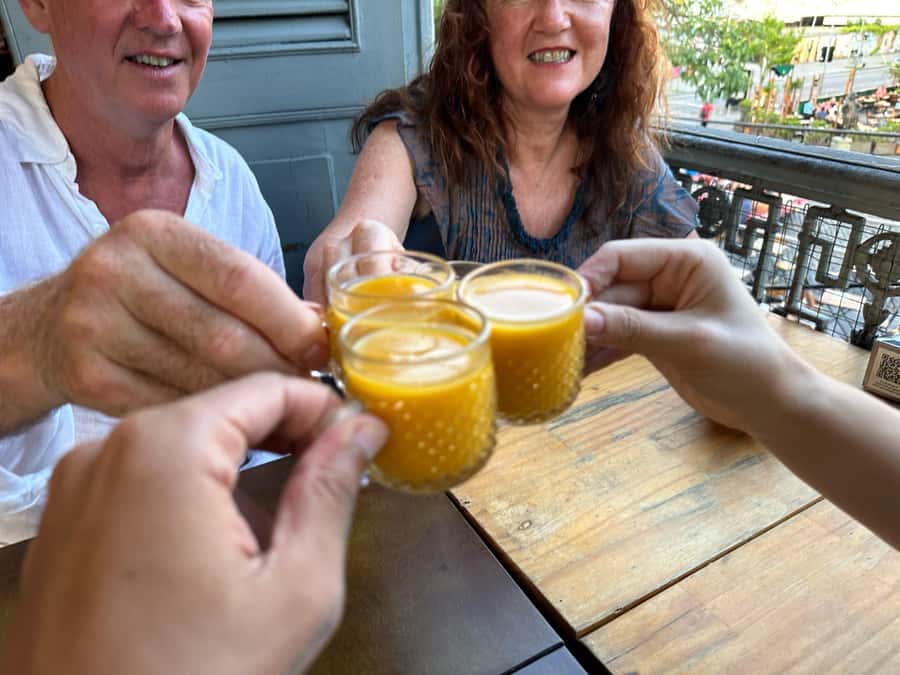
At $75 per person, the value depends on how much you want from a food tour. You are paying for a four-hour guided route, food and drink tastings, access to several local restaurants and bars, the metro connection, and more than 10 samples, with four additional tastings around Pedra do Sal.
That is a fair package if you would otherwise pay separately for several snacks, drinks, and a guided neighborhood visit. The guide also saves you the work of finding dishes from different Brazilian regions and deciding what to order at unfamiliar places.
The value is weaker if you want a full lunch or dinner at one restaurant. These are samples, and the menu is not fixed. You may still want another meal afterward, especially if you have a large appetite.
I would also compare the tour with your evening plans. The 12:30 PM start gives you time to add your own meal or explore later. The 4:00 PM start is more efficient if you want food followed by samba, but it leaves less flexibility.
Who will enjoy this experience most?
I would recommend this tour to anyone who wants an introduction to Brazilian food beyond the usual restaurant menu. It suits first-time visitors who want a guide to explain unfamiliar ingredients, as well as returning visitors who want to see a different side of Rio.
It is a good match for social eaters. You share samples with a group, and the route has a friendly, communal feel rather than a formal tasting-room style. Solo visitors may find the group format especially useful.
The tour also suits people who value place and context. You are not only eating. You are visiting Little Africa, moving between local restaurants, and ending near a traditional samba circle.
It may not suit you if you dislike changing plans, avoid all unfamiliar food, or want a food-market visit. One person specifically wanted a market included, and that is a fair point. The route focuses on restaurants, bars, and Pedra do Sal rather than a market hall.
Food restrictions deserve some thought. A vegetarian angu option is listed, and tacacá may be available without shrimp, but the full menu can change. Contact the provider before booking if you have a serious allergy or need strict dietary control.
Timing, language, and practical details
The tour lasts four hours, with starting times that include 12:30 PM and 4:00 PM. The first is better for a relaxed afternoon. The second is built around reaching samba after the food stops.
Live guides are available in English, Portuguese, and Spanish. The experience is wheelchair accessible, though the route includes restaurants, a metro journey, and movement between stops, so it is sensible to confirm any specific mobility needs when booking.
Hotel pickup and drop-off are not included. Your meeting point is inside Tacacá do Norte Gourmet at number 35 O, and the experience returns to the Tacacá do Norte area.
You can cancel up to 24 hours ahead for a full refund, and the reserve-now, pay-later option keeps your schedule more flexible. Those policies are useful if your Rio plans are still shifting.
Should you book the Rio food tour?
Book it if you want many small tastes, clear regional food context, and an evening that ends with samba rather than a standard restaurant meal. The combination of tacacá, angu, empadas, coxinha, cachaça, bar snacks, and Pedra do Sal gives you a broad first look at Brazilian food culture.
Choose the 12:30 PM start if you like open time afterward. Choose 4:00 PM if you want to move straight from the food route into samba.
Skip it if a fixed menu is essential, if you want a market visit, or if you prefer a long sit-down meal. For everyone else, the $75 price buys more than food. It buys a guided route through several flavors and a part of Rio that is easier to understand when music, neighborhood, and cooking are taken together.
FAQ
How long does the Rio food tour last?
The experience lasts four hours.
Where does the tour meet?
You meet inside Tacacá do Norte Gourmet at number 35 O. Be careful not to confuse it with the nearby Tacacá do Norte restaurant.
What food might I taste?
Possible tastings include northern-style açaí, tacacá with or without shrimp, Guaraná Jesus, traditional or vegetarian angu, a feijoada ball, fried cassava, okra empada, Romeo and Juliet empada, coxinha de pernil without dough, passion fruit cachaça, pastry, and bar food.
Are the dishes guaranteed?
No. Restaurants and dishes may change without prior notice, depending on the day and restaurant availability.
What time should I choose?
The 12:30 PM tour works well if you want free time afterward before samba begins around 6:00 PM. The 4:00 PM tour is better if you want to finish the food experience and go directly toward samba.
Is transportation included?
The route includes a metro journey of about 10 minutes. Hotel pickup and drop-off are not included.
What languages are available, and is the tour wheelchair accessible?
Live guiding is available in English, Portuguese, and Spanish. The activity is listed as wheelchair accessible.
Just added around Rio De Janeiro
- Vidigal Favela Tour★ 4.4 · 26 reviews
- Hang gliding flight in Rio de Janeiro★ 5.0 · 6 reviews
- Rio de Janeiro: Zip Lining and Canopy Tree Tour★ 3.3 · 6 reviews
- Rio de Janeiro: Attend a Vasco da Gama game with local guide★ 4.8 · 9 reviews
- Unforgettable Boat Party★ 5.0 · 3 reviews
- Tijuca Forest Hike – Waterfalls & Caves, Nature & Wild Life!★ 5.0 · 51 reviews
- Rio Highlights: Christ, Sugarloaf, and More in a Private Tour★ 5.0 · 36 reviews
- Tijuca Forest w/ Chinese View,cascatinha Taunay,horto waterfall and parque laje★ 4.5 · 29 reviews
Food & Drink, compared.

Pub Crawl in Lapa with Cachaça Tasting and Live Samba
Read our review →
Jolimont Winery Tour – Visitation and Tasting – Canela RS
Read our review →
Sunset Boat Tour with Beer, Water, Soda and Snacks included
Read our review →
São Paulo 5 Hour Private Tour With Fruit Tasting
Read our review →
Petropolis The Imperial City with Beer tour and Lunch
Read our review →

Browse the lists this tour appears in