

Reviewed · SANTA TERESA TOURS
Santa Teresa – Bohemia and Art
Santa Teresa’s best trick is making Rio feel like several cities at once: a colonial hill town, an artists’ quarter, and a lookout over Christ the Redeemer. You’ll walk cobbled streets past old mansions, colorful murals, and the famous yellow trams before reaching Parque das Ruinas and its sweeping views.
I like the small, human scale of this three-hour walk and the simple snack stop for açaí and pão de queijo. I also like that tram tickets are included, though there is one important catch: if the queue lasts more than an hour, you’ll take taxis instead, and the route may feel less special.
In This Review
- Key points to know before booking
- Santa Teresa, Rio’s hilltop neighborhood with an old soul
- The yellow tram, with one practical catch
- Cobblestones, mansions, murals, and Rio views
- Parque das Ruinas and Laurinda Santos Lobo’s mansion
- Açaí and pão de queijo, the right kind of tour break
- How much value do you get for $60?
- Timing, footwear, and the shape of the walk
- Who will enjoy this Santa Teresa walk?
- Should you book Santa Teresa: Bohemia and Art?
- FAQ
- How long does the Santa Teresa tour last?
- Where does the tour meet?
- Is the tram ride included?
- What food is included?
- Which languages are available?
- What should I wear or bring?
- Is the tour suitable for people with mobility impairments?
Key points to know before booking
- Yellow tram access depends on the queue: The tram is included, but a wait of more than an hour means taking taxis to Santa Teresa.
- Parque das Ruinas is the main payoff: The restored mansion of Laurinda Santos Lobo offers broad views across Rio.
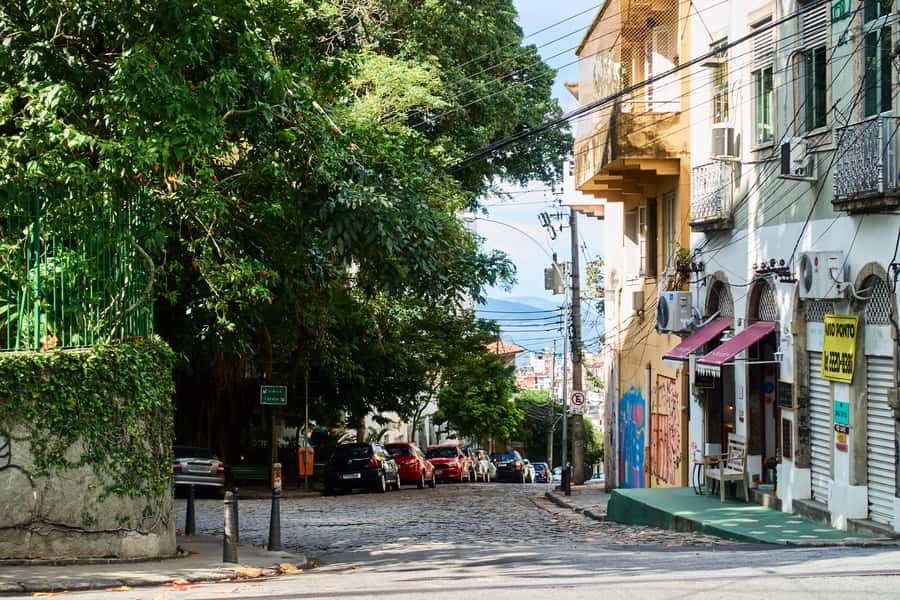
- You’ll see Santa Teresa on foot: Cobblestones, steep streets, mansions, murals, galleries, and passing trams shape the route.
- Açaí and pão de queijo are included: The snack stop gives the walk a distinctly Brazilian pause.
- The guides set the tone: Rafael and Fernanda received especially warm praise for clear stories and attentive service.
- Plan for uneven streets: Comfortable shoes are essential, and the tour is not suitable for people with mobility impairments.
Santa Teresa, Rio’s hilltop neighborhood with an old soul

Santa Teresa is the kind of Rio neighborhood that rewards walking slowly. It sits on a hill above the city center, with winding streets, old houses, art studios, and views that open suddenly between buildings.
The tour begins near the Santa Teresa tram station. From there, you spend about 15 minutes reaching the neighborhood before setting off on foot. The exact order can change depending on the tram line, but the heart of the outing is a walking route through Santa Teresa’s cobbled streets.
I like this format because Santa Teresa is not a place you understand from a vehicle window. The old homes, painted walls, narrow lanes, and yellow trams make sense as a group. You need time to notice the details, and a guide can explain why the neighborhood feels so different from the broad avenues and beaches elsewhere in Rio.
The setting also gives the tour a useful historical frame. Santa Teresa preserves traces of the Brazilian Empire and the later belle époque, when grand homes and social life gave the area a more polished air. Some buildings are now worn, repurposed, or partly restored, which adds to the neighborhood’s character.
More santa teresa tours in Rio De Janeiro:
- Santa Teresa, Lapa, and Cinelândia with Tram Ride and Selarón Steps
★ 4.5 · 274 reviews - Rio de Janeiro: Historic Rio and Santa Teresa Half-Day Tour
★ 4.4 · 228 reviews - Ancient Rio and Santa Teresa Tour with Hotel pick-up and drop-off
★ 4.5 · 154 reviews
The yellow tram, with one practical catch
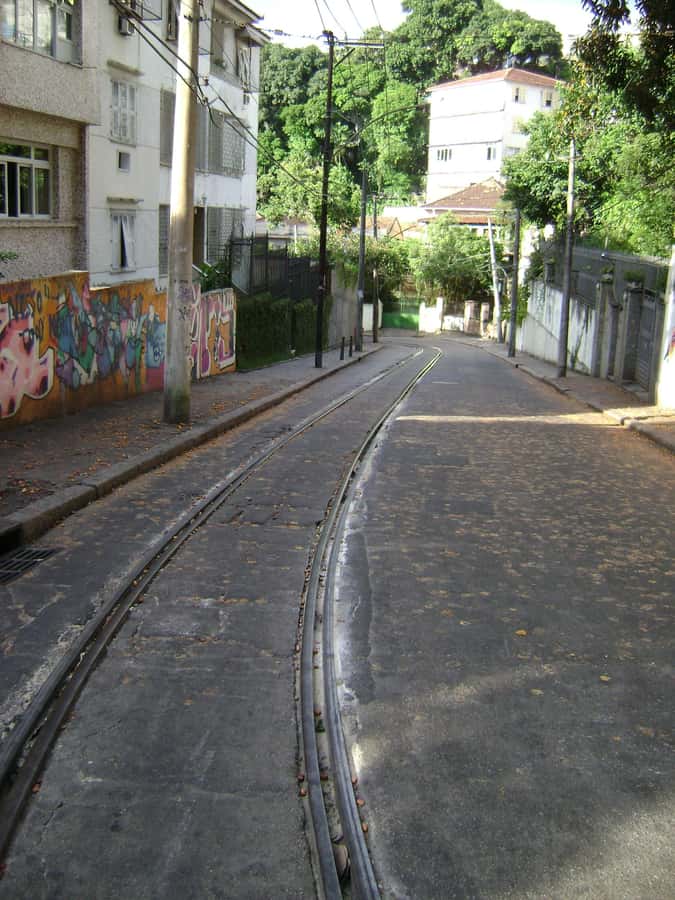
The Santa Teresa tram is one of Rio’s most recognizable sights. Its bright yellow cars move through the neighborhood on old tracks, passing close to buildings and threading across the hilly streets.
Your tram ticket is included, so the ride is meant to be part of the experience rather than an extra cost. When the line is reasonable, this is a fine way to begin. It gives you an immediate sense of Santa Teresa’s shape and lets you enjoy one of the city’s classic forms of transport.
But you should understand the backup plan before you book. If the wait exceeds one hour, the group will use taxis to reach Santa Teresa. That decision protects the three-hour schedule, but it also removes one of the tour’s signature moments.
This is not simply a minor change in transport. For some people, the tram is the main reason to choose this outing over an ordinary taxi ride. A long queue can reflect poor timing, and one person who took the tour found the taxi replacement disappointing. I would treat the tram as a welcome bonus, not a guarantee.
If the line is too long, the guide may still give you a worthwhile walk through Santa Teresa, but your expectations should be flexible. The tour’s strongest features are the neighborhood itself, the history, the views, and the guide’s explanations. The tram adds atmosphere, but it is not the entire experience.
Cobblestones, mansions, murals, and Rio views

Once you begin walking, the pace becomes more relaxed. You’ll hear about Santa Teresa’s past while passing colonial houses, palaces, and larger residences linked to Rio’s upper-class years.
The architecture is one of the tour’s main pleasures. Some buildings retain elegant details from the Imperial period or the belle époque. Others show the wear of time. The contrast helps you see Santa Teresa as a living neighborhood rather than a preserved museum.
Look up as you walk. The area is known for art on its walls, and urban murals appear alongside older facades. You may also pass galleries or artist spaces. The tour description promises a look at what local artists create, but the details of the art stops can vary.
That variation matters. One route included a gallery that felt more like a souvenir shop, and too much time there reduced the sense of discovery. Another stop involved a museum that was closed. These moments do not ruin the outing, but they show why the guide’s judgment and the day’s conditions matter.
Rafael received particular praise for sharing many interesting anecdotes, while Fernanda was singled out for her attention to detail and friendly manner. Those names are useful if you are comparing available departures. The guide can make the difference between simply walking along the main road and understanding what you are seeing.
The route also includes views of Christ the Redeemer. You will not be visiting the statue itself, but the sight of it from Santa Teresa gives the walk a strong Rio setting. The view changes as you move through the hills, and it helps connect the neighborhood to the wider city.
Parque das Ruinas and Laurinda Santos Lobo’s mansion

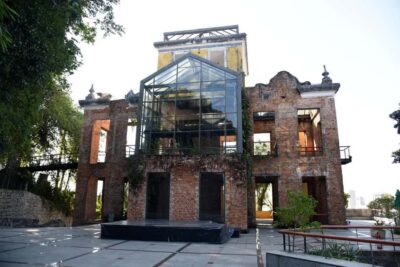
Parque das Ruinas is the clearest destination on the route. The park occupies the remains of a mansion once associated with Laurinda Santos Lobo, a prominent figure of Rio’s belle époque.
The house was abandoned for more than 50 years before being rehabilitated. Its restored structure now works as a cultural space and lookout. The mix of exposed ruin, red brick, open sections, and restored elements gives the site a memorable visual character.
This is where the tour’s history and views come together. Inside and around the mansion, your guide can explain how wealthy social life once worked during the Brazilian Empire and its later cultural era. Then you can look out over Rio from the property’s elevated position.
I consider Parque das Ruinas the best reason to choose a guided Santa Teresa walk. You get more than a photo stop. The building gives the neighborhood a story, and the panorama gives you a clear sense of why Santa Teresa became such a desirable hillside address.
Still, the tour does not promise a long museum visit or an extensive art program inside the park. If you want several formal museums or studio visits, this may feel light. Its strength is the combination of one major site, street-level architecture, and a guide’s commentary.
Same city, a completely different kind of day:
- Rio de Janeiro: 6-Stop Highlights of Rio with Lunch
★ 4.4 · 5,157 reviews - Christ the Redeemer Entry Ticket by Corcovado Train
★ 4.4 · 4,476 reviews - Rio de Janeiro: Rocinha Favela Walking Tour with Local Guide
★ 4.8 · 3,052 reviews - Rio de Janeiro: Sugarloaf Cable Car Official Ticket
★ 4.6 · 2,873 reviews
Açaí and pão de queijo, the right kind of tour break
The included snack stop features açaí and pão de queijo. That is a small detail, but it improves the rhythm of a three-hour walking tour.
Açaí is a chilled Brazilian fruit-based treat, often served thick enough to eat with a spoon. Pão de queijo is the familiar Brazilian cheese bread, small, chewy, and warm when freshly served. Together, they offer two very different tastes and textures.
The snack is not a full meal, so plan accordingly. It is best viewed as a pause rather than lunch. It also gives you a chance to sit down, ask questions, and take a break from Santa Teresa’s uneven streets.
One criticism of the outing was that the food could be found in many parts of Rio. That is fair. The snack is not a rare culinary discovery, and you could easily buy similar items elsewhere.
Still, the value is not only in rarity. You are tasting familiar Brazilian staples during a neighborhood walk, and the stop gives the group a natural rest. If you already know açaí and pão de queijo, do not book this tour for the food alone. If you are new to them, it is a pleasant introduction.
How much value do you get for $60?
At $60 per person, this is not the cheapest way to reach Santa Teresa. You can take a taxi or rideshare to the neighborhood for much less, then walk around with a guidebook or map.
The price makes more sense if you want the guide to connect the pieces: the imperial past, the mansions, the tram, the street art, Laurinda Santos Lobo’s home, and the views. Tram tickets and the snack are included, and the outing lasts about three hours.
The value depends heavily on the guide and the route taken that day. Rafael and Fernanda received especially strong praise for their storytelling and care. A good guide can add anecdotes and context that you would probably miss while walking the main streets alone.
The value falls if the tram queue is too long and the route spends too much time at a commercial gallery or unrelated city-center stops. One disappointing outing included the National Library and the Justice Court after the tram was skipped. Those places did not fit the promised focus on Santa Teresa’s art and neighborhood character.
For that reason, I would compare this experience with your own priorities. If you mainly want transportation to Santa Teresa, $60 is hard to justify. If you want a structured walk with a live guide, included tram fare when practical, a snack, and an organized visit to Parque das Ruinas, the price is more reasonable.
Timing, footwear, and the shape of the walk

The advertised duration is three hours, though one outing finished in about two and a half hours. You should leave room in your day, but do not assume every minute will be filled with scheduled stops.
This is a walking tour, and Santa Teresa’s streets are not flat or smooth. Wear shoes with good support. High heels are not allowed, and large bags or luggage are also not permitted.
The tour runs in rainy weather, so bring suitable protection. Rain can change how enjoyable cobblestones and viewpoints feel, but the activity does not automatically stop because of wet conditions.
The experience is not suitable for people with mobility impairments. That is important, not a footnote. Even without a detailed accessibility description, the combination of hills, cobblestones, stairs or uneven surfaces, and walking time should guide your decision.
There is no hotel pickup or drop-off. You meet in front of the Santa Teresa tram station, so you need to arrange your own way there. The guide can speak English, Portuguese, or Spanish, which makes the experience useful for a broad range of visitors.
Who will enjoy this Santa Teresa walk?

I would choose this tour if you enjoy neighborhoods more than checklist sightseeing. It suits you if old architecture, street art, local snacks, and city views matter as much as major monuments.
It is also a good fit if you want historical context without committing to a full-day excursion. Three hours is enough to get a feel for Santa Teresa while leaving time for other parts of Rio.
The outing is especially appealing for first-time visitors who want a guide’s help with orientation. A solo booking can sometimes work very well, since a smaller group may allow more questions and fuller explanations. One solo participant received personal attention throughout the walk.
Art lovers should keep their expectations measured. You will see murals, galleries, and creative work in the streets, but the activity does not guarantee a private studio visit or a meeting with a working artist. If that is your main goal, confirm the planned stops before booking.
I would be cautious if the tram is the single feature you care about most. The line may be too long, and the taxi alternative is practical but less atmospheric. I would also skip it if you dislike cobblestones, hills, or a flexible route.
Should you book Santa Teresa: Bohemia and Art?

Book it if you want a guided introduction to Santa Teresa that mixes old Rio, street art, yellow trams, local snacks, and a strong viewpoint. The best parts are the neighborhood walk and Parque das Ruinas, especially when the guide adds the kind of small historical stories that bring the mansions to life.
Before paying $60, accept two conditions. The tram may be replaced by taxis, and the art portion may be more about murals and galleries than direct contact with artists. Ask about the day’s route if that distinction matters to you.
I would choose this experience for a first look at Santa Teresa, particularly with Rafael or Fernanda if their departures are available. I would not choose it simply as a cheap way to reach the neighborhood. For that, local transport and an independent walk cost less. For guided context, a planned snack, and a visit to the restored mansion at Parque das Ruinas, it can earn its place in your Rio schedule.
FAQ
How long does the Santa Teresa tour last?
The scheduled duration is three hours. Starting times vary, so you need to check availability when booking. One outing finished in about two and a half hours.
Where does the tour meet?
The meeting point is in front of the Estação de Bondes de Santa Teresa, the Santa Teresa tram station.
Is the tram ride included?
Yes. Tram tickets are included. If the waiting line is longer than one hour, the group will use taxis to reach Santa Teresa instead.
What food is included?
The tour includes a snack stop with açaí and pão de queijo. It is a snack rather than a full meal.
Which languages are available?
The live guide can lead the tour in English, Portuguese, or Spanish.
What should I wear or bring?
Wear comfortable shoes. High-heeled shoes and luggage or large bags are not allowed. The tour also operates in rainy weather, so suitable rain protection is sensible.
Is the tour suitable for people with mobility impairments?
No. This is a walking tour through Santa Teresa, and it is not suitable for people with mobility impairments.
Just added around Rio De Janeiro
- Vidigal Favela Tour★ 4.4 · 26 reviews
- Hang gliding flight in Rio de Janeiro★ 5.0 · 6 reviews
- Rio de Janeiro: Zip Lining and Canopy Tree Tour★ 3.3 · 6 reviews
- Rio de Janeiro: Attend a Vasco da Gama game with local guide★ 4.8 · 9 reviews
- Unforgettable Boat Party★ 5.0 · 3 reviews
- Tijuca Forest Hike – Waterfalls & Caves, Nature & Wild Life!★ 5.0 · 51 reviews
- Rio Highlights: Christ, Sugarloaf, and More in a Private Tour★ 5.0 · 36 reviews
- Tijuca Forest w/ Chinese View,cascatinha Taunay,horto waterfall and parque laje★ 4.5 · 29 reviews
Santa Teresa Tours, compared.

Santa Teresa, Lapa, and Cinelândia with Tram Ride and Selarón Steps
Read our review →

Ancient Rio and Santa Teresa Tour with Hotel pick-up and drop-off
Read our review →
Walking tour of the bohemian neighborhoods of Santa Teresa and Lapa
Read our review →
Centro Historico and Lapa – Santa Teresa Walking, Historical and Bohemian Tour
Read our review →
Browse the lists this tour appears in