Reviewed · RIO DE JANEIRO TOURS
Rio de Janeiro Downtown Tour
Rio’s downtown story comes in quick succession: a football shrine, Carnival’s parade route, colonial churches, modernist buildings, street art, and wide sea-facing avenues. This three-hour small-group tour gives you a useful first look at places that are spread across the city and hard to connect on your own.
I like the efficient route and the chance to see both famous Rio icons and less obvious landmarks such as São Bento Monastery and Itamaraty Palace. I also like the flexible guide service, with guides such as Meilin, Cabo, Mailee, and Monica praised for adjusting the outing and answering questions. The catch is clear: much of the tour takes place in the minivan, and traffic can turn several stops into views through the window.
In This Review
- Key points at a glance
- Why this compact Rio route works
- Maracanã Stadium and the Carnival route
- Avenida Presidente Vargas and the city’s civic core
- Lapa, the Metropolitan Cathedral, and Avenida Chile
- Selarón Steps and a strong photo stop
- São Bento Monastery: the interior worth prioritizing
- The return along Aterro do Flamengo
- What the guide can add
- Price, timing, and practical value
- Who should book this downtown tour?
- Should you book it?
- FAQ
- How long does the Rio Downtown Tour last?
- Which languages are available?
- Where does hotel pickup take place?
- What time does pickup usually happen?
- Is transportation included?
- Can I cancel the booking?
Key points at a glance
- Maracanã and the Sambadrome: See two places central to Rio’s football and Carnival culture.
- Selarón Steps: Stop at Jorge Selarón’s colorful stairway in bohemian Lapa.
- São Bento Monastery: Expect a plain exterior and a richly decorated Baroque and Rococo interior.
- Downtown in one sweep: Pass Central Station, government palaces, Campo de Santana, Tiradentes Square, and Avenida Chile.
- A useful coastal finish: Return along Aterro do Flamengo past beaches, monuments, and museums.
- Best for a first orientation: The route suits you if you want many major sights in a short time and do not need long visits at each one.
Why this compact Rio route works
At $74 per person, this tour is priced as a broad city overview rather than a series of long museum visits. You are paying for a guide, hotel transport from selected beach districts, and a vehicle that links far-flung sights without asking you to work out Rio’s transport system in a short afternoon.
That matters in Rio. Downtown, Lapa, São Bento, Maracanã, and the Flamengo waterfront are not one tidy walking circuit. The minivan lets you cover ground, but it also limits time on foot. I would book this as a first-day orientation, especially if you want a guide to explain what you are seeing before returning later to the places that deserve more time.
The outing lasts three hours, with pickup generally between 2 pm and 2:30 pm. The exact pace depends on traffic, the size of the group, and how long each stop takes. Several people have received what felt like a private tour when they were the only participant, and the guide was able to adjust the route to their interests. That is a useful possibility, but it should not be treated as a guarantee.
Other Rio De Janeiro days worth putting on the list:
- Rio de Janeiro: 6-Stop Highlights of Rio with Lunch
★ 4.4 · 5,157 reviews - Christ the Redeemer Entry Ticket by Corcovado Train
★ 4.4 · 4,476 reviews - Rio de Janeiro: Rocinha Favela Walking Tour with Local Guide
★ 4.8 · 3,052 reviews
Maracanã Stadium and the Carnival route
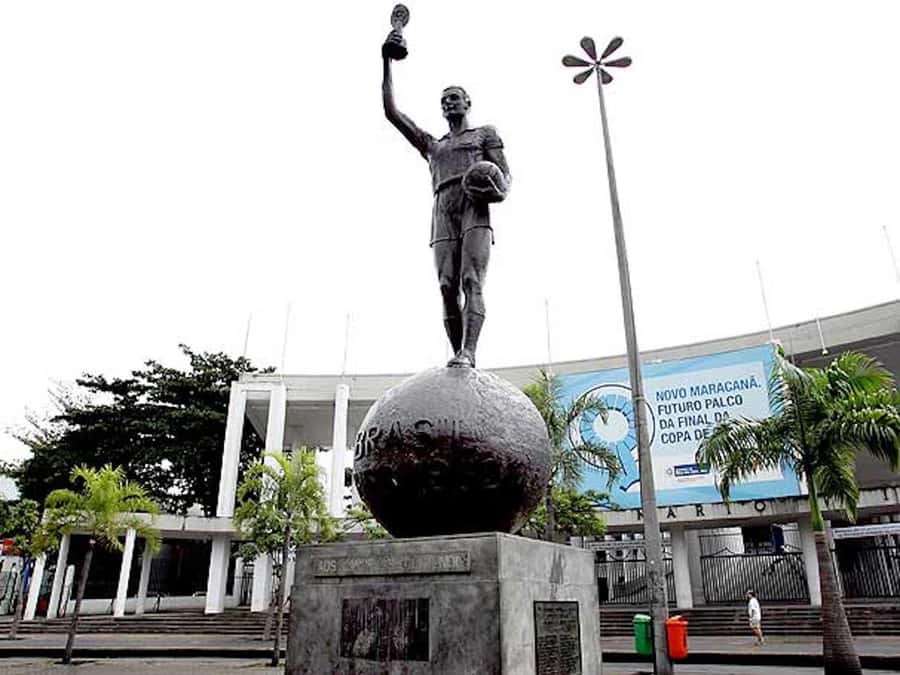
The first major stop is Maracanã Stadium, with attention to Bellini’s statue. Even if you are not a football fan, Maracanã helps explain Rio’s sporting identity. A brief stop gives you the setting and the chance to take in the scale of a stadium known far beyond Brazil.
The itinerary does not promise a stadium interior visit. Think of this as an exterior stop and photo opportunity, not a match-day or behind-the-scenes tour. If seeing the inside is important to you, ask before booking so your expectations match the actual plan.
The minivan then reaches the Sambadrome, the purpose-built venue for Rio’s main Carnival parade. This is another place where a short stop can be useful. You see the parade route and get a physical sense of how Carnival is staged, rather than treating it as an abstract annual event seen only in photographs.
A visit outside Carnival season will naturally be quieter. That is part of the point, but it also means the Sambadrome may feel like an empty parade avenue rather than a spectacle. Your guide can provide the context; you will not be watching the parade itself.
Avenida Presidente Vargas and the city’s civic core
From the Sambadrome, the route follows Avenida Presidente Vargas. This broad avenue links a string of important downtown sights, and the vehicle is helpful here because the stops are spread along a busy urban corridor.
You pass Central Railway Station, a major transport landmark, and Duque de Caxias Palace, once the headquarters of the Ministry of the Armed Forces. Itamaraty Palace, formerly the headquarters of the Ministry of Foreign Affairs, adds another layer of civic and political history.
The tour also passes Campo de Santana, then continues by Avenida Passos to Tiradentes Square. These are the kinds of places that can blur together if you explore downtown without a plan. A guide gives the sequence some meaning, even when you are viewing a building from outside.
This section also shows the main weakness of the outing. Some sights are seen from the vehicle, and traffic can slow the route. If you want to study facades, enter public buildings, or pause for photographs at every stop, three hours will feel tight.
Lapa, the Metropolitan Cathedral, and Avenida Chile
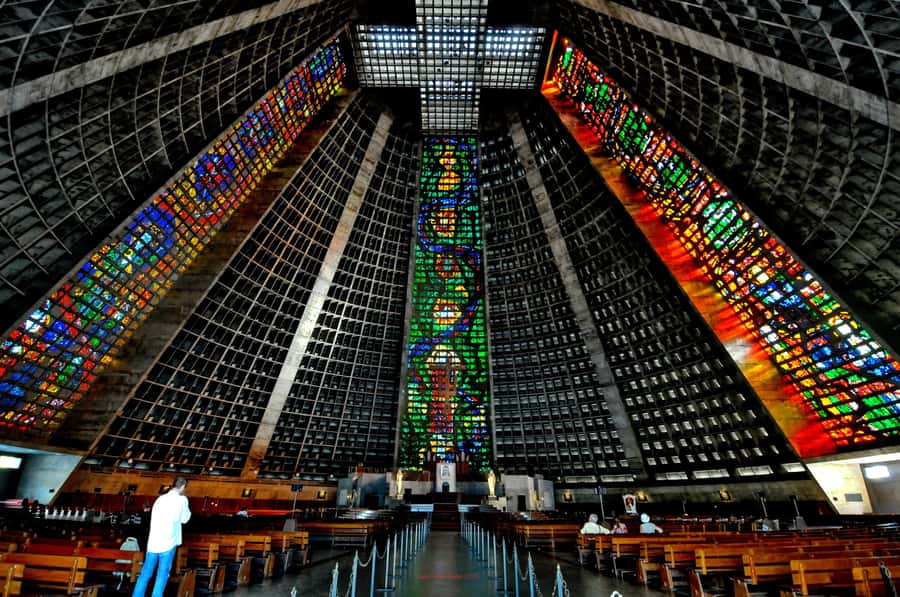
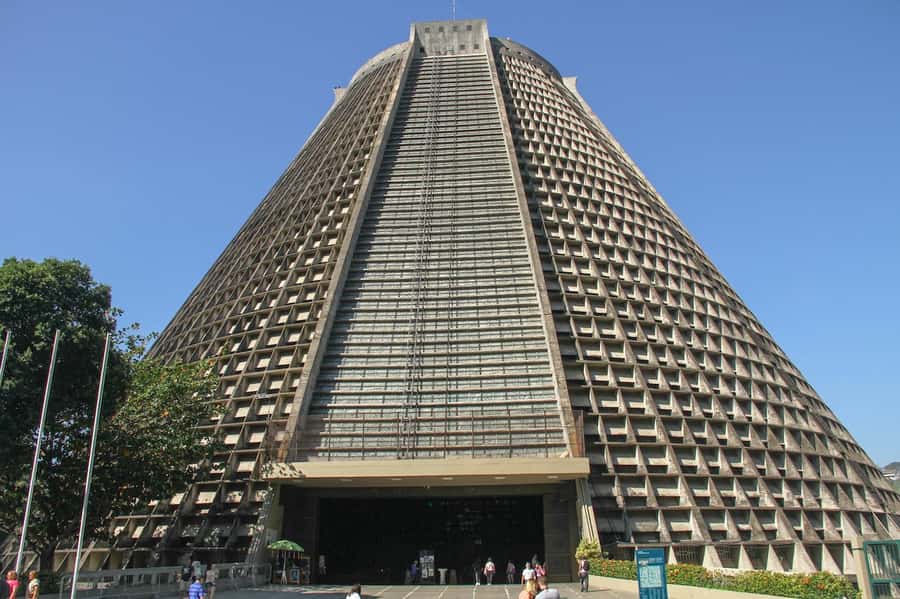
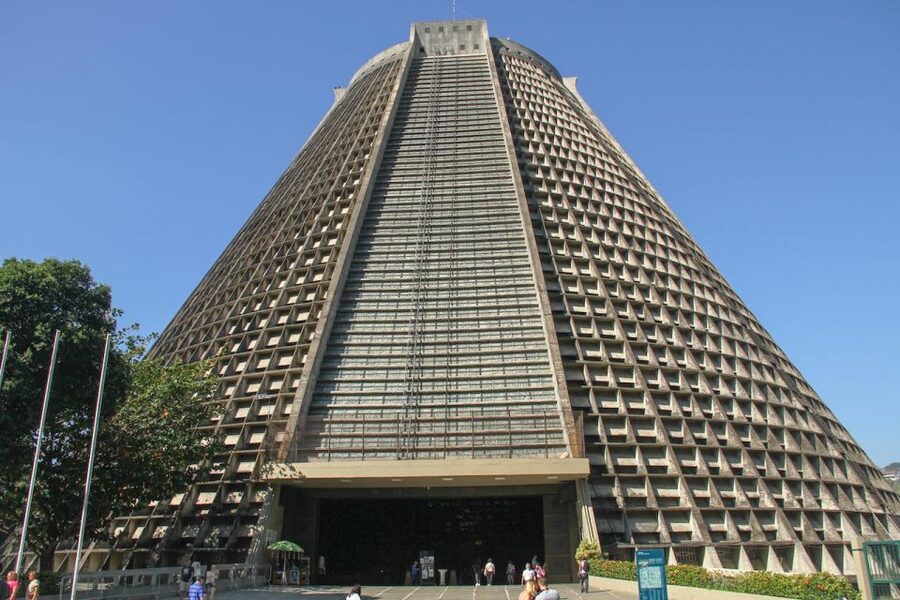
The cone-shaped Metropolitan Cathedral is one of Rio’s most unusual landmarks. Its modern design differs sharply from the historic churches and government buildings elsewhere on the route, which makes the visit more than a quick religious stop.
Inside, the cathedral is known for its tall stained-glass panels and open interior. The supplied plan specifically describes it as a modern-art landmark, so this is a place where you should step out and look upward rather than simply take a picture from the doorway.
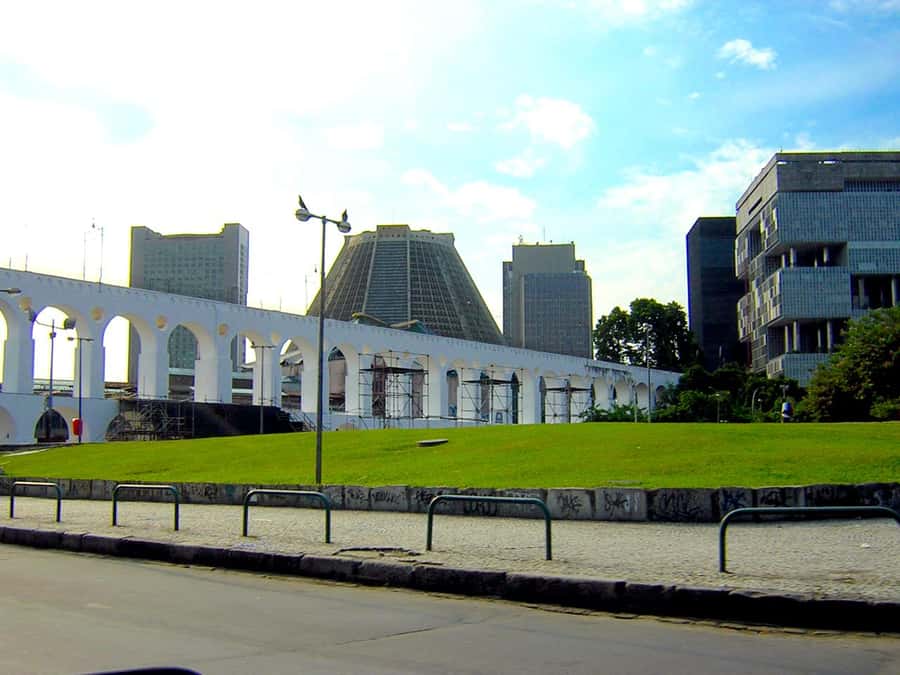
The itinerary then moves through Lapa, a central neighborhood associated with Rio’s bohemian side. You see the Lapa Arches, Lavradio Street, and Avenida Chile. The Arches are among the city’s most recognizable structures, while the surrounding streets help connect the tourist image of Lapa with its wider urban setting.
Do not expect an extended neighborhood walk. The route is designed to show you several points in quick order. If Lapa interests you most, note where the vehicle stops and return later for more time on foot.
Same city, a completely different kind of day:
- Rio de Janeiro: Sugarloaf Cable Car Official Ticket
★ 4.6 · 2,873 reviews - Rio: Christ the Redeemer, Sugarloaf, Selaron & BBQ Lunch
★ 4.5 · 2,428 reviews - Rio De Janeiro: Half-Day Rocinha Favela Walking Tour
★ 4.7 · 2,272 reviews - Rio de Janeiro: Angra dos Reis and Ilha Grande Full-Day Tour
★ 4.6 · 1,673 reviews
Selarón Steps and a strong photo stop
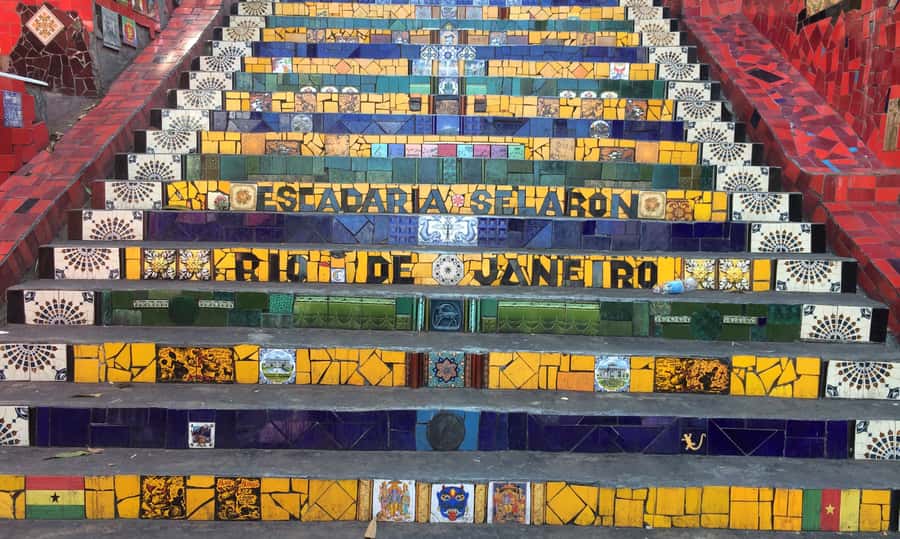
The Escadaria Selarón is likely to be one of the most memorable short stops. Artist Jorge Selarón covered the staircase with tiles in bold green, yellow, and blue, colors linked here with the Brazilian flag. The work was his personal tribute to the Brazilian people.
The steps are visually busy in the best way, with tile patterns that reward a closer look. You will want time to walk a little, find a good angle, and notice how the decoration changes from one section to another.
This is also a practical place to keep your belongings close. The tour information does not promise a long stop, so be ready to move when the guide calls the group back. A small group helps here, since you can usually get closer to the details without managing a large crowd.
São Bento Monastery: the interior worth prioritizing
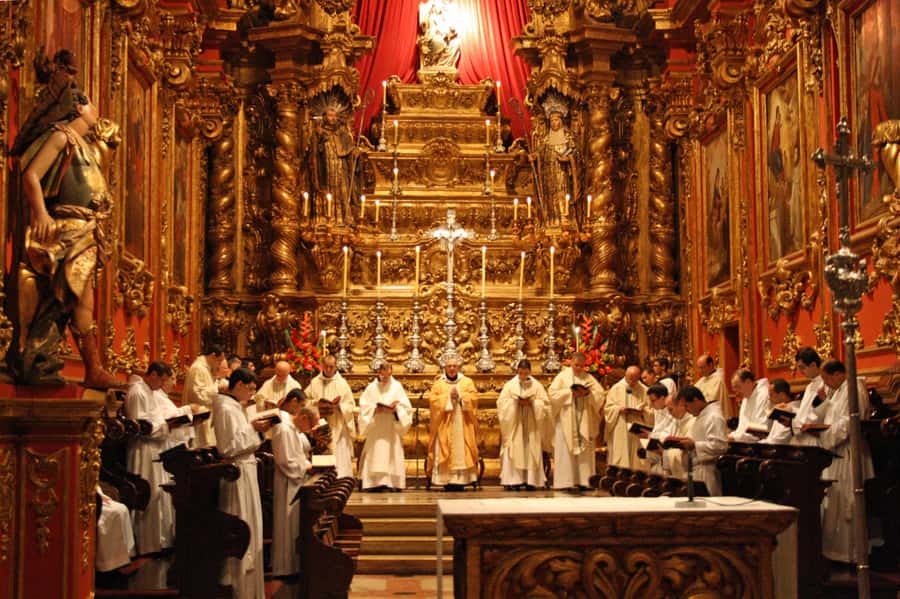
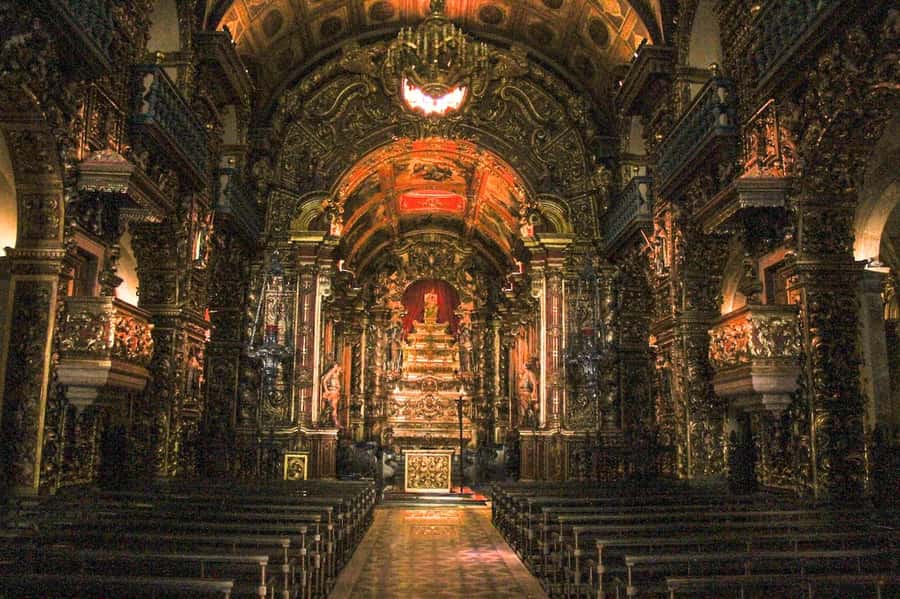
São Bento Monastery provides the tour’s sharpest contrast. The exterior is deliberately plain and restrained, while the interior features gilded Baroque carving, plant motifs, and Rococo decoration around the high altar, cross vaulting, and Chapel of the Blessed Sacrament.
I would give this stop real attention. The building can look simple from outside, so it is easy to underestimate it. Once inside, the decorated surfaces change the mood completely. This is one of the places where a guide’s explanation adds value, especially if you are unfamiliar with the difference between the austere outer design and the ornate interior.
The schedule still matters. A three-hour city circuit cannot offer the same time as a dedicated monastery visit. If religious art and architecture are high on your list, make São Bento a reason to book the tour, then consider returning independently if the opening schedule allows. The provided information does not state visiting hours or guarantee a particular length of stop.
The return along Aterro do Flamengo
The return route follows Aterro do Flamengo, one of Rio’s broad waterfront park areas. From the minivan, you see the Museum of Modern Art, the Monument to the Fallen in World War II, and the Church of Outeiro da Glória.
You also pass Flamengo and Botafogo beaches. This gives the tour a useful change of scene after the dense downtown streets. The views connect the historic center with the city’s famous shoreline and show how quickly Rio shifts from urban avenues to open waterfront.
Again, these are mainly viewing stops unless the guide says otherwise. The value is the range: in one afternoon, you move from football and Carnival to churches, public buildings, art, and beaches. The tradeoff is that you will not have time to explore each place in depth.
The tour ends with hotel drop-off in Copacabana, Ipanema, or Leblon. That makes the afternoon easy to fit into a beach-district itinerary, since you do not need to arrange your own return from downtown.
What the guide can add

The guide is the main variable in a tour that covers so much ground. English and Spanish are available, and named guides associated with this experience include Meilin, Cabo, Mailee, and Monica. The strongest reports describe guides who answered questions, adjusted the route, and paid attention to individual interests.
That flexibility is especially useful when the group is small. One person received a private-style outing with the guide and driver tailoring the experience around personal interests. You might receive the same kind of attention, but group size and daily operations can vary.
The best guide for this route will do more than point out buildings. You want clear explanations of why Maracanã matters, how Carnival uses the Sambadrome, and why São Bento looks so different inside and out. A friendly, prepared guide can make the drive between stops feel worthwhile.
The experience is not ideal if you prefer to set your own pace. The vehicle must keep to a schedule, and traffic can reduce time at the sights. When booking, tell the operator if one stop matters most to you. The outing has shown some flexibility, but that depends on the guide and the day.
Price, timing, and practical value
The $74 price makes the most sense for you if hotel pickup, a guide, and transport between distant parts of Rio save you time and stress. It is less convincing if you mainly want to walk around Lapa, photograph Selarón Steps, or spend a long period inside the cathedral and monastery.
Pickup is available from most hotels in Leblon, Ipanema, and Copacabana. If your hotel is outside those areas, the stated meeting point is Hilton Hotel Copacabana. Pickup is scheduled between 2 pm and 2:30 pm, so keep that window free and confirm the exact time after booking.
The vehicle is an air-conditioned minivan, a welcome detail for a warm afternoon. The tour is described as small-group, though the exact number is not provided. You receive a professional guide and hotel drop-off, but entrance tickets are not listed among the inclusions. The itinerary also does not promise entry to Maracanã or any other paid attraction.
Free cancellation is available up to 24 hours before departure, and you can reserve while postponing payment. Confirmation arrives within 24 hours of booking, subject to availability. Those terms give you some room to adjust plans, but they do not change the central value question: this is a guided overview, not a slow cultural visit.
Who should book this downtown tour?
I would choose this tour if you have limited time in Rio, want to see the city center without arranging several separate rides, or prefer an English- or Spanish-speaking guide. It is also a sensible choice early in your stay, when you want a quick map of the city and ideas for places to revisit.
The route suits first-time visitors who want famous sights plus a few architectural surprises. São Bento Monastery, the Metropolitan Cathedral, and the Civic Center keep the tour from becoming only a checklist of postcard views.
I would hesitate if your priority is walking. One detailed complaint about the experience was that too much of the time was spent in the vehicle, sometimes in traffic, with attractions viewed through the window. That criticism is fair. The tour covers a lot, but coverage comes at the cost of depth.
If you book, wear comfortable shoes for the short walking stops and keep your camera ready. Ask the guide which locations will have time outside the minivan. If Selarón Steps or São Bento matters most, say so early.
Should you book it?
Book this Rio Downtown Tour if you value breadth, transport, and guide commentary over long visits. At $74, it can be good value when you use it to get oriented and then return to your favorite places on your own.
Skip it if you dislike vehicle-based sightseeing or expect every landmark to include an interior visit. The route is ambitious for three hours, but that is also its appeal. With a strong guide, you can connect Rio’s football, Carnival, faith, public life, art, and beaches in one compact afternoon.
FAQ
How long does the Rio Downtown Tour last?
The tour lasts three hours, including the sightseeing route and hotel transportation.
Which languages are available?
Live guiding is available in English and Spanish.
Where does hotel pickup take place?
Pickup is available from most hotels in Leblon, Ipanema, and Copacabana. If your hotel is outside the pickup area, the meeting point is Hilton Hotel Copacabana.
What time does pickup usually happen?
Pickup is scheduled between 2 pm and 2:30 pm from selected hotels in the three listed neighborhoods. You should confirm the exact pickup details after booking.
Is transportation included?
Yes. The experience includes transport by air-conditioned minivan, along with hotel pickup and drop-off from selected hotels.
Can I cancel the booking?
Yes. You can cancel up to 24 hours in advance for a full refund. You can also reserve now and pay later, subject to availability and the stated booking terms.
Just added around Rio De Janeiro
- Vidigal Favela Tour★ 4.4 · 26 reviews
- Hang gliding flight in Rio de Janeiro★ 5.0 · 6 reviews
- Rio de Janeiro: Zip Lining and Canopy Tree Tour★ 3.3 · 6 reviews
- Rio de Janeiro: Attend a Vasco da Gama game with local guide★ 4.8 · 9 reviews
- Unforgettable Boat Party★ 5.0 · 3 reviews
- Tijuca Forest Hike – Waterfalls & Caves, Nature & Wild Life!★ 5.0 · 51 reviews
- Rio Highlights: Christ, Sugarloaf, and More in a Private Tour★ 5.0 · 36 reviews
- Tijuca Forest w/ Chinese View,cascatinha Taunay,horto waterfall and parque laje★ 4.5 · 29 reviews
Rio de Janeiro Tours, compared.


Christ the Redeemer Entry Ticket by Corcovado Train
Read our review →


Christ the Redeemer, Sugarloaf, Selaron & BBQ Lunch
Read our review →