
Reviewed · BRASíLIA TOURS
Civic, Legal and Architectural Citytour
Brasília is not a city you understand by wandering a few blocks. Its grand avenues, separated districts, monumental government buildings, and far-flung sights were designed around the car. This private tour gives you a quick, clear look at the whole plan, from Oscar Niemeyer’s daring curves to the presidential palace and the blue light of the Dom Bosco Shrine.
I especially like two things here: the route covers a remarkable number of major sights in four hours, and a good guide can turn Brasília’s confusing layout into a simple story. Guides including Alberto, Michael, Anselmo, Flávio, José, and Ambrosio have been praised for clear English and personal insight. The main caution is the pace: you see many places, but architecture lovers may want more time inside each building.
In This Review
- Key points to know before booking
- Why a car tour makes sense in Brasília
- Cathedral curves and a city made of symbols
- Blue light at the Dom Bosco Shrine
- The JK Memorial and Brasília’s origin story
- The Temple of Good Will and Brasília beyond government
- The JK Bridge and Lake Paranoá views
- Three Powers Square, where Brazil’s government meets
- Alvorada Palace and the limits of access
- TV Tower, Army Headquarters, and Crystal Square
- The small church that helped shape the city
- A quick stadium stop completes the city overview
- What the guides add to the experience
- Is $170 good value for up to four people?
- Practical details for a smoother four hours
- Should you book this Brasília city tour?
- FAQ
- How long does the Civic, Legal and Architectural Citytour last?
- What time does the tour start?
- Is this a private tour?
- How much does the tour cost?
- Which Brasília landmarks are included?
- Is admission included?
- Can I visit the inside of the National Congress?
- Can I visit the Alvorada Palace?
- Do I need identification for any stop?
- What happens if the weather is poor?
Key points to know before booking
- A private four-hour route: Your group of up to four people has the vehicle and guide to itself.
- Brasília’s complete architectural picture: The tour links Niemeyer buildings, Lucio Costa’s city plan, political monuments, churches, museums, and Lake Paranoá.
- Strong guide factor: Alberto, Michael, Anselmo, Flávio, José, and Ambrosio have each been praised for clear explanations, friendly service, and good English.
- Mostly free admission: The JK Memorial includes a paid admission ticket within the tour price, while the other listed stops are free.
- Built for Brasília’s heat and distance: Seeing the city by car is far easier than trying to walk between its separated districts.
- A flexible route, with limits: The day can be adjusted, but access to places such as the TV Tower or Alvorada Palace can depend on closures, operating hours, or weather.
Why a car tour makes sense in Brasília
Brasília was planned on a huge scale. Its main areas stretch along broad avenues and monumental axes, with residential superblocks and government buildings set well apart. This is fascinating urban design, but it is not a friendly city for a first-day walking tour.
The private vehicle solves the basic problem. You can cover the major sights without spending your day arranging separate rides or trying to judge distances from a map. The route also gives you a useful overview before you decide which buildings deserve a second visit.
The format is private for your group, with a maximum of four people. That matters because you can ask questions about architecture, Brazilian politics, or daily life in Brasília without waiting for a large group to catch up. A few guide accounts describe clean, comfortable vehicles, prompt pickup, and bottled water, though you should confirm what will be provided on your own departure.
The standard start time is 9:00 am. An earlier start can be sensible in Brasília’s strong sun and heat. One guide moved the start earlier to make the conditions easier, a practical choice that also leaves more room if a stop takes longer than planned.
Other Brazil days worth putting on the list:
- Rio de Janeiro: 6-Stop Highlights of Rio with Lunch
★ 4.4 · 5,157 reviews - Christ the Redeemer Entry Ticket by Corcovado Train
★ 4.4 · 4,476 reviews - Rio de Janeiro: Rocinha Favela Walking Tour with Local Guide
★ 4.8 · 3,052 reviews
Cathedral curves and a city made of symbols
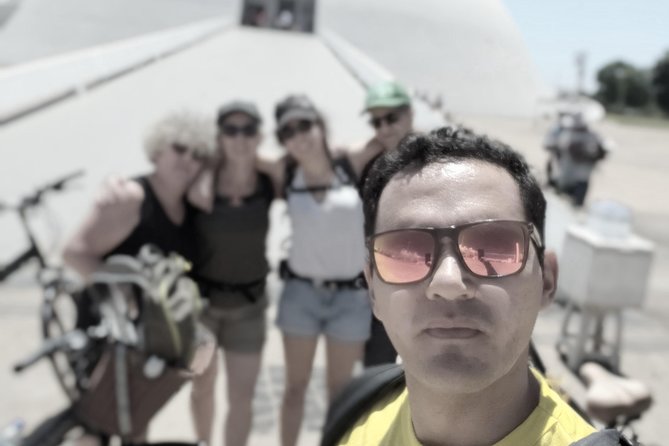
The Metropolitan Cathedral is one of the tour’s best first impressions. Niemeyer designed it with a crown-like structure formed by sweeping concrete ribs, surrounded by a reflecting pool. Inside, colored glass and modern religious art give the space a light, open feel rather than the heavy stone mood of many European cathedrals.
You get about 15 minutes here, with free admission. That is enough to take in the structure and hear the main explanation, but not enough for a slow study of every artwork. If you care most about architecture, tell your guide early that you would like a little extra time at the cathedral or another Niemeyer interior.
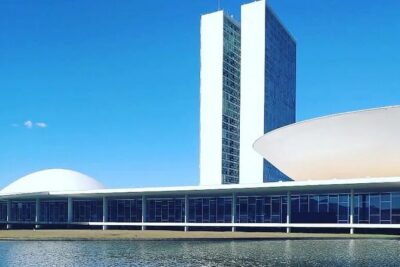
The National Congress follows, another major Niemeyer design on the Monumental Axis. Its twin towers and contrasting bowl-shaped chambers make the building easy to recognize, but the important point is its role: this is where Brazil’s legislative branch works.
The listed stop lasts about 20 minutes. Guided visits may be available in English, Portuguese, and another listed language, depending on the schedule. Access and the exact format can change, so treat this as a chance to understand the building and its function rather than a guaranteed extended interior tour.
Blue light at the Dom Bosco Shrine
The Sanctuary of São João Bosco is a change of mood from the stark white forms of the government district. Blue stained-glass windows fill the interior, creating a cool, luminous space that feels especially welcome after time outside.
You have about 20 minutes here, and admission is free. The shrine is often one of the most memorable stops because it uses light as its main architectural material. You do not need to be an architecture specialist to appreciate it.
This stop also shows why the route works better than a narrow Niemeyer-only tour. Brasília’s identity is not just concrete, curves, and political power. Its churches and public spaces give the city a more personal side.
The JK Memorial and Brasília’s origin story
At the JK Memorial, the focus shifts from design to the man who made Brasília possible. Juscelino Kubitschek was Brazil’s president when the new capital was built, and the memorial presents his life and connection to the city.
Allow about 40 minutes, the longest scheduled visit on the route. The museum includes photographs and videos about the construction of Brasília, works of art, a coffee stop, and souvenirs. Admission is included here, unlike the free outdoor stops.
This is an important pause because Brasília can otherwise feel like a collection of spectacular objects. The memorial helps connect the buildings to the political decision to move Brazil’s capital inland and to the immense effort involved in creating a new city.
If your interest is mainly architectural, this is one place where the tour’s time balance may feel different. You will see a lot across the day, but the JK Memorial deserves attention for its historical material. Ask your guide to explain how the city’s design and construction fit together rather than treating the museum as a quick photo stop.
Same city, a completely different kind of day:
- Rio de Janeiro: Sugarloaf Cable Car Official Ticket
★ 4.6 · 2,873 reviews - Rio: Christ the Redeemer, Sugarloaf, Selaron & BBQ Lunch
★ 4.5 · 2,428 reviews - Rio De Janeiro: Half-Day Rocinha Favela Walking Tour
★ 4.7 · 2,272 reviews - Rio de Janeiro: Angra dos Reis and Ilha Grande Full-Day Tour
★ 4.6 · 1,673 reviews
The Temple of Good Will and Brasília beyond government
The Temple of Good Will, or Templo da Boa Vontade, adds an unusual spiritual stop. It is an ecumenical temple open to all religions, built in a pyramid form. At its top is a large clear crystal described as radiating energy toward people walking the spiral inside the nave.
The visit lasts around 30 minutes and admission is free. The experience is different from the cathedral and the Dom Bosco Shrine. Instead of focusing on one Christian tradition, the temple presents a broader religious message through shape, movement, and symbolism.
You may find this stop more interesting if you enjoy unusual buildings and cultural context, rather than only famous monuments. It also breaks up the government-heavy portion of the route.
The JK Bridge and Lake Paranoá views
At the Mirante da Ponte JK, you pause for about 10 minutes to see one of Brasília’s best-known modern structures. The bridge crosses Lake Paranoá and is framed by lookout points, restaurants, and broad water views.
This is mainly a photo and orientation stop. The short time works well for a look across the lake and a few pictures, but it is not designed as a meal break or a long visit. If the bridge and lake appeal to you, ask whether there is room to adjust the schedule.
The stop also reminds you that Brasília is more than its central political axis. The lake, bridge, and newer parts of the city show how the capital functions as a living place rather than only a planned monument.
Three Powers Square, where Brazil’s government meets
Praça dos Três Poderes is one of the most important stops for understanding Brasília’s civic design. The square brings together the country’s three federal powers: the legislative, judicial, and executive branches.
You will spend about 15 minutes here. The exact buildings and sight lines matter because the square was planned as a physical expression of the separation and balance of government. A strong guide can make the arrangement easier to read, especially if this is your first visit to Brasília.
This is also a good place to ask questions about Brazilian politics and the city’s role as the national capital. Several guide accounts praise the best guides for answering questions about history, government, culture, and architecture rather than giving only memorized building facts.
Alvorada Palace and the limits of access
The Palácio da Alvorada is the official residence of Brazil’s president and was the first work inaugurated in Brasília. Its clean modernist lines and setting near Lake Paranoá make it a key part of the city’s early architectural story.
The planned stop lasts around 15 minutes. Guided tours are received on Wednesdays, so a regular visit may be limited to an exterior view, depending on the day and current access rules. The road leading to the palace has also been closed on some occasions, so this is one stop you should regard as subject to change.
That is not a flaw in the tour itself. Government access can change without warning. A good guide can still explain the palace and its place in Brasília’s history even if you cannot approach as closely as expected.
TV Tower, Army Headquarters, and Crystal Square
The TV Tower is a useful high point for understanding Brasília’s layout. Designed by Lucio Costa to carry the city’s analog television signal, it has a 75-meter lookout reached by elevator.
The scheduled stop is about 15 minutes. You must present an identification document, and climbing the stairs is not allowed. The elevator is essential, and it has occasionally been out of service, so do not book this tour solely for the lookout view.
The Army Headquarters provides another architectural contrast. Niemeyer designed the complex, which includes an acoustic shell, a theater, and Praça dos Cristais, a space designed by Roberto Burle Marx. Allow about 20 minutes.
Together, these stops show how Brasília’s design extends beyond the most photographed government buildings. The TV Tower helps you read the city from above, while the Army Headquarters and Crystal Square show how sculpture, planting, performance, and public space were folded into the plan.
The small church that helped shape the city
Igrejinha Nossa Senhora de Fátima is a small church designed by Niemeyer at the request of Sarah Kubitschek. It was built beside Brasília’s model superblock, which served as a base for the residential areas that followed.
You spend about 15 minutes here. The church is smaller and more intimate than the Metropolitan Cathedral, making it a useful reminder that Brasília’s modernism appears in everyday neighborhood settings as well as monumental ones.
This is a worthwhile stop if you want to understand how the city was meant to work for residents. The plan was not only about ministries and official ceremonies. It also included residential blocks, local churches, and organized community spaces.
A quick stadium stop completes the city overview
The final listed stop is a five-minute photo stop at Estádio Nacional Mané Garrincha. It is brief and should be treated exactly that way.
The stadium adds a sports landmark to a route otherwise focused on architecture, government, and civic history. You will not have time for a full stadium visit, but it gives you one more reference point in the city.
With twelve stops, the tour is fast-moving without being a simple drive-by, assuming the route runs on schedule and access is open. The biggest benefit is coverage. The main tradeoff is depth.
What the guides add to the experience
The guide can make or break this tour. Brasília’s buildings are visually striking, but their meaning is not always obvious from the outside. You need someone who can explain the city plan, the political purpose of the Monumental Axis, and the connection between Kubitschek, Costa, and Niemeyer.
Alberto receives especially strong praise for his English, local knowledge, careful driving, communication before the tour, and comfortable vehicle. He is described as a lifelong resident of Brasília, which can add useful insight into what it is like to live in a city designed on such a grand scale.
Michael has also been praised for enthusiasm and clear explanations. Anselmo is noted for very good English, humor, and a strong grasp of Brasília’s architecture and history. Ambrosio is described as offering a personal look at the city’s culture, while Flávio and José are praised for friendly, well-organized tours.
Guide quality can vary, and one account describes a guide as less active in explaining the sights. Another reported a language barrier, while a separate experience found the guide’s English perfectly understandable even if not perfect. If the topic matters to you, confirm the guide’s language ability and ask for a written stop list before departure.
Is $170 good value for up to four people?
The price is $170 per group, not per person, for up to four people. For a full private vehicle and guide, that can be fair value, especially if you are traveling with three or four people and want to see Brasília in one day.
For a solo traveler, the cost feels higher because you carry the full group price. The value depends on how much you care about context and convenience. You could arrange separate rides, but you would lose the simple route and the chance to ask one guide about the whole city.
The tour is strongest for first-time visitors with limited time. It is also useful if you arrive in Brasília for only one full day. One family completed the experience during a short stay and found it a good way to see the city’s most unusual buildings without spending days sorting out transportation.
Architecture professionals or serious students may want a longer custom visit. The standard schedule gives you a strong introduction, but some interiors and Niemeyer works deserve more than 15 or 20 minutes.
Practical details for a smoother four hours
Wear clothing suitable for strong sun and bring water unless the provider confirms it will be supplied. The route includes outdoor squares, lookouts, and photo stops, and Brasília can become very hot in the afternoon.
Keep your identification document with you for the TV Tower. The elevator is required there, and access can fail if the lift is out of order.
The experience is near public transportation, though the tour itself is built around private transport. Service animals are allowed, and most people can participate. The tour requires good weather, and poor conditions can lead to a new date or a full refund.
Free cancellation is available up to 24 hours before the start time. Changes or cancellations inside that window are not accepted for a refund.
Should you book this Brasília city tour?
Book it if you want a clear first look at Brasília and value a private guide who can connect architecture, politics, and city planning. It is particularly useful for a short stay, a small group of up to four, or anyone who does not want to manage long distances by taxi or ride-hailing service.
The strongest reason to book is the route’s range. In four hours, you can see the cathedral, Congress, Dom Bosco Shrine, JK Memorial, Three Powers Square, Alvorada Palace, TV Tower, Army Headquarters, neighborhood church, stadium, temple, and JK Bridge.
Skip it if you want a slow architectural study with extended interior visits. In that case, use this tour as an orientation, then return independently to the buildings that caught your attention. Before paying, confirm the guide’s language, the pickup time, the current access to Alvorada Palace and the TV Tower, and whether water and air conditioning will be available.
FAQ
How long does the Civic, Legal and Architectural Citytour last?
The tour lasts approximately four hours.
What time does the tour start?
The listed start time is 9:00 am.
Is this a private tour?
Yes. Only your group participates, and the group can include up to four people.
How much does the tour cost?
The price is $170 per group of up to four people.
Which Brasília landmarks are included?
The route includes the Metropolitan Cathedral, National Congress, Sanctuary of São João Bosco, JK Memorial, Temple of Good Will, JK Bridge lookout, Three Powers Square, Alvorada Palace, TV Tower, Army Headquarters, Nossa Senhora de Fátima Church, and Mané Garrincha National Stadium.
Is admission included?
Admission is free at the listed stops except the JK Memorial, where the admission ticket is included in the tour price.
Can I visit the inside of the National Congress?
The National Congress offers guided tours in English and Portuguese, but the exact access and schedule can vary.
Can I visit the Alvorada Palace?
Guided tours at the Alvorada Palace are received on Wednesdays. Access to the road and the palace can change, so the stop may be limited or unavailable.
Do I need identification for any stop?
Yes. The TV Tower requires you to present an identification document.
What happens if the weather is poor?
The experience requires good weather. If it is canceled because of poor weather, you will be offered another date or a full refund.
Just added around Brazil
- Vidigal Favela Tour★ 4.4 · 26 reviews
- Hang gliding flight in Rio de Janeiro★ 5.0 · 6 reviews
- Paraty Historical City Walking Tour★ 4.1 · 8 reviews
- Rio de Janeiro: Zip Lining and Canopy Tree Tour★ 3.3 · 6 reviews
- Walking Tour of São Luís do Maranhão★ 4.4 · 14 reviews
- Rio de Janeiro: Attend a Vasco da Gama game with local guide★ 4.8 · 9 reviews
- Unforgettable Boat Party★ 5.0 · 3 reviews
- Trindade Day Trip: Nature and Sea Adventure from Paraty★ 4.6 · 5 reviews
Brasília Tours, compared.

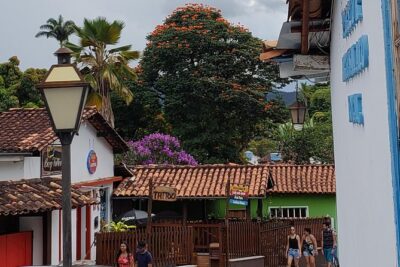
Pirenópolis, the charming baroque city inaugurated in 1723 in the gold cycle
Read our review →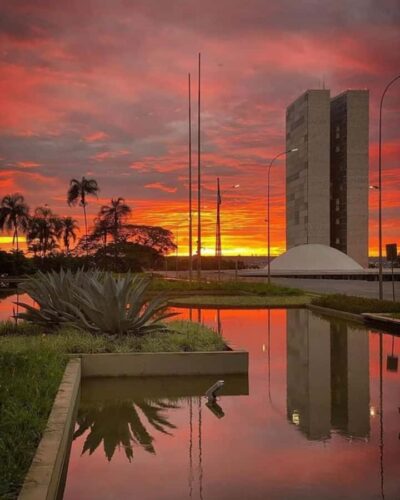
Browse the lists this tour appears in