
Reviewed · WORKSHOPS
Rio de Janeiro: Brazilian Cooking Class with Hotel Pickup
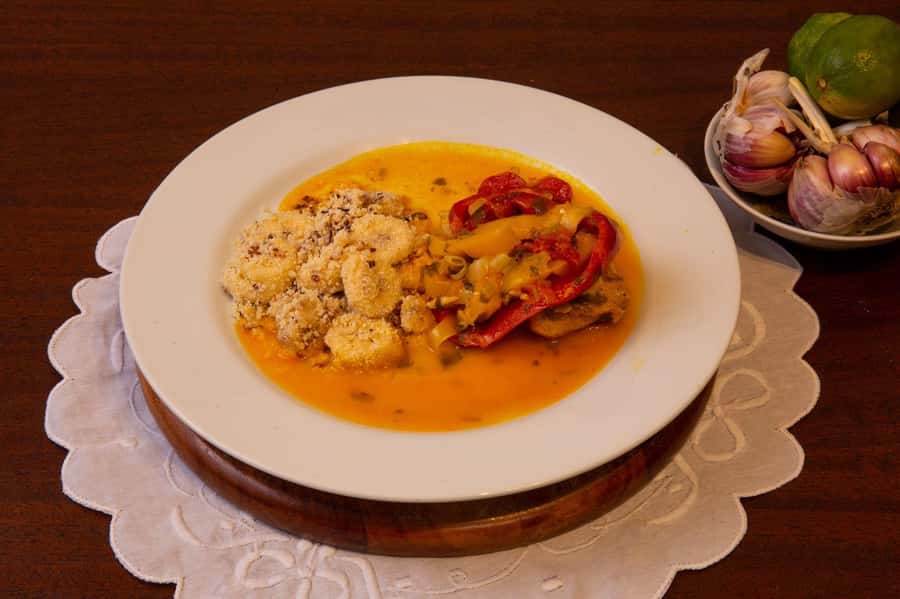
Brazilian food makes the best kind of souvenir: one you can cook again. This four-hour class in Copacabana takes you from hotel pickup to a shared dinner, with a local chef guiding you through feijoada or seafood moqueca, side dishes, brigadeiro, and classic drinks.
I like the choice between two major Brazilian dishes, and I like that the class explains the stories behind them instead of treating cooking as a string of recipes. Chefs Carina and Simone have both led especially warm, patient sessions, and one couple even had a private class.
The main drawback is that traffic can stretch the four-hour schedule, especially in high season. You should also check exactly what is included at booking, since brigadeiro is part of the cooking plan while dessert is listed among the items not included.
In This Review
- Key points to know before booking
- Starting with a Rio hotel pickup
- Choosing between feijoada and seafood moqueca
- Cooking the side dishes that make the meal Brazilian
- Mixing caipirinha and coconut shake
- Sitting down to eat what you prepared
- What the teaching style seems to be like
- Who will get the most from this class
- Is the $117 price fair?
- Booking details worth checking
- Should you book it?
- FAQ
- How long does the Brazilian cooking class last?
- What main dishes can I choose from?
- Is hotel pickup included?
- Can I be picked up in Barra da Tijuca or Recreio dos Bandeirantes?
- What languages does the instructor speak?
- Are ingredients included?
- Are drinks included?
- Is dessert included?
- Can I cancel for a refund?
Key points to know before booking
- Choose your main dish: Learn either feijoada, Brazil’s black bean and pork stew, or seafood moqueca with fish, coconut milk, and regional seasoning.
- Hotel pickup covers central Rio: Transfers are offered from most hotels in Leblon, Ipanema, Copacabana, Leme, Botafogo, Flamengo, and Centro, as well as the cruise port.
- The class is hands-on: You prepare the meal rather than simply watch a chef cook it.
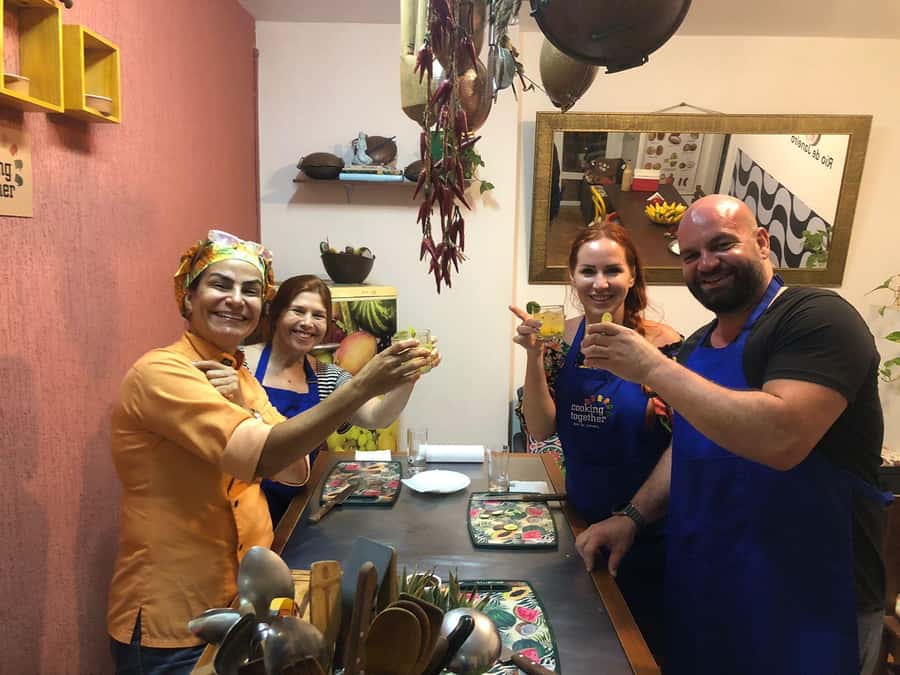
- Drinks are part of the fun: Mix a traditional caipirinha and a coconut shake to serve with dinner.
- Guides bring personality: Carina and Simone are named instructors who have been praised for patience, clear explanations, and cultural insight.
- Allow extra time in busy periods: Rio traffic may make the pickup, class, and return take longer than four hours.
Starting with a Rio hotel pickup
The experience begins in the afternoon with a transfer from your hotel to the chef’s kitchen in Copacabana. Pickup is available from most hotels in the main tourist districts, including Leblon, Ipanema, Copacabana, Leme, Botafogo, Flamengo, and Centro. Cruise-port pickup is also available.
You need to provide your hotel location and confirm the pickup time. This is a useful part of the package because Rio is spread out, and getting across town can be a chore when you are carrying plans for the day. The return transfer is included too, so you do not need to arrange a taxi after dinner.
Traffic is the one practical warning. During high season, roads can be slow because of the large number of people in the city. I would avoid scheduling this class immediately before a flight, cruise departure, or fixed evening reservation.
The listed price is $117 per person. That is not a budget meal, but it covers round-trip transportation, instruction, and ingredients for all the dishes. If you already planned to pay for a restaurant dinner and two taxi rides, the price becomes easier to justify. The stronger value comes from the skill and context you take home, not simply from the food on the plate.
Pickup from Barra da Tijuca or Recreio dos Bandeirantes costs an additional $10 or 40 Brazilian reals per person. An adapted vehicle costs an additional $100 or 500 Brazilian reals, so travelers who need accessible transport should notify the operator in advance.
A few more Rio De Janeiro trips to weigh up
- Rio de Janeiro: Brazilian Cooking Class in Rio de Janeiro
★ 5.0 · 4 reviews
Choosing between feijoada and seafood moqueca
After arriving, you meet the chef and choose the main dish. This decision shapes the meal, so it helps to know what each one represents.
Feijoada is a hearty black bean stew made with pork. It is filling, earthy, and closely tied to the idea of a Brazilian communal meal. The class gives you a chance to learn how the dish is assembled and why it matters, rather than simply ordering a bowl in a restaurant.
Seafood moqueca is a fish stew made with coconut milk. It offers a lighter, more fragrant direction, with the coconut adding a smooth sweetness to the seafood. If you prefer fish or want a meal that feels closer to Brazil’s coastal cooking, this is likely the better pick.
The choice also gives you a useful glimpse of Brazil’s range. Feijoada is substantial and comforting, while moqueca brings the sea and coconut into the kitchen. You are not forced into a single set menu, which is a nice touch for couples or small groups with different tastes.
The chef presents the ingredients and explains how to select good produce. That lesson matters because it turns the class into something you can repeat at home. You learn to think about freshness and quality, not just follow a list of steps.
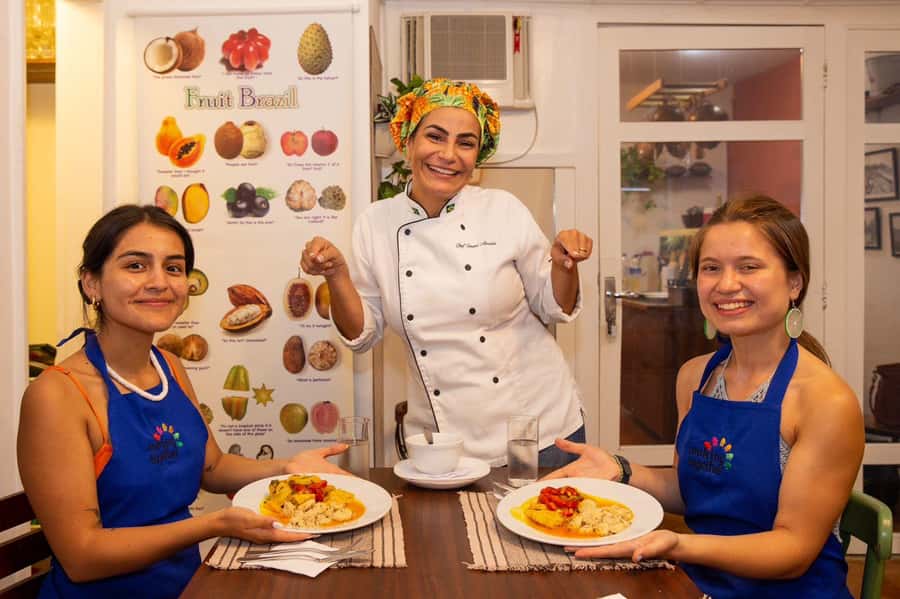
The available languages are Portuguese, Spanish, and English. If you are not comfortable in Portuguese, request an English-speaking instructor when confirming the class. Carina and Simone are two named chefs associated with the experience. Carina has been praised for making the session fun while teaching home cooks and beginners alike. Simone has been praised for explaining the cultural meaning of each dish before the cooking began.
Cooking the side dishes that make the meal Brazilian
The main course is only part of the class. You also prepare several smaller dishes, and these may be some of the most useful recipes to take home.
One is coalho cheese with pepper jelly. The cheese adds a salty, firm bite, while the jelly brings heat and sweetness. It is the kind of simple starter that can work at a dinner party without requiring hours in the kitchen.
You also prepare sausage with onion flambéed in cachaça. Cachaça is Brazil’s sugarcane spirit, and using it in the dish connects the food to the country’s drink culture. The flambé is a lively cooking step, but the more important lesson is how a small amount of spirit can change the aroma and finish of a savory dish.
Brigadeiro is included in the cooking plan as the Brazilian sweet. It is a familiar comfort food in Brazil and a good counterpoint to the savory dishes. The activity information also says dessert is not included, so I would ask the operator before booking whether the brigadeiro is prepared only, served as part of the meal, or treated as an optional extra. That small clarification avoids a surprise when the bill or final meal arrives.
These side dishes make the class feel like a full dinner rather than a demonstration of one recipe. You are working across salty, spicy, sweet, creamy, and smoky flavors. The result is a better introduction to everyday Brazilian cooking than a single bowl of stew would provide.
Mixing caipirinha and coconut shake
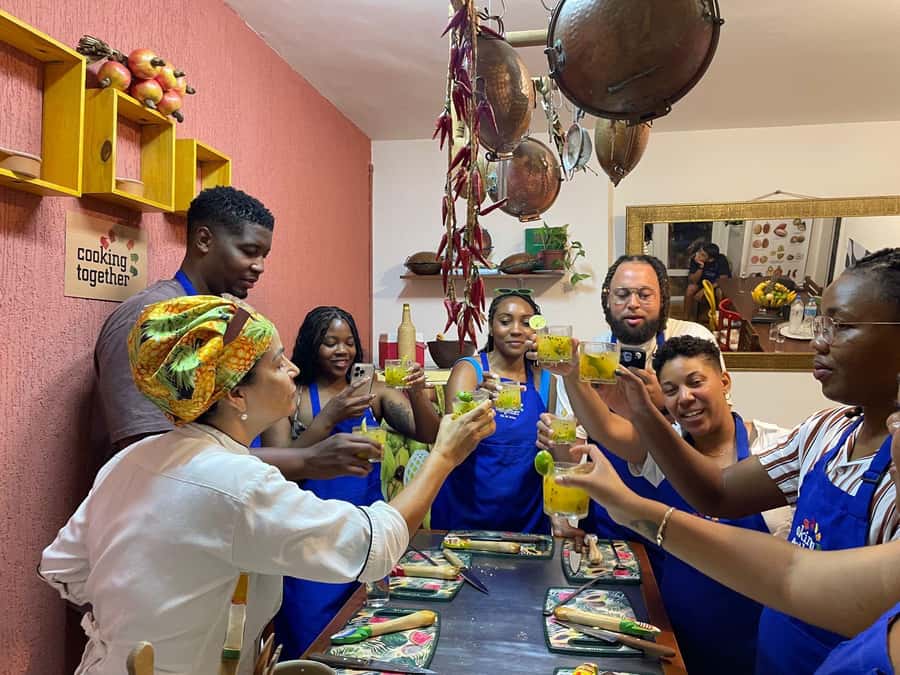
The drink portion adds a social note to the class. You mix a classic caipirinha, Brazil’s best-known cocktail, and a coconut shake to serve with the meal.
The caipirinha gives you a direct connection to cachaça, the same spirit used in the sausage dish. The coconut shake offers a cooler, softer alternative. Making both lets you compare the sharp, lively cocktail with a creamy tropical drink.
The package includes the ingredients needed for the cooking experience, but additional drinks are not included. That wording is worth noting. The caipirinha and coconut shake are part of the planned activity, while any extra beverages beyond those may cost more.
This is also where the class becomes especially social. You are not only learning a recipe. You are preparing something to share at the table, with the chef and other participants if the session is conducted as a group. One confirmed booking was private for a married couple, but you should not assume every departure is private unless the operator confirms it.
Same city, a completely different kind of day:
- Rio de Janeiro: 6-Stop Highlights of Rio with Lunch
★ 4.4 · 5,157 reviews - Christ the Redeemer Entry Ticket by Corcovado Train
★ 4.4 · 4,476 reviews - Rio de Janeiro: Rocinha Favela Walking Tour with Local Guide
★ 4.8 · 3,052 reviews - Rio de Janeiro: Sugarloaf Cable Car Official Ticket
★ 4.6 · 2,873 reviews
Sitting down to eat what you prepared
Once the cooking is finished, you sit down for the meal. This is the payoff, but it is also part of the lesson. You can taste the main dish immediately and see how the side dishes and drinks work with it.
I like this format because it closes the loop. A standard food tour may let you sample several things, but you may not understand how they were made. Here, the meal reflects your own work, and the chef can help explain what went right or what you might change next time.
The atmosphere is described as convivial, with time to share stories with fellow participants. That makes this a good pick if you want an evening activity that encourages conversation rather than another formal sightseeing stop.
The class may be especially useful for people who have already visited Rio’s major sights. One couple chose it specifically because they had been to Rio before and wanted a different kind of experience. Cooking gives you a new way to meet the place without adding another viewpoint, church, or beach stop to your schedule.
Still, keep your expectations sensible. This is a four-hour class with transport, cooking, eating, and conversation. It is not a professional culinary certificate, and the exact pace may depend on the group, the chef, and traffic.
What the teaching style seems to be like
The strongest feature is the instructor’s role. You are not simply handed ingredients and told to follow instructions. The chef explains cultural meaning, introduces the produce, and guides you through the steps.
Carina has been singled out for being a strong teacher who made the class enjoyable for both home cooks and people without much kitchen experience. Simone has been described as thoughtful, engaging, and patient, with a habit of explaining the cultural importance of the dishes before cooking began.
Those details matter more than fancy kitchen equipment. A good class depends on whether the chef can adjust explanations for beginners, answer questions, and keep the work moving. The available feedback points to that being a major strength here.
The class also welcomes different skill levels. If you cook often, you may focus on ingredient selection, seasoning, and technique. If you rarely cook, you still get a structured way to take part. You may bring your own set of knives if you prefer, though this is optional.
For mobility needs, notify the provider in advance. An adapted vehicle is available for an additional fee. The information supplied does not describe the kitchen setup in detail, so you should ask specific questions if you need step-free access or other adaptations.
Who will get the most from this class
I would recommend this experience to several types of visitors:
- Food-focused visitors who want more than a restaurant meal.
- Repeat visitors to Rio looking for a fresh activity.
- Couples and small groups who enjoy preparing dinner together.
- Beginner cooks who want patient instruction.
- Experienced home cooks interested in Brazilian ingredients and techniques.
- Cruise passengers who can use port pickup and return service.
It may be less suitable if you want a quick activity with no fixed schedule. The afternoon pickup, cooking time, meal, and return transfer require a good part of the day. It is also not the right choice if you strongly dislike seafood, pork, beans, coconut, or spirits, although the two main-dish choices give you some flexibility.
Families should confirm the minimum age and participation rules before booking, since those details are not provided. The same applies to dietary restrictions. The menu includes pork, seafood, dairy, pepper jelly, and alcoholic drinks, so ask the operator what substitutions are possible rather than assuming they can be made.
Is the $117 price fair?
At $117 per person, this is best viewed as a food lesson with transportation, not merely a dinner. You receive hotel pickup and return, the cooking class, and ingredients for all the listed dishes.
The value improves if you are staying outside easy walking distance of Copacabana or if you would otherwise pay for two rides. It also improves if you care about taking recipes and techniques home. The session covers a main dish, several sides, dessert preparation, and two drinks, which is a substantial amount for four hours.
The price is harder to justify if you only want to taste Brazilian food. Rio has restaurants where you can order feijoada or moqueca without spending an afternoon cooking. This class earns its cost through participation, instruction, and the chance to ask questions.
Since only five ratings are provided, I would treat the perfect score as encouraging but not as proof that every departure will be identical. The named chefs and specific praise for the teaching style are useful signs, but group size, chef assignment, and the exact kitchen setting should be confirmed if those details matter to you.
Booking details worth checking
You can cancel up to 24 hours before the activity for a full refund. The reserve-now, pay-later option lets you hold a place without paying at the time of booking, which helps when Rio plans are still shifting.
Check the starting time before committing, since availability determines the afternoon schedule. Give the operator your hotel location and confirm pickup rather than assuming every property in the listed districts is covered.
If you need an adapted vehicle, mention it early and budget for the additional charge. The same applies to pickup in Barra da Tijuca or Recreio dos Bandeirantes.
Finally, ask about the dessert wording. Brigadeiro appears in the cooking plan, while dessert is listed as not included. It is better to clarify whether the ingredients and serving are covered before you pay.
Should you book it?
Book this class if you want a personal connection to Brazilian food and enjoy doing rather than simply watching. The choice of feijoada or moqueca, the side dishes, the caipirinha, and the hotel transfers make it a well-rounded afternoon.
I would give it priority if you have already seen Rio’s main sights, are staying in one of the covered hotel districts, or want an activity that works for both serious cooks and complete beginners. Skip it if you need a short, tightly timed outing or only want a restaurant meal.
For the best fit, confirm the chef’s language, group format, dietary needs, pickup time, and dessert details. With those points settled, this is a useful and tasty way to carry a piece of Rio’s food culture home.
FAQ
How long does the Brazilian cooking class last?
The activity lasts four hours, including the cooking class, meal, and round-trip transfer.
What main dishes can I choose from?
You can choose between feijoada, a black bean stew with pork, and seafood moqueca, a fish stew made with coconut milk.
Is hotel pickup included?
Yes. Round-trip transfer is included from most hotels in Leblon, Ipanema, Copacabana, Leme, Botafogo, Flamengo, and Centro. Pickup from the cruise port is also available.
Can I be picked up in Barra da Tijuca or Recreio dos Bandeirantes?
Yes, but pickup from those areas costs an additional $10 or 40 Brazilian reals per person.
What languages does the instructor speak?
Instruction is available in Portuguese, Spanish, and English.
Are ingredients included?
Yes. Ingredients for all dishes are included.
Are drinks included?
The planned caipirinha and coconut shake are part of the cooking activity. Additional drinks are not included.
Is dessert included?
Brigadeiro is listed among the dishes you prepare, but dessert is also listed as not included. Confirm the exact dessert arrangement with the provider before booking.
Can I cancel for a refund?
You can cancel up to 24 hours in advance for a full refund. You can also reserve now and pay later.
Just added around Rio De Janeiro
- Vidigal Favela Tour★ 4.4 · 26 reviews
- Hang gliding flight in Rio de Janeiro★ 5.0 · 6 reviews
- Rio de Janeiro: Zip Lining and Canopy Tree Tour★ 3.3 · 6 reviews
- Rio de Janeiro: Attend a Vasco da Gama game with local guide★ 4.8 · 9 reviews
- Unforgettable Boat Party★ 5.0 · 3 reviews
- Tijuca Forest Hike – Waterfalls & Caves, Nature & Wild Life!★ 5.0 · 51 reviews
- Rio Highlights: Christ, Sugarloaf, and More in a Private Tour★ 5.0 · 36 reviews
- Tijuca Forest w/ Chinese View,cascatinha Taunay,horto waterfall and parque laje★ 4.5 · 29 reviews
Workshops, compared.






Capoeira Class at Mestre Bimba’s 1st Ever School.
Read our review →
Surf lessons with local instructors in Copacabana/ipanema!
Read our review →
Surf Lesson with Qualified Instructor in Florianópolis
Read our review →Browse the lists this tour appears in