
Reviewed · STREET ART
Rio Street Art Tour
Rio’s street art is not just decoration. On this three-hour private tour, murals become a guide to the city’s politics, African heritage, Carnival culture, and changing waterfront. You’ll ride the subway and VLT with Wellington, walk through central Rio, and finish beside the huge Etnias mural in Porto Maravilha.
I like the local use of public transportation, which gives you a better feel for daily Rio than a coach ride. I also like the way the tour joins art with Cinelândia’s architecture, Little Africa, Carnival, and the port’s connection to enslaved Africans. The main consideration is simple: this is a walking tour with several transit changes, so bring water and expect an active three hours.
In This Review
- Key points at a glance
- Why Rio’s murals tell more than a pretty story
- Starting at the Municipal Theater and moving through Glória
- Selarón Steps, a colorful stop with a busy setting
- Cinelândia and the architecture of central Rio
- Boulevard Olímpico and Rio’s museum district
- Porto Maravilha and the Etnias mural
- What Wellington adds to the walk
- Walking, transit, and the three-hour pace
- Is $68.61 a fair price?
- Who should book this Rio art tour?
- My call: book it for context, not just photographs
- FAQ
- How long does the Rio Street Art Tour last?
- Where does the tour begin?
- Where does the tour end?
- Is this a private tour?
- Does the tour use public transportation?
- What happens if bad weather cancels the tour?
Key points at a glance
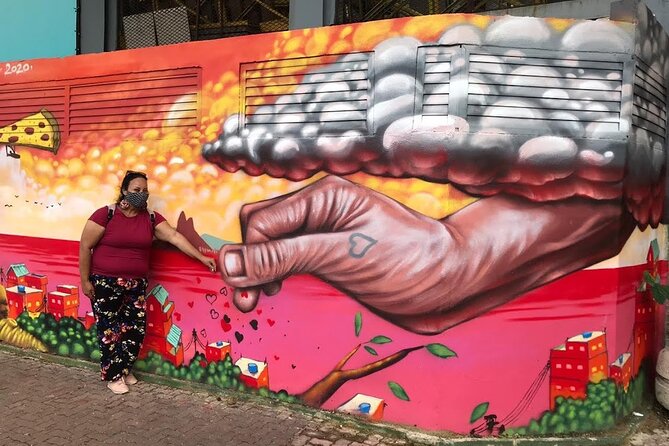
- World’s largest graffiti mural: End at the Etnias mural in Porto Maravilha, a monumental work tied to the Olympic-era waterfront.
- A private experience: Your group participates alone, even if you book as one person.
- Subway and VLT included in the route: Public transit is part of the city lesson, not just a way to get from one stop to another.
- Street art with context: Wellington connects murals to politics, slavery, Afro-Brazilian culture, Carnival, architecture, and current events.
- Several central Rio districts: See Glória, Cinelândia, Centro, Boulevard Olímpico, Porto Maravilha, and the area around Little Africa.
- Three hours for $68.61 per person: A fair price if you want an active cultural orientation rather than a quick photo stop.
Why Rio’s murals tell more than a pretty story
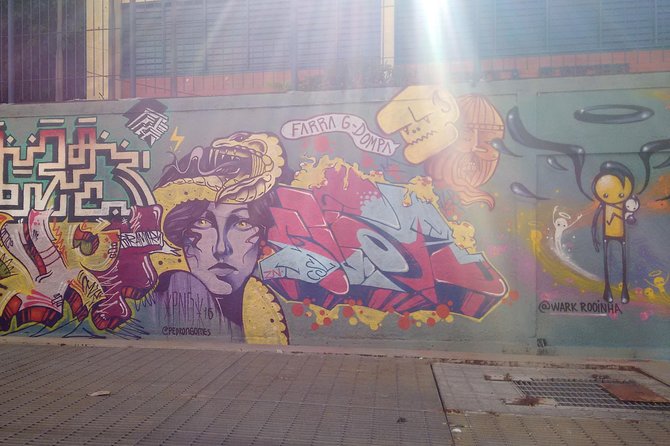
The best reason to take this tour is that it treats street art as a public record. A painted wall can point you toward questions about race, power, history, urban renewal, and who gets represented in a city.
Wellington is the main interpreter. His tours are praised for linking the images to Rio’s past and present, while keeping the walk conversational. He also speaks English well, which matters when the subject moves from a colorful mural to more difficult themes such as slavery and political struggle.
This is not a gallery tour with a roof and numbered rooms. You’ll be outside, moving through streets and public spaces. The art is part of the neighborhood, so the experience includes architecture, transportation, landmarks, and the ordinary rhythm of central Rio.
The private format is a real advantage. If you book alone, you still have a private tour. With friends or family, you can ask more questions and spend extra time on a mural or neighborhood that catches your attention.
A few more Rio de Janeiro trips to weigh up
- Rio Street Art Tour
★ 5.0 · 76 reviews - São Paulo: Bar and Street Art Crawl with Local Guide
★ 4.9 · 102 reviews - Street Art and Park Bike Tour
★ 5.0 · 56 reviews
Starting at the Municipal Theater and moving through Glória
The tour begins at the Municipal Theater of Rio de Janeiro in Praça Floriano, in the Centro district. The theater anchors Cinelândia, an area known for major cultural and civic buildings.
The first part of the route takes you by subway toward Glória. This opening ride helps place the tour in Rio’s wider urban setting. You are not simply being driven to a mural, then dropped off for a photograph. You are using the city’s transit system and moving between districts as local residents do.
In Glória, the tour begins with what is described as Rio’s first legalized graffiti. That detail gives the artwork a useful frame. Legal walls and officially accepted murals tell a different story from unauthorized painting, and the shift helps you understand how street art gained a public role in Rio.
You’ll also look at European architectural influence in the city. That pairing is one of the tour’s strengths: old buildings and new murals share the same route. Rio’s center can change character quickly, and Wellington uses those changes to explain how the city grew and how its public spaces have been reused.
Selarón Steps, a colorful stop with a busy setting
The Escadaria Selarón is one of Rio’s best-known sights. Its tiled steps are a natural stop on an art-focused walk, but they also bring a change in atmosphere.
The staircase is the third most visited tourist spot in the city, according to the tour information, so you should expect a more popular and photographic setting here. This is not the quietest part of the route. You may find more people stopping for pictures, and the visit is scheduled for about 20 minutes.
That short time is enough to see the staircase and hear its story without allowing the famous stop to take over the entire experience. I like that balance. Selarón Steps are worth seeing, but Rio has more to offer than one famous set of tiles.
The staircase also works as a bridge between the tour’s two sides. You get a recognizable landmark, then continue toward less obvious street art and waterfront districts. If you want a tour made only of famous sights, this route may feel too broad. If you want famous sights placed beside local art and city history, it fits well.
Cinelândia and the architecture of central Rio
Cinelândia is more than a meeting point. The tour takes time to point out the city’s main library and main theater, giving you a look at Rio’s public cultural institutions.
The scheduled visit here lasts about 30 minutes. Wellington’s style, based on the experience described by participants, is to explain not just what a building is, but why its setting matters. He brings in architecture, politics, Carnival, and samba schools as part of the larger story.
That wider view is useful because street art can be easy to admire without understanding. A mural becomes more interesting when you know what neighborhood it faces, what public issue it touches, or how the city around it has changed.
After Cinelândia, you take the VLT, Rio’s light rail system, toward the Olympic Boulevard. The transit segment adds a practical note: you should be comfortable walking to and from stations and getting on public transportation during the tour. One participant specifically appreciated Wellington handling the train ticket, which helped avoid the risk of an incorrect fare or possible fine.
Same city, a completely different kind of day:
- Rio de Janeiro: 6-Stop Highlights of Rio with Lunch
★ 4.4 · 5,157 reviews - Christ the Redeemer Entry Ticket by Corcovado Train
★ 4.4 · 4,476 reviews - Rio de Janeiro: Rocinha Favela Walking Tour with Local Guide
★ 4.8 · 3,052 reviews - Rio de Janeiro: Sugarloaf Cable Car Official Ticket
★ 4.6 · 2,873 reviews
Boulevard Olímpico and Rio’s museum district
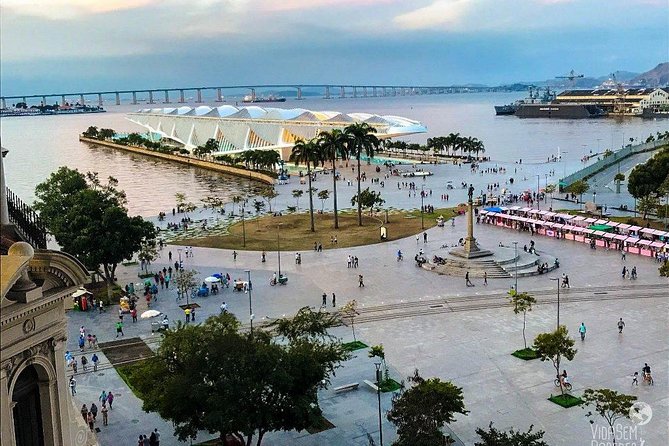
Boulevard Olímpico is home to several of the city’s main museums. The route gives you time to see this waterfront area before reaching the tour’s final mural.
The boulevard’s name reflects its connection with Rio’s Olympic-era redevelopment, and the district has a more modern feel than Cinelândia’s older civic center. Here, public art, museums, open space, and large-scale urban projects meet in one stretch.
The tour information assigns about 30 minutes to this stop. That is enough for an overview and for Wellington to explain the setting, but not enough for a full museum visit. Admission to the tour stops is listed as free, but you should not assume the walking tour includes entry to every museum. The route is focused on exterior art and city interpretation.
This is one place where your expectations matter. You’ll see the area around the museums, including the futuristic Museu do Amanhã and Museu de Arte do Rio, but this is not a museum ticketed tour. If you want to spend hours inside the exhibits, plan a separate visit.
Porto Maravilha and the Etnias mural
The tour finishes in Porto Maravilha, the regenerated port district. This is the longest stop, at about one hour, and it is where the street art reaches its biggest scale.
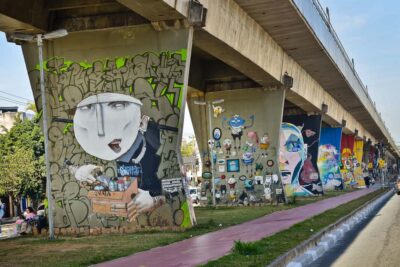
The main attraction is the Etnias mural, described as the largest graffiti mural in the world. Its size is impressive, but scale alone is not the point. Wellington explains the messages in the images and connects the port area to the history of enslaved Africans brought to Brazil.
That context gives the final stop real weight. The mural is not an isolated piece of decoration. It sits in a part of Rio where public space, tourism, redevelopment, and the memory of slavery meet.
The route also goes near Little Africa. The area is important for understanding Afro-Brazilian culture and the port’s role in Brazil’s history. One group arranged to focus more closely on Little Africa, and Wellington adapted the experience to that request. That suggests the private format can be useful if your interests lean toward history and culture as much as painting.
You may also hear about Carnival floats and samba schools. One experience included a visit to a Carnival float storage and staging area, and another suggested asking about Cidade do Samba near the train stop if it is open. These details are not guaranteed parts of every tour, but they show how the tour can connect mural art with Rio’s annual Carnival traditions.
What Wellington adds to the walk
The strongest feature here is the guide’s ability to connect separate subjects. You may begin with graffiti, then move into colonial and European architectural influence, Afro-Brazilian culture, political messages, Carnival, and current events.
Wellington is repeatedly described as animated, friendly, and easy to question. That matters on a private walk, because the quality of the experience depends heavily on the person leading it. His personal connection to Rio also gives the tour a local voice rather than a list of dates and names.
You’ll want to ask questions as you go. Ask about a figure painted on a wall, the meaning of a symbol, the history of the port, or how a mural fits into Rio’s social debates. The tour works best when you treat it as a conversation.
There is one useful caution. A participant wished the route included more newer or younger graffiti, since some of the works felt older. Street art changes, and murals can fade, be painted over, or age in place. If you are mainly interested in the newest work, ask Wellington what is currently on the route when you meet.
Walking, transit, and the three-hour pace
The tour lasts about three hours. That sounds manageable, and it is, but the route covers several areas and includes walking, a subway ride, and the VLT.
One stop lasts only 20 minutes, while Porto Maravilha receives about an hour. That pacing makes sense. Selarón Steps are a compact sight, while the waterfront murals need more time to view and explain.
Bring water. One participant called the walking route easy but still recommended a bottle. Wear comfortable shoes, since you will not remain in one plaza or museum courtyard.
The use of public transportation is part of the appeal, but it also means you should allow for a more active outing. This is not a bus tour where you sit between landmarks. The route is near public transportation, and most people can participate, but you should be ready for a walking-focused experience.
The meeting point is at the Municipal Theater in Praça Floriano. The tour ends somewhere different, in Porto Maravilha, so do not plan to return automatically to the starting point. That ending is practical if you want to continue around the waterfront, visit a museum separately, or find lunch nearby.
Is $68.61 a fair price?
At $68.61 per person, the tour is not the cheapest way to see a mural. It offers better value if you want interpretation, neighborhood context, and a private guide who handles a route involving both subway and VLT.
You are paying for roughly three hours of guiding, not admission to a museum. The stops list free admission, so the financial value comes from the route and the explanation. Wellington’s role is especially important because the experience covers subjects that are difficult to absorb from a quick online caption.
The private setup improves the value for a small group. A solo visitor receives individual attention, while a family or group of friends can shape the conversation around its own interests. For two people, the cost may feel higher than joining a large group. In return, you get a more personal outing and no strangers setting the pace.
I would compare this with the cost of arranging several separate visits in central Rio. You would still need to find the art, understand the connections between locations, manage public transit, and decide how much time to give each area. The tour puts that work in one three-hour block.
Who should book this Rio art tour?
I would recommend it to first-time visitors who want an introduction to central Rio beyond the usual postcard sights. It is also a good fit if you care about public art, architecture, Brazilian history, Afro-Brazilian culture, politics, or Carnival.
Solo visitors benefit from the private format. Families can ask questions at their own level, and friends can make the tour a shared introduction to the city before exploring on their own.
You may want to choose another activity if you dislike walking, dislike public transportation, or want a quiet indoor art experience. You should also set aside extra time if your main goal is visiting museums, since the tour passes their district but does not function as a museum tour.
The tour requires good weather. You can cancel for a full refund up to 24 hours before the start time. If bad weather cancels the experience, you are offered another date or a full refund. That policy is helpful, since most of the value depends on being outdoors.
My call: book it for context, not just photographs
Book this tour if you want Rio’s street art explained as part of the city’s culture and difficult past. The murals, Selarón Steps, Cinelândia, Little Africa, and Porto Maravilha create a varied route, and the subway and VLT make the city itself part of the experience.
The main draw is Wellington’s personal, flexible guiding. You get more than a series of photo stops. You get a way to read Rio through walls, buildings, transit lines, Carnival, and the port.
Skip it if you want only the newest graffiti or a short ride between landmarks. For most people who enjoy art and want a useful first look at central Rio, the $68.61 price is reasonable, and the three-hour format gives you a strong cultural start without taking an entire day.
FAQ
How long does the Rio Street Art Tour last?
The tour lasts approximately three hours.
Where does the tour begin?
It begins at the Municipal Theater of Rio de Janeiro, at Praça Floriano, S/N, Centro, Rio de Janeiro.
Where does the tour end?
The activity ends in a different location from the meeting point, in the Porto Maravilha area.
Is this a private tour?
Yes. Only your group participates, and the tour can accommodate a booking of one person.
Does the tour use public transportation?
Yes. The route includes the subway and the VLT, along with walking between the stops.
What happens if bad weather cancels the tour?
You can choose a different date or receive a full refund if the experience is canceled because of poor weather.
Just added around Rio de Janeiro
- Vidigal Favela Tour★ 4.4 · 26 reviews
- Hang gliding flight in Rio de Janeiro★ 5.0 · 6 reviews
- Rio de Janeiro: Zip Lining and Canopy Tree Tour★ 3.3 · 6 reviews
- Rio de Janeiro: Attend a Vasco da Gama game with local guide★ 4.8 · 9 reviews
- Unforgettable Boat Party★ 5.0 · 3 reviews
- Tijuca Forest Hike – Waterfalls & Caves, Nature & Wild Life!★ 5.0 · 51 reviews
- Rio Highlights: Christ, Sugarloaf, and More in a Private Tour★ 5.0 · 36 reviews
- Tijuca Forest w/ Chinese View,cascatinha Taunay,horto waterfall and parque laje★ 4.5 · 29 reviews
Street Art, compared.


Private Street Art Tour of São Paulo with Batman´s Alley Visit
Read our review →
Browse the lists this tour appears in