
Reviewed · SURF LESSONS
Rio de Janeiro: Surflessons and surfcoach.
Rio’s CADES surf session is built around small-group coaching and good wave selection, not a crowded beach lesson where everyone gets the same quick instructions. Beginners warm up, read the sea with the instructor, then spend about 50 minutes practicing. More experienced surfers train toward specific goals and review filmed footage afterward.
I like two things right away: you get all the main surf equipment, and the coach can move you between the CADES headquarters and the surf spot when needed. I also like the language choice, with Portuguese, Spanish, and English available. The main catch is the price: at $90 for one person, this is not a budget lesson, especially since the advertised duration is one hour while the detailed schedules run longer.
In This Review
- Key points to know
- Meeting at CADES before heading to the water
- The first 10 minutes: warming up before the lesson
- Reading the waves with your instructor
- Fifty minutes of practical surfing
- Technical training for intermediate and advanced surfers
- Equipment and the CADES base
- Is $90 a fair price?
- Languages, access, and who should book
- What the early feedback tells you
- Should you book the CADES surf session?
- FAQ
- How long does the surf experience last?
- Where do I meet the instructor?
- What equipment is included?
- Are transfers included?
- Which languages are available?
- Can I cancel or pay later?
Key points to know
- A 5-person maximum keeps the coaching personal and limits time spent waiting for help.
- Beginners get sea-reading practice, not just a quick explanation on the sand.
- Intermediate and advanced surfers can be filmed and receive video analysis after the session.
- Boards, leashes, wetsuits, and wax are included, so you do not need to bring your own kit.
- CADES has showers, bathrooms, a training room, and a skateboard surf simulator track.
- Coach Henry is praised for patience, a useful quality if you are learning from scratch.
Meeting at CADES before heading to the water
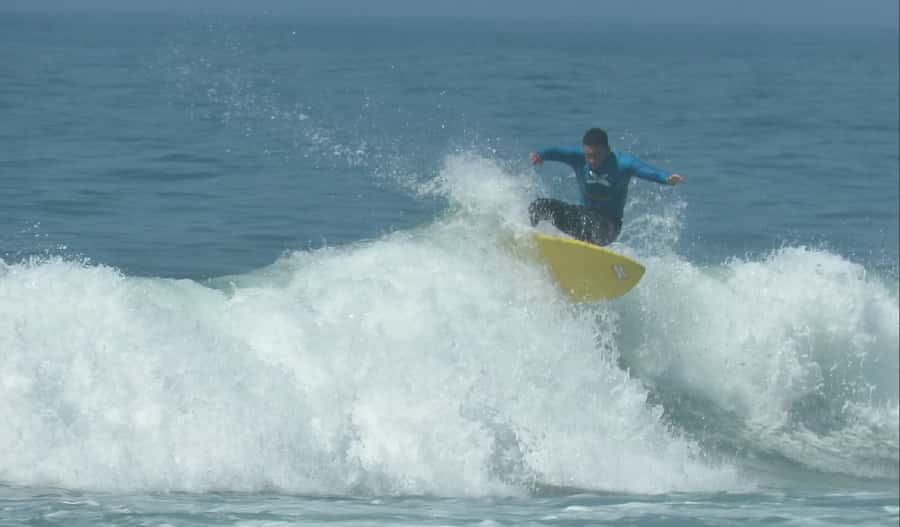
Your session begins at the CADES headquarters at the meeting point supplied with your booking. This is more than a simple curbside meeting spot. The base has bathrooms, showers, an activity room, and a skateboard surf simulator training track, giving you a place to prepare and change before or after the water.
You need to arrange your own transport to the meeting point. If you need a transfer between the CADES space and the surf spot, that can be provided, but the cost depends on the distance. Confirm this detail before booking if you are staying far from the base or want to avoid a surprise added expense.
The small-group limit matters here. With no more than five participants, the instructor has a better chance to watch your stance, correct your balance, and give you useful pointers instead of calling out general advice to a large crowd.
Bring water, beachwear, a change of clothes, and clothing that can get dirty. You may also want a simple bag for wet items after the class. The supplied equipment covers the board, leash, wetsuit, and wax, which makes this easier for visitors who are not carrying surf gear around Brazil.
More surf lessons in Rio De Janeiro:
- Rio Surf Experience!
★ 5.0 · 85 reviews - Rio Surf Experience
★ 4.9 · 37 reviews - Surf lessons: in Arpoador in Ipanema.
★ 4.7 · 35 reviews
The first 10 minutes: warming up before the lesson
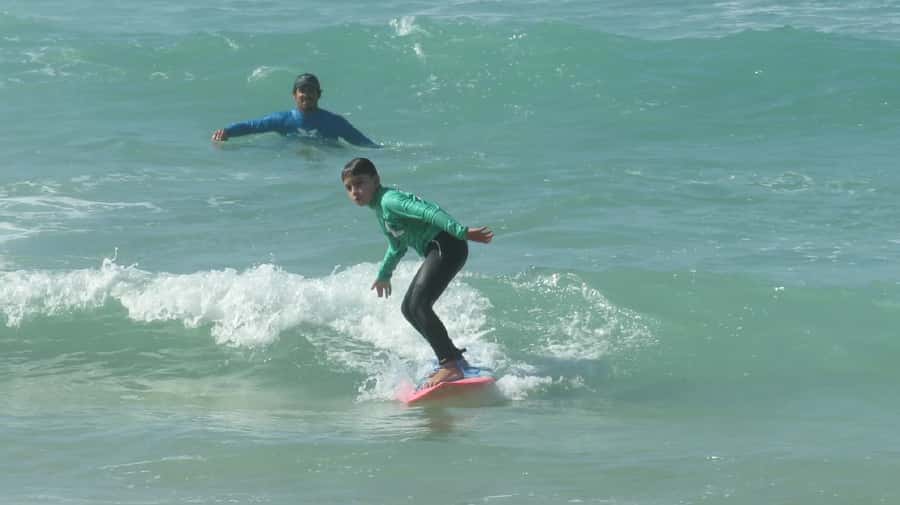
The beginner class starts with a 10-minute warm-up. That is a sensible use of time for a sport that asks your legs, core, shoulders, and balance to work together.
You should treat this part as preparation, not dead time. A short warm-up can help you feel less stiff when you paddle and stand, and it gives the instructor a first look at how you move. If you are new to surfing, this is also a useful moment to ask basic questions about the board and what you should focus on first.
The detailed schedule describes a one-hour activity, but the timing adds up differently. The beginner format includes 10 minutes of warm-up, five minutes of sea and wave analysis, and 50 minutes in the water, for about 65 minutes. The technical format runs longer still, with a 10-minute briefing, 50 minutes in the water, and 20 minutes of video analysis.
I would confirm the exact timing when you book. The difference may reflect flexible scheduling or rounded marketing, but it is worth knowing how much of your day to reserve.
Reading the waves with your instructor
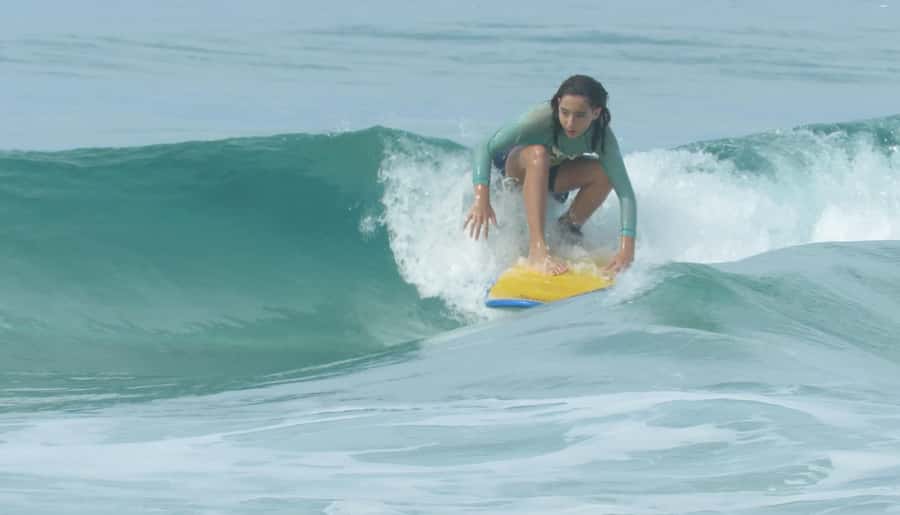
After the warm-up, you spend about five minutes looking at the sea and waves together with the instructor. This is one of the strongest parts of the beginner plan because surfing is not only about standing on a board. You also need to understand where waves form, how they move, and when to attempt one.
The short briefing gives you a basic method for reading the conditions before you paddle out. It can also help you feel less lost at the beach. Instead of rushing directly into the water, you get a moment to see what the instructor sees and connect the advice to the actual waves in front of you.
CADES says it schedules sessions around the best conditions of the day. That wording does not guarantee perfect waves, since the sea always changes, but it suggests that the coaching is planned with conditions in mind rather than locked to one unsuitable spot.
The instructor’s patience is particularly important here. Henry is identified as one of the teachers, and his patience receives the clearest personal praise in the available feedback. That is a meaningful detail for a beginner. A calm teacher gives you room to make mistakes, listen, and try again without feeling hurried.
Fifty minutes of practical surfing
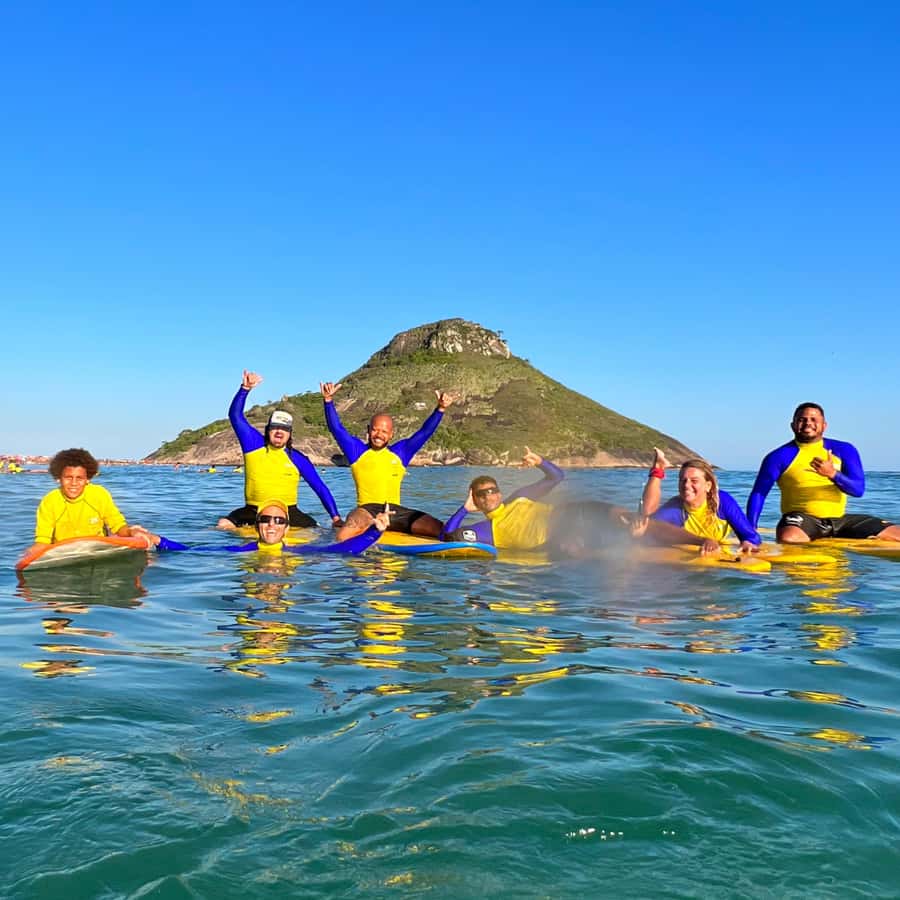
The main beginner session takes about 50 minutes in the water. That gives you enough time to repeat the basic movements rather than trying one attempt and heading back to shore.
You can expect the practical work to focus on the fundamentals of surfing. The supplied plan does not promise a set number of waves or a particular beach, so you should not book this expecting a fixed series of named stops. The surf spot depends on the conditions and the training goals for the day.
For beginners, the value is in the combination of preparation and repeated practice. You receive equipment, a warm-up, wave guidance, and direct instruction in the water. That is more useful than renting a board alone if you have never surfed or are still struggling to catch and stand on a wave.
Still, one hour in the water is not enough to turn a complete beginner into a confident surfer. Think of this as a focused introduction or a useful step in a longer learning process. If you enjoy it, ask CADES about additional training rather than expecting one session to solve every part of surfing.
All ages are accepted, and the activity is offered from beginner through advanced level. The supplied information does not give a minimum age, fitness requirement, or exact beach conditions, so families should confirm those points before paying.
Same city, a completely different kind of day:
- Rio de Janeiro: 6-Stop Highlights of Rio with Lunch
★ 4.4 · 5,157 reviews - Christ the Redeemer Entry Ticket by Corcovado Train
★ 4.4 · 4,476 reviews - Rio de Janeiro: Rocinha Favela Walking Tour with Local Guide
★ 4.8 · 3,052 reviews - Rio de Janeiro: Sugarloaf Cable Car Official Ticket
★ 4.6 · 2,873 reviews
Technical training for intermediate and advanced surfers
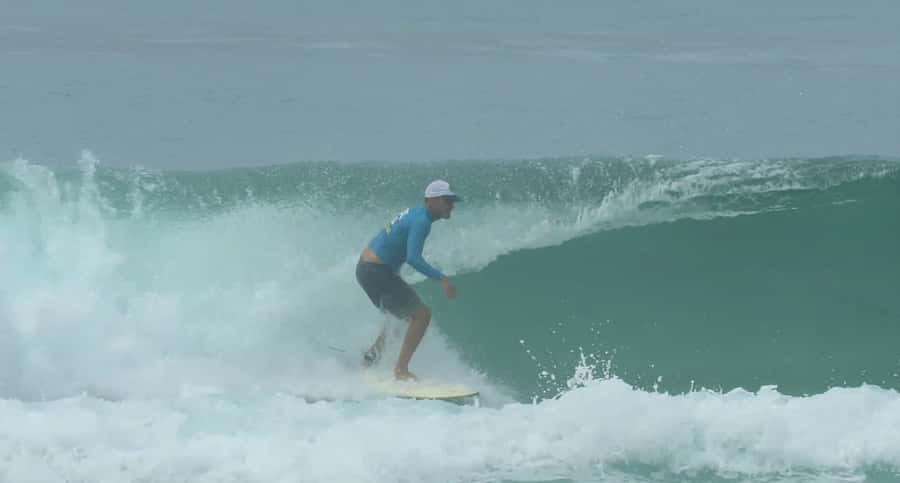
Experienced surfers follow a different format. You and the coach meet at the chosen surf spot, then spend about 10 minutes discussing the peak, the waves, and the goals for the session.
This goal-based start is a good reason for an intermediate or advanced surfer to choose coaching instead of a standard lesson. You can arrive with a specific issue to work on, though the exact goals are set with the coach during the briefing. The plan may focus on your technique, your response to the waves, or another area identified during the session.
The water portion lasts about 50 minutes. The coach can observe your surfing in real conditions rather than relying only on a dry-land explanation. That makes the advice more connected to your habits on the board.
The extra feature is filming. Images of the activity are included, and the session finishes with about 20 minutes of video analysis at CADES or at the place where the training happened. Video can show details that are hard to feel while surfing, such as body position, timing, or how you approach a wave.
The video session is also why the stated one-hour duration deserves a second look. The technical schedule totals about 80 minutes. At $90, the footage and discussion may make the session worthwhile for a serious surfer, but you should confirm how the filming is delivered and how much video you receive.
Equipment and the CADES base
The included equipment removes several common hassles. You receive a board, leash, wetsuit, and wax, so you can arrive without building a surf kit from scratch.
That inclusion adds real value for people who are flying into Rio or moving between cities. You do not have to carry a board, guess which wetsuit thickness to rent, or pay separate beach rental fees. The information does not specify board models, sizes, or wetsuit thickness, so tell CADES about your level and needs when arranging the session.
The headquarters also gives the activity a practical base. Showers and bathrooms are useful after saltwater time, while the activity room provides a place for the video review. The skateboard surf simulator training track is an unusual extra, though the schedule does not say that simulator practice is part of every booking. Ask if you want to use it.
Transfers between the CADES space and the surf spot are available when necessary. Because the price depends on distance, this is an included convenience only in a limited sense. It may be arranged, but not necessarily at no extra cost.
Is $90 a fair price?
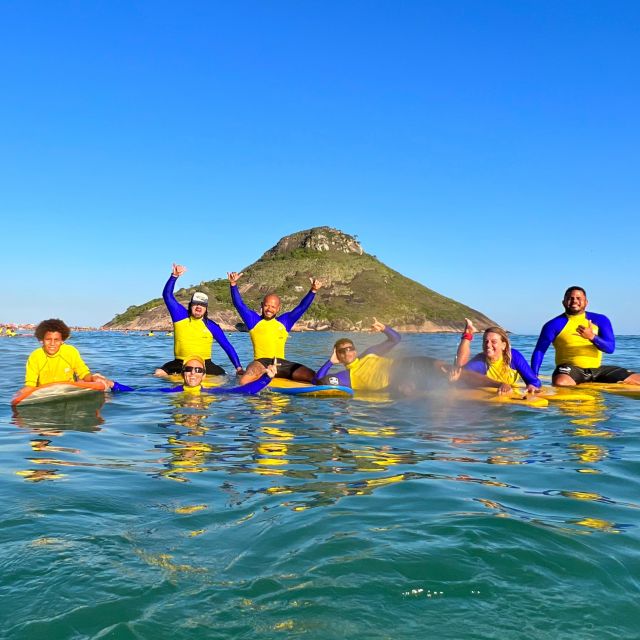
The listed rate is $90 per person. That is a high price for a one-hour surf lesson if you compare it with a basic board rental or a large beach class.
The value improves if you use the parts that are harder to arrange alone: a maximum group of five, coaching in three languages, equipment, wave selection, possible transfers, filming, and video analysis for technical sessions. For an intermediate or advanced surfer, the footage and personal feedback may be the main reason to pay the premium.
Beginners should look at the price differently. You are paying for a structured introduction and safety-minded guidance, not simply for time on a board. If you are nervous about reading the sea or standing up for the first time, patient instruction can be worth more than the cheapest available lesson.
Meals are not included. Plan on about $10 per meal per person as a rough guide from the supplied details. Transport to the meeting point is also extra, with the final amount based on distance.
The free cancellation window helps reduce the risk. You can cancel up to 24 hours ahead for a full refund, and the reserve-now, pay-later option lets you hold a place without paying immediately. These policies are useful when your Rio plans are still shifting, but confirm the terms shown at checkout.
Languages, access, and who should book
Instruction is available in Portuguese, Spanish, and English. That is a practical advantage in a sport where small corrections matter. If you speak one of those languages, you can choose the one that lets you understand body position and timing most clearly.
The activity is listed as wheelchair accessible. Accessibility can vary between the headquarters, transfer vehicle, beach access, and water entry, so explain your needs to CADES before the session and confirm which parts of the route are suitable for you.
I would recommend this experience most strongly to three types of people:
- A beginner who wants patient, direct instruction rather than a large class.
- An intermediate surfer who wants help with a specific part of technique.
- An advanced surfer who values filmed footage and a coach-led review.
It is less suited to someone who wants a cheap, casual rental or a fixed sightseeing schedule. The surf spot changes with the conditions, the exact timing needs clarification, and transport costs may be added.
What the early feedback tells you
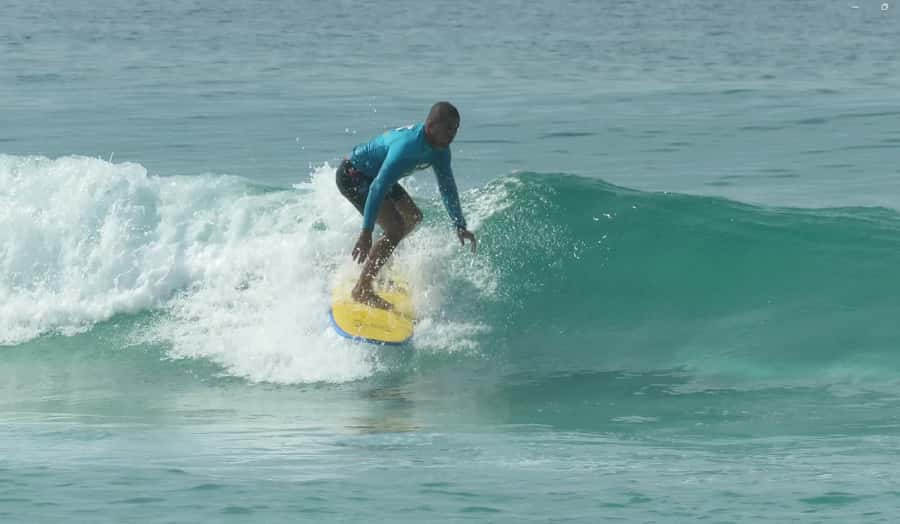
The experience has a perfect rating from three reviews, a small sample that should be treated with some caution. Still, the comments point to two useful details.
One German participant specifically praises Henry’s patience and recommends the experience for people who want to learn surfing. That supports the idea that this is especially friendly for beginners who need calm correction and repeated attempts.
A participant from Guatemala describes the experience as excellent, but gives no technical detail. Taken together, the feedback is positive but limited. I would use it as a helpful sign, not as proof that every session will have ideal waves or the same instructor.
The most reliable reason to book is the structure: warm-up, wave analysis, practical coaching, and, for technical sessions, video review. Those elements give you a clear learning path even when the sea conditions are not perfect.
Should you book the CADES surf session?
Book it if you want a small, coached session with equipment supplied and the option of video feedback. Beginners gain a patient introduction, while intermediate and advanced surfers get a more focused training format than a standard lesson.
Before you confirm, ask CADES three things: which coach will lead your session, what the exact total duration will be, and whether a transfer fee applies for your surf spot. At $90, those details matter.
If you are serious about learning or improving and want more than a board rental, this is a sensible choice. If you only want a quick, low-cost taste of surfing, compare prices carefully first.
FAQ
How long does the surf experience last?
The activity is advertised as one hour, but the detailed beginner schedule includes 10 minutes of warm-up, five minutes of sea and wave analysis, and 50 minutes in the water. The technical session includes 10 minutes of briefing, 50 minutes in the water, and 20 minutes of video analysis. Confirm the exact timing when booking.
Where do I meet the instructor?
Beginners meet the teacher at the CADES headquarters at the meeting point provided with the booking. Technical surfers meet the coach at the surf spot selected for training.
What equipment is included?
The activity includes a surfboard, leash, wetsuit, and wax. You do not need to arrange separate rentals for these items.
Are transfers included?
Transfers between the CADES headquarters and the surf spot can be provided if necessary. Transport to the meeting point is not included, and transfer costs depend on the distance.
Which languages are available?
Instruction is available in Portuguese, Spanish, and English.
Can I cancel or pay later?
You can cancel up to 24 hours in advance for a full refund. The reserve-now, pay-later option allows you to book without paying immediately.
Just added around Rio De Janeiro
- Vidigal Favela Tour★ 4.4 · 26 reviews
- Hang gliding flight in Rio de Janeiro★ 5.0 · 6 reviews
- Rio de Janeiro: Zip Lining and Canopy Tree Tour★ 3.3 · 6 reviews
- Rio de Janeiro: Attend a Vasco da Gama game with local guide★ 4.8 · 9 reviews
- Unforgettable Boat Party★ 5.0 · 3 reviews
- Tijuca Forest Hike – Waterfalls & Caves, Nature & Wild Life!★ 5.0 · 51 reviews
- Rio Highlights: Christ, Sugarloaf, and More in a Private Tour★ 5.0 · 36 reviews
- Tijuca Forest w/ Chinese View,cascatinha Taunay,horto waterfall and parque laje★ 4.5 · 29 reviews
Surf Lessons, compared.

Surf lessons with local instructors in Copacabana/ipanema!
Read our review →
Surf Lesson with Qualified Instructor in Florianópolis
Read our review →
Browse the lists this tour appears in