
Reviewed · FLORIANóPOLIS TOURS
Germanic Roots Tour Blumenau and Pomerode
The Germanic Roots Tour turns a day inland from Balneário Camboriú into a fast-moving lesson in Santa Catarina’s immigrant culture. You’ll see Blumenau’s old streets, Pomerode’s German-style buildings, a historic brewery, Nugali chocolate, and enough museums and family stops to keep the day varied.
I like the strong guiding and the mix of serious history with easy pleasures. Guides Fábio and Edna are often singled out for clear explanations, good timing, and help with groups that include both adults and children. I also like the price: at about $28.91 per person, transport and a Cadastur-accredited guide make this a useful way to cover two towns without arranging your own vehicle.
The tradeoff is time. Ten hours sounds generous, but the tour has twelve listed stops, so most visits are brief. Paid admissions, food, and colonial coffee are extra, and one past outing had trouble with a leaking van in rainy weather. The company said that vehicle was outsourced and that it would avoid repeating the arrangement, but I’d still pack for wet weather and confirm the transport on the day.
In This Review
- Key points before you book
- Why Blumenau and Pomerode make a good day trip
- Blumenau’s historic center in one concentrated hour
- Beer, architecture, and Blumenau’s public face
- Vila Germânica, where festival culture takes center stage
- Pomerode’s welcoming gate and small-town character
- Pomerano, crafts, theater, and Schornstein Brewery
- Choosing the paid attractions in Pomerode
- What the price includes, and what it does not
- Who should book this outing
- Should you book the Germanic Roots Tour?
- FAQ
- Where does the Germanic Roots Tour start?
- How long does the tour last?
- What cities does the tour visit?
- Is transportation included?
- Is a guide included?
- Are entrance fees included?
- Can I cancel for a full refund?
Key points before you book
- Blumenau brings the history: See the founder’s mausoleum, the first half-timbered house, the old planned street, and the city’s best-known German-style sights.
- Pomerode is the quieter half: Its tourist center, crafts, chocolate shop, brewery, zoo, and museums give the afternoon a more small-town feel.
- Fábio and Edna add real value: Their history and geography explanations are a major part of what makes the trip worthwhile.
- The tour is built for variety: Architecture, beer, animals, cars, toys, food, and children’s attractions all appear in one day.
- Extra costs matter: The Beer Museum, Vila Encantada, Pomerode Zoo, Automobile Museum, and Toy Museum charge admission, while meals and colonial coffee are also on your own.
- Expect a full day: Departure is at 8:00 a.m., the outing lasts about 10 hours, and you return to the starting point in Balneário Camboriú.
Why Blumenau and Pomerode make a good day trip
Santa Catarina’s European Valley offers a change from the high-rise shore of Balneário Camboriú. The towns here reflect German immigration through half-timbered buildings, food traditions, breweries, festivals, family names, and public spaces designed to recall villages in Europe.
That does not mean you are visiting Germany. Blumenau and Pomerode are Brazilian cities with their own histories, local customs, and modern lives. The value of this trip is seeing how immigrant traditions became part of Santa Catarina rather than simply posing in front of decorative facades.
The route also works well for mixed-age groups. An adult can listen to a guide explain colonization and city planning, while a child may be more interested in dinosaurs, animals, toys, or chocolate. You will not get long, relaxed visits at every stop, but you will get a broad introduction to both towns in one day.
Transport is by air-conditioned van or executive minibus with reclining seats, stereo, and DVD. The maximum group size is 28, so this is not a private tour, but it is still more manageable than a large coach excursion. The exact vehicle matters, especially in rain, so I would pay attention to the operator’s confirmation and bring a light jacket or umbrella.
Other Florianópolis days worth putting on the list:
- European Valley – Blumenau and Pomerode
★ 4.5 · 101 reviews - Balneário Camboriú tour and cable car ride from Florianópolis
★ 4.5 · 74 reviews - Balneário Camboriú, Unipraias and Laranjeiras – Exit Floripa
★ 4.5 · 67 reviews
Blumenau’s historic center in one concentrated hour
The first stop covers several points in Blumenau’s historic center. The pace is brisk, but this opening gives you the background needed to understand the rest of the day.
At Hercílio Luz Square, the guide explains the city’s foundation and colonization. This is where the tour shifts from a scenic outing to a cultural visit. Listen for the connection between settlement, German immigration, and the city’s architecture. The guide’s commentary is important because the buildings alone do not explain how Blumenau developed.
The Mausoleum of Dr. Otto Blumenau honors the city’s founder. Inside, you can see photographs, objects, and artifacts connected with the Blumenau family. It is a compact stop, so you should not expect a large museum visit. Its worth comes from placing a name and family behind the city’s origin story.
The Cemitério dos Gatos is one of the tour’s unusual details. It is linked to Edith Gaertner, described as an animal lover. This small, curious site adds a personal story to the route and breaks up the usual parade of churches, civic buildings, and monuments.
The Colonial Family Museum occupies the first house built in the half-timbered style. For many people, this is the clearest way to understand the building method that gives the area its German look. You can see how a historic home differs from the larger, more polished tourist buildings elsewhere in town.
Finally, Alameda Duque de Caxias is presented as Blumenau’s first planned street. This is a useful detail for anyone interested in urban history. The tour is not only about old houses. It also shows how the city was laid out and how its early planning shaped the center you see today.
Admission to this first section is included. Still, one hour for all these points means you will need to follow the guide and keep moving. If you prefer long museum visits, this will feel too short. If you want a clear overview before exploring more on your own, it works well.
Beer, architecture, and Blumenau’s public face
The Beer Museum follows with a 30-minute visit focused on the history of beer and how it is made. Admission is not included, so check the extra cost before committing. This stop fits the region well, since brewing is part of the local German cultural image, but it is not a tasting-focused description. You should expect interpretation about beer production and history rather than build the day around sampling.
After the museum, the van makes a panoramic pass along Rua XV de Novembro. This is the street used for the Oktoberfest parade. You will see the São Paulo Apostle Cathedral, the Castelinho, and the Carlos Gomes Theater.
The Castelinho is a replica of the city hall in Michelstadt, a town in southern Germany. That detail makes the stop more than a photo opportunity. It shows how Blumenau’s public architecture deliberately refers back to German places while creating a distinctly Brazilian city center.
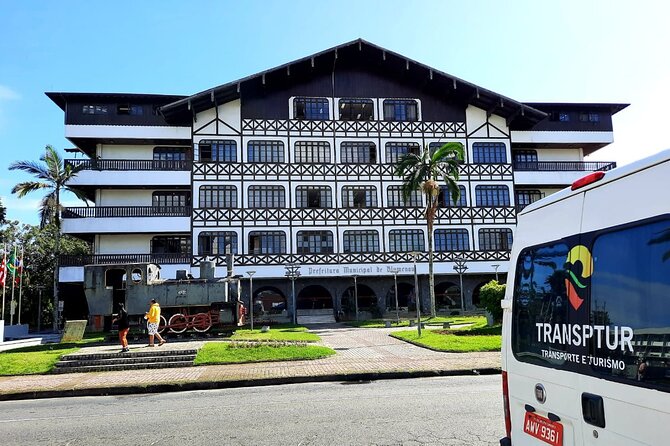
At Blumenau City Hall, you have about 15 minutes. The building’s design draws on old colonial houses, so this is another chance to compare civic architecture with the older homes seen earlier. The stop is free and short, best treated as a photo and orientation break rather than a full interior visit.
The famous iron bridge recalls the first locomotive purchased from Germany. It is another quick sight, but the railway connection helps explain how goods and people once moved through the region. I appreciate stops like this because they give the tour a practical side. Immigration was not only about houses and festivals. It also involved transport, trade, and the growth of towns.
Vila Germânica, where festival culture takes center stage
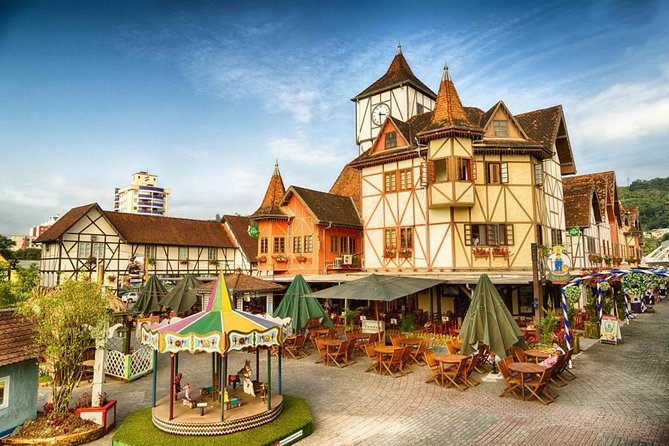
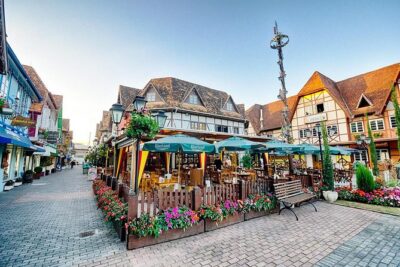
Parque Vila Germânica is one of the day’s most recognizable stops. You get about an hour to walk through a complex built in a European style, with restaurants, souvenir shops, regional products, and typical crafts.
The park hosts events tied to local culture, including Oktoberfest, Osterdorf, Weihnachtsdorf, the Brazilian Beer Festival, and Festitália. If you visit outside festival dates, you will see the setting rather than the full event atmosphere. Even so, the park helps explain why Blumenau is so closely linked with German-themed celebrations.
This is a practical place to browse for food or souvenirs, but remember that personal spending is not included. The hour can disappear quickly if you want to eat, shop, and take photographs. I would decide in advance if your priority is lunch, shopping, or simply seeing the architecture.
For families, the park is easier than a formal museum. For adults interested in the region’s cultural identity, it provides context for Oktoberfest without requiring a special festival trip. It can also be a useful rest stop after the historic center.
Same city, a completely different kind of day:
- Germanic Route – Cultural and historical in Ilhota, Blumenau and Pomerode
★ 4.5 · 67 reviews - Florianópolis: Camboriu & Unipraias Park with Cable Car Ride
★ 4.4 · 63 reviews - Floripa Total – Leaving Florianópolis by Itaguasul Turismo
★ 4.5 · 56 reviews - Diving with Turtles in Floripa
★ 5.0 · 53 reviews
Pomerode’s welcoming gate and small-town character
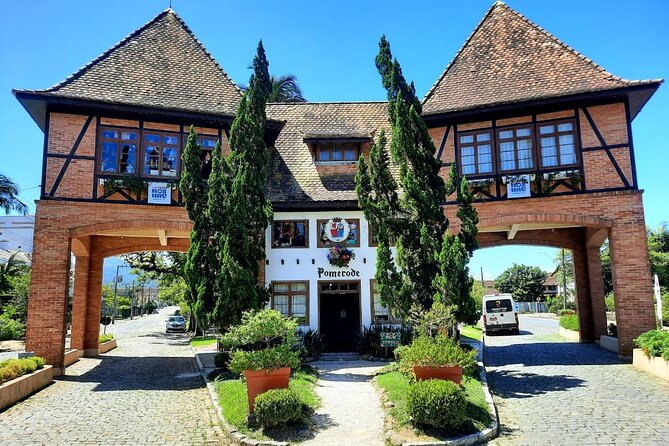
The route continues to Pomerode, often described as a quieter and more charming town than Blumenau. The first stop is the Portal Turístico Sul, built to welcome people arriving in the city.
You can photograph the gate, try on typical German clothing for pictures, and look at local handicrafts. The stop lasts about 15 minutes, so treat it as a quick introduction rather than a full craft market visit. It is a good place to take the classic Pomerode photo, but the real value comes later in the central area.
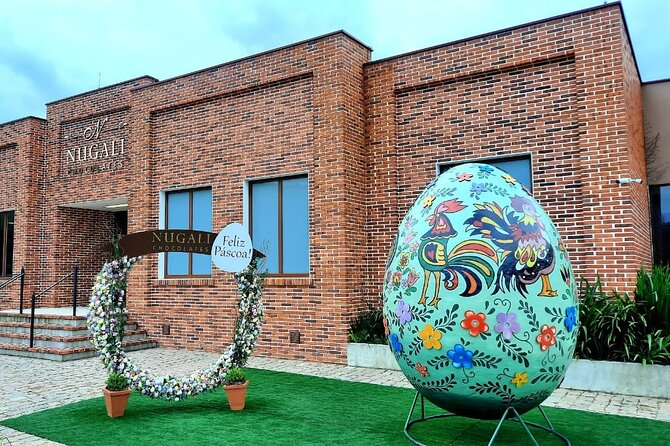
Next comes Nugali Chocolates, a 15-minute visit to the company’s central store. The chocolates include products that have received international awards, and the stop gives you a chance to buy something local without spending time at a full meal.
The visit is short, so you may need to choose quickly. If you enjoy Brazilian food products, this is one of the easiest take-home purchases on the route. It also gives the day a welcome change from architecture and museums.
Pomerano, crafts, theater, and Schornstein Brewery
The Pomerode Tourist Center groups several attractions into a 30-minute visit. At Paseo Pomerano, you will find shops selling souvenirs, cachaça, chocolates, crystals, and confectionery. This is a compact retail area with a Germanic design, useful for browsing regional goods in one place.
Handgemacht is a handicraft house where artisans work together to make and sell their pieces. That makes it more personal than a generic souvenir stop. You might find locally made objects, but the short schedule means you should not expect time to examine every item.
The Municipal Theater adds a cultural building to the route. The tour does not promise a performance or a long interior visit, so its role is mainly architectural and civic.
The Schornstein Brewery occupies a historic building that was once the Weege Market. Next to the factory, the Schornstein Kneipe, or official bar, uses a building associated with the brewery and has a 30-meter chimney made from handmade solid bricks.
This is one of the most interesting combinations on the trip: an old market building, a working brewery, and a restaurant-bar setting. The listed visit does not include food or drinks, so budget separately if you want to stop for them. You may need to choose between browsing the center and ordering something at the brewery, since half an hour is not long.
Choosing the paid attractions in Pomerode
The final part of the day gives you several optional attractions. Their admission fees are not included, so the total price depends on what you choose.
Vila Encantada is a children’s park with eight life-size dinosaur species, pirate areas, an adventure space, and an interactive village. It is the clearest choice for families with younger children. The scheduled visit is about 30 minutes, which is enough for a quick look but likely not enough for children who want to use every attraction.
The Pomerode Zoo receives about 50 minutes. It was the first zoo in southern Brazil and now has more than 1,000 animals representing 242 species. If animals are a priority, this is probably the best use of your optional admission budget. The longer time allocation also makes it less rushed than some of the smaller stops.
Still, 50 minutes is not a full zoo day. You will need to accept a highlights visit and follow the group schedule. The zoo is especially appealing for families, but adults interested in the region’s architecture may prefer to spend their extra money elsewhere.
The Pomerode Automobile Museum displays 30 classic cars made from the 1940s through the 1970s. It offers an easy dose of nostalgia and suits anyone who enjoys old vehicles, design, or transport history.
The same stop includes the Toy Museum, with more than 3,000 cataloged toys dating from 1920 to the present. The collection covers many models and unusual objects. This is a good choice for families and for adults who like cultural collections that connect with everyday life.
Because the scheduled time is about 20 minutes, you may have to choose between the cars and toys rather than study both carefully. Admission is not included for either museum. Ask the guide how the timing works on your departure date so you can make a sensible choice.
What the price includes, and what it does not
At about $28.91 per person, this tour offers solid value if you want transport from Balneário Camboriú and a guide for both towns. The vehicle, air conditioning, reclining seats, and accredited guide remove much of the planning work. You also avoid arranging separate transport between Blumenau and Pomerode.
The price does not cover meals, colonial coffee, personal purchases, or admission to the Beer Museum, Vila Encantada, Pomerode Zoo, Automobile Museum, and Toy Museum. These extras can change the final cost, especially for a family.
I would think of the advertised price as the base cost for the route and commentary. Add only the attractions that fit your interests. If you mainly want architecture and history, you can keep extras low. If you have children or love animals, cars, or dinosaurs, plan for more.
The tour has a 4.9 rating from 54 reviews and a 100 percent recommendation figure. The most consistent praise centers on punctual pickup, polite service, and guides who explain the region in detail. Fábio is repeatedly praised for his history and geography commentary, while Edna is noted for warmth, organization, and care with family groups. Those details matter because the guide turns a series of quick stops into a connected story.
Who should book this outing
You should consider this tour if you are staying in Balneário Camboriú and want to see inland Santa Catarina without renting a car. It also suits you if you like having a guide explain architecture, colonization, and local culture rather than simply taking photographs.
Families get useful choices at Vila Encantada, the zoo, and the Toy Museum. Couples and adults may prefer the historic center, breweries, chocolate, public buildings, and crafts. A mixed group can split its interests, though the fixed schedule will not allow everyone to linger everywhere.
You may want a different plan if you prefer slow travel, long meals, or detailed museum visits. Twelve stops in roughly 10 hours is ambitious. The tour gives you a broad picture, not a relaxed, specialist look at either city.
Book at least 24 hours ahead if you need the full refund option. Confirmation is received at booking, and the experience can be canceled for poor weather or if its minimum group size is not reached. In those cases, you are offered another date or experience, or a full refund.
Should you book the Germanic Roots Tour?
I would book it if you have one free day, want an easy inland excursion, and value a guide’s explanations as much as the sights. The combination of Blumenau’s civic history, Pomerode’s German-style center, breweries, chocolate, and family attractions gives you plenty of variety for the cost.
Go in with the right expectations. This is a sampler, not a leisurely private tour. Bring money for optional admissions and food, wear comfortable shoes, and prepare for a long day. If Fábio, Edna, or another guide with the same strong local background leads your group, the commentary may be the part you remember best.
FAQ
Where does the Germanic Roots Tour start?
The tour starts in Balneário Camboriú, in Santa Catarina, Brazil. It begins at 8:00 a.m. and returns to the starting point.
How long does the tour last?
The experience lasts about 10 hours.
What cities does the tour visit?
The tour visits Blumenau and Pomerode.
Is transportation included?
Yes. Transportation is provided by an air-conditioned van or executive minibus with reclining seats, stereo, and DVD.
Is a guide included?
Yes. A Cadastur-accredited tourist guide accompanies the tour.
Are entrance fees included?
Some stops are free, but admission to the Beer Museum, Vila Encantada, Pomerode Zoo, Automobile Museum, and Toy Museum is not included.
Can I cancel for a full refund?
Yes, if you cancel at least 24 hours before the local start time. Cancellations or changes made less than 24 hours in advance are not refunded.
Just added around Florianópolis
- Paragliding flight with instructor in Florianópolis★ 4.5 · 49 reviews
- Turtle Snorkeling by Adrenailha★ 5.0 · 42 reviews
- Kayak Water Trail in Red River Park by Adrenailha★ 5.0 · 40 reviews
- Florianópolis city tour (full day)★ 4.5 · 32 reviews
- Discover Florianópolis: Full Day City Tour and Local Highlights★ 4.0 · 47 reviews
- East Lake Trail and Morro da Coroa with photo session★ 5.0 · 43 reviews
- Transporte Beto Carrero – Leaving Florianópolis by Itaguasul Turismo★ 4.5 · 39 reviews
- Round Trip Beto Carrero World from Balneario Camboriu★ 5.0 · 31 reviews
Florianópolis Tours, compared.

Balneário Camboriú tour and cable car ride from Florianópolis
Read our review →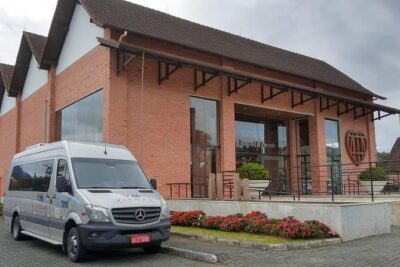
Germanic Route – Cultural and historical in Ilhota, Blumenau and Pomerode
Read our review →
Balneário Camboriú, Unipraias and Laranjeiras – Exit Floripa
Read our review →

Floripa Total – Leaving Florianópolis by Itaguasul Turismo
Read our review →

Paragliding flight with instructor in Florianópolis
Read our review →Browse the lists this tour appears in