
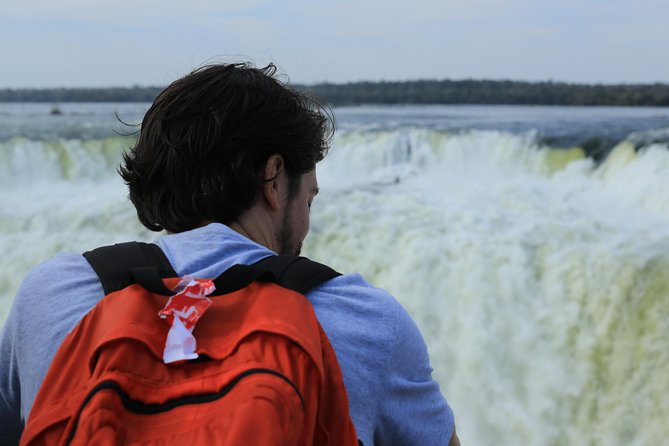
Reviewed · IGUAçU FALLS TOURS
Ancestral Iguazu: Argentine Falls and Guarani Community Tour
The best part of this small-group tour from Brazil is that it combines the Argentine side of Iguazu Falls with a visit to a Guarani community. You get the famous waterfalls, but also a chance to hear about local culture, land rights, and resistance from a community guide.
I like the help at the border and the guide-led route through the park. Guides such as Bruna, Bruno, Marcos, Roberto, and Gil have been praised for clear communication, safe driving, nature knowledge, and adjusting the pace to the group. The main drawback is that the advertised five to seven hours may feel short for the Argentine park, especially if the Devil’s Throat trail is closed or walking speeds vary.
In This Review
- Key points to know before booking
- Why the Argentine side changes your Iguazu experience
- A quick stop at the Three Borders landmark
- Walking the three Argentine park routes
- What the guide adds inside the park
- A different kind of stop at Jasy Porã
- The real price: $150 plus Argentine fees
- Border help is one of the strongest practical benefits
- Timing, weather, and walking pace
- The guides and the human side of the day
- Who should book this Argentine Iguazu tour?
- Should you book it?
- FAQ
- Where does the tour start?
- How long does the experience last?
- Is the Argentine national park entrance included?
- Are other fees and taxes included in the price?
- Is the Guarani community visit included?
- How much walking is involved?
- Is Devil’s Throat always open?
- What is the cancellation policy?
Key points to know before booking
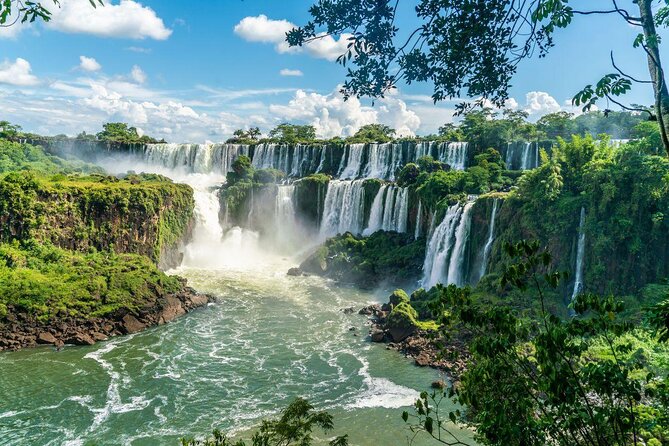
- Three countries in one view: The Argentine Three Borders landmark shows where Brazil, Argentina, and Paraguay meet.
- Nearly 9 kilometers of walking: The Argentine park route covers the Upper Trail, Lower Trail, and a train connection toward Devil’s Throat when open.
- A Guarani cultural visit: A local guide at Jasy Porã explains community traditions, land struggles, and regional Indigenous culture.
- Extra park costs matter: The $150 price does not include the Argentine national park entrance fee of ARS45,000 or ARS15,000 in listed fees and taxes per person.
- A compact group, with a limit of 15: A small group can make border crossings and trail planning easier, but the pace may still vary.
- Moderate fitness is needed: Expect substantial walking, slippery paths in rain, and a long day on your feet.
Why the Argentine side changes your Iguazu experience
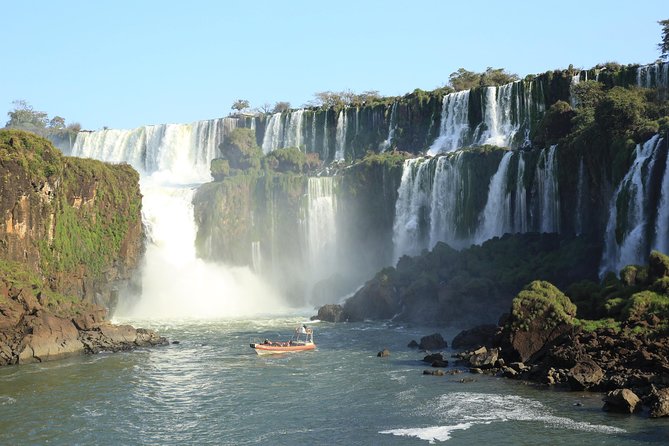
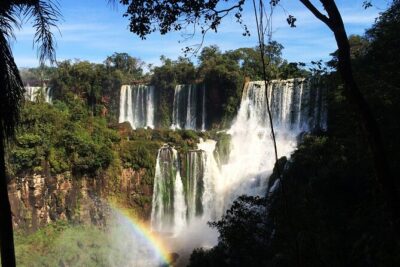
The Brazilian side gives you broad views across the falls. The Argentine side puts you closer to the water, with paths that lead through forest and along several sections of the river. You see the cataracts from different angles rather than taking one long lookout walk.
That variety is the real reason to cross the border. On the Upper Trail, you look down toward powerful drops and broad curtains of water. The Lower Trail brings you closer to the spray and gives a more enclosed, forested feel. The route toward Devil’s Throat adds a train ride and a walk when that section is operating.
The tour starts at about 7:30 am in Foz do Iguacu. An early departure is useful here. It gives you a better chance of reaching the park before the busiest period, and one booking reported getting through the park before large crowds built up. Border formalities can be less stressful with a guide who speaks Portuguese and Spanish and knows the process.
The exact return time is not fixed. One outing was back at a downtown hotel around 2:15 pm, while the planned duration is about five to seven hours. Treat this as a substantial half-day rather than a guaranteed full-day tour.
More iguaçu falls tours in Foz do Iguacu:
- Iguazu Falls: Full-Day Tour of Brazil & Argentina Sides
★ 4.9 · 1,542 reviews - From Foz do Iguazu: Brazil Iguazu Falls & Macuco Safari Boat
★ 4.7 · 358 reviews - Iguassu Waterfalls: 1 Day Tour Brazil and Argentina’s sides
★ 4.9 · 353 reviews
A quick stop at the Three Borders landmark
The first stop is the Hito Tres Fronteras, also called the Marco das 3 Fronteiras on the Argentine side. You can see the meeting point of the Iguazu River and the Paraná River, with Brazil, Argentina, and Paraguay visible across the water.
The stop lasts about 10 minutes and admission is free. That is enough for a look, a few photographs, and an explanation of the geography. It is not a long sightseeing visit, so you should see it as a useful orientation stop rather than a major part of the day.
I like this opening because it gives the region a clear sense of place. Iguazu is not just a waterfall destination. It sits at a border crossroads, and the rivers help explain why the area has long been important to several countries and cultures.
The stop can also depend on the day’s timing. One guide made this visit as an extra stop, while another version places it in the planned route. Ask at booking or before departure if the Three Borders viewpoint is essential to you.
Walking the three Argentine park routes
The main part of the day takes place inside Iguazu National Park in Argentina. The route covers almost 9 kilometers over three sections: the Upper Trail, the Lower Trail, and the train route toward Devil’s Throat.
That distance deserves attention. You do not need athletic ability, but you do need a moderate level of fitness and comfort walking for several hours. The paths can feel slippery in wet weather, so wear shoes with a reliable grip. Sandals or smooth-soled casual shoes are a poor choice for a rainy day.
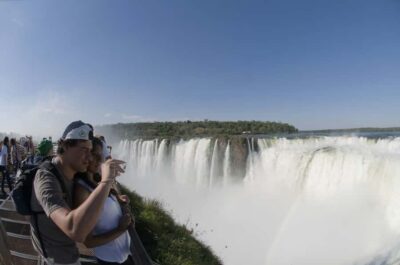
The Upper Trail is the easier section to understand visually. It brings you over and beside the upper falls, with open viewpoints and a strong sense of the river’s force. You can see water dropping into lower basins and spreading into mist below.
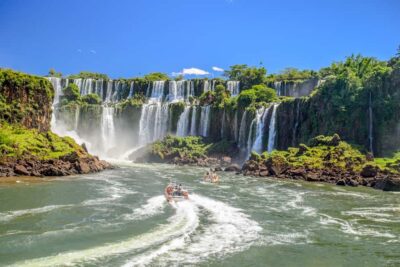
The Lower Trail changes the mood. You walk closer to the spray and through forested sections, with the falls appearing around bends. This path usually feels more active because you are not simply stopping at one lookout. You move through the setting and wait for each view to appear.
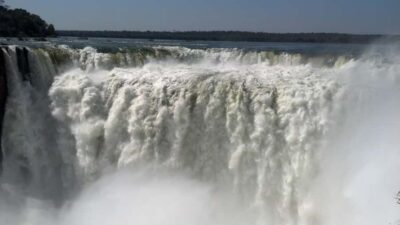
The train ride toward Devil’s Throat is one of the park’s signature features. From the train, you continue on foot to the lookout area when the route is open. The water and mist at Devil’s Throat are often the dramatic finish people expect from the Argentine side.
There is an important warning here. The Devil’s Throat trail was reported closed after flooding and remained unavailable at the time of one recent outing. Since this changes the shape of the day, check current conditions before paying for the park ticket. If it is closed, the Upper and Lower Trails still offer a strong visit, but you should not book on the assumption that every section will operate.
What the guide adds inside the park
The guide is more than a driver between Brazil and Argentina. A good guide helps you handle the border crossing, understand the park layout, and choose a sensible order for the paths.
Bruna received particular praise for answering WhatsApp questions before the tour, helping with online park tickets, and pointing out birds, animals, insects, and plant life. Her habit of picking up litter also showed a practical concern for the park rather than just a desire to move quickly through it.
Roberto helped people who did not have pesos ready for the entrance costs. Marcos was described as friendly and engaging, and he made a stop at the Three Borders landmark that was not part of one group’s original plan. Gil was praised for knowing the park and matching the pace to the person he was guiding.
These details matter because the Argentine side has many moving parts. You need transport, border assistance, park admission, trail decisions, and possibly a train connection. A guide who communicates well can reduce wasted time and help you get more from the hours available.
The group size is capped at 15. That is still large enough for different walking speeds to become a problem. One outing had 14 people, with a wide age range, and the group did not move at one steady pace. If you want a private experience, ask about the day’s group size. A small group of two made one outing feel almost private, but that is not guaranteed.
Same city, a completely different kind of day:
- From Foz do Iguaçu: Brazilian Side of the Falls with Ticket
★ 4.6 · 346 reviews - From Foz do Iguaçu: Iguazú Falls Boat Ride Argentina
★ 4.9 · 274 reviews - From Foz do Iguaçu: Argentinean Falls Tour with Pickup
★ 4.6 · 269 reviews - From Foz do Iguaçu: Argentinian Iguazu Falls with Boat Ride
★ 4.5 · 185 reviews
A different kind of stop at Jasy Porã
The visit to the Comunidad Guarani Yriapu, also known as the Indigenous Iriapu community, gives this experience its strongest point of difference. At Jasy Porã, a Guarani guide explains community culture, the struggle for land, and the process of resistance faced by Indigenous people in the Iguazu region.
This is not a quick photo stop. The planned visit lasts about two hours, and the community entry with a local guide is included. That time allows the cultural part of the experience to carry real weight instead of being squeezed into a short introduction.
I value this stop because it connects the waterfall to the people who live in the region. You hear about Guarani culture from a member of the community, not only from a general park explanation. The subject of land rights also adds context to the surrounding forest and the pressures faced by Indigenous communities.
The experience is best approached with attention and respect. It is not a performance added to fill time. The focus is on culture, history, resistance, and the community’s connection to its land. If you want only waterfall viewpoints, this two-hour visit will reduce your time in the park. If you want a wider understanding of the region, it is the reason to choose this tour over a standard falls transfer.
The real price: $150 plus Argentine fees
The advertised price is $150 per person. That includes an air-conditioned vehicle, a guide, and entry to the Guarani community with its local guide.
You must budget extra for the Argentine side of the national park. The supplied cost is ARS45,000 per person for admission, plus ARS15,000 per person in fees and taxes. Prices in Argentine pesos can change, so confirm the current amount before departure.
That makes the total cost higher than the headline price. Still, the value depends on what you would otherwise need to arrange yourself. The fee covers transport from Foz do Iguacu, border assistance, a guide in the park, and the Guarani community visit. It also saves you from working out the cross-border route and park sequence alone.
The tour makes the most sense if you place a high value on ease and guidance. If you are comfortable handling the border, buying your own park ticket, and arranging transport, an independent visit may cost less. You would then need to manage the long trails and decide how to fit in the community visit, if available separately.
Food is not listed as included. One outing had an excellent lunch at the park with vegetarian choices, but you should treat lunch as an additional expense and confirm the plan for your own departure.
Border help is one of the strongest practical benefits
Crossing between Foz do Iguacu and the Argentine park can feel complicated if you do not speak Portuguese or Spanish. The guides assist with the process and help keep the morning moving.
Bring the personal information needed for the park pass. One person was surprised to be asked for a date of birth, full name, and passport number. That is useful to know in advance, especially if you prefer to have your details ready rather than search through documents at the border.
The guide’s language ability is also helpful when questions arise about fees, tickets, and entry procedures. Immigration was described as easy on one outing, with the guide making the crossing feel less troublesome.
Do not assume that a smooth border crossing means the park entry will take no time. Ticket lines can still be long, even if they move quickly. Booking online may save time, but check exactly what is included and keep the guide informed about your ticket status.
Timing, weather, and walking pace
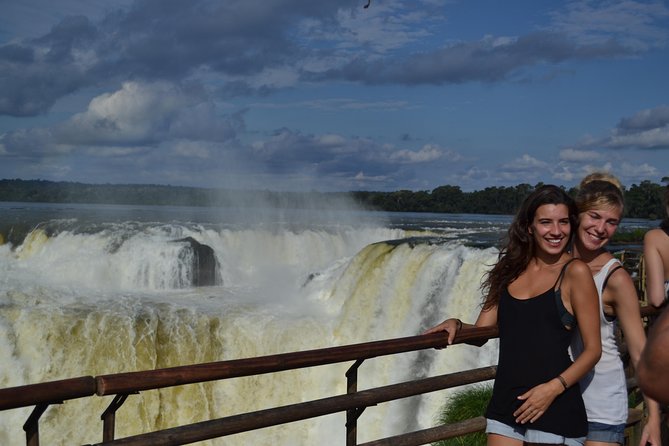
Start time is 7:30 am. The early start supports the tour’s main advantage, reaching the park before the larger crowds. It also leaves room for the border crossing and a long route through the park.
Rain changes the experience. The walkways can become slippery, and spray is part of the falls experience even in good weather. Wear sturdy shoes, protect documents and electronics, and expect to get damp near the water. Only the footwear advice is certain from the available information, so do not assume the operator supplies rain gear.
The pace can be adapted in some cases. Gil adjusted the outing to suit one person, and several guides were praised for being attentive and flexible. But flexibility has limits when a group contains people walking at very different speeds.
You should be comfortable with several hours of walking and uneven or wet surfaces. The experience is not presented as suitable for people with very limited mobility. Public transportation is nearby, but the tour itself begins at the stated meeting point at 7:30 am.
The guides and the human side of the day
The most consistent strength is the guide service. Bruna, Bruno, Marcos, Roberto, and Gil each received praise for different qualities: communication, nature knowledge, safe driving, patience, local explanations, and care with practical problems.
Bruno was praised for explaining the falls and allowing enough time to take in the views. Marcos was described as warm and attentive, while Roberto helped solve a cash problem with the entrance fees. Bruna’s pre-tour communication and sharp eye for wildlife and litter made her a particularly memorable guide.
Guide quality can vary by departure, so I would ask for the guide’s name and confirm the meeting details through WhatsApp before the morning begins. The tour provider is Let’s Go Iguassu Travel Experience, and confirmation is sent when you book.
The overall rating is 4.8 from 47 ratings, with 96 percent recommending the experience. Those numbers suggest a strong record, but the practical limits remain the same: extra fees, substantial walking, changing trail access, and group pace.
Who should book this Argentine Iguazu tour?
I would choose this tour if you are staying in Brazil and want an efficient way to see the Argentine side without arranging the border crossing yourself. It is also a good match if you want a guide who can explain wildlife and park routes, rather than simply drop you at the entrance.
The Guarani community visit makes it especially useful for you if cultural context matters as much as photographs. You get two very different parts of the region in one outing: immense waterfalls and an Indigenous perspective on land, identity, and resistance.
I would think twice if your main goal is a slow, complete day at the falls. The five to seven-hour schedule may not allow leisurely time at every viewpoint, and the Devil’s Throat closure can remove the section many people most want to see. A larger group can also create delays between faster and slower walkers.
The cancellation terms are simple: cancel at least 24 hours before the start for a full refund. Changes made within 24 hours are not accepted, and the experience may be canceled with a full refund if its minimum group size is not reached.
Should you book it?
Book this experience if you want border help, guided park access, and a meaningful Guarani visit in one compact day. The strong guides and early start add real value, especially when you are based in Foz do Iguacu.
Before paying, confirm the current Devil’s Throat status, the Argentine peso fees, the expected group size, and how much time will be available at Jasy Porã. If those details suit you, this is a thoughtful way to see more than the postcard version of Iguazu.
FAQ
Where does the tour start?
The tour starts in Foz do Iguacu, Brazil, at approximately 7:30 am.
How long does the experience last?
The stated duration is approximately five to seven hours. One outing returned to a downtown Brazil hotel at around 2:15 pm.
Is the Argentine national park entrance included?
No. The Argentine Iguazu National Park entrance fee is listed separately at ARS45,000 per person.
Are other fees and taxes included in the price?
No. An additional ARS15,000 per person is listed for fees and taxes.
Is the Guarani community visit included?
Yes. Entry to the Guarani community with a local guide is included.
How much walking is involved?
The Argentine park route covers almost 9 kilometers across the Upper Trail, Lower Trail, and the train route toward Devil’s Throat. A moderate level of physical fitness is recommended.
Is Devil’s Throat always open?
No. The Devil’s Throat trail was reported closed after flooding until further notice during one outing. Check current conditions before booking or purchasing the park ticket.
What is the cancellation policy?
You can cancel at least 24 hours before the start time for a full refund. Cancellations or changes made less than 24 hours before the start are not accepted for a refund.
Just added around Foz do Iguacu
- Private transport with guide to the Falls on the Argentinean side.★ 5.0 · 35 reviews
- Private Tour Argentinean side of Iguazu Falls★ 5.0 · 50 reviews
- Private transport with guide to Brazil Falls + Bird Park★ 5.0 · 52 reviews
- Brazilian Side of the Falls and Boat Tour Macuco Safari – All Tickets Included★ 4.5 · 51 reviews
- Iguassu Falls Combo Tour: Visit to the Brazilian side and Waterfall Boat Ride★ 4.0 · 50 reviews
- Brazilian Falls Private Tour with Entrance, Lunch and Boat★ 5.0 · 46 reviews
- Bathing in the Forest Trail in Foz do Iguaçu★ 5.0 · 28 reviews
- Tour Tour, We take the tour of the Argentina + Puerto Iguaçu Falls★ 5.0 · 53 reviews
Iguaçu Falls Tours, compared.
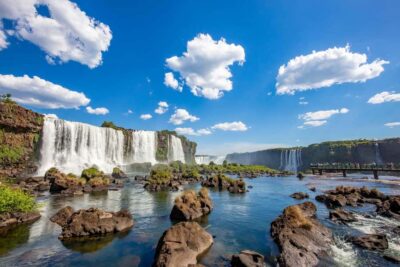
Iguazu Falls: Full-Day Tour of Brazil & Argentina Sides
Read our review →
From Foz do Iguazu: Brazil Iguazu Falls & Macuco Safari Boat
Read our review →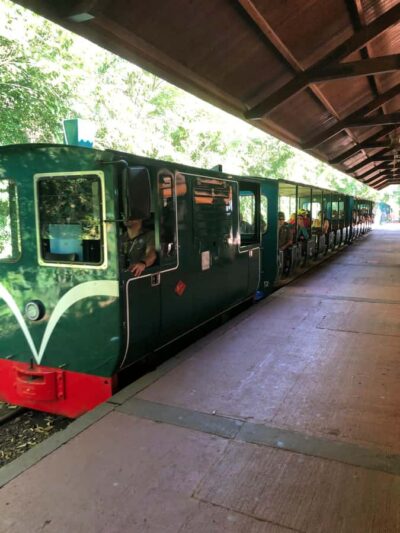
Iguassu Waterfalls: 1 Day Tour Brazil and Argentina’s sides
Read our review →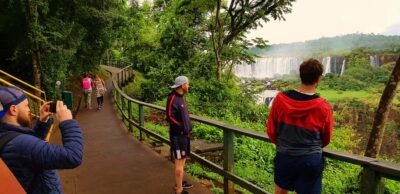
Day Trip to the Argentinian Side of Iguassu Falls from Foz do Iguaçu
Read our review →Browse the lists this tour appears in